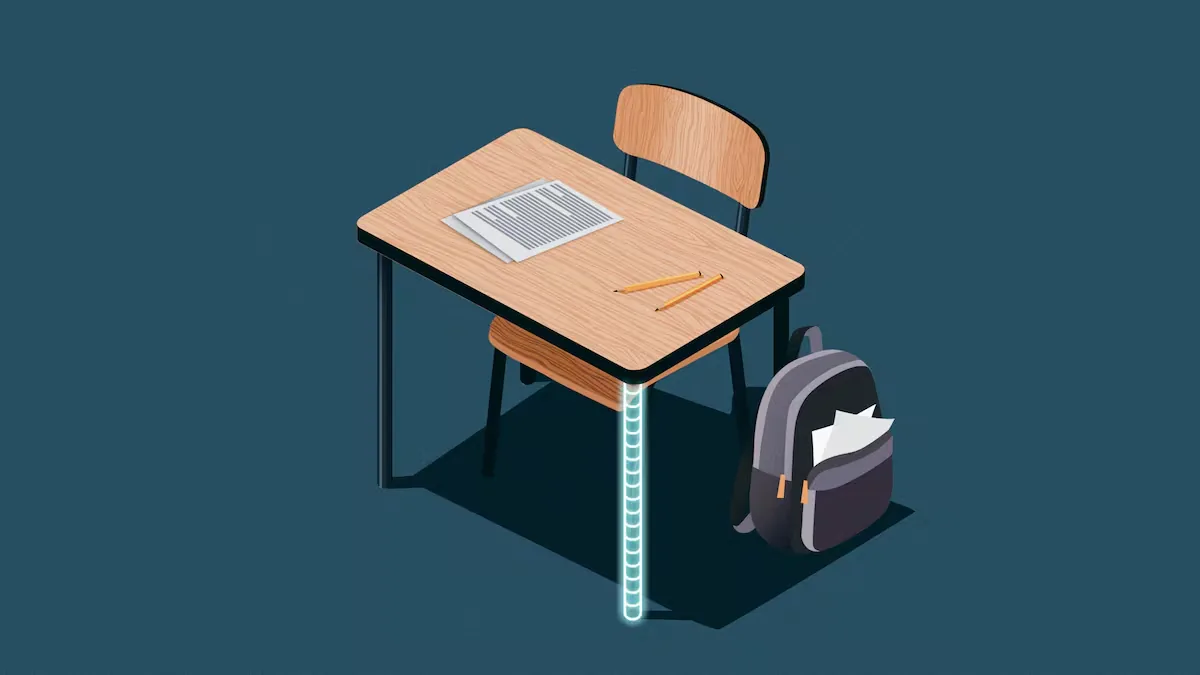
At the beginning of summer, I had the opportunity to talk with Guido Imbens, Nobel Prize winner in Economics, and he told me the following anecdote regarding the impact of artificial intelligence (AI) on learning: “I remember a student a long time ago who wrote me an email at three in the morning saying that one of my exercises had no solution. Three hours later, he sent me another message: ‘Ignore the previous email. I have found the solution.’ That student spent hours struggling with the problem until he solved it. Now it is different. You give them a problem and they have a machine next to them constantly whispering: ‘I know the answer. I can give it to you right now.’
Read more Calpe, renewing itself in the shadow of the Peñón
The anecdote raises an important underlying issue. Learning requires effort, and AI allows us to replace our effort achieving apparently excellent results: what happens if AI sabotages our learning?
In an experiment with nearly a thousand math students, Bastani and coauthors (2025) show that students with free access to GPT-4 performed 48% better during exercises; however, when AI was taken away, they scored 17% worse than the control group. It is an example of cognitive offloading: AI facilitates the immediate task but can replace the effort necessary to learn.
The incentive problem is obvious: Why spend 50 minutes doing homework if you can spend 20 and play 30 more minutes with your friends while getting the same grade?
In another study by Stromberg and coauthors (2026) from the University of Hong Kong, they followed 27,000 students aged 12 to 18 in China. After 6 months, students who used AI improved their homework grades by 18%. When exams came, the surprise was revealed: students who had access to AI scored 20% below their peers who did not use AI.
Of course, AI without intermediaries can work well for some. In another randomized experiment with 194 Harvard Physics students, the students alternated between an active learning in-person class and a lesson taught at home by an AI tutor. With AI, learning gains were more than double, despite spending less time.
But of course… they were Harvard students. In an environment with that type of students, the effect of AI is similar to the appearance of Google: for the highly motivated, the more powerful the tool, the more the learning frontier expands.
However, that is not the effect seen in most students: Wikipedia has always been there, but most prefer to spend time using TikTok.
The other side of the coin is that AI also makes it harder for teachers to extract the correct signals from students’ effort. With very little effort, a poor student can produce content, essays, or presentations worthy of a high grade. As Luis Garicano explains in his book Messy Jobs —applied to the world of employment— AI simultaneously lowers the cost of content production and raises the cost of verification, greatly complicating the task of assessing students’ real learning.
But then how can we trust an educational system that does not allow us to differentiate those who make an effort from those who do not?
The consensus is rapidly moving toward the idea that AI, to work in education, must be mediated by teachers.
Most students need to feel accompanied, inspired, and heard to find the motivation necessary to learn. And for that, it is likely that the role of a good teacher is irreplaceable, regardless of how much language models improve.
Read more With hands stained by catastrophe
As a complement, AI can be a great ally for teachers from below and from above.
From below, AI can free up time on tedious tasks like preparing presentations or generating exercises and be a very good support to improve the quality of instruction or practice for students. One of the great advantages of AI is that practice is food for the machine: when the student does exercises in a chatbot, AI learns and adapts “to the appropriate level” of each student, identifying their learning gaps and generating exercises tailored to them. However, those chatbots must be well prepared pedagogically, with strong guardrails and be Socratic —that is, they should not offer answers but guide students with questions, as a good teacher would—. In the study I mentioned earlier, when students were offered a pedagogically trained AI tool, the negative effect of learning loss disappeared completely.
In AI from above, AI can serve to make better teachers.
In an experiment with 900 tutors and 1800 students, Wang and coauthors (2024) found that Tutor CoPilot —an AI assistant focused on guiding teachers— increases the probability of mastering content by 4 points. The effect reaches nine points among the lowest-rated tutors, suggesting that AI can help those with less experience or skills.
AI can also work by giving feedback in real time. Peer feedback, which is common and very beneficial in other professions, is very complicated and expensive in classrooms. AI allows recording interactions with students and giving individualized feedback to the teacher to improve.
Typically, teacher training programs are very expensive. Such formulas would greatly reduce costs for teacher training policies at scale.
Finally, to respond to the challenge of learning and verification, teachers are already applying creative formulas. For example, in student presentations, I have reversed the times: 5 minutes of presentation and 15 of questions (before I did it the other way around). If there is one thing I learned in politics, it is that if you don’t know about a topic, it is quickly identified by debating in public.
Ethan and Lilian Mollick propose using AI to create personalized practice spaces. For example, in a negotiation class, AI can become a difficult client, react to each argument, and, at the end, explain to the student what they did well before posing a more complex challenge.
Regarding the effort challenge raised by the Nobel laureate, there is another way to look at the same problem. Since now everyone has access to the same tool and can do what they used to do much faster, the relevant question is: what new things can students do thanks to AI that they could not have even imagined before?
The world of possibilities is enormous: from analyzing large databases, to designing prototypes of anything, or webscraping information to study any topic without knowing anything about programming.
Steve Jobs said in a 1985 speech, anticipating the AI revolution, that one day we could all be like Alexander the Great and have an Aristotle as a mentor. That is still possible, but we have to make sure Aristotle helps us think better… not do our homework!