
Fragile, temporary, and even contradictory truces, instead of a generalized ceasefire and then the peace the region deserves. Breaking truces is an ancient and savage sport that everyone practices where one form or another of war has persisted for at least a hundred years. Despite their precariousness, their beginning is a moment of joy and hope that explodes in the streets and is barely clouded by the obstinacy of those who consider them compatible with their right to continue bombing, demolishing homes, and occupying foreign territories, as Israel does, or launching missiles against the neighboring country, as Hezbollah does.
Read more María Guardiola and the dogs
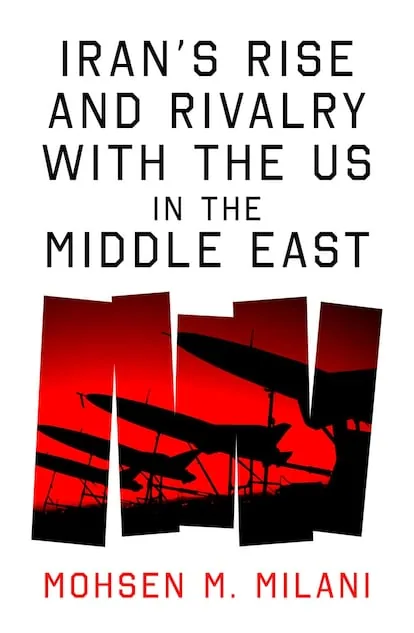
Such truces are a miracle if they hold. The one declared between Iran and the United States, without missile exchange over the skies of the Gulf until April 22, will coincide for a few days with that of Lebanon, without officially recognized hostilities until the 26th of the same month. If the weapons between Israel and Hezbollah do not truly fall silent, peace talks between Iranians and Americans will hardly be able to continue, ready again to negotiate under Pakistani patronage, after the 21 hours in which they sat face to face without results on the 11th and 12th of this month.
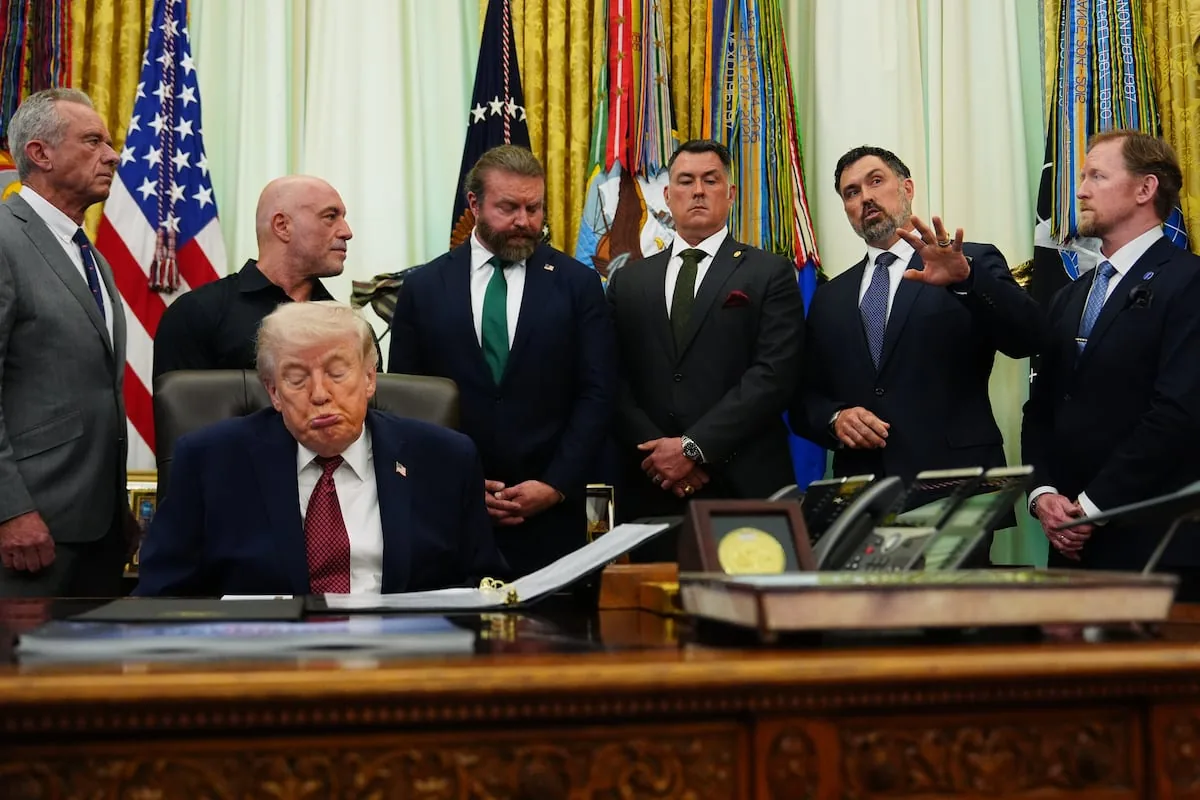
Trump continues to seek the Nobel Prize with the two peace agreements he wants to claim, the eighth and ninth according to his fanciful accounts. Both pauses are his merit, imposed as just punishment on Netanyahu for the deception suffered with the ambitious plans of easy victory he sold him in the White House. They were going to overthrow the regime together and even replace it with another pro-Western one, led by Reza Pahlavi, the heir of the emperor overthrown in 1979. The Israeli prime minister risked a lot, lost the bet, and now ignores Trumpist demands. He needs endless wars to reach the October elections as the leader who led Israel to its greatest territorial expansion since 1967, with the spoils of territories taken from Gaza, Lebanon, and Syria available for illegal colonization, just as is happening in the West Bank.
These truces signal the limits of military force. A coalition of the best armies has failed in its attempt to overthrow the Iranian regime from the air and must now disguise its defeat, which is not military but political. With a hasty negotiation, it wants to resolve disputes that no one has been able to address since 1979, in the case of Iran, and since 1948, in the case of Lebanon. Israel has no diplomatic relations with either country, and the conditions for achieving regional peace are the most difficult in all of history, with Lebanon and Iran still prostrated by the toll of death, destruction, and population displacement caused by the current war, now on pause.
Read more Ideas for a popular television museum
Trumpist negotiation instruments, like the ten commandments, are summarized in two: military coercion and business. That is, reliance on force and greed, and contempt for international institutions, consensus, and dialogue. Trump and Netanyahu amply fulfill the old Latin maxim that advises those who want peace to prepare for war. The maxim that would correspond to them turns weapons into a panacea instead of a necessity: if you want peace, never stop warring. It is peace by force, which brings the enemy to negotiate under threat and sets peremptory deadlines without the fighting ceasing or at least the economic siege and strangulation, classic instruments that accompany all wars.
Tehran and Washington are going to parley for the second time, and it is to be hoped that no one will leave the table in a bad mood. That they at least prolong the truce instead of immediately drawing arms, as the White House threatens and Netanyahu would wish. Four days of discussions will not be enough to resolve control over Hormuz, which some open to maritime traffic when others close it. Nor will it be enough to ensure that Iran will never have nuclear weapons. Despite the false victorious euphoria displayed by Trump, no one sees even a glimmer of light for a peaceful and agreed solution to such thorny disputes.
If the negotiation stumbles and Netanyahu regains the initiative that Trump took from him, it is easy to foresee the quagmire in which the entire region, including Iran, will continue to sink. It is the old and tragic quagmire of its history. They will call peace the continuation of the war, which will remain more or less attenuated or syncopated, accumulating as always death and destruction in the gray territory that Israel knows so well. Trump will perhaps try to save face, once again relying on his long experience in manufacturing fake news and alternative realities. But this time it seems that not even his own will believe him.
To read (and listen) more:
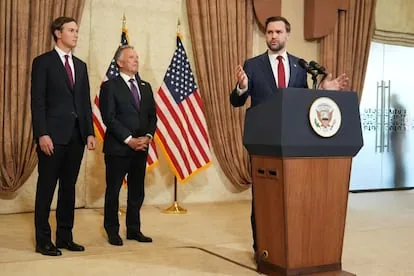
Seyed Hossein Mousavian. ‘America and Iran’s Long Road to Peace’. (‘Foreign Affairs’, April 17).

David Remnick. ‘A Genocide Scholar Asks ‘What Went Wrong’ in Israel’.(‘The New Yorker Radio Hour’. April 17).
Tanya Goudsouzian and Ibrahim al-Marashi. ‘The Middle East enters its first Great War: a new possible order’. (Real Instituto Elcano, April 16).