
Two days before the early dissolution of the Assembly, María Guardiola took to the stage of the Gran Teatro de Cáceres. Saturday, October 25. The theater, which opened exactly a century ago, has a capacity of 553 people. Minutes earlier, on San Antón street, there was a considerable queue to enter. And for good reason. That was going to be the most spectacular cultural event of 2025 in Extremadura: the Mario Vargas Llosa Biennial Novel Prize was to be awarded. In the preceding months, when it became known that the Junta would sponsor that prestigious literary competition for 650,000 euros, the opposition acted as opposition. They considered it “absurd, sectarian, opaque, and unnecessary.” I don’t know. I see the authorities in the front row and the finalists seated in a box waiting for the verdict. The Nicaraguan Sergio Ramírez, exiled in our country, one of our own, won.
Read more Ideas for a popular television museum
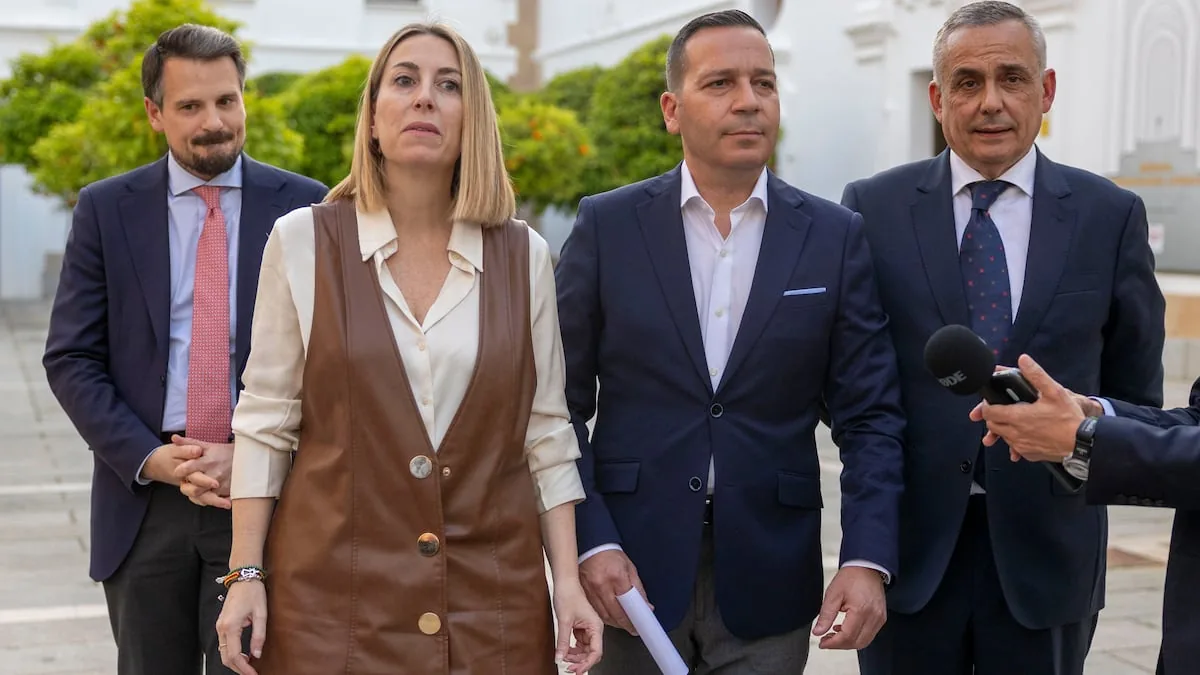
In one of the images of the event distributed by the Junta, the president appears on stage alongside Álvaro Vargas Llosa. The hall is dark, they look upwards. A video with photographs of the colossal Peruvian writer was projected on the screen, at once a reference for an authentic and conservative liberalism that his son had highlighted during the conversation he had held that afternoon with Juan Luis Cebrián, moderated by Rubén Amón. Before the video projection, at the start of the closing ceremony of that edition of the Biennial, María Guardiola gave a speech. How could she not take the opportunity to present the societal project derived from a specific cultural policy? She did it as all politicians do. “Today here, Vargas Llosa’s legacy meets Extremadura’s mission,” she said. “Here, the Extremestiza strategy takes on its full meaning,” she also said. “A project to strengthen ties with Hispanic America, reclaim our common history, and elevate that heritage that unites us on both sides of the Atlantic,” she said to define the spirit of that strategy. “We have a unique responsibility: to be a bridge of cultures, to extend our hands.” I don’t know. Less than 48 hours later, Guardiola dissolved the Assembly and called elections. Vox went from 5 to 11 seats. This week there will be an investiture. The PP and Vox have agreed. “If there is a new president —God will tell because we are in the hands of the Almighty— it will be because Vox wants it. No more, no less,” the regional leader of the national-populist party affirmed in the Assembly ten days ago.
The spirit of modern moderation that Guardiola once seemed to defend, even against her party’s leadership, has been swallowed by Vox’s corrosive agenda. It is the price of power, that fundamental dimension of some of Vargas Llosa’s best novels. That proclaimed responsibility of the president to extend her hands, which is intrinsically liberal because it assumes pluralism as the civic foundation of a society, has been profaned by establishing “national priority” in the pact as a new pillar of her new Government’s public policies: the origin of the citizen will be a factor of inequality. No longer free and equal. The backbone of the agreement, wrote Elsa García de Blas and Virginia Martínez, is a reflection of the racist ghost haunting Europe: the identification of immigration as the scapegoat of our time, and precisely in an autonomous community facing the complex challenge of depopulation. Enric Juliana says it in the fascinating conversation he has with Esteban Hernández in Viaje a un Nuevo Mundo: “This is the message, bash the poor foreigner because their suffering will channel our tensions.” Us and the dogs.
Read more Spain and the Global South