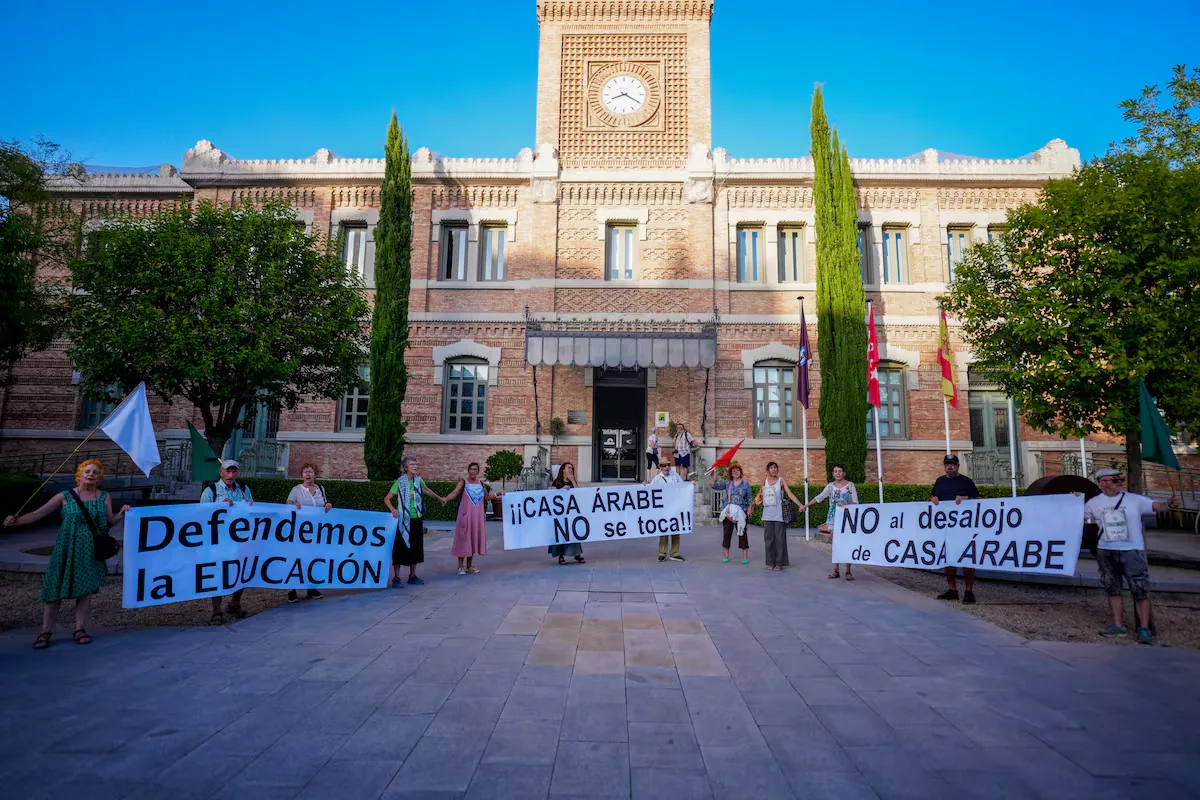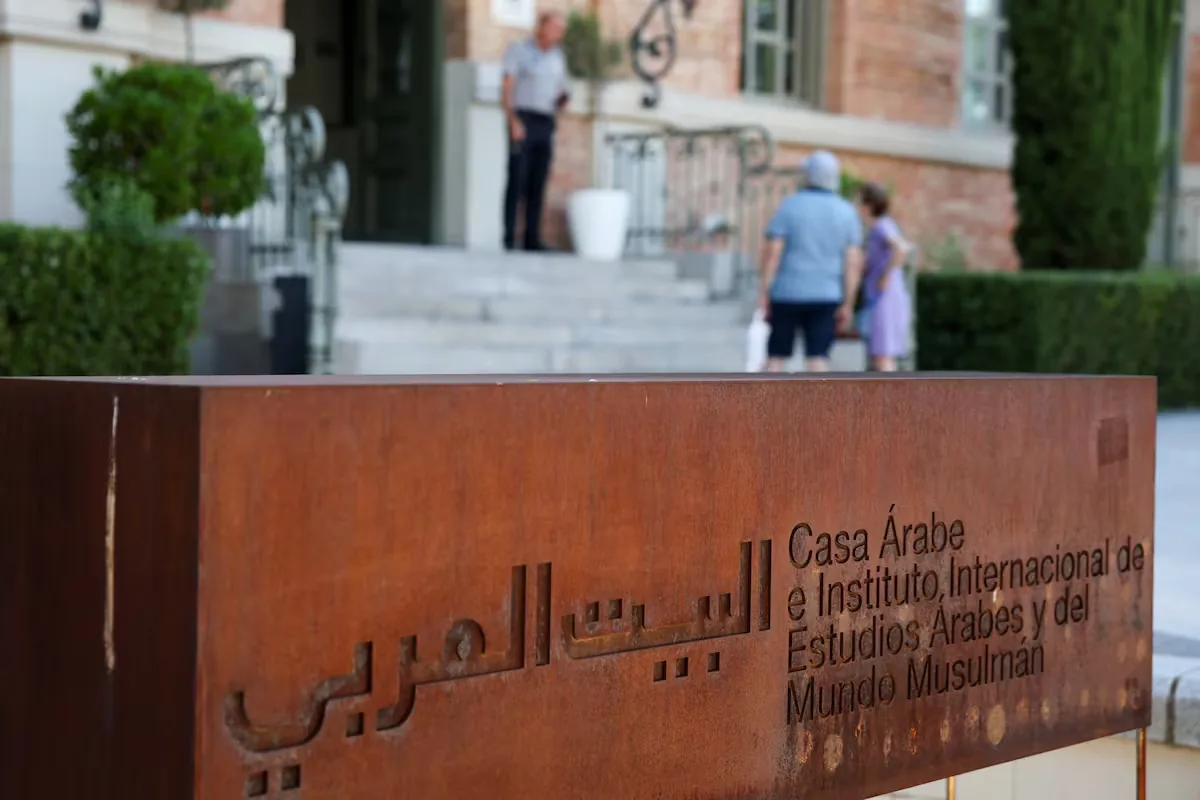
The tug of war continues between the Madrid City Council and Casa Árabe following the statement last June in which the City Council demanded its eviction and the declarations of the mayor of Madrid, José Luis Martínez-Almeida, who accused the Foreign Ministry of “illegal occupation of the building.” This Friday, after days of dispute, sources from Casa Árabe told this newspaper about the existence of minutes from the Governing Council of December 2022 and a report from the Ministry of Culture from June 2025 that proved that the Madrid City Council had been aware of the condition of the Casa Árabe building in Madrid for at least four years and ignored it until June of this year. In June the conflict escalated and eviction was ordered.
Read more The two minors arrested for the Manresa crime were under supervised release
The Culture report, prepared after a visit on May 23, 2025 by a team of architects, states that the building “presents serious pathologies, both due to its nature and the renovations that have been carried out since its inception.” The document also considers that the problems detected are fundamentally of a constructive nature, that nets were placed over the cornices in 2023 by the company REVAL, and does not attribute the deficiencies to a lack of maintenance by Casa Árabe.
The document coincides with the version offered by the institution, which maintains that its maintenance team carries out inspections “annually.” Sources from Casa Árabe also assure that at the Governing Council held in June 2025 they conveyed to the City Council the need to undertake a renovation of the building and their financial inability to face such an intervention alone. The request for help reportedly did not receive an effective response from the City Council, according to the same sources.
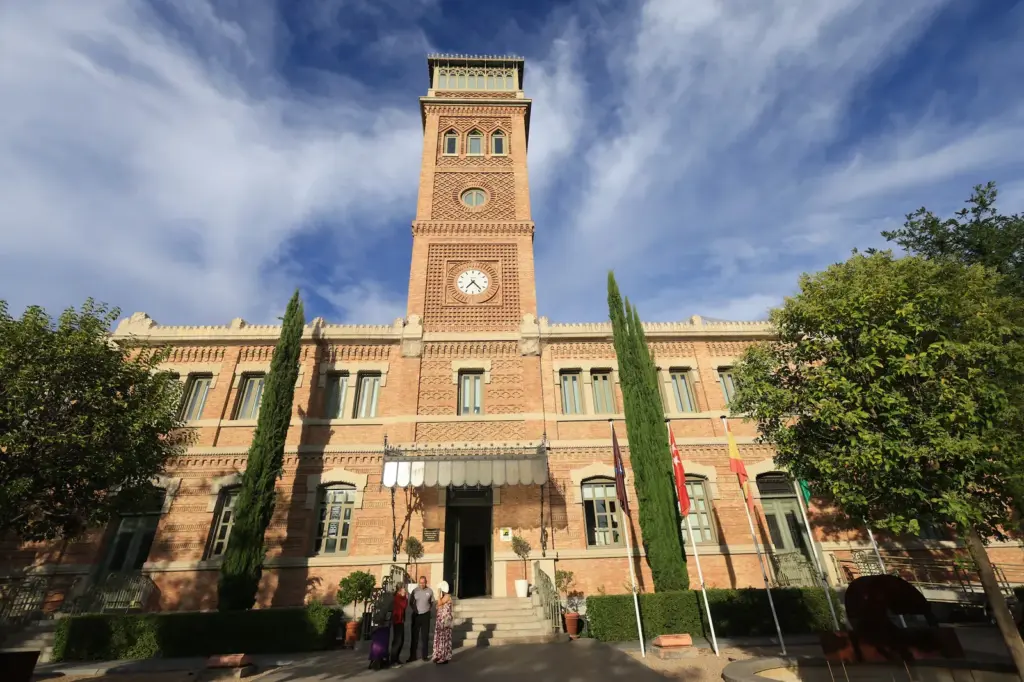
José Luis Martínez-Almeida’s version, however, points in another direction. Asked by this newspaper this Friday about the City Council’s knowledge of the building’s condition and the Culture documentation, the mayor defended that the City Council has been trying to reach an agreement and justified the decision to act without waiting any longer. The Madrid mayor did not want to go into nuances when asked about the promotional video recorded in January of this year by the Madrid City Council, in which, knowing the condition, it encouraged people to visit the building, and he concluded that it is a “historic building,” although he did not answer why the eviction started a year after the Governing Council.
Almeida maintained that there were “ways to act,” but no agreement was reached with the parties involved. The mayor considered that the City Council “cannot wait for an agreement” and called prolonging the situation “irresponsible.” In his explanation, he also blamed the Ministry of Foreign Affairs — which oversees Casa Árabe along with other institutions — for the lack of agreement.
“We won’t wait any longer,” Almeida summarized to justify the municipal decision.
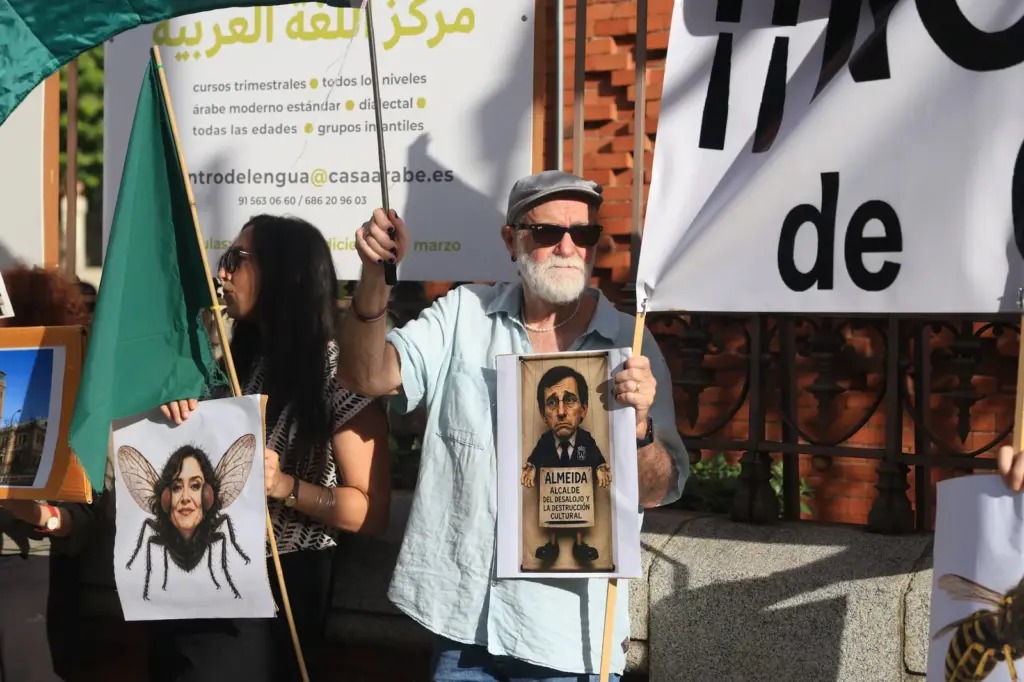
The minutes of that Governing Council confirm that the Madrid City Council knew the condition of the building and that it was through its Director of International Relations, José Francisco Herrera, that they received in June 2025 an explicit request to undertake a renovation, which was “ignored” and now the situation forces the eviction.
The version maintained by the City Council for a couple of months is that “the building presents maintenance problems that have led to structural damage” and, therefore, it warned that there is a risk to the safety of workers and visitors. Furthermore, it held the Ministry of Foreign Affairs responsible for any incident that might occur and announced that it is studying “taking legal action” to force the convening of the Governing Council and recover possession of the building.
Read more The hour of the Glory facade of the Sagrada Familia: this is how Gaudí imagined it
Foreign Affairs has always denied that version. “It is false that the Ministry of Foreign Affairs has not maintained communication with Mayor Almeida about Casa Árabe,” sources from the department said last Monday, recalling that José Manuel Albares called the mayor on July 27 to discuss the situation and that both agreed to continue dialogue to find a solution. They also reject that the institution is being “occupied” and assure that on July 30 technical meetings were held between ministry officials and the City Council.
According to Foreign Affairs, the City Council can only withdraw its contribution to the consortium, the building, if another partner leaves. The Community of Madrid has announced its withdrawal, but this has not yet been formalized nor have its assets been settled in the Governing Council. The ministry defends that Casa Árabe remain open, highlights the public support of Arab ambassadors and Arabic students, and warns of the damage its closure would cause to Spain’s international image. Additionally, it maintains that both the attempt to close and the mayor’s statements seek to harm diplomatic relations with Arab countries, “which are experiencing their best historical moment.”
Meanwhile, the building remains closed, except for passage areas and gardens, with workers teleworking.
In light of this entire conflict, Más Madrid will bring a proposal to the plenary sessions of the Retiro and Salamanca districts to demand the continuity of Casa Árabe in the Escuelas Aguirre, respect for the current transfer agreement, and the opening of a dialogue table between the City Council, the administrations of the Casa Árabe Consortium, and the institution itself. The initiative also calls to preserve the institutional, cultural, and public use of the building and maintain its current zoning classification.
The Culture documentation and the mayor’s statements place the conflict on another level: it is no longer just about determining whether the building has structural or construction problems, but about establishing when the different administrations became aware of the extent of the pathologies, what measures were proposed, who was supposed to carry them out, and why they were not undertaken before reaching the current situation.
The City Council now defends that it could not keep waiting for an agreement. Casa Árabe, on the other hand, maintains that it asked for help to undertake a renovation it could not financially afford. The Culture report provides a relevant element to that discussion: it confirms the existence of serious pathologies and places their origin in the building’s construction characteristics and successive renovations, without placing responsibility on the institution’s ordinary maintenance.
Read more Photographer Roger Farrington publishes unpublished images of John Lennon’s return to music in 1980