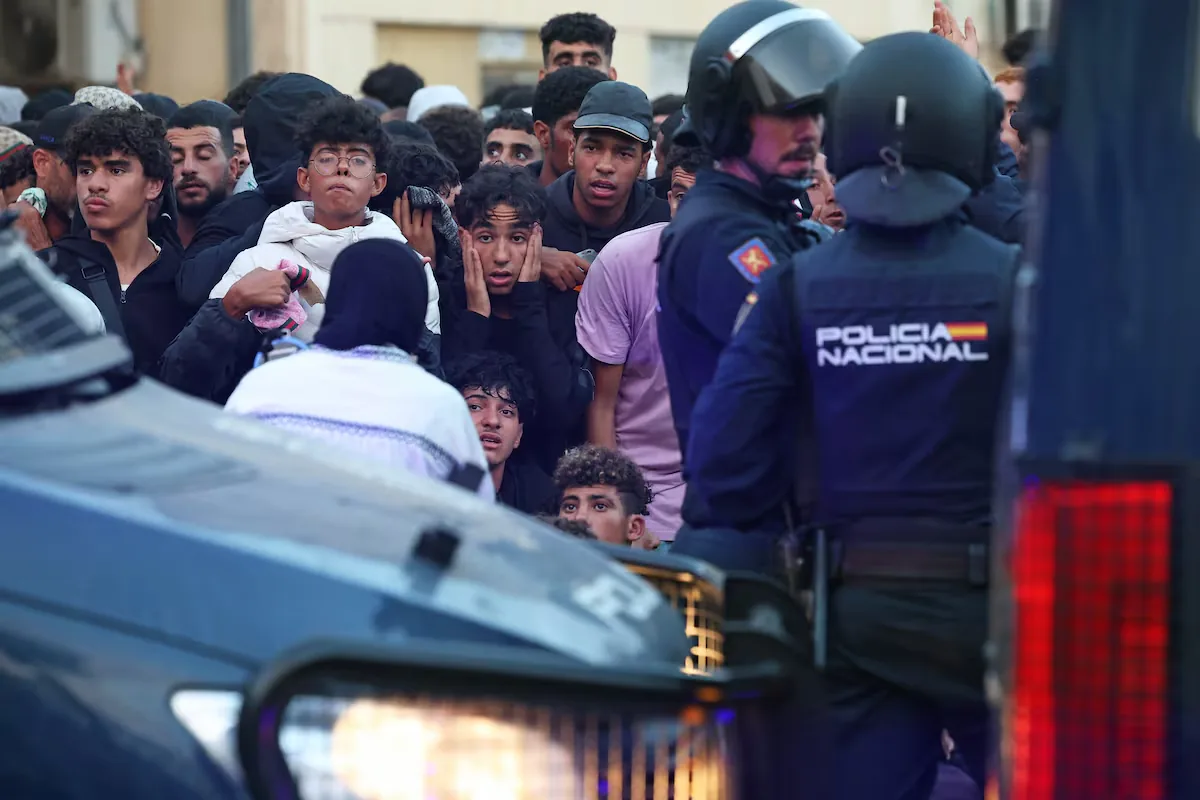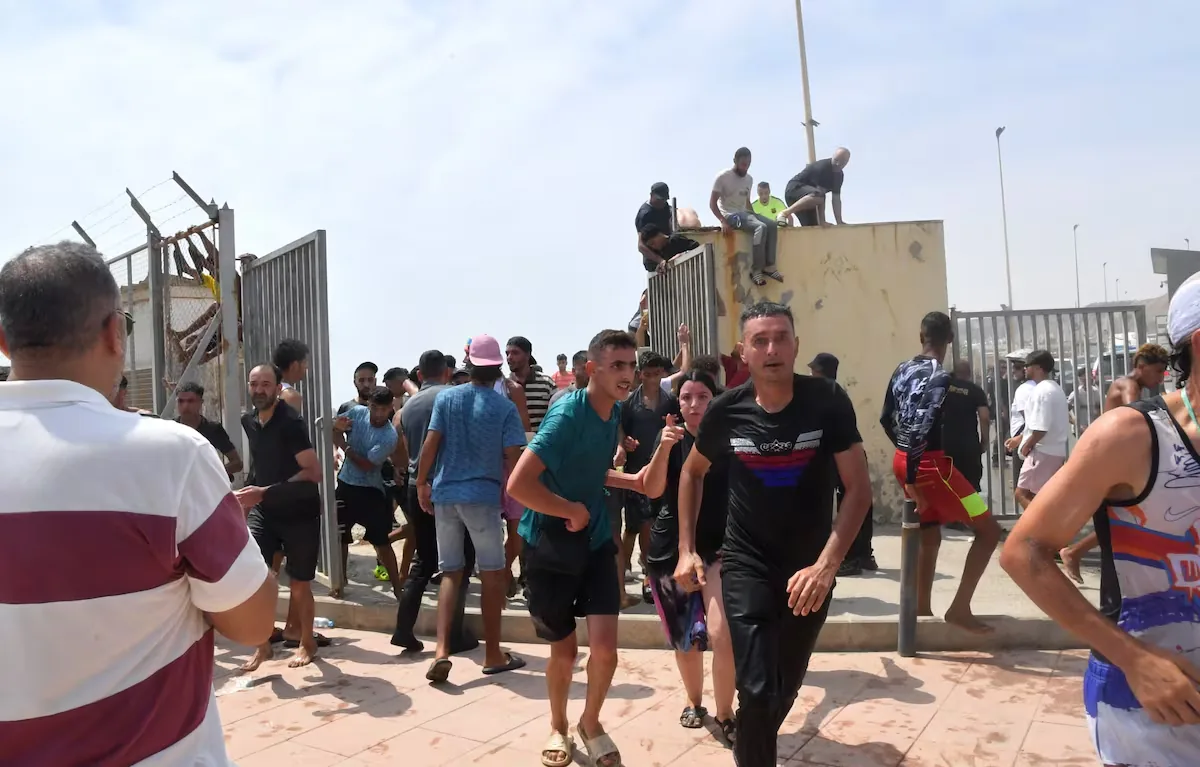
On July 30 at 12:06 in the morning, the Electronic Warfare Regiment No. 32 of the Army sent a classified message to the military intelligence services warning of a “VERY LIKELY” “massive entry” taking advantage of the Throne Day holiday in Morocco. However, an hour earlier—and according to the report that the National Police delivered on August 31 to the judge of the National Court María Tardón—the massive crossing into Ceuta was facing its second wave and there had already been “an overflow of police control due to accumulated pressure.” At 13:00, Cifas (Armed Forces Intelligence Center), the recipient of the classified message, issued a document on the situation describing “migratory chaos,” with Spanish forces “overwhelmed” by the entry of “thousands of people.” Both this and the first message from the Electronic Warfare Regiment were declassified this Wednesday by the Government.
Read more The need for a new pact for democracy
Various police and intelligence bodies had recorded in the days before the chaos broke out at the border calls on social media for a group assault on Ceuta. On July 28, two days before the massive entry, the National Center for Migrations and Borders (Cenif), dependent on the National Police, issued an information note which, based on open sources, indicated that in the following days, given the “geopolitical context,” the “risk of mass jumps” could increase, “especially on Throne Day, celebrated on July 30.” The document also noted that agents had located social media profiles encouraging a jump, but these were posts with “limited reach.”
On the 29th, the National Intelligence Center (CNI) warned the Government Delegation, Civil Guard, and Moroccan services of calls on social media. And, that same day, Cenif alerted at nine in the evening of a high probability of “entries by swimming,” with a “low-medium” risk, as had been happening in previous days, and a “medium” probability of entries by swimming and a jump over the fence, with a “medium-high” risk. Finally, it pointed out the “extreme risk” of coordinated entries by swimming and a jump over the fence, but clarified that these were of “medium-low” probability.
Among all these prior warnings, the message from the Army declassified by the Government is the most emphatic, indicating a “very likely” “massive entry.” But its issuance came when chaos was already taking over the border. The very report that Cenif sent on August 31 to the magistrate investigating the mass jump—which remained secret and caused a clash between the Executive and the Judiciary—points out that around 11:00 that day, a second wave had already begun.
Three waves
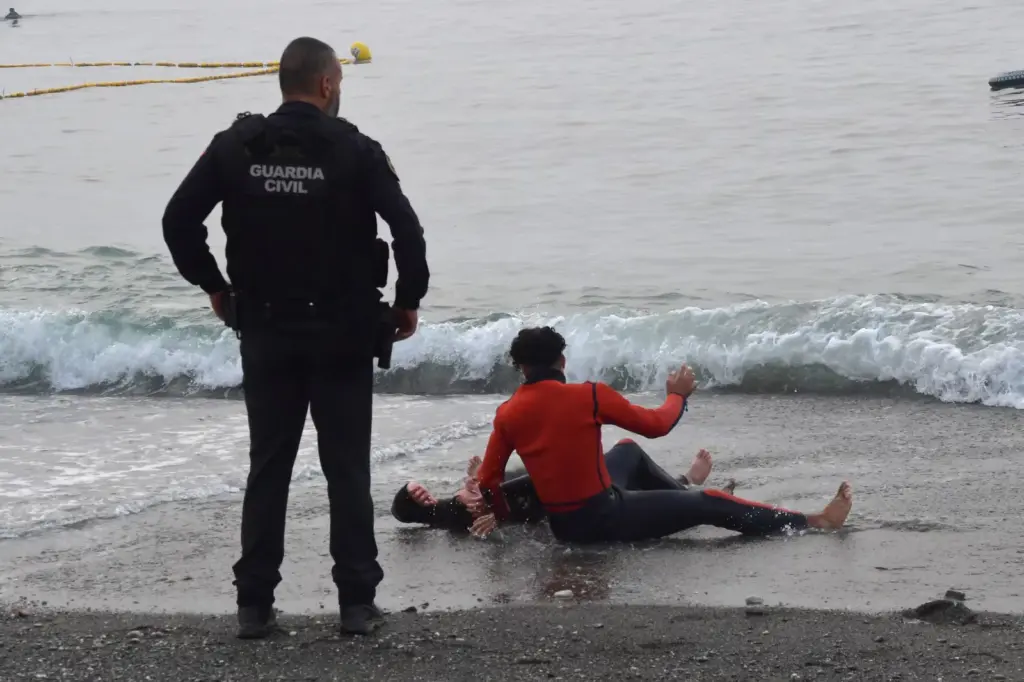
Cenif reconstructs for the judge the chronology of what happened on July 30. At 8:00 in the morning, there were already young people crossing “in a trickle.” By 9:30 in the morning, according to its report, there was a “progressive increase of trickle entries by swimming,” which resulted in their “accumulation” in the police control area of Tarajal. At that time, according to Cenif, there was a “progressive increase of trickle or swimming entries” of young Moroccans “equipped with wetsuits.”
National Police agents indicate in the document provided to the investigating magistrate that at 11:00 the “accesses open” and there is an “overflow” of police control. Here the profile of those entering changes: if before they were young people crossing by swimming, equipped for a crossing, people of older age and even entire families with children begin to enter. The border overflows.
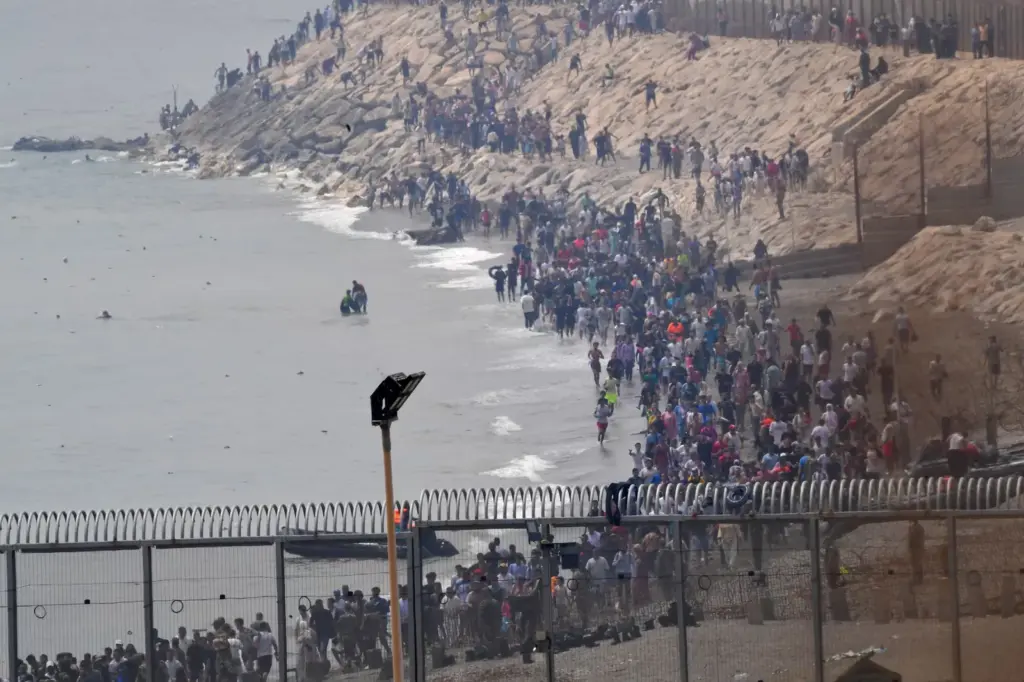
According to the Police, at 12:15—i.e., 15 minutes after the Army warned of a massive jump—“the massive entry continued.” Photographs from that day, taken by EL PAÍS, show at that hour hundreds of people along the breakwater marking the border between Ceuta and Morocco.