The murder of Naín Andrés Pérez, alias Bendito Menor, and Rosa Angélica Tarazona, alias La Bebecita, both members of the Autodefensas Conquistadoras de la Sierra Nevada (ACSN), while they were sleeping in a mansion in Riohacha, opens a debate about the most appropriate way to combat organized crime, and a fundamental issue: territorial governance.
Read more Sheinbaum’s Administration Moves Away from López Obrador’s Hydrocarbons Policy
First, it is worth remembering that the death penalty is prohibited by the Constitution in its article 11, which states: “The right to life is inviolable. There shall be no death penalty.” But this is one more of our legal fictions, since the death penalty is applied almost daily by criminals of all kinds. The serious thing is that it is also done by the State, and that undermines its legitimacy, which does not rest on military power or cruelty, but on moral power.
William Ospina, in his column last Sunday, Repeating a failure?, reminded us that when he was a child, the army had the habit of displaying corpses after operations against Desquite, Tarzán or Sangrenegra. And it is true. We experienced that reality in Tolima, one of the regions most affected by the Violence. The cases he cites are not the only ones; the list is long, and Chispas should be included among many others.
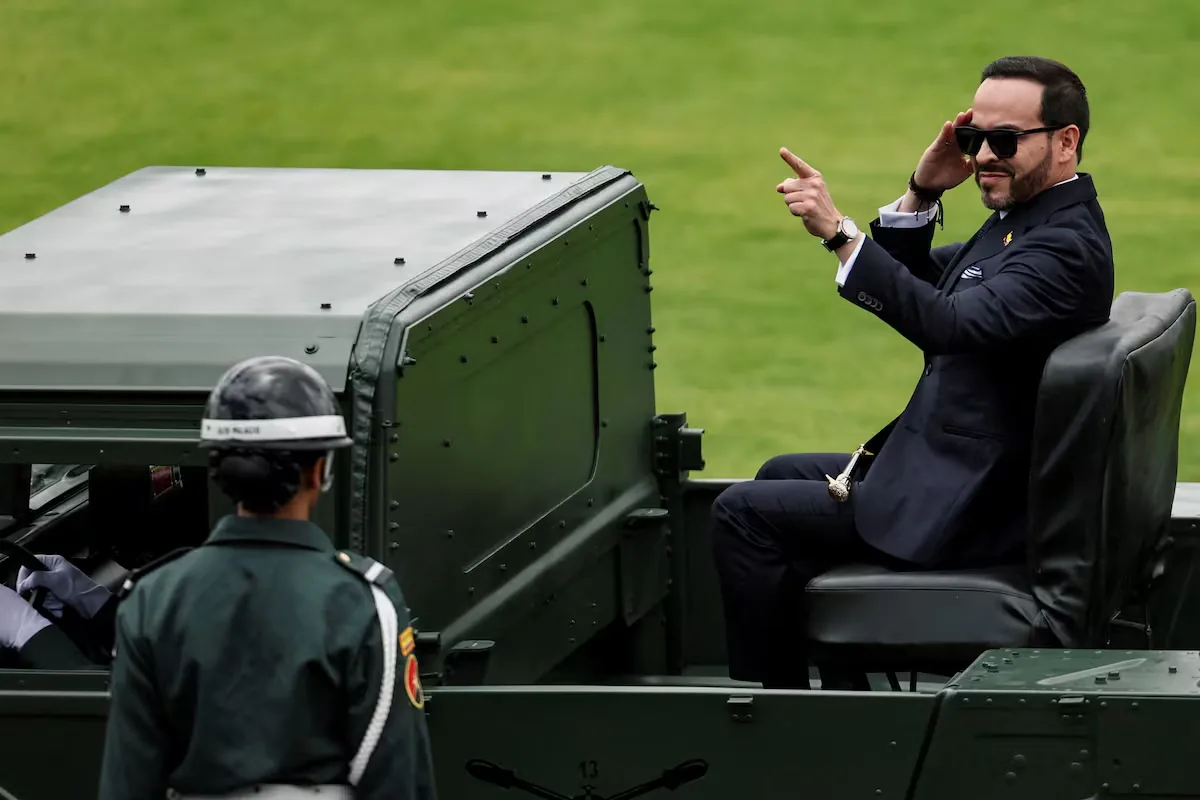
Ospina is right: there is nothing new in what De la Espriella does. Anyone who has taken an interest in what the liberal-conservative Violence was knows how ruthless and bloody it was, and how peace was built: not on the basis of justice, modernization of the country, and strengthening of democratic institutions; it was based on a pact of impunity and a heap of corpses and millions of victims. The result is what we have today. By means of repression, De la Espriella will need more than four years. Francisco Franco required 36 years to impose the peace of the tombs in Spain. Parading among the corpses like a Roman emperor is communicatively effective — it projects an image of a strong and merciless man — but it does not lead to demobilizing anyone in a country accustomed to violence, nor does it build security. One should not be deceived.
In 1954, General Gustavo Rojas Pinilla, after outlawing the Communist Party, declared eight municipalities in the Sumapaz region as military operation zones and established “work centers,” which were “corrals in the sun and water fenced with electrified barbed wire,” where people accused of being communists were taken. The following year, the bombing of Villarrica (Tolima) occurred, where the Army, with U.S. support, dropped at least fifty napalm bombs. Later, during the government of Guillermo León Valencia, bombings against the “independent republics” in southern Tolima took place. From those operations, the FARC were born, in Planadas and Rioblanco.
Uribe and the vibrating Arauca
The manu militari recipes have been tried several times throughout Colombian history. Newly inaugurated, President Álvaro Uribe (2002) launched a military offensive in Arauca and went there to personally direct the operations. After declaring a state of internal commotion, he declared Rehabilitation and Consolidation Zones and strengthened seven Army battalions (trained by U.S. military) to protect the Caño Limón-Coveñas pipeline, through which 230,000 barrels of oil circulated daily. He ordered a massive confinement in Saravena and arrested more than 2,000 people, accused of rebellion. In the end, only three or four were sentenced. That happened almost 25 years ago, and that department still does not see progress, peace, justice, or democracy. The ELN remains alive along with other illegal organizations that live off illicit economies.
Governments have oscillated between total war and peace talks, negotiating compliance with the law. The pendulum has moved between these two poles. What we are seeing today is the transition from Gustavo Petro’s total peace to Abelardo de la Espriella’s total war. It is the same old story. What has never been attempted — or perhaps a little, during Virgilio Barco’s government (1986-1990) — has been to strengthen local democracy, promote and guarantee citizen participation, build the State in the regions, and improve justice.
Read more Galápagos, the paradise under criminal siege
Decentralization and territorial governance
De la Espriella has spoken about decentralization. And when he mentions that, I rejoice, and even get hopeful. However, to date, it has not gone beyond announcements and symbolic actions, such as taking office in Cali or working from Barranquilla. And this, obviously, can be whatever he wants, except decentralization. Thus, the issue of territorial governance will remain unresolved. Inequalities between regions will deepen, and the place of birth will define the fate of millions of people. What happened in Riohacha is something Escalona immortalized in his vallenato Almirante Padilla. The State there almost does not exist, and when citizens see its face in that land — where smuggling is born — it is to impose itself by force, like Padilla in Puerto López.
Killing a poor devil like Bendito Menor is what has been done for decades, almost two centuries. If a virtual cemetery were made with the graves of all the rebels, wrongdoers, and bandits “taken down” or “neutralized” by the State, several gigabytes would be needed. Since the times of the Conquest and the Colony, good, bad, and very bad people have been killed from power, and almost nothing changes. How positive it would have been for the Social Rule of Law if, instead of killing Pérez in Riohacha — who did not die in combat — he had been arrested, prosecuted, and sentenced for his crimes! When power is equated at the lowest level and overflows its own limits, it loses legitimacy. The statement by the Ombudswoman, Iris Marín Ortiz, about this case is important and relevant.
During the Conquest and the Colony, many people were taken down by the Crown. La Gaitana in the current department of Huila went down in history for her resistance in the 16th century, after leading a rebellion against Spanish rule around 1539. She had a more than legitimate reason: her son was burned alive by order of the conqueror Pedro de Añasco. Benkos Biohó was an enslaved African king who escaped at the end of the 16th century and founded the Palenque de San Basilio. He led attacks against Spanish commissions trying to recapture slaves. For the governor of Cartagena, he was the most wanted “wrongdoer,” and he was finally betrayed and executed in 1621, just like Galán, the comunero.
Without establishing equivalences between those characters and a contemporary criminal leader, it is worth remembering a historical constant: power tends to simplify conflicts, turning its adversaries into enemies who must be eliminated, and that does not mean a stable solution.
De la Espriella was proud of taking down Naín, as if he had just won the lottery. The truth is that it is a Pyrrhic victory. This was shown by the farewell tribute they paid him on the day of the funeral in Riohacha, which reminded me of Pablo Escobar’s funeral in Medellín.
Pérez is neither the first nor will be the last to fall. Everything seems to indicate that the death penalty will continue to be applied despite being constitutionally prohibited, and that territorial governance problems will continue to be postponed.
Read more Julia Holter and earthly love in her album ‘Materia’: “I feel like a child inside”