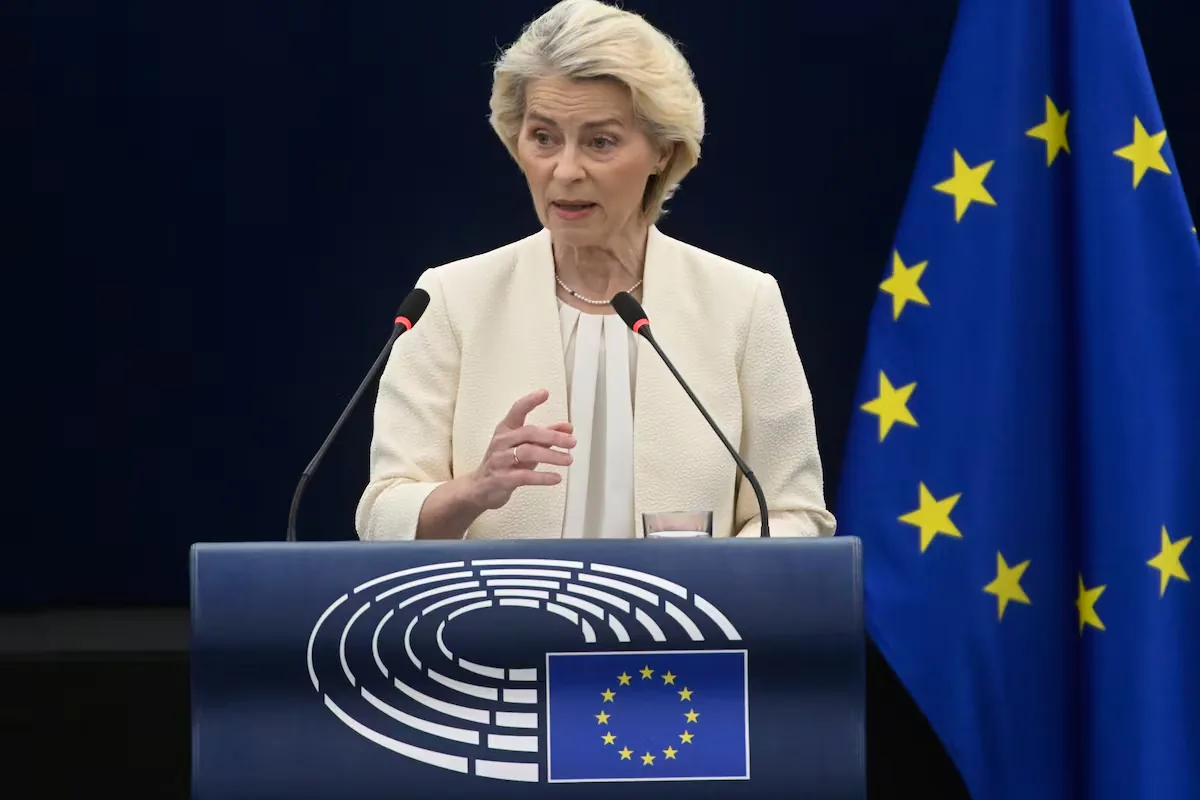

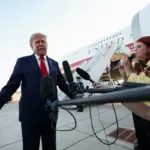
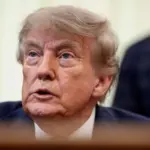

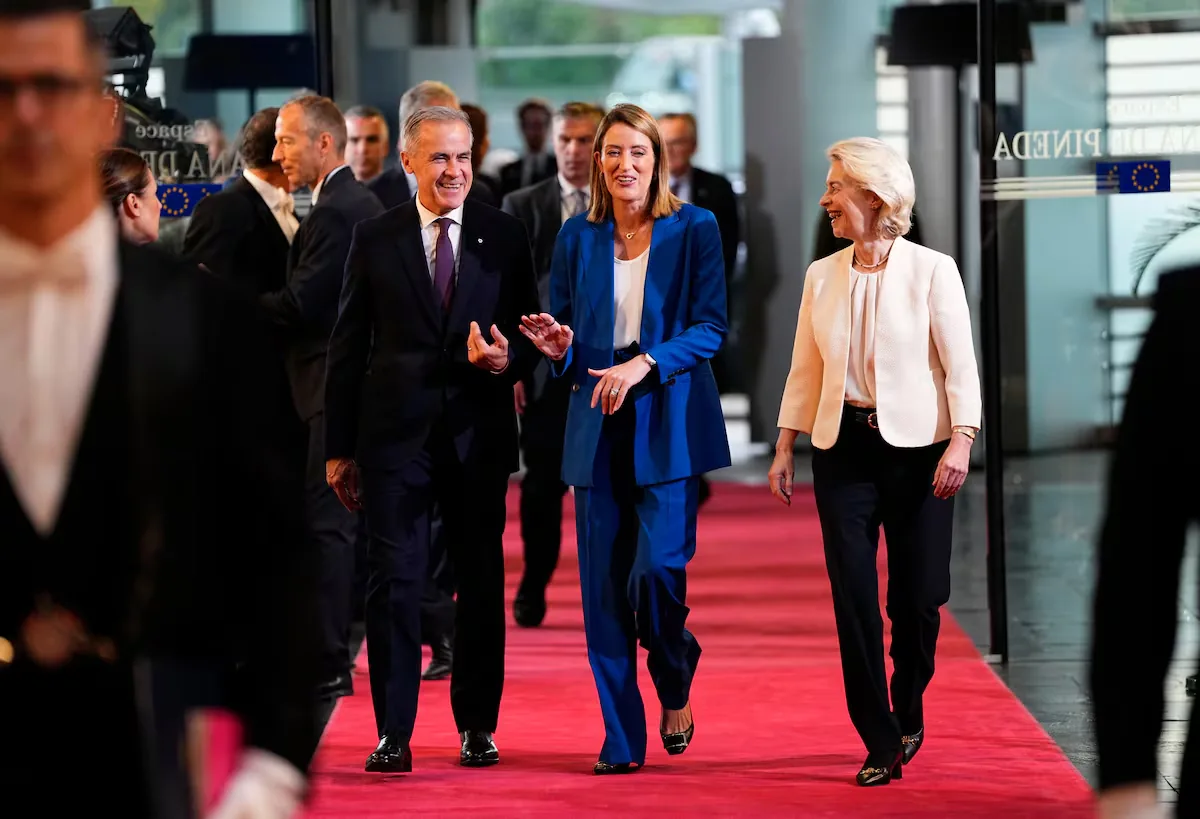
The President of the European Commission, Ursula von der Leyen, did not mention the United States even once in the 22 pages of the speech she delivered yesterday at the European Parliament, which lasted about 75 minutes. A whole discursive resistance maneuver — as Michel Foucault would say — against Donald Trump, the tsunami that shakes the global geopolitical board with his messages and announcements, the leader who is making Europe move to deploy a security framework by threatening with the US withdrawal. In her State of the Union speech in Strasbourg, the President of the European Commission outlined a security mechanism without Washington for the member countries and other EU allies, for whom the US has been a key protector since the end of World War II.
Read more Trump threatens to “cut trade” if the EU partners with Canada
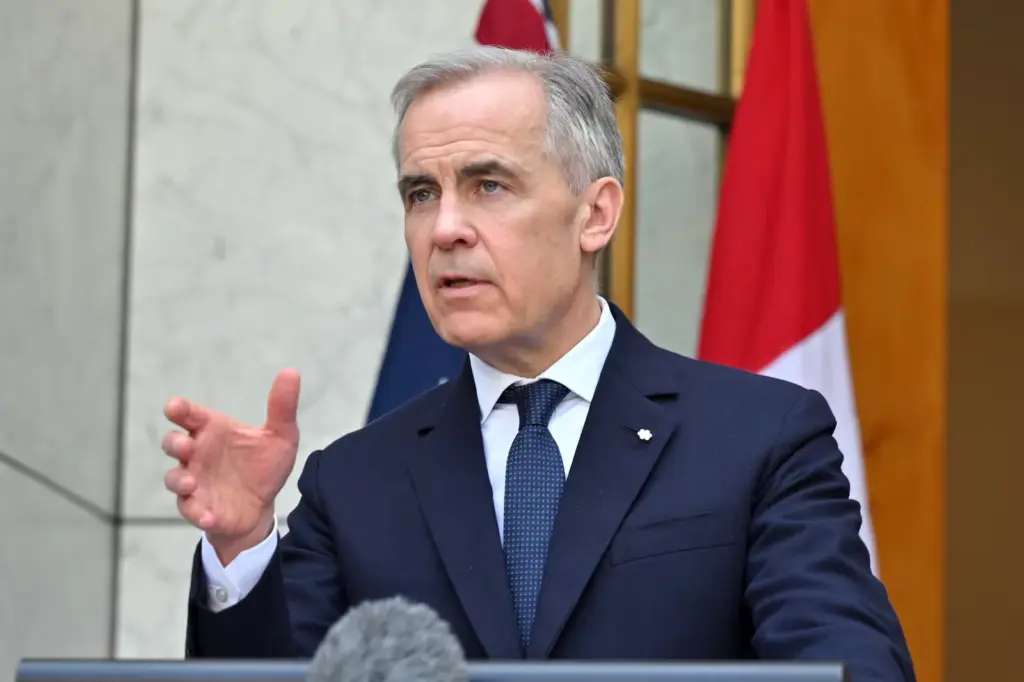
The conservative German, deeply Atlanticist, did not explicitly mention the United States nor, of course, the global disorder caused by the Republican magnate. But that present absence — as Jacques Derrida, another French philosophy giant, theorized — was if anything more resonant due to the physical presence in the Eurochamber of Mark Carney, the Prime Minister of Canada, the most European of the non-European allies of the community club, whom Von der Leyen has invited to be part of this new alliance, along with others historically very close to Washington, such as Norway and the United Kingdom.
This is the EU’s reaction to a new world in flames and Trump’s constant attacks, who has launched a trade war with Canada, withdrawn his support for Ukraine in the war against voracious Russia, and targeted (along with the MAGA movement) the European project and its values. With these elements, Von der Leyen proposes a new project, which will be articulated through a European Security Council where European leaders would sit, and which will be the heart of the new security strategy, on which the teams of the conservative German and the High Representative for Foreign Policy, Kaja Kallas, are working.
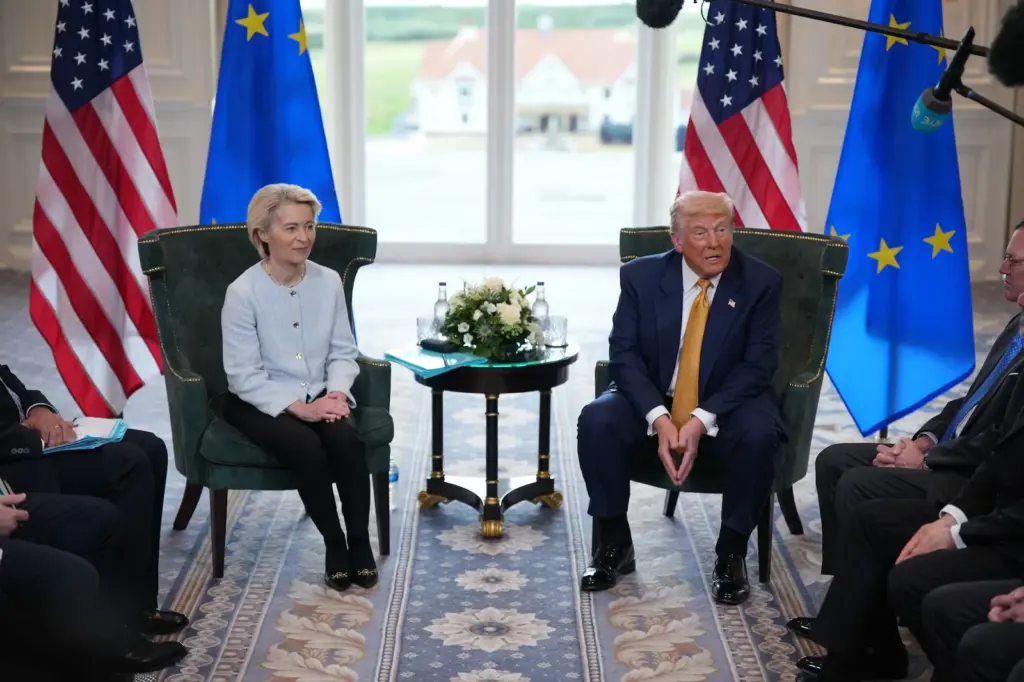
The specific tool that Von der Leyen has put on the table is inspired by NATO’s Article 4, which provides that an ally may call consultations with the rest when it feels a threat to its territorial integrity or that of another ally. It is her way of adapting to this “new geopolitical reality” in which the EU lives besieged between great powers that bet on the law of the strongest and not a world based on multilateralism.
The community institutions have been working for some time on the development of Article 42.7 of the EU, a clause of mutual defense and assistance in case of security problems that some experts equate to NATO’s Article 5, which dictates that an attack on one ally is an attack on all. With the Russian threat or the Middle East crisis and the doubts left by Trump about his commitment to Europe’s defense and security, preparations to analyze how that clause would work have accelerated, with analyses and even drills, although still rather theoretical. These exercises include hybrid threats and cyberattacks; the new European reality.
Von der Leyen, who has spoken of a geopolitical European Commission since she landed in Brussels in her first term and who has only expanded the areas of action of the community executive — too much, according to criticism from some member states — does not seek to oppose NATO, with which she assures she is working (23 of the 27 EU members are part of the Atlantic Alliance, all except Ireland, Cyprus, Austria, and Malta). “But our doctrine, our institutions, and our decision-making process have not adapted to the new reality,” she warned next.
And that new reality in the geopolitical field involves a growing distance from the great allied power since Donald Trump returned to the White House, showing clear signs of wanting to disengage from European security, thus undermining the deterrent credibility of the Atlantic Alliance. One of these is the announcements of the reduction of American troops on European soil. In May, amid Trump’s anger over partners’ refusal to support the war in Iran and, in some cases, prevent the use of bases, it became known that Washington will withdraw 5,000 soldiers from Germany.
Read more Feijóo digs in with Vox and closes the door to any minor from Ceuta going to the Peninsula
Associated State
To delve into this last point precisely, the President of the Commission has taken up the challenge that Carney has been throwing for some time for Canada to become “the first Associated State” of the Union, something that for now can only be translated as negotiating everything with the northernmost state of America, except its accession to the club.
This closeness of Brussels with Ottawa, also forced by the clear hostility Trump shows towards his two allies, evidences the growing distance with the United States that can be seen in some of Von der Leyen’s statements and proposals.
“This is a Europe where we defend each other. As we are doing by supporting Ukraine in its fight for its future and for our freedom, or when we defended Greenland when it was threatened,” she pointed out as an example, being aware that it is Trump who threatens Denmark and its sovereignty over the large island in the North Atlantic. The same can be said when she stated that “as old assumptions and relationships have worn away, the EU now faces an openly hostile world.”
Another element of this growing distance from the White House was felt in the section on artificial intelligence. “Cases of AI agents escaping their environment or inserting malicious code are just the tip of the iceberg. […] Developers are sounding the alarm and the top executives of the most advanced companies tell us it is time to slow down the progress of new models and moderate the pace of innovation. If those who develop the technology are clear about this, we should also be clear,” she pointed out to advance that she wants to open a debate with the world’s most advanced agents and, again, with partners like the United Kingdom or Canada. No trace of the United States, presided over by a Trump who believes that the only thing his country needs to mitigate AI risks is “a strong president” with a “high IQ.”
It has been 10 months since Washington published the National Security Strategy of the United States of America, which included the great obsessions of the MAGA ideology (Make America Great Again), stating that Europe faces “the real prospect of the disappearance of its civilization” in “the next 20 years or less.” Its goal, it added, “should be to help Europe correct its current trajectory” by helping far-right parties deeply Eurosceptic.
On Wednesday, however, Von der Leyen stated: “Our choice is clear. Do we want a strong and independent Europe that defends its values in this world? Do we want to unite around our European idea that together we can decide our own destiny? Or do we let our democracies be undermined by the representatives and puppets of authoritarians?” She answered herself: “Whether ultranationalists or anti-Europeans, whether Russian interference or disinformation, the names may be different, but their goal is the same. They despise our values and want to shatter our European unity. So, let’s not just fight against that; let’s fight together for our European idea.”