








The American artificial intelligence (AI) giant Anthropic has officially started its operations in Spain, establishing a subsidiary based in Madrid. With this opening, the company led by Dario Amodei expands its European network, which already has a presence in London, Dublin, Paris, Zurich, Munich, and Milan. The move comes at a time when the company, which competes with firms like OpenAI and SpaceX, is working on its IPO, which could be the largest in history, and amid uncertainty in the tech industry due to the request from major AI companies, including Anthropic itself, to slow down development because of security risks.
Read more Von der Leyen announces a security plan for Europe without the United States
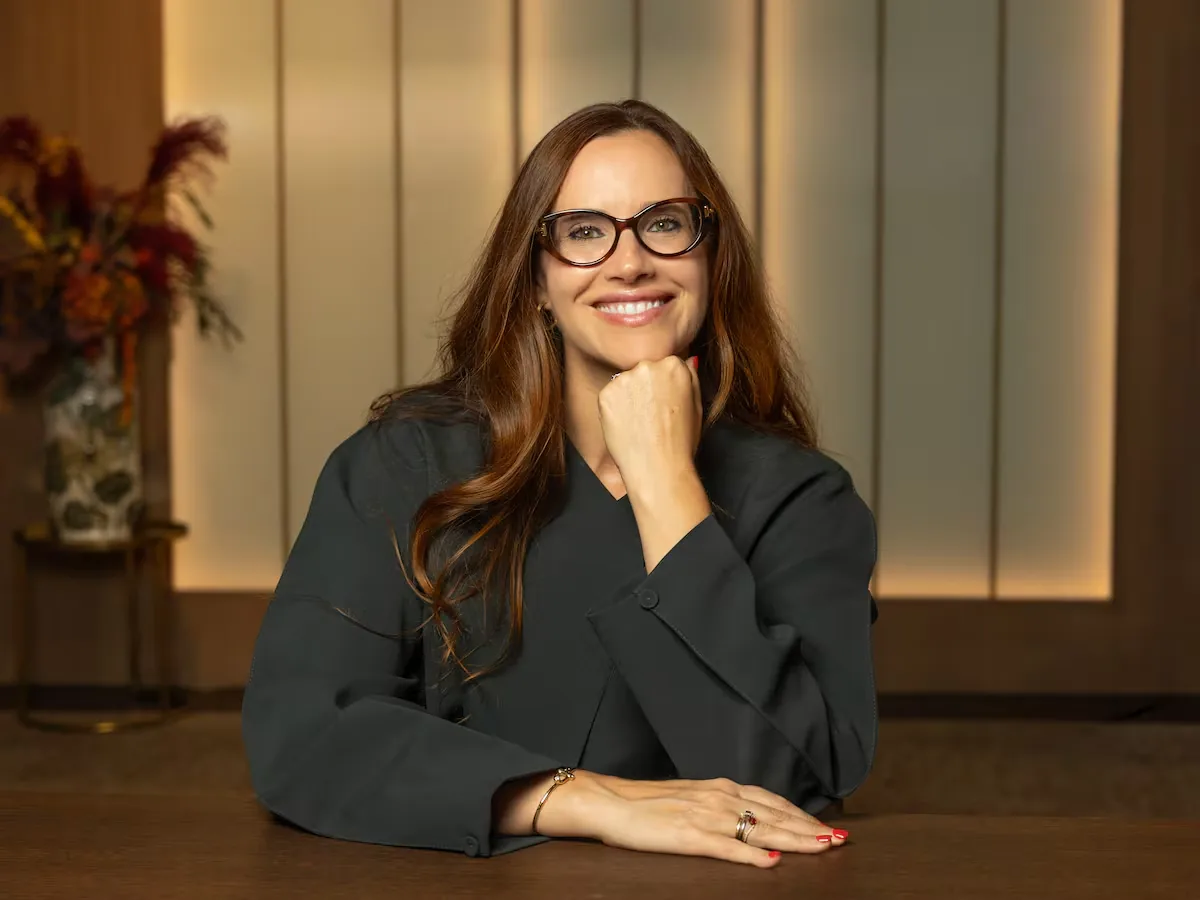
For this venture into the Spanish market, the company has appointed Cristina Pitarch as the head. The country manager is a veteran executive expert in cybersecurity, who has worked at Salesforce, Informatica, and Google. In recent years, she has been the general director of Google Cloud Security in Europe, Africa, and the Middle East.
In a conversation with this newspaper regarding the current public debate on AI, Pitarch points out that the reflection brings real advantages. “We need to see everything to plan it well, and right now our request is to slow down. This is one of the issues we are taking very seriously and that we will do, regardless of what other companies may do,” she says.
The company has seen in recent months that AI capabilities have accelerated drastically. The models cause more serious examples of misalignment, that is, incidents like those seen in the cybersecurity sector. “Slowing down gives us the opportunity to do it right. We will give access to external evaluators, even at the employee level, so they can verify that these models are safe and report problems,” she says.
Pitarch believes AI companies should work with democracies and advocates for a type of foundation that establishes what can and cannot be done. “Right now we are private companies working without any kind of regulation,” explains the executive, who points to the need for rules to be established more quickly and with greater coordination.
In her opinion, the best option would be for both the United States and all democratic governments to coordinate with all authoritarian governments and all those developing AI. Pitarch explains that such initiatives can be taken innovatively and accelerate regulation so that safety standards are set instead of simply competing on price. “I think the simpler and more manageable the rules are, the better,” she says.
The Spanish option
Regarding the idea of opening in Madrid, the executive assures that there are strategic motivations. “Spain is one of the most important AI markets in Europe. We have a long-term commitment and want Madrid to be that strategic center for the Peninsula, for southern Europe, and for all Spanish-speaking markets,” she states.
Read more Trump threatens to “cut trade” if the EU partners with Canada
The executive comments that AI adoption is growing very rapidly in Spain. “We have internal figures that say AI is used 2.7 times more in Spain than expected for its population. We are above Germany and just a bit below Portugal, so there is still room for growth,” says Pitarch. Anthropic highlights that among the Spanish companies already using its assistant Claude are Santander, CaixaBank, BBVA, Telefónica, Konecta, Amadeus, Indra, and Ferrovial.
Anthropic’s plan is to help companies move from pilot tests to scale, not only large companies but also SMEs and start-ups. The executive states that Anthropic’s intention is to make this AI useful and accessible.
Internally, Anthropic will have a local center in Spain that is not just a simple sales point. The firm has a dedicated team combining commercial, support, and advisory responsibilities, as well as a team of technical experts in applied AI. The intention is to add more commercial positions, boost partnerships and agreements with institutions, research centers, and the entire start-up ecosystem, which is currently thriving in Spain. Additionally, the firm seeks local talent. The company has collaborated with ISDI Business School to support its Ambassadors initiative. The so-called Claude ambassadors organize local events to bring creators together and shape the future of the tool. The most recent event in Madrid gathered over 350 attendees.
The executive believes that Spanish organizations are looking for AI that improves productivity, supports their teams, and provides practical results. And not only in searches, translation, or use by students, which are the most basic, but also in analysis, programming, and internal knowledge. “We are seeing teams from very important companies using Claude in large-scale projects in sectors such as banking, infrastructure, or travel. We want to continue focusing on well-made AI, in specific cases, with human supervision. We focus on companies, always having a security team alongside the product,” says Pitarch, who adds that “what Spanish companies need is not just an AI system, but a secure AI system.”
In this regard, she argues that Claude offers a lot of help so cybersecurity teams can find vulnerabilities, and insists that companies must have a proactive role to detect holes in time. Since Claude and the latest versions were introduced, detection times have massively decreased. “In the end, cybersecurity is always about staying ahead of what is coming because the bad actors are also using AI.”
Regarding Anthropic’s impact on the software industry, Pitarch recalls that in less than two years, AI has gone from the chatbot where everyone asked a question to see what it answered to systems developed through agents. Currently, Claude writes more than 80% of the code produced, whereas at the beginning of 2025, the percentage was in the single digits. “Engineers are publishing eight times more code today than in 2024,” she notes.
Read more Feijóo digs in with Vox and closes the door to any minor from Ceuta going to the Peninsula