


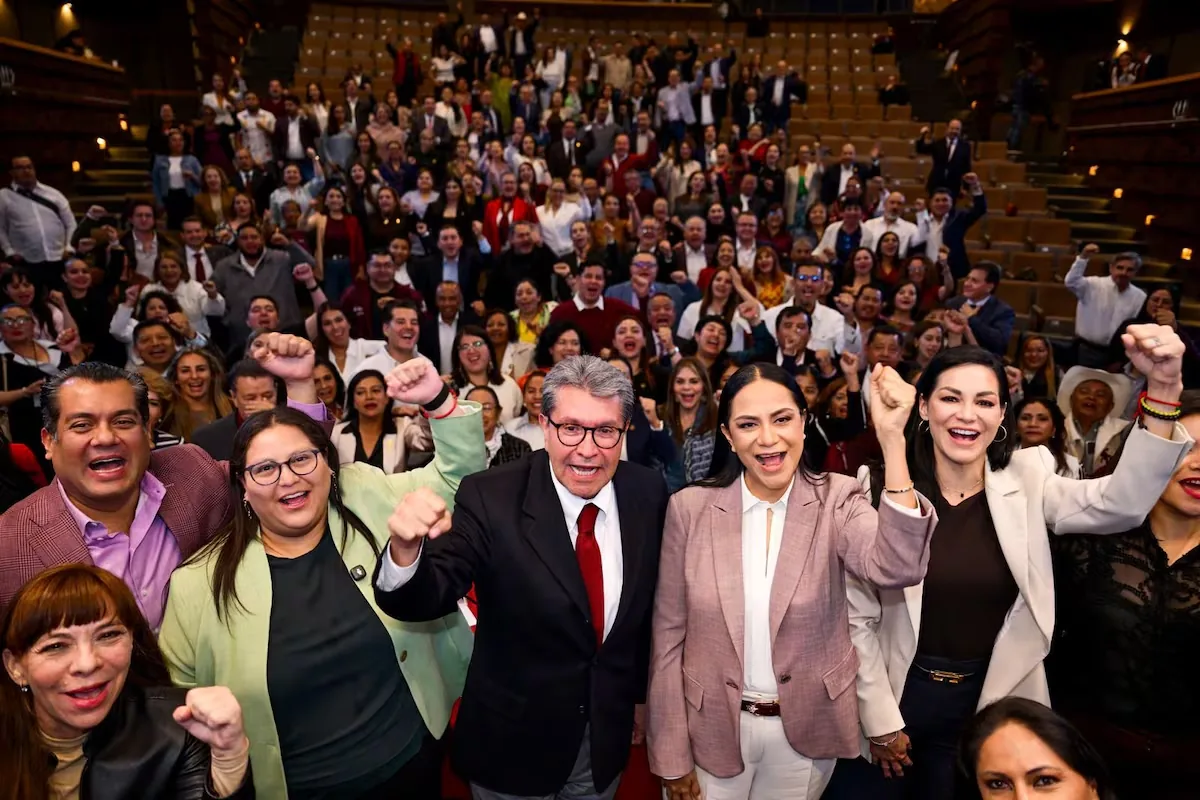
The Morena party primaries have continued their course. So far, there is a white smoke signal in 10 of the 17 federal entities where elections will be held in 2027. The constant in the ten resolved cases foreshadows a power-sharing model that will rest on the current governors of the States with the responsibility of successfully securing the election of their successors. What does that imply?
Morena has been selecting candidates for months for the process in which a majority of the Mexican States will renew their governorships. The June 6 election is of seminal importance. The party in power must not only demonstrate that the wear and tear of governing does not threaten its hegemony, but also seeks to establish a ritual in which internal ambitions do not overwhelm it.
After the 2012 electoral defeat, Andrés Manuel López Obrador left the Party of the Democratic Revolution to create his own electoral vehicle, the National Regeneration Movement; Morena competed for the first time in 2015. Before 2018, Morena had not won a single one of the 32 governorships. It won its first five just eight years ago. The following year it added two more: Puebla and Baja California.
In 2021, the great Morena landslide occurred. Midterm elections in Mexico usually upset the incumbent government. In fact, in that year’s renewal of the Chamber of Deputies, the opposition regained seats to the point of becoming a brake on López Obrador’s constitutional reforms. That opposition victory was partial: Morena secured 11 of the 15 governorships at stake.
Part of the legislative defeat six years ago happened in Mexico City, then governed by Sheinbaum. Three years later she would win the presidential election, Morena would add Yucatán to its string of entities won between 2018 and 2024, in the Senate they formed a qualified majority by recruiting PAN and PRI members, and in the Chamber of Deputies they maneuvered to have an unbeatable overrepresentation.
In short, despite the legislative setback of 2021, Morena’s winning curve so far is steep. According to several polls, that momentum has a tailwind heading into the upcoming election, hence selecting the best candidate for each state competition demanded Morena processes that increased chances of victory and averted serious mistakes.
This conundrum is further complicated by unprecedented factors for this party formally born in 2014. From that year until 2024, López Obrador was the balancing point in Morena. Although he suggested that candidate selection should rely on polls and even raffles, no one ever disputed that a kind of Tabasco Holy Spirit illuminated key, complex, or contested candidacies.
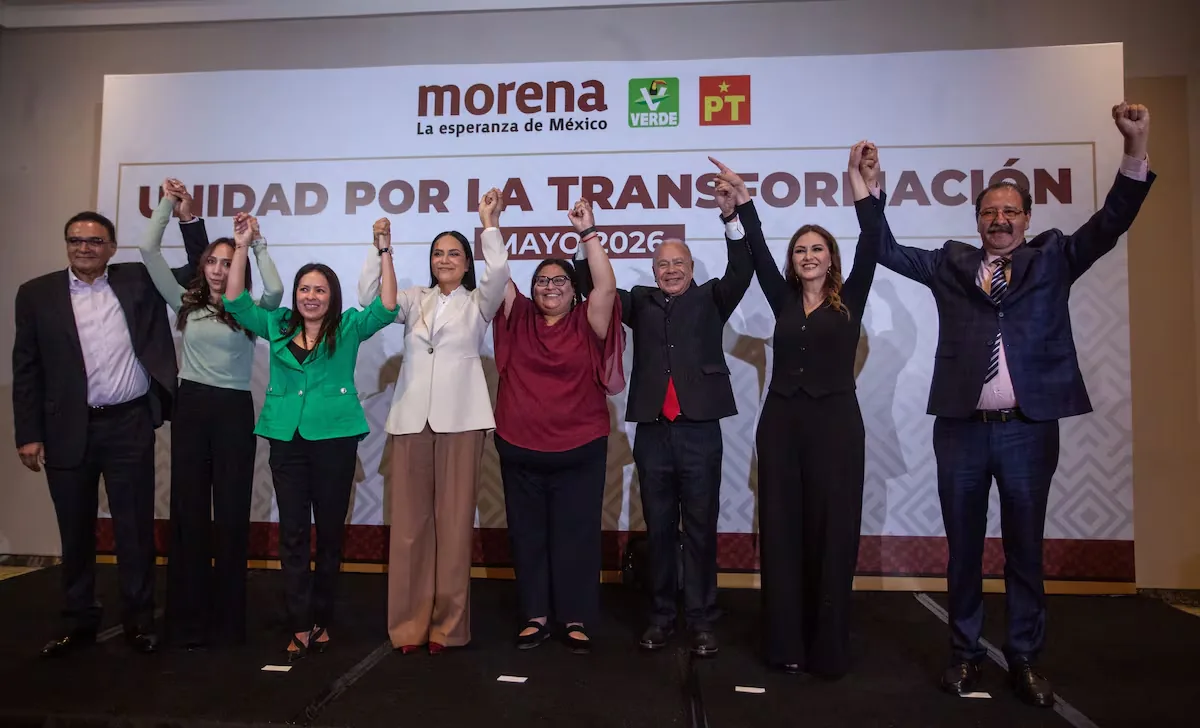
Morena has had to walk — at least formally — without its founder since 2024. The leadership that the former president left in that party was replaced months ago by President Sheinbaum, and the duo she appointed — Ariadna Montiel and Citlalli Hernández, both as Obradorist as Claudistas — have managed the screening that by this week has already revealed more than half of the candidacies.
The process has not been free of controversy. The leadership promised that from polls, the possibilities and viability of the people who registered would be weighted; these surveys would not only measure name recognition but also negatives and/or room for growth. Or so it was understood, because Morena has refused to disclose those studies with which it has already selected ten candidates.
A preliminary assessment of the selection is that protests are few — notably that of former Acapulco president Abelina López, who after learning she lost disqualified “paper polls” because she “has the people,” a threat that remains to be seen if it will lead to risky rebellion. Another novelty is the dissatisfaction of the Labor Party, which has boycotted several state cases.
But the most notable is Morena’s drift to base on its governors the possibility of retaining the States they govern. Although part of the public conversation has tried to deduce whether it is President Sheinbaum or former President López Obrador who is placing candidates, most of the reveals correspond to people preferred and promoted by the current state leaders.
The winning profiles in Michoacán, Quintana Roo, Baja California, Campeche, Colima, and Zacatecas are successors of the respective governors.
Read more Trump’s blow to White House correspondents: “It is a veto to the free press”
There are other entities with their own characteristics that, without disputing what was said in the previous paragraph, have their own logic: in Sinaloa, a former senator who has distanced herself from former governor Rubén Rocha will compete but was neither nor is his staunch adversary; while in Guerrero Félix Salgado Macedonio, the governor’s father, could not run due to the anti-nepotism veto, but will be a protagonist no matter what. Querétaro and Aguascalientes belong to PAN, so the rule does not apply.
Candidacies remain to be defined in Baja California Sur, Nayarit, Sonora, and Tlaxcala, with Morena governments; also San Luis Potosí where the governor is from the Green Party and resists Claudia’s order not to nominate relatives; and finally Chihuahua and Nuevo León, from the opposition. In a matter of days, we will see if in the first four cases it is confirmed that the favorites of the governors are anointed.
Morena is, as its name recalls, a movement. Its genetics is the conquest of power. Within electoral competition, it plays not based on the idea that it can win or lose, but with the premise of gaining more spaces and not letting go of those it has. Its decision-making prioritizes a mission it considers historic: the opposition cannot threaten the milestone of forging a unique government model.
That the candidates are people of the governors commits the former to resounding victories and forces consideration of the extent to which those authorities will divert public funds to achieve a party objective. The victory, moreover, would have a malicious outcome. Governor and candidate will forge a relationship that could be the seed of a trans-term impunity pact.
It will be disguised as a promise of continuity when in reality it opens enormous risks that the accounts of the outgoing official remain sealed, unreachable in terms of accountability for the successor who will owe everything to their sponsor.
And at the party level, it cancels the renewal of internal cadres, punishing militants of the three ruling forces who are not loyal to the rewarded governor, which necessarily leads to a new risk scenario: the emergence of strongmen.
It was not the president who placed the candidates, and it can even be said that the hand of the former president would not be obvious either. It remains, however, to see the games that people like Adán Augusto López or Andy López Beltrán may have played in the shadows in each reveal.
But giving the blessing from the National Palace to the official candidates at the state level will end up becoming a source of problems for the president, who will have to put on a good face to the abuses and excesses of those who, without acknowledging that their impunity is at stake, will abuse the excuse that it is a presidential task to carry out an election that Morena cannot lose.
In the scenario of winning, that group of governors will constitute a power within Morena, one in which its members will feel as empowered as they are unpunished to think about next moves. If they establish themselves as the strong people in their States, more than one will allow themselves to harbor presidential dreams, and at least want to act as factors in the 2030 decision.
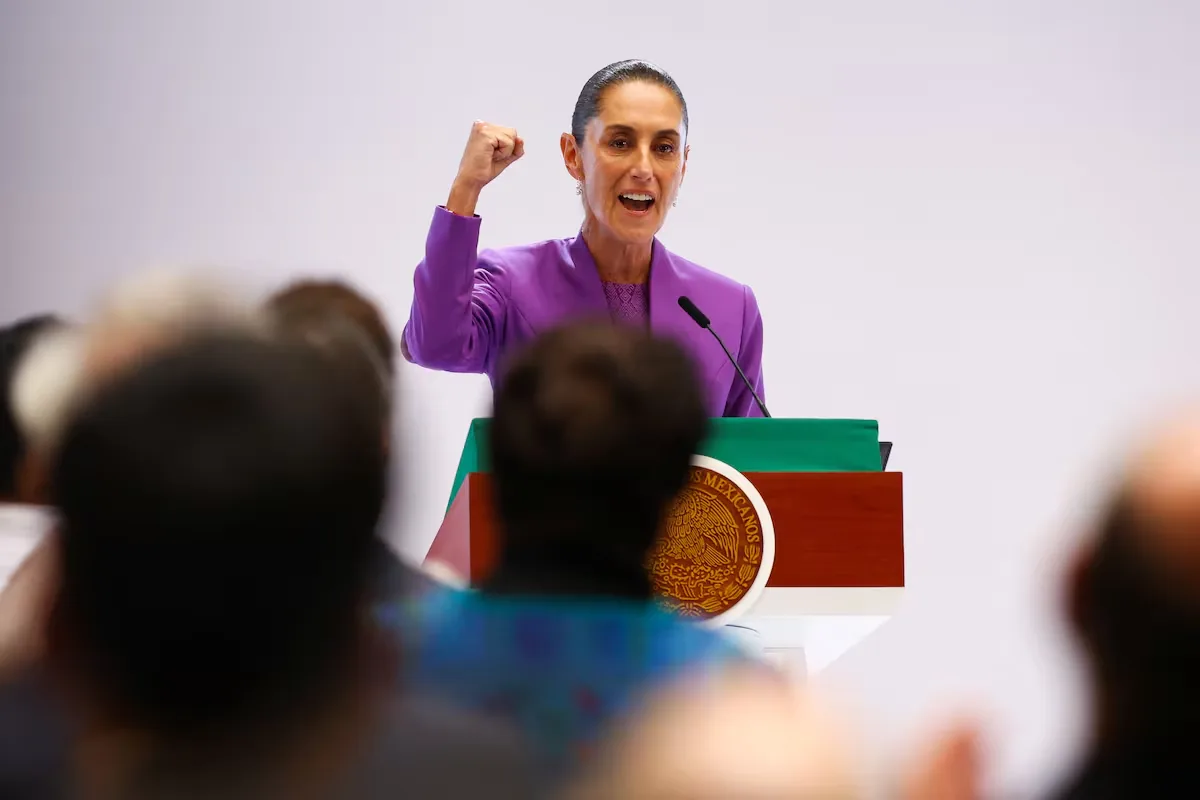
Sheinbaum has decided to delegate the responsibility of winning the election to the governors. It is a reward that can encourage corruption and the emergence of strongmen. What may prove effective electorally could also be ruinous for Mexico’s democratic governance, and even for Morena’s internal life and maturation.
Read more The PP summons Marlaska, Robles, and Albares again in the Senate