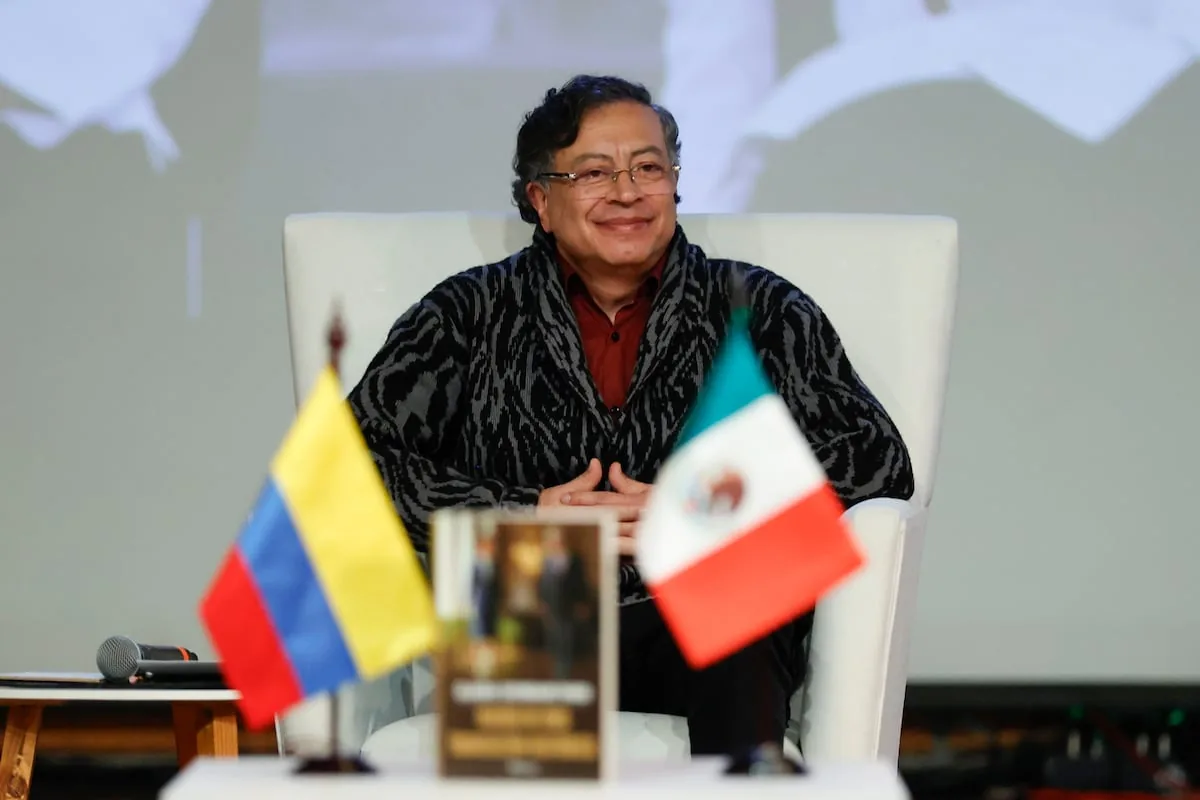








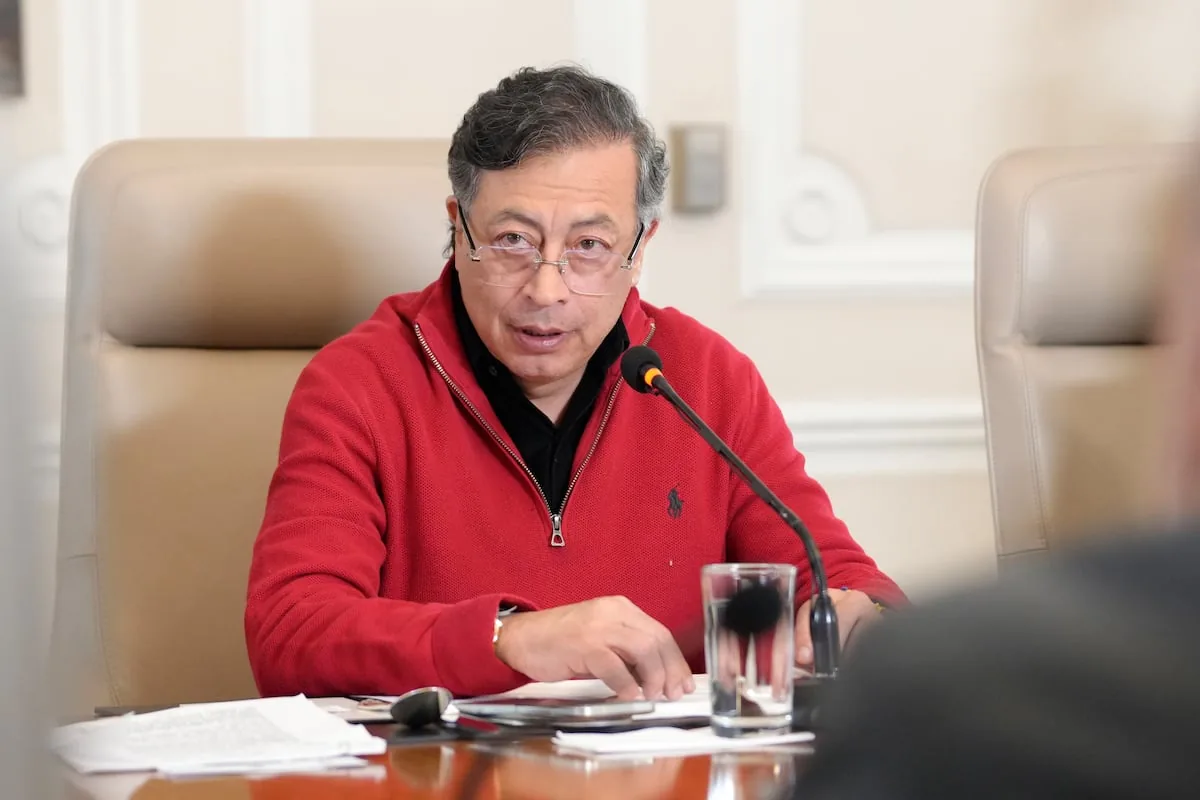
The president of Colombia, Gustavo Petro, announced this Tuesday his intention to increase the minimum wage in the country if the Bank of the Republic raises interest rates. The possibility was revealed during a council of ministers in which the president said: “If the board [of the Bank of the Republic] continues with that nonsense, then we will raise the salary again.” The president based his idea on the fact that, according to the Constitution, the minimum wage must be “vital and mobile” and on his intention to “protect the economy” from the increase in rates which, in his opinion, has a contrary effect.
Read more Adif will reopen freight rail traffic through the Rubí tunnel on the night of April 28
Petro’s announcement maintains the tension between the Government and the Issuer, an entity independent of the Executive that, nevertheless, participates in its board of directors with the presence of the Minister of Finance. The differences between the head of state and the Bank of the Republic date back to the beginning of his mandate, when Petro began to insist on the need to lower interest rates. “Interest rate hikes put the entire productive economy at risk,” the president said back in 2023. The bank, however, opted for a rigid stance in recent months with the intention of keeping inflation at bay: since April, it maintained the interest rate at 9.25%, but increased it last January to 10.25% to raise it again in March to the current 11.25%.
That decision to raise the price of money to 11.25% sharpened the tension between the Government and the Bank of the Republic. On that day, March 31, the Minister of Finance, Germán Ávila, participated in the meeting where the seven members of the Bank’s board defined the interest rate increase. Faced with the imminent decision to raise it, Ávila withdrew from the meeting, announced the increase almost an hour before the central bank’s official press conference, and announced the Government’s break with it. “We decided to withdraw from the board of the Bank of the Republic and establish a significant distance between the Executive and the body. […] We cannot be the architects of a monetary policy that only responds to representatives of the financial sector,” said the minister.
Read more The Supreme Court accepts Ayuso’s appeal to block Pedro Sánchez’s immigrant regularization
For his part, the director of the Bank of the Republic, Leonardo Villar, has responded to the accusations and, in fact, this very week declined to participate in a forum on monetary policy organized by the Government. In the letter in which he rejected the invitation, Villar also criticized Minister Ávila: “In your public interventions, you have gone further and accused us, me and several of my colleagues, of adopting decisions aimed at benefiting bankers. This is an unfounded accusation and openly contrary to the truth,” he stated. He added that these accusations hinder a fluid dialogue that would allow the mandates assigned to the Bank of the Republic by the Constitution to be fulfilled.