






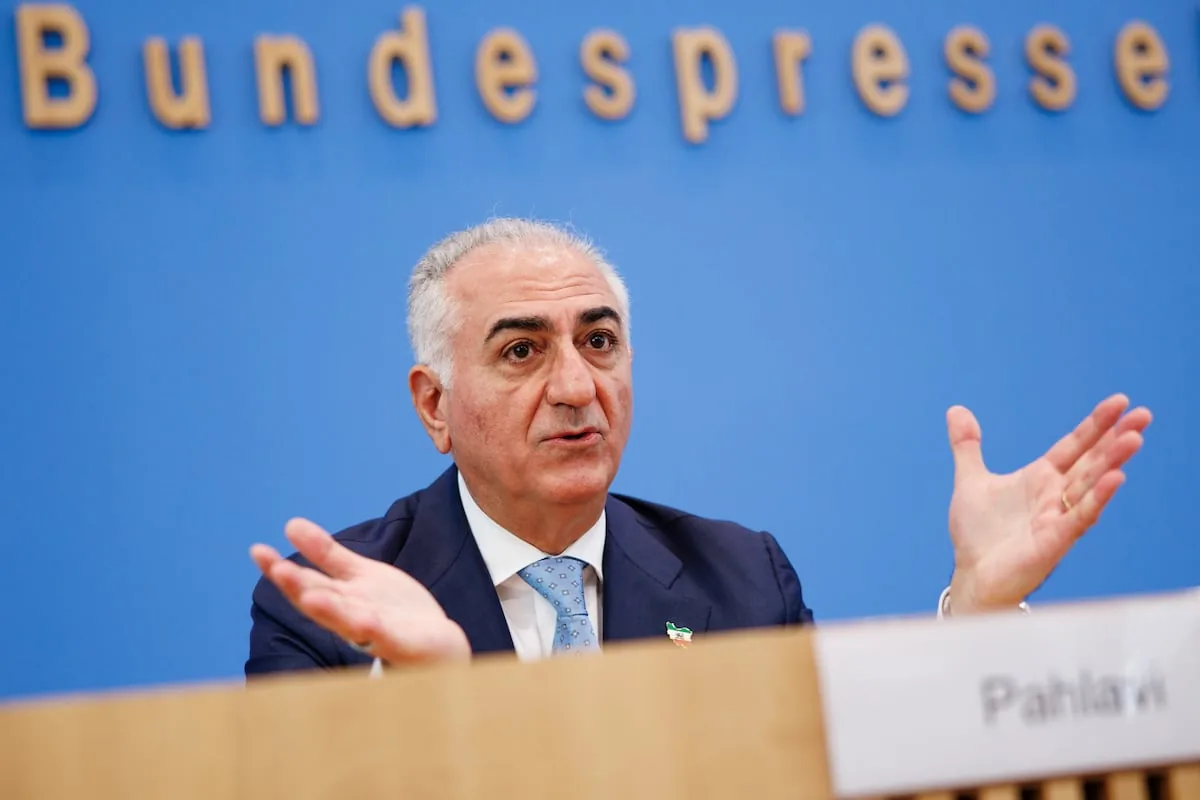
At a time when US President Donald Trump seems open to the possibility of resuming talks with the Iranian regime in Pakistan, after he extended the ceasefire indefinitely, Mohammad Reza Pahlavi, son of the last Shah of Iran, appeared this Thursday in Berlin at a press conference. In that forum, he asked that the Iranians protesting against the Government of the Islamic Republic also be heard and that the “40,000 civilians massacred by the regime” be remembered. The official death toll in the protests Pahlavi referred to last January is 3,117. Iranian organizations in exile, such as HRANA, based in the United States, estimate that the number could exceed 7,000.
Read more Taylor Swift and Bad Bunny, the most streamed in 20 years of Spotify history
The prince of the overthrown eponymous dynasty, that of his father, the last Shah of Iran, Mohammad Reza Pahlavi —whose overthrow led to the proclamation of the Islamic Republic in February 1979— expressed skepticism about a possible agreement and the duration of the ceasefire. “I don’t have much confidence that this will lead to a stable situation, even if it were to happen,” he declared to the press in the German capital. “Even if there were some agreement, I don’t think it would last long and I don’t think it would contribute to stabilizing the situation.”
In his opinion, “to think that the regime has the capacity to truly commit to a lasting peace is a somewhat exaggerated fantasy” and he pointed out that this time would serve the regime, “as always,” to reorganize and regain momentum.
“The definitive solution will come when we have the opportunity to end this regime once and for all. This is a golden opportunity that must not be missed. It would be a shame if we didn’t see the end of this regime now that it is so fragile and on the verge of collapse,” he stated. He then recalled that it “has massacred thousands of innocent citizens” in a “war that has lasted 47 years and in which there is no ceasefire.” Furthermore, he warned of possible reprisals: “The regime is a wounded beast.”
Addressing European governments, Pahlavi demanded that they stop appeasing or negotiating with Tehran’s leaders. “Nothing that keeps the state apparatus in power should be legitimized,” he said. “Europe has been trying to change the regime for almost 50 years and has failed. As long as it remains in power, Europe will continue to live in danger.” And he pointed out that “the Iranian people want ‘a total break’.”
“They have paid for it with blood. They will not exchange their freedom for the uncomfortable fantasy that monsters with blood-stained hands have somehow become the diplomats who will bring peace.” For Pahlavi, in the end, “the question is not whether change will come.” “Change is underway. The real question is how many Iranians will lose their lives while the community of Western democracies merely watches,” he noted.
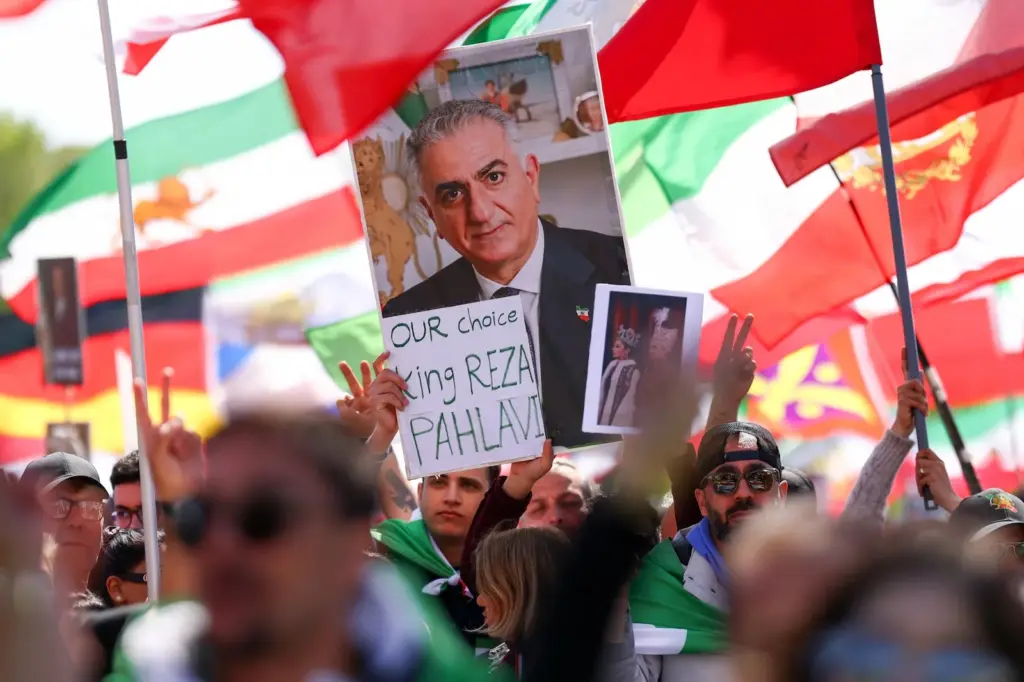
Pahlavi was received at the press building in central Berlin amidst numerous demonstrators calling for the overthrow of the Government of the Islamic Republic. They also gathered in front of the German Parliament building, and many demonstrators waved flags with the emblem of the monarchy overthrown by the Islamists in 1979: the lion and the sun. However, his visit has also drawn much criticism. Monarchist groups in the Iranian diaspora consider him the political leader of the Iranian opposition. But it is unclear how much support he actually has in Iran. Trump has never received him, and Western governments also keep their distance from him.
Read more The Generalitat did not alert FGV about the DANA of 2024
No member of the German government will meet with Pahlavi, who lives in exile in the United States. However, the conservative foreign affairs expert, Armin Laschet, will meet him for “an exchange of ideas.” This will be carried out together with other deputies from different parliamentary groups, according to the CDU deputy. Laschet is also chairman of the Bundestag’s Foreign Affairs Committee. Pahlavi criticized the German government for its attitude towards him and called it a “disgrace” that they do not want to speak with him. “Democratic governments should speak with the people who are the voice of the voiceless,” he said, recalling that the Iranian regime completely cut off internet access in the country to hide the repression of protests and to prevent access to information beyond “the regime’s propaganda.” “Talk to the people. Don’t push the regime’s narrative,” he also appealed to journalists.
Protests against Pahlavi are also planned, such as the one called in front of the Brandenburg Gate under the slogan “Pahlavi not Welcome.” A demonstrator threw something resembling tomato sauce at him as he left the press conference, staining his suit and collar.
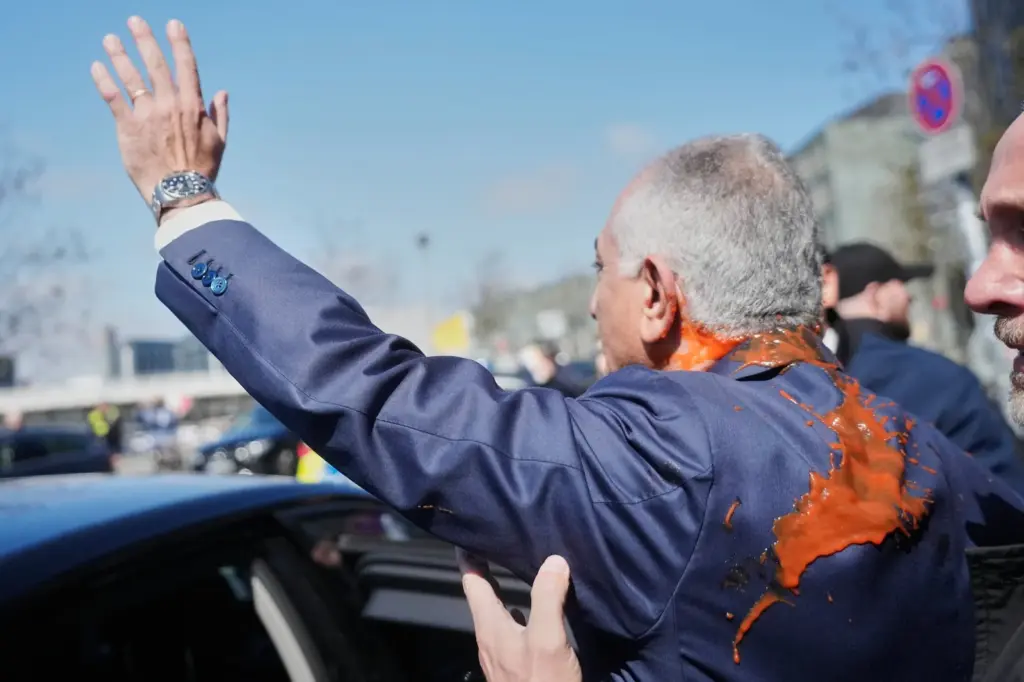
Pahlavi has spoken in favor of a secular democracy in Iran and has offered to lead the country if the current government were overthrown. Part of the Iranian opposition supports him. However, the 65-year-old has been criticized, among other things, for his closeness to Israel. Nevertheless, when asked this Thursday about the accusation that he acts on behalf of Israel, he replied that he is “a friend of Israel,” but “not an agent of Israel,” and referred to the “biblical link” between the two peoples and the fact that his country had once hosted Jewish refugees persecuted by Hitler.
With the start of massive protests in Iran in January, Pahlavi demanded a change of power and called on the Iranian police and army to stage a coup to overthrow the Islamic Republic. But he was criticized in some sectors of Iranian society for his support for the war, which has also affected the civilian population.
Furthermore, his father ruled the country with an iron fist: the opposition was repressed, critics ended up in prison, and a notorious intelligence service acted brutally against opponents. In fact, Amnesty International considered in 1975 that the Iranian monarchy had been one of the regimes that most violated human rights, hand in hand with Savak, its feared political police. At the same time, other Iranians also hold positive memories, as the Shah developed the country with major reform projects and a close link with the West.