








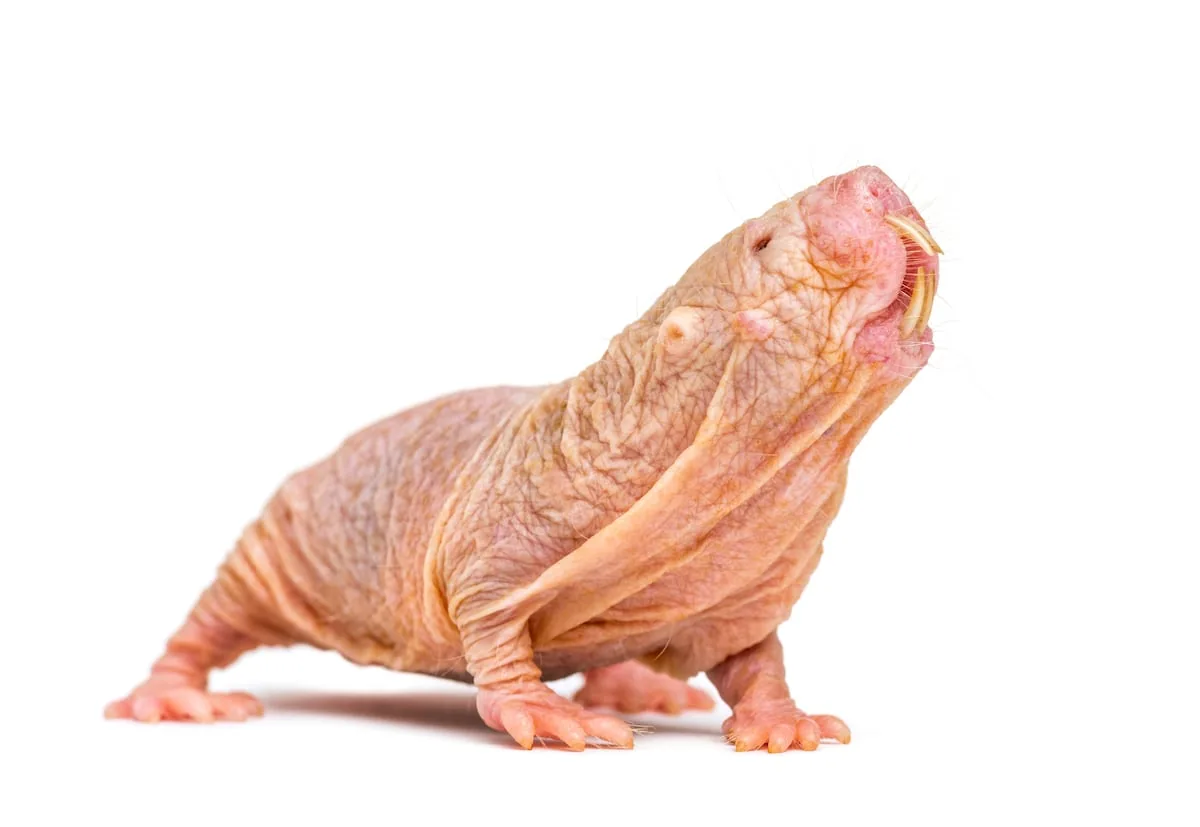
It is, perhaps, the most extraordinary animal on the face of the Earth. Not only because of its strange and striking appearance; it is wrinkled, pink, almost hairless, with disproportionately large teeth protruding from its snout and tiny, almost useless eyes. It is, above all, because of what it hides beneath that wrinkled skin. The naked mole-rat (Heterocephalus glaber) is a rodent the size of a mouse that lives in underground colonies in the Horn of Africa and also in laboratories around the world for its fascinating qualities: it lives up to 30 or even 40 years, ten times longer than its relatives, the mice. It hardly develops cancer. Its skin is insensitive to acids and it does not feel pain. And it is the only mammal that lives in underground colonies, like ants, with a queen, and soldiers and workers who live to serve her. Its life has inspired cartoon characters and even comics. A study published this Wednesday in the journal Science Advances now adds another chapter to its legend: when the colony queen loses strength, her subjects do not kill each other to replace her. They can do something much more surprising. They can wait.
Read more Amud 7, the Neanderthal baby that shows they developed faster than modern humans
The story begins in July 2019, at the Salk Institute for Biological Studies in La Jolla, California. A colony of six animals arrived at Janelle Ayres’ laboratory: a queen of unknown age named Teré, a male named Paquito, and the first litter they had together. The colony was named “Los Amigos” (in Spanish). The offspring that were born were also given names, some from Tolkien, like Arwen, the beautiful elf who ties her fate to the human Aragorn. The lead researcher of the study, Ayres, explains that naming individuals makes it easier to track them over time and reflects “a respectful recognition of their individuality, without losing scientific objectivity.”
During the first months, Teré behaved like a model queen. She produced litters regularly, with intervals between 76 and 81 days, and between 6 and 10 pups, with 100% survival. There were no aggressions in the colony. The social structure was clear. But naked mole-rat colonies are living systems, and scientists wanted to know what happens when something unexpected occurs in that system.
In the world of the naked mole-rat, reproduction is a matter for a single female. Colonies are organized around that single reproductive female, the queen, who monopolizes breeding. The queen actively suppresses ovulation in subordinate females, through intimidation (biting or pushing them), chemical signals, and possibly physiological mechanisms not yet fully understood. It is a biological dictatorship.
What was known until now is that when the queen dies or disappears, order breaks violently. Subordinate females compete to assume the reproductive role, which generates a lot of aggression and continuous wars over succession: blood decides who rules.
But Ayres and her team suspected there could be another way. To find it, they needed a long experiment (it lasted six years), patience, and a colony they knew animal by animal. Los Amigos were perfect.
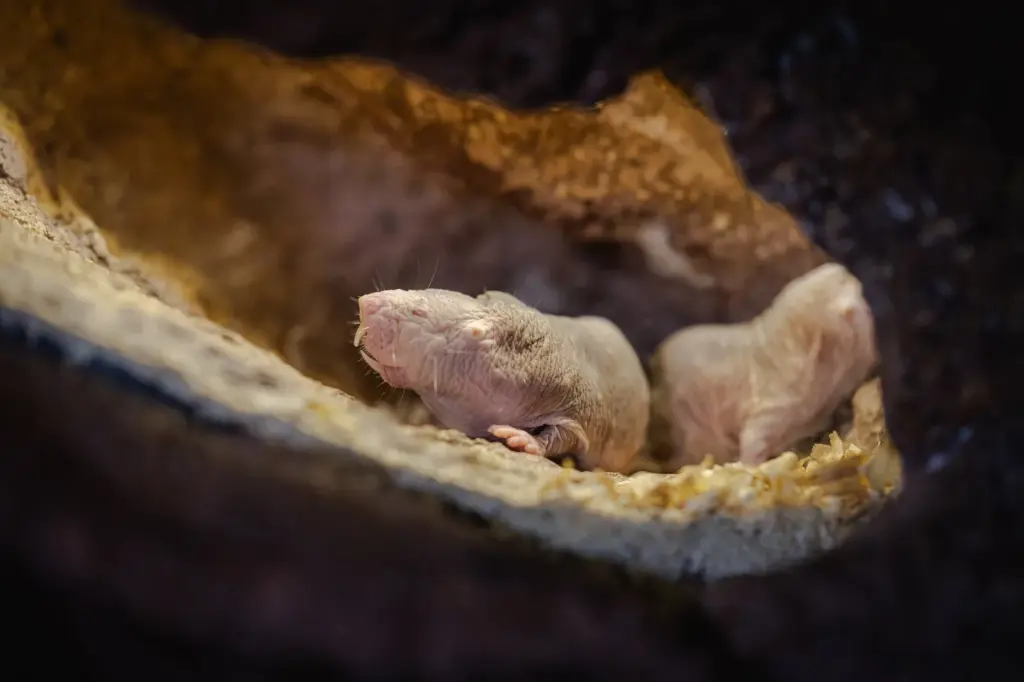
The researchers subjected the colony to two types of stress known to alter reproduction in rodents. The first was overcrowding. When the colony reached 39 animals, the queen continued to get pregnant and give birth to litters of normal size, but all the pups died. The stress affected the newborns, not Teré’s fertility. And no subordinate took advantage of the queen’s reproductive weakness to try to seize the throne.
Read more Alcaraz withdraws from the Godó due to a wrist injury: “It is more serious than we thought”
The second disturbance was more powerful: a move. In May 2022, the entire colony was relocated to another building on the same campus. The environmental conditions — temperature, humidity, light cycle — were identical. But something changed. Teré’s reproductive capacity ceased completely. During the following year, she maintained a stable weight and clinical exams revealed no evidence of pregnancy. A year without pups, with no apparent explanation. And again, no aggression.
It was during this long pause that the researchers began to observe something new: in the fall of 2023, Teré timidly resumed reproduction with litters of one or two pups that did not survive; meanwhile, one of her daughters, Alexandria, began to show signs of pregnancy. A second reproductive female had emerged in the colony, something that had not been documented before. And without anyone fighting over it.
This parallel reproduction occurred without any aggression, without dominance challenges or social instability in the colony. Teré and Alexandria were, in their own way, sharing the throne. Alexandria died shortly after, but another daughter of Teré from the same litter, Arwen, began to show the same signs of pregnancy. In October 2025, Arwen gave birth to two pups that survived; the first to do so since 2023. The researchers documented that Teré showed “guard” behavior towards Arwen and her litter, with no signs of conflict. The succession had been completed. Without aggression or bloodshed. The queen mother ceded power to her daughter, and she took it without needing to wrest it away.
Ayres is cautious about how much this finding reflects what happens in nature. “Our findings demonstrate that naked mole-rats are capable of peaceful succession, in addition to the more widely recognized aggressive route,” she says. “However, it remains to be determined whether this alternative strategy is employed in natural environments.”
What the study does allow to affirm is that this flexibility exists, that “hidden path,” as the authors themselves call it. The findings reveal a “social plasticity,” they say, never before observed in this animal, traditionally subjected to the strong hierarchy of the queen.
What determines which path a colony takes? Ayres has a hypothesis: “It is reasonable to speculate that succession depends not only on social stability and reproductive competition, but also on a cost-benefit analysis. When the cost of conflict is too high, a peaceful transition may be favored.”
Read more Numerology uncovered the 4.7 million Primitiva scam in A Coruña