






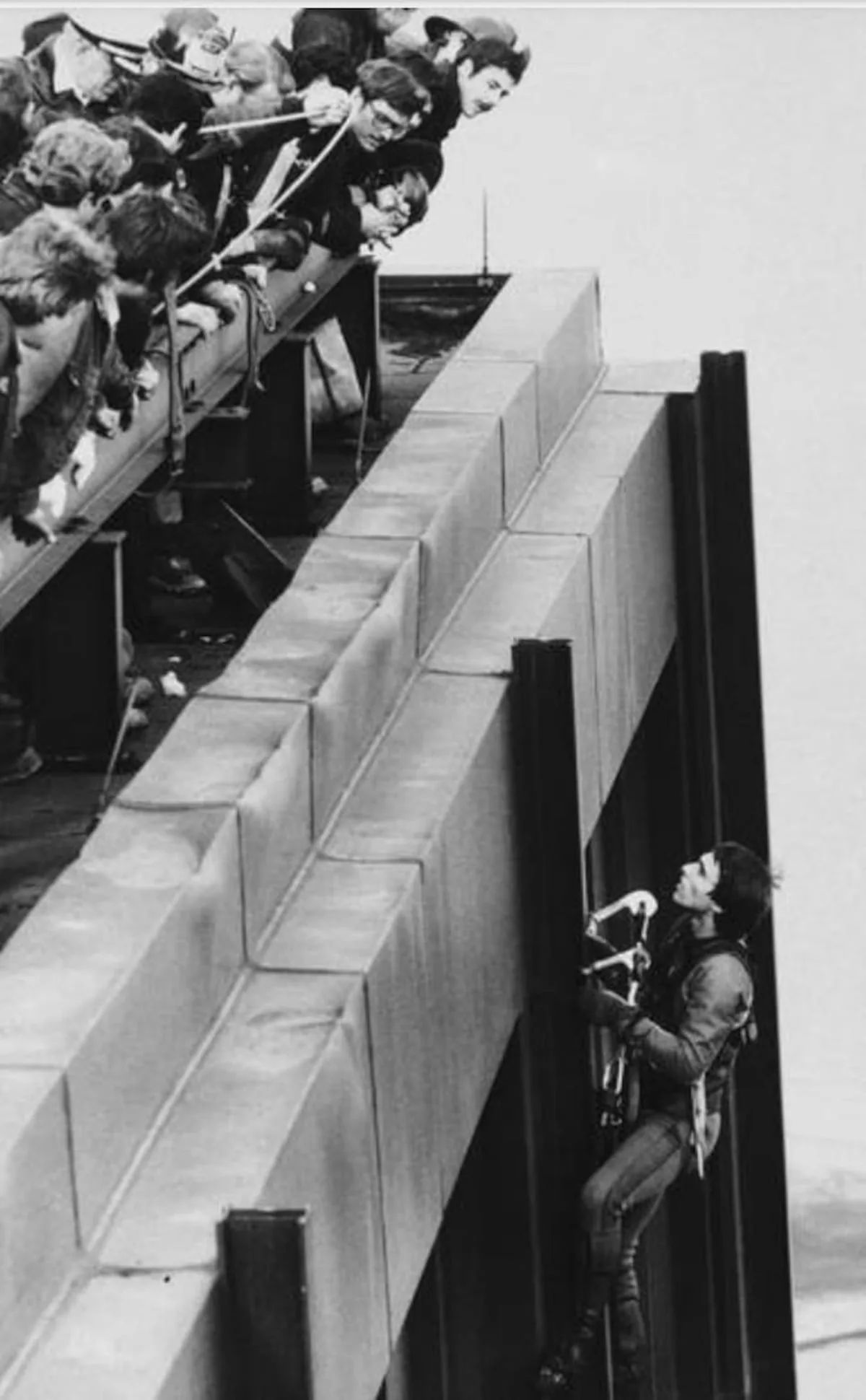
In 1981, a man climbed the 442 meters of the Sears Tower, the tallest building in the world at the time. It wasn’t a circus act, although it might have looked like one from the street; it was a warning, and a rather uncomfortable one for the city, because it called into question all the skyscrapers on the planet and forced Chicago to rethink itself. The story deserves to be told slowly.
In 1970, Sears — then the world’s largest department store company, with over 350,000 employees nationwide — commissioned architect Bruce Graham of the SOM firm to build its headquarters in Chicago. It was a building for a corporate giant, and corporate giants, as we know, are rarely content with normal buildings, something Graham understood perfectly, so he proposed another giant. A headquarters that would live up to the size of their empire, literally. He proposed building the tallest skyscraper in the world, and Sears — of course — said yes.
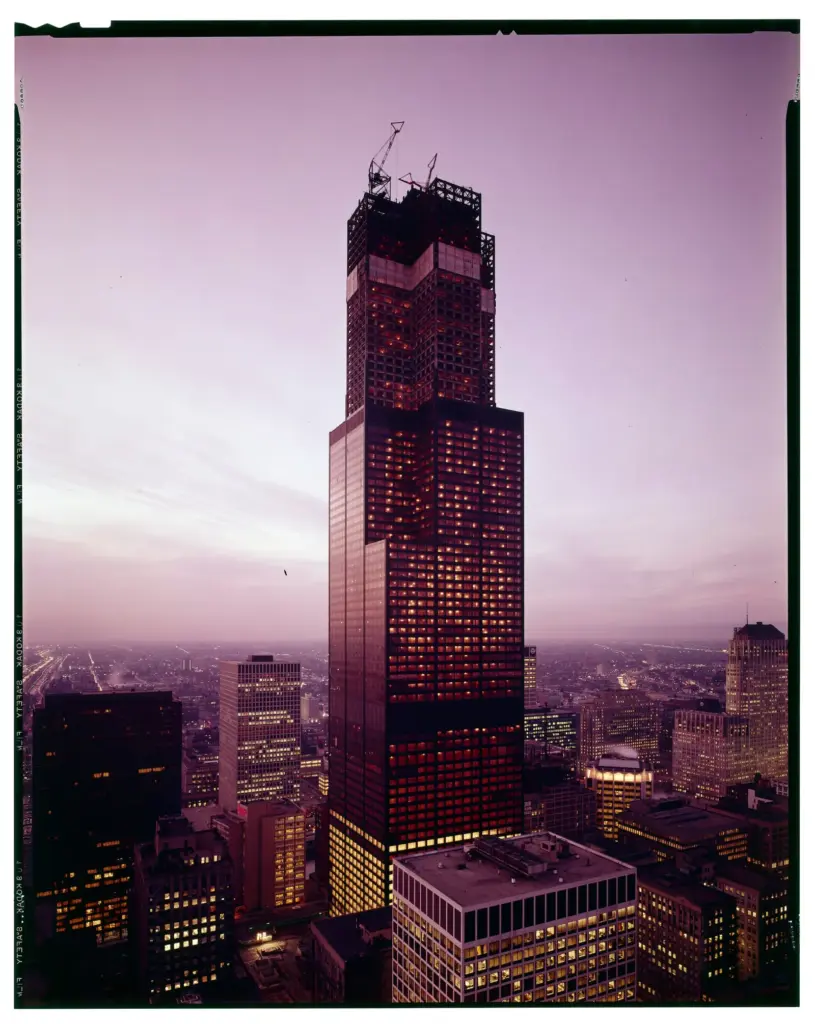
Fortunately for everyone, Graham had Fazlur Khan, a Bangladeshi engineer with whom he had already worked on the John Hancock in Chicago. Khan was one of those characters who occasionally appear in architectural history to break the rules of the game. In the Hancock, he had revolutionized high-rise construction with his exterior tube system, inspired — and this already gives clues about the character — by bamboo cane.
The problem was that the John Hancock measured 344 meters, and the future Sears Tower would reach 442. Almost a hundred meters taller, which is already an incomparable technical challenge, but what’s more, it would be a hundred meters taller in a city with Chicago’s wind, which is called The Windy City for a reason. What did this mean? Well, what was being proposed was 442 meters of engineering on the verge of the impossible. And where did Khan find the solution? In a pack of cigarettes. Seriously. He pulled out a pack in the middle of a meeting and explained to Graham what the structure of the new skyscraper would be like.
An isolated cigarette could sway easily, but if you grouped several together and made them work together, the slenderness exposed to the wind was considerably reduced and the whole became stabilized. Khan could have resorted to bamboo canes, of course, but in the seventies, people smoked a lot and the cigarette pack was more at hand.
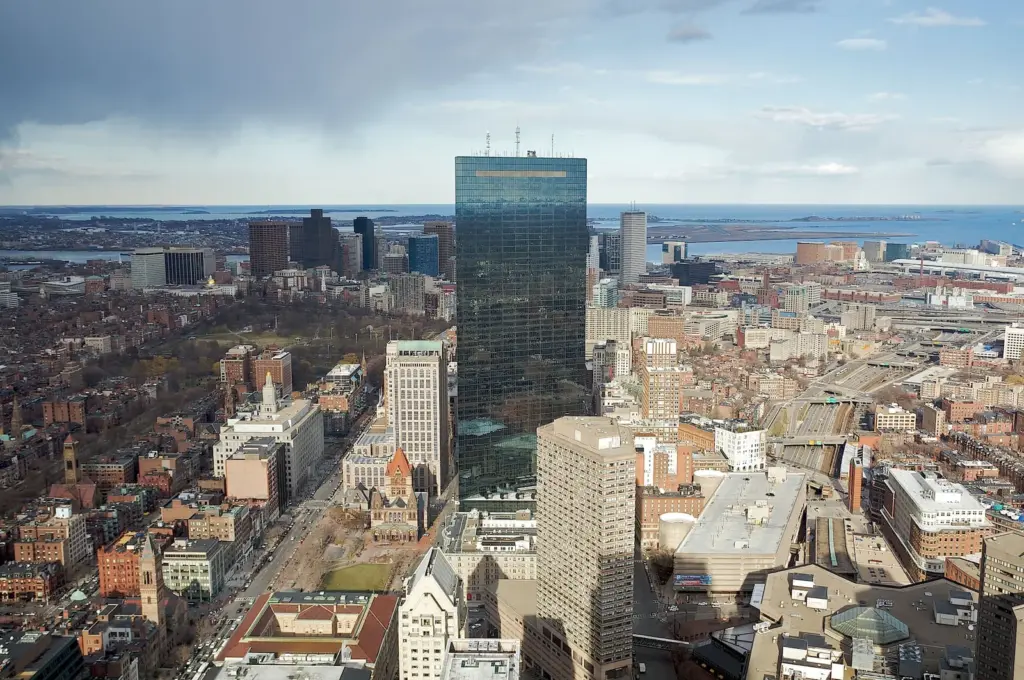
The result was a structure that seemed to condense the brutal optimism of early seventies architecture into steel and glass. Not a single spire, nothing of the sort, but nine square tubes — a bundle organized in a three-by-three grid — that rose compactly for fifty floors and then gradually tapered, stepping back, until only two tubes survived at the summit. The bundled tube structure solved the wind problem but also economized material and multiplied the usable area. That is, it was much more profitable, which is an essential factor in corporate architecture and skyscrapers.
Opened in 1973, the Sears Tower became the tallest building in the world and the city’s center of gravity. Chicago inaugurated a new symbol. But symbols also generate questions. What happens inside when a fire breaks out. How floors 300 meters above the ground are evacuated. What verticality means when it ceases to be a triumph and becomes a threat.
These questions were not abstract. And someone was going to raise them sooner or later in the most, ahem, vertical way possible.
In 1980, Dan Goodwin, a twenty-five-year-old climber, witnessed the MGM Grand hotel fire in Las Vegas with his own eyes. Eighty-five dead. Bodies trapped in luxury rooms, sealed windows, smoke filling the corridors. They were victims of the flames and at the same time — and this is what obsessed Goodwin for months — victims of height. No one could reach them. Firefighters had no means to rescue them. The height had made them inaccessible long before the fire killed them.
Read more Yomif Kejelcha, the athlete who made history and whom no one will remember
Impressed by the disaster, Goodwin presented himself a few weeks later to the Las Vegas fire department with a high-rise rescue plan. His idea was to climb the exterior of skyscrapers and string cables and nets for victims, who would then be evacuated by helicopters. The Las Vegas fire chief thought it was a reckless plan but told Goodwin — somewhat to get rid of him — that he would consider it if he could prove that someone could indeed climb a skyscraper from the outside. And Goodwin took the challenge as a formal invitation.
Two months later, on May 25, 1981, he appeared at the Sears Tower with a series of hooks and suction cups, clad in a blue and red suit that anyone could identify from a kilometer away. It was Memorial Day, a national holiday, and that ensured him hundreds of spectators and even more cameras. Newspapers began calling him Spider-Dan that very afternoon.
Spider-Dan impressed the whole world, of course. But he wasn’t there to impress anyone. He was there to warn, and his argument wasn’t a technical report, it was his own body slowly moving up the skin of the planet’s tallest skyscraper.
Seven hours of ascent. The sun beating on the glass, the wind trying to tear him from the surface, the firefighters below looking up, not quite knowing what to do with that man dressed as a comic book character. Every meter Goodwin gained was, in a way, a silent accusation against the entire city. Because the firefighters couldn’t stop him — they tried, by the way, with very little success — and that didn’t just mean they were slower than him, it also meant they couldn’t stop a fire in the skyscraper. Perhaps in any skyscraper. And that was the uncomfortable part of the matter.
The man dressed as Spider-Man planted an American flag on the top of the world’s tallest tower and, for a few seconds, became the figure everyone looked at from the street, from offices, from elevators stopped mid-ascent. He was arrested upon descending and given a symbolic fine, because they didn’t quite know what else to do with him. What remained was the image. A human body clinging to the facade, challenging a structure conceived as a synthesis of American corporate power.
Goodwin’s climb revealed something Khan and Graham had built without intending to. That the tower was also a stage, a public surface where anyone with enough ambition could write a message three hundred meters above the ground. And Chicago took note. It reformed its high-rise rescue protocols and made them the safest in the world.
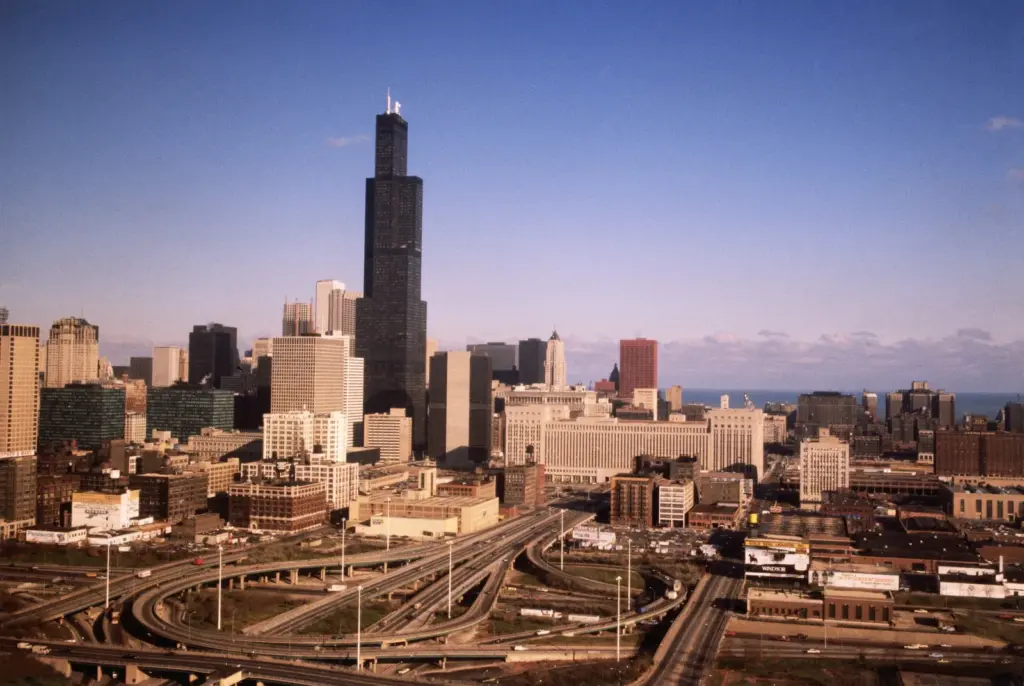
The tower is still there, though it’s now called Willis Tower, because skyscraper names are as volatile as the companies that pay for them. Visiting it is visiting its double history. That of the Bangladeshi engineer who tamed the wind with a pack of cigarettes, and that of the Californian climber who used it as a warning dressed as a superhero.