








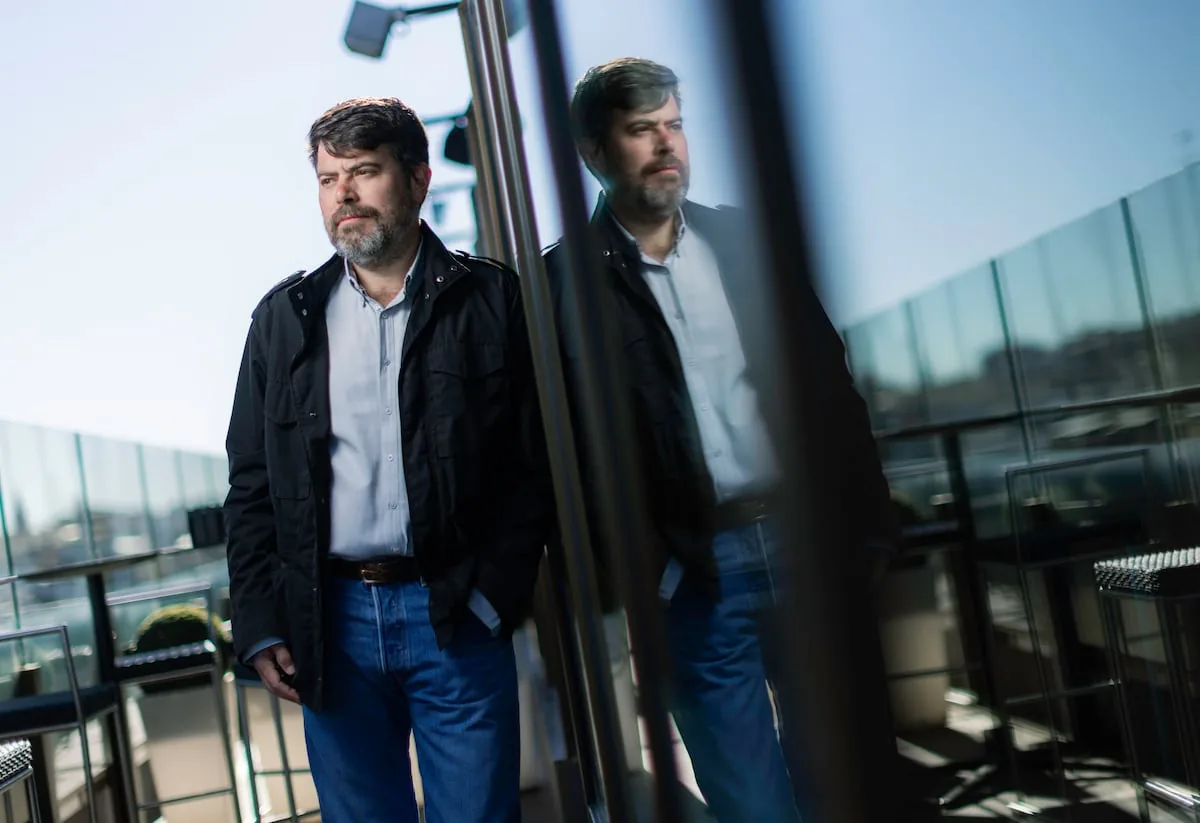
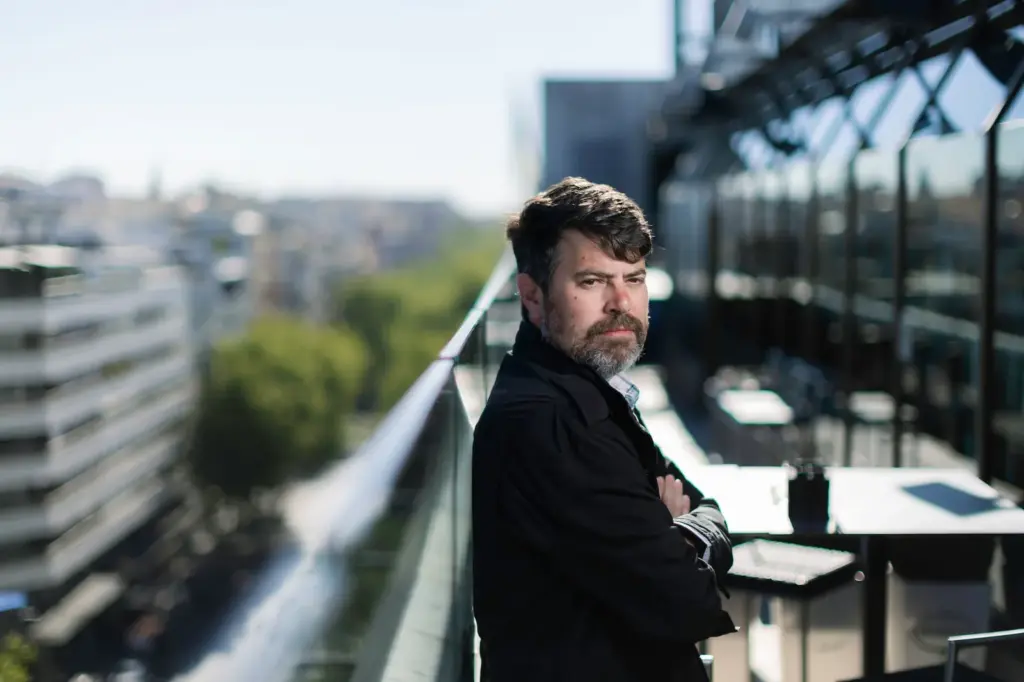
Rafael Méndez (Murcia, 50 years old) is one of those journalists capable of finding a blind spot and obsessing over it until he uncovers a news story, a report, or both, like this book, The Owners of the State. The Senior Officials Who Pull the Strings of Power in Spain (Península). In 264 pages, Méndez, a former journalist for EL PAÍS and currently at Salvados, reviews with names and surnames and the help of valuable anonymous sources (the hazards of getting into such exclusive circles), painful cases that go unnoticed by public opinion. It is not a book, he clarifies several times, against senior officials, but against several of them and the regime and impunity that protects them.
Read more Feijóo will campaign in Andalusia with his own agenda parallel to that of Juan Manuel Moreno
Question. How does this start?
Answer. About ten years ago. I was working at EL PAÍS, in the Domingo supplement. One day a lawyer told me: “I know of a State lawyer from Ports who left and is now suing a port authority.” And talking, I came across several more cases that I thought might be interesting to publish.
Q. You find, for example, that the State lawyers who had made the Ports Law had gone to the private sector to explain to companies, for a fortune, how to benefit from the law to go against Ports of the State. It is one of the most striking issues in the book: how one does things in the public administration and, with that experience, goes to the private company to explain how to exploit them.
A. And it is not illegal. That is precisely what is scandalous. That elephant in the room. No one wants to get into it. But it is legal, it is not corruption. It is done with permission. Many arbitrations against the Kingdom of Spain are handled by State lawyers on leave who, without losing their position, dedicate themselves to suing the State itself, sometimes on behalf of foreign sovereign funds. This is transparent: you see it on their websites. No one has set limits. The problem is that those who arrive at the ministries do not confront them. One told me: “If we piss them off, the papers don’t come out.”
Q. …
A. This has been allowed for 40 or 50 years. Those who arrive have no incentives to change it: you confront the high administration, it does not bring electoral returns, and no one is paying attention to this. There are 40% of State lawyers between leave and special services. They can return at any time after making a lot of money. And no one has proposed something as basic as that if you leave, you cannot sue the administration. Any company would do that.
Q. Hello and goodbye.
A. Ten years, you make a fortune and then you knock on the door: “Hello, where is my computer?”. But there is another level: those who combine public and private at the same time. There were about 40 positions in the State Advocacy for that. When at El Confidencial we requested the list through Transparency, there were 33. Since then they have stopped granting them, but those who have it, keep it. There are about 17 or 18 left.
Q. In the book you also talk about the competitive exams. They are very tough, but it gives the impression that the problem is not in access but in what happens afterwards.
A. Yes. The exams are very tough and maintain social prestige. It is not easy to plug someone in. You have to be fair about that. But there are also things: there are many compound surnames, a certain degree of endogamy, especially in small bodies like the Council of State. Even so, the problem is not there, but afterwards. In sectors like Energy, for example, these profiles are highly sought after by companies. They offer astronomical salaries. And they do not just hire theoretical knowledge: they hire knowing how the rules have been made, knowing where the weak points are, knowing who to call. That saves a lot of time.
Q. The system of relationships: colleagues, trainers, networks. The famous social capital.
A. There was a lawyer who wrote in an academic article what he called “open doors”: you go to the private sector and the next day you can return to the ministry to ask about the matter you were handling. He is a very serious State lawyer and everyone speaks very well of him. Well, he went to the private sector on leave and now sues the State defending the electric companies over the blackout: he is claiming hundreds of millions from us. In the end, money calls a lot.
Q. What case has impacted you the most?
A. The case of Joaquín Abajo Quintana, especially because it happened in broad daylight. He was an active State lawyer and secretary of the Afinsa Council. Afinsa was a major scam, and he was the secretary of the Council, who must ensure the legality of what is done. Afinsa papers were mixed with letterhead from the State Advocacy. What surprises me most is that, unlike other cases you might hear about, this happened with total visibility: there was a trial, there is a video statement that is relatively easy to get, and nothing happened, neither outside nor inside the Advocacy. There was a State lawyer involved who was sentenced to prison, returned, rejoined, and is still in his position. I mean, that should have been a wake-up call.
Q. Why doesn’t the regime of compatibilities end?
A. There would be resistance. State lawyers have a lot of power. If they sign a report against you, they can block you politically.
Q. You say in the book that is why the most valued State lawyers are the flexible ones. A Secretary of State told you what his relationship with his lawyer was: “If I tell him to make a report saying it is night,” he manages to argue it even if it is midday.
Read more “Sentencias: no constan”: behind the most sought-after paper at the Moroccan consulate
A. Any good lawyer can do that. So, if the lawyer starts telling you “this can’t be done, this can’t be done,” it’s many sticks in the wheel. If one day they ask for the file — we are seeing it with Plus Ultra, with all day in the courts — and they say “let’s see this file,” and there is a report against it, the politician who has pushed forward and made a decision with a contrary legal report knows it can end badly. More and more. It’s all in the file: Manos Limpias takes it and you end up fried. That is the power. There was a case with the Sánchez caretaker government: the government was not formed and they had to transfer about 6,000 million to the autonomous communities. The State Advocacy, in the Treasury, said it could not be done; it was a legal opinion as it could have been another, but it held that being in caretaker status the money could not be transferred. They had to remove her from the position — now she is in the Ayuso government — and have another State lawyer sign it. It is an example. It is proof that if you are in politics and find a report against you, you can get into a big mess. So if you piss them off…
Q. You recount painful scenes, like those former colleagues, some in the State and others in the private company, traveling to international arbitrations some in economy class, others in first class.
A. In international arbitrations of renewables, Spain is risking billions and with that money you can hire the best lawyers, who are often State lawyers, and they make a fortune. I understand it must be very difficult to resist that temptation, but the State should be there and say: “Very well, you leave, I can’t avoid it, but if you leave you can’t come back.” Like any company paying money to defend itself would do. Because in the end you are receiving public money to fight against the public. And the worst is that many do not even return: they have earned so much money they don’t need it. Others do return, but only to retire in the last years.
Q. What would you change?
A. I would at least change the logic of saying: the one who is going against me is not on leave and does not have his position reserved. If there is a strong economic crisis, like the last time it happened and many returned, it cannot be that they call the next day and you have to make room for them. Also, you could size your staff with the people you really have. Imagine a newspaper with 40% of the staff out but with the right to return the next day, or firefighters in the same situation: it would be very difficult to organize.
Q. There is no control or sanctions.
A. There are no sanctions because they control it themselves. When they catch someone, they call him. No file is opened because it would drag on and end up in the courts. When a senior official is detected violating — working outside without permission, apart from cases where compatibility is granted — what is done is to call him, have a coffee and say: “Man, go on leave, for the good of all,” and that’s it. There is never a file or a sanction. Everything stays among friends. I don’t know if there is a part of “you today, me tomorrow,” but certainly it is also resolved like that, to avoid angering, because everyone knows each other and you need the machinery to work. Anyone who confronts them has it complicated.
Q. And he can come back.
A. The State’s general lawyer is always a State lawyer who will then return, so everything is managed internally. Little by little, of course, things change, but very slowly. That is why, in the case of compatibilities, there were 40, then 30, now there are 18 or 19; when they retire, no more will be given and in 15 or 20 years the problem will have dissolved. Meanwhile, you can look for an active State lawyer and see on his website that he has advised large companies, but there is no way to know exactly whom; neither we, nor the Ministry of Justice, nor anyone knows who they are advising.
Q. Politicians and senior officials work together, but in watertight compartments.
A. Yes. And that has a good part: there is independence and the ability to stop. A minister does not arrive and colonize the administration. Jessica’s case is interesting: they plug her in, but they cannot do it directly in the ministry, they have to do it through chained public companies. That shows there are barriers, although also ways to circumvent them.
Q. That independence is necessary, but it also requires control.
A. Of course. It is very good that there is someone who tells a minister “this cannot be done.” When you like a government, you would probably like it to be able to do more things; but when another of a different sign arrives, you will like that there are people there who say: “Listen, this cannot be done.” If Vox arrives and says “I want to give aid first to Spaniards,” there has to be an independent voice that says: “Look, you cannot discriminate here; there are things that cannot be done.” And that is very good. But that responsibility, I think, must entail that we look at it, that we know it, that we know who they work for.
Q. Are they aware of that power?
A. I don’t think so. This works almost like a State within the State. There is a first layer of the Administration that works with its own rules and knowledge; they move and work hand in hand with politicians. That they have power is good, as I said before, to be able to stop and say: “This cannot be done, minister.” And my position does not depend on me telling you yes. In all human organizations we have seen people who fold to those in charge and say yes to everything, and it is good that there are people with the freedom to say no and who have that power. If they are aware of all the power they have, I don’t think so; not always, at least. Some yes, but many relativize it quite a bit and see it as something normal. It is their world. The lawyers of the Council of State, for example, which is a very strange body, in my opinion.
Q. There was a counselor there until 2009, Miguel Vizcaíno Márquez, with a huge scar from the Civil War.
A. And now there is José Luis Manzanares Samaniego, a lifelong counselor of 96 years old, with the rank of Secretary of State, salary, driver, and secretary. He retired from the Supreme Court in 2000 and is still there. He meets a couple of days a week. Of course, the lawyers have a lot of power. What capacity for control or renewal can there be in such a figure?
Read more The former attorney general puts his finger on the sore spot