







In 1947, a group of scientists from the University of Chicago conceived a system to alert the world of a nuclear catastrophe and assured that, according to their forecasts, the world was eight symbolic minutes from its end. In 1976, when the first issue of El PAÍS hit the streets, this cushion of minutes had grown to nine. That day there were many problems and the newspaper’s first front page took care of pointing them out, but the risk of all ending up turned into stardust from an atomic blast was not the main one. Today, as this newspaper is about to turn 50, these forecasts indicate that we are only 85 seconds from extinction due to the uncontrolled proliferation of nuclear weapons, global warming, and the very likely misuse of Artificial Intelligence. A decidedly important piece of news, this final extinction, but one that will not be reflected anywhere.
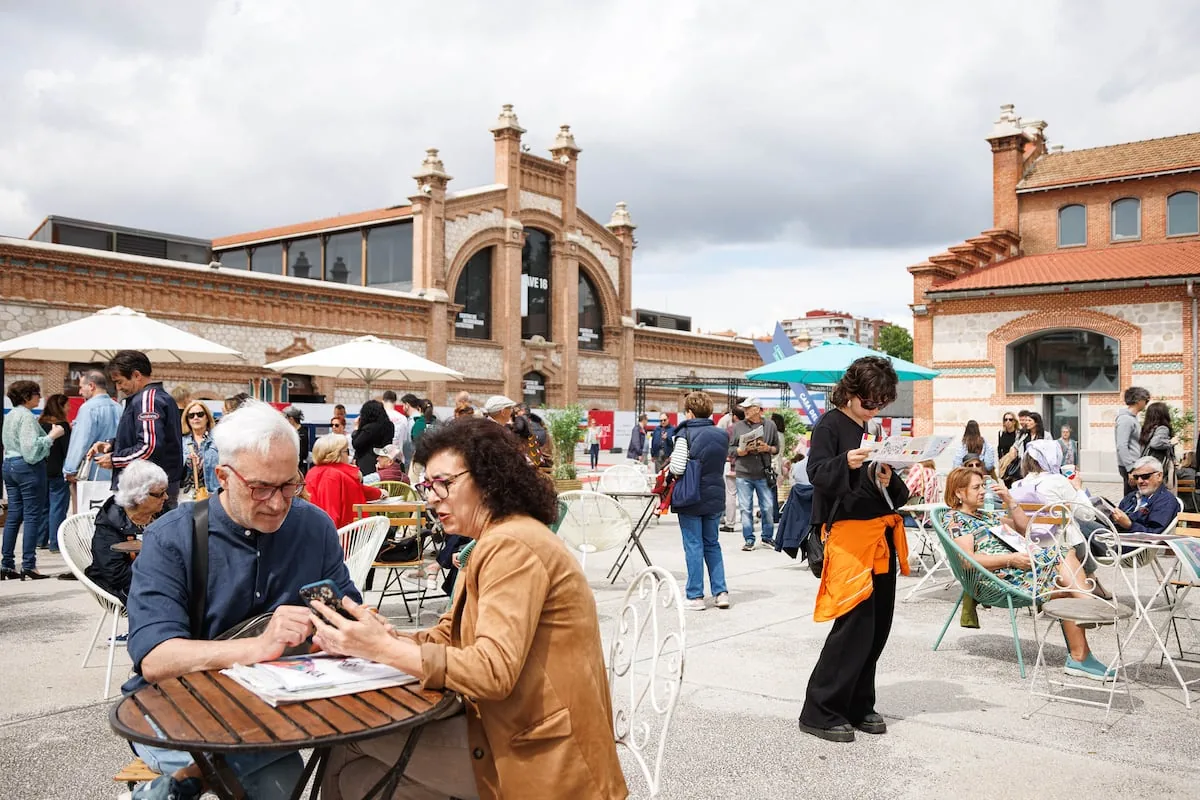
The end of the planet, the good and bad news, the pessimism and optimism in addressing them, and the very likely mess of a world that — without necessarily going extinct in 85 seconds — we will leave to our children and grandchildren were discussed yesterday, among many other matters, in the halls of Matadero Madrid during the activities of the second day of the Festival that is being held until today for the 50th anniversary of EL PAIS. Colombian writer Juan Gabriel Vásquez recalled the example of the Doomsday Clock in the conversation he had with the Franco-Italian writer Giuliano da Empoli.
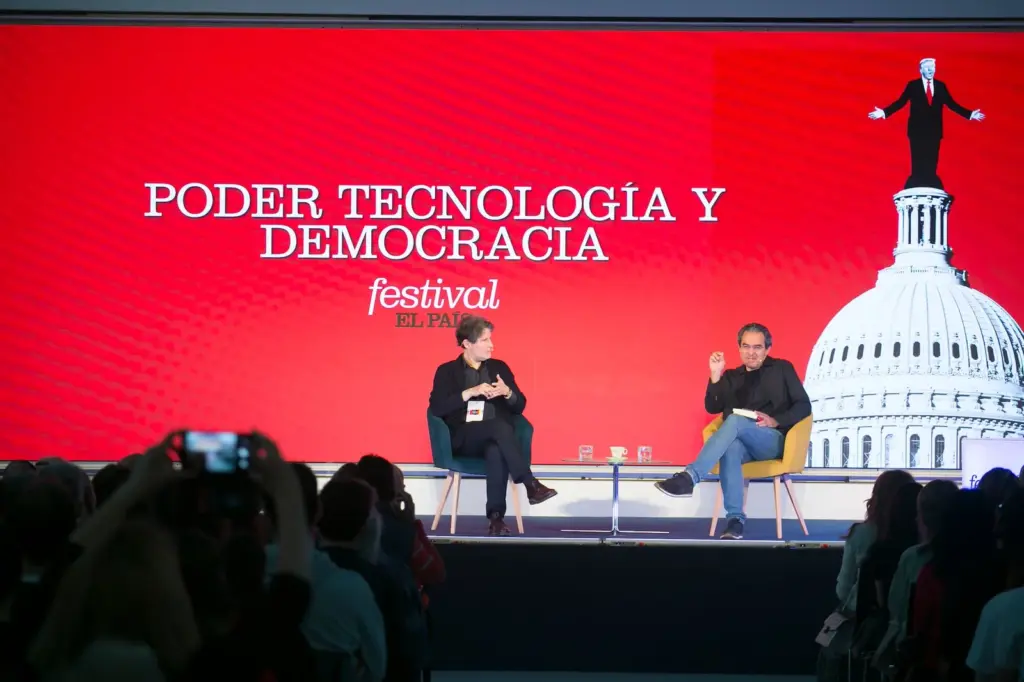
Da Empoli, lucid and direct, author of the insightful essay The Time of the Predators, warned attendees of the risks involved in the de facto alliance between technooligarchs like Mark Zuckerberg or Elon Musk and populists like Donald Trump or Javier Milei to seize more and more spheres of power every day. “They are interested in fostering both extremes, not just the one they occupy, to then pit them against public opinion and disarm it,” he assured. Da Empoli painted such a dark picture, such a sad future, with social and political polarization intensifying and ignorance and hatred spreading thanks to the gunpowder of digital platforms that in the end, exhausted, Vásquez asked, almost waving a white flag: “And what can we do?”.
Da Empoli’s answers —“promote the physical, flee from the digital when possible, don’t settle…”— felt insufficient and one left the conference with a heavy heart. To make matters worse, an apocalyptic downpour fell over Madrid at that moment and it was enough to think that at least five more seconds had just been deducted from the Doomsday Clock.
The shadow spread through Matadero. Because that feeling of ending was not only floating in the conferences of prominent writers. In an innocent press workshop for children, when asked to write a news story, Rebeca, nine years old, who had come with her sister Leire, seven, wrote: “Trump wants to start World War III.” Not at all far-fetched, judging by several geopolitics experts. Luckily, another girl, Blanca, also nine years old, proposed a hopeful headline: “Homework and exams are ending.” Hooray for Blanca’s proposal. The Ministry of Education has work to do there.
A bouquet of good news
In the other corner of the venue, a small group of EL PAÍS journalists resisted the enemy in the company of philologist and professor Lola Pons, a collaborator of this newspaper. Under the currently provocative title We Are Not That Bad, Mari Luz Peinado projected a bouquet of good news on the screen: an immunologist who revolutionized diabetes treatment, a treaty to protect international waters, a Russian mother courage who fought against child indoctrination, the increase in certain areas of railway routes… Examples of EL PAÍS front pages from 1976 were also shown, reflecting a much more macho society, more tolerant of violence and prone to directly calling people with disabilities “subnormal.”
By the way, to have a woman appear on the front page, one had to wait until the end of May, the month this newspaper was launched half a century ago. The lucky one was Queen Sofía on a visit to a mine in Asturias.
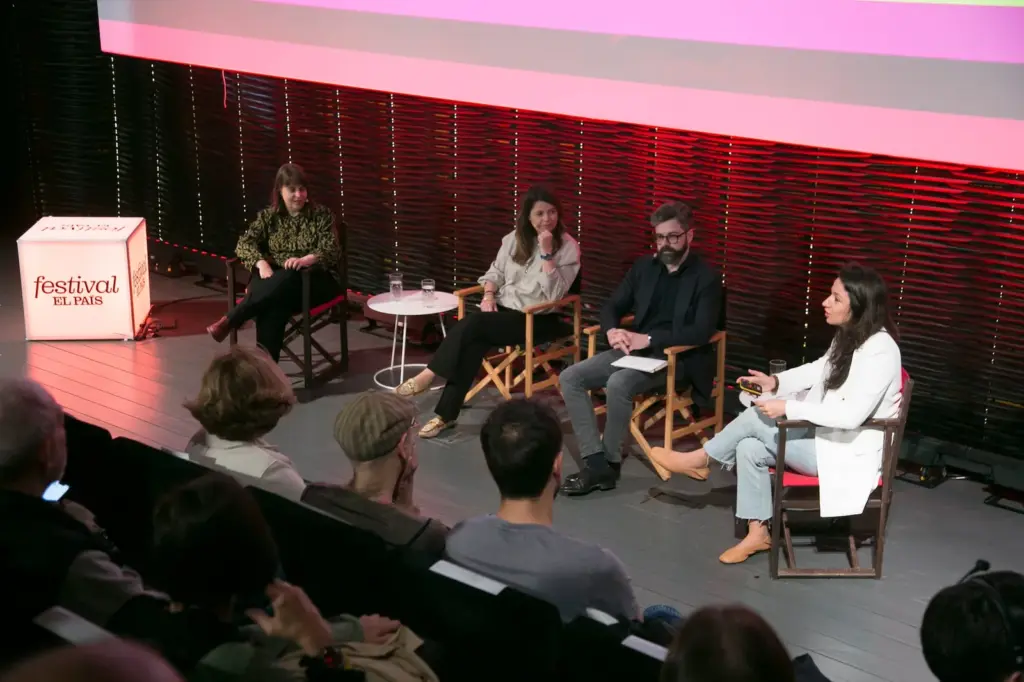
Jaime Rubio Hancock, editor of the Ideas supplement of EL PAÍS, explained that it is advisable to be moderately optimistic. “If you are optimistic you do things.” And he gave a clarifying example: “An absolute pessimist will never quit smoking, because he will think he is not capable and also, why bother?; an absolute optimist neither, because he will think he will never get cancer; only the moderate optimist will try to quit smoking even if he has tried many times unsuccessfully, because he sees himself capable of doing it.” Both Peinado and Brenda Valverde, members of the Correo sí deseado newsletter, advocate for constructive journalism that not only reflects problems but shows people and situations that have managed to solve specific adversities.
—A little bit of light—, said Valverde.
—Exactly: a little bit of light—, replied Hancock.
Every day, in the afternoon, the heads of the different sections meet with the director of this newspaper to decide which contents will be front-page news and highlighted on the web. Yesterday, this meeting, for the first time in EL PAÍS’s history, was held in a public place, a packed room at Matadero Madrid.
Yesterday, as always, a choice had to be made. On one hand, there was the news that the President of the United States, Donald Trump, issues a warning to all of Europe with the threat of withdrawing troops from Germany; or a portrait of six immigrants who aspire for their lives to become more decent and better after obtaining the promised regularization. A journalistic dilemma. And social. And political. Sometimes it all boils down to deciding what is most important, which is the leading news.
The director, Jan Martínez Ahrens, decided that the main news on the front page of the last issue of EL PAÍS of the last 50 years would be the collective portrait of the immigrants for whom a legal step is going to change their lives.

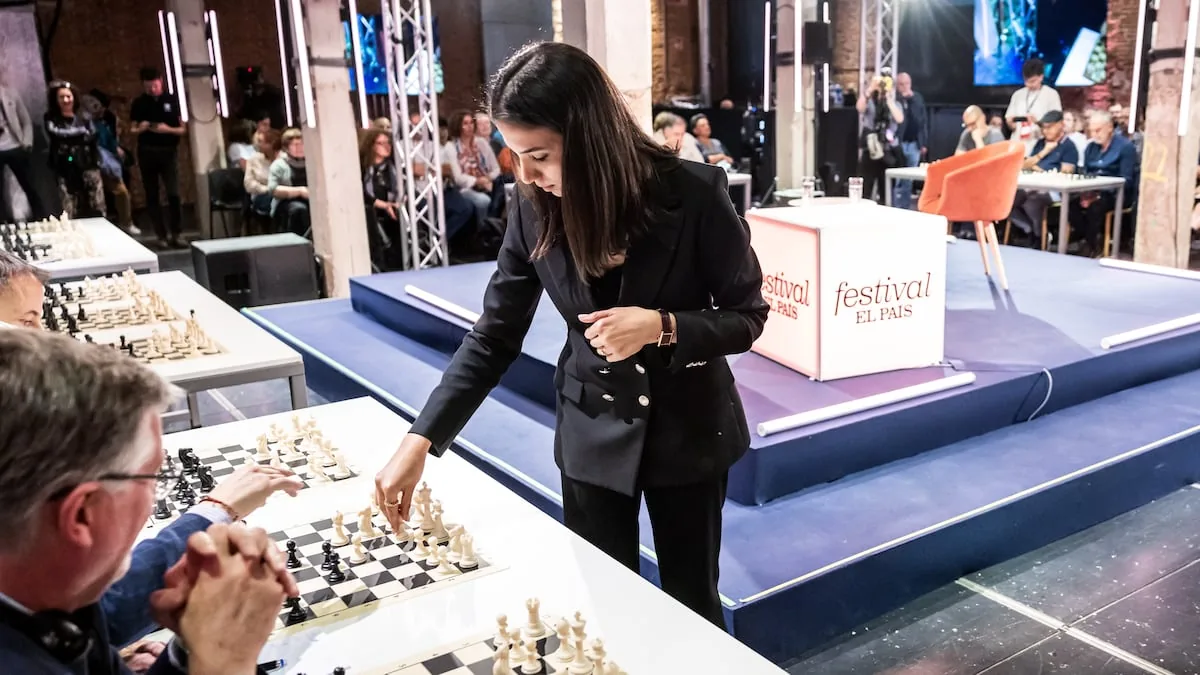
While those decisions were being made, in another hall of Matadero Madrid, Iranian chess player in exile Sara Khadem faced, in a room full of audience, simultaneous games with 22 men. She played only with white pieces. Seeing her play, a lady watching her face the twenty chess players exclaimed, with admiration: “How fast she moves, how she always knows what to decide.” In the end, Khadem won 14 games, drew six, and was only defeated by two opponents.
Decidedly, something has changed in this half century full of good and bad news, white and black.