








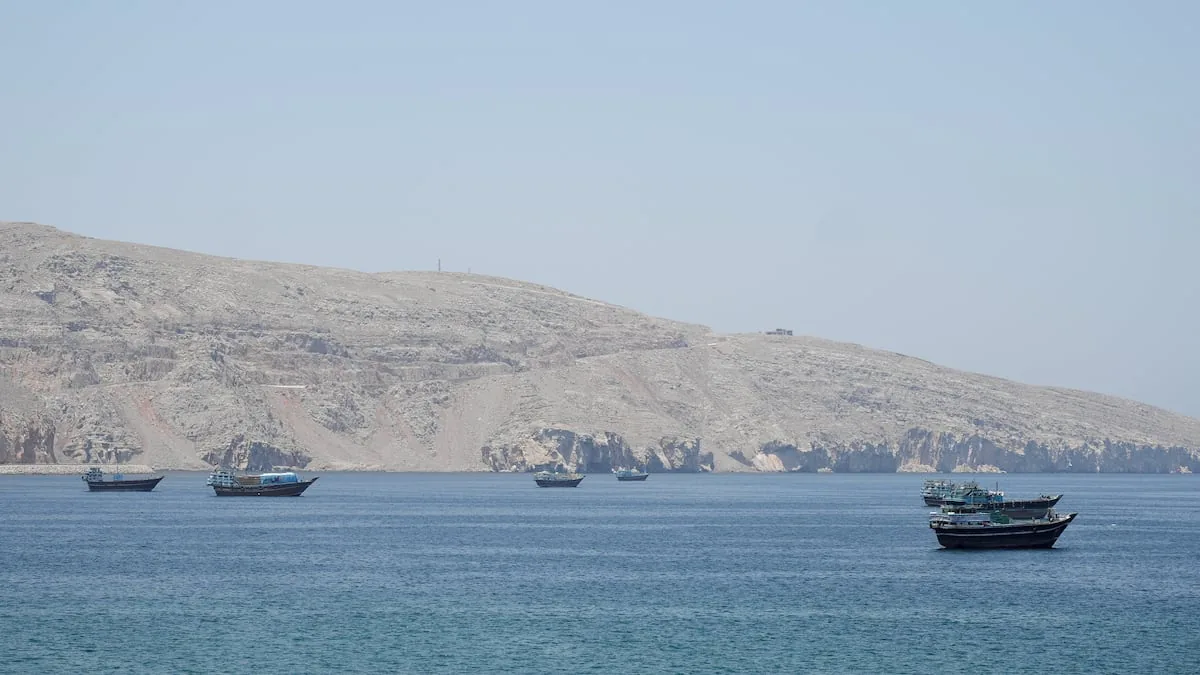
Iran has created an agency intended to manage and, initially, collect tolls and grant permission to ships to transit through the Strait of Hormuz, the maritime artery that Tehran has blocked since the start of the war, and which now suffers a double closure, after the United States also closed it to Iranian ships on April 12. Announced this Tuesday night by the state television Press TV, this new institution has been named the Persian Gulf Strait Authority or PGSA, by its English acronym.
Significantly, the announcement of its establishment, also shared on its social networks by the Tasnim agency, linked to the Revolutionary Guard, was made known almost immediately after Donald Trump announced, also this Tuesday night, the suspension of Operation Freedom Project, the mission to “escort” merchant ships trapped by the Iranian blockade of Hormuz, which had been in effect for two days.
Beyond publishing an email to which shipping companies must write to receive instructions and manage permits and informing ships that they must comply with “the new rules” to obtain transit permission through Hormuz, Iranian official media have not provided many details on how this new agency will operate. Its creation points, however, to Iran’s undisguised purpose of making its control of the Strait of Hormuz a permanent pillar of its foreign policy and deterrence against possible future attacks.
The blockade of Hormuz is also the main bargaining tool in Iranian hands while the country discusses with the United States a possible peace agreement that could be “close,” according to the US portal Axios this Wednesday. At least that is what Washington hopes, trusting that Tehran will soon sign a memorandum to end the war unleashed by Israel and its US ally on February 28.
According to the cited portal, the document includes the “lifting” of the double blockade imposed by Iran and the United States on that maritime artery. Therefore, it is unclear whether the announcement of this new Iranian authority over the strait responds to the purpose of consolidating its control of Hormuz, or if it is an attempt to increase pressure on the United States ahead of those negotiations.
The Suez Model
Meanwhile, the Iranian Parliament has been processing a bill on Hormuz transit for weeks, whose draft provides more clues about how the procedure Tehran seeks to implement from now on for oil tankers and other merchant ships crossing that narrow maritime route might be.
The text of that bill has already been distributed to journalists and Iranian media, according to well-known Iranian journalist Fereshteh Sadeghi on the social network X, a professional with good sources in the Islamic Republic authorities. Ali Hashem, another journalist who collaborates with generally well-informed regional media such as the Amwaj portal, referred to an email sent by the PGSA—the new Iranian agency—to shipping companies of ships trapped in the strait (about 1500 with 20,000 crew members) detailing conditions that broadly coincide with those in the bill draft.
The draft of the new regulation does not mention specific amounts in the chapter related to “fees” (the tolls Iran wants to charge ships) that Iran wants “foreign companies whose vessels cross the Strait of Hormuz” to pay. It does establish that to obtain this right of passage they must “provide the Iranian Armed Forces with bank guarantees in national currency, the rial” and that these tolls will be calculated according to the type of vessel, its cargo, its value, and its weight, always according to the Iranian journalist. This model is the one applied, for example, in the Suez Canal.
The Vice President of the Iranian Parliament, Hamidreza Haji Babaei, stated at the end of April that some ships had already started paying tolls, even before this requirement, difficult to fit into international law, is formalized in Iranian legislation. He did not specify amounts, but some media have mentioned that at least one merchant ship, supposedly under the Japanese flag, paid two million dollars to transit through Hormuz.
Thirty percent of the tolls collected “will be allocated,” according to Sadeghi citing the bill draft, to “strengthening the Iranian Armed Forces” and “improving their military capabilities.” The new regulation project establishes that the institution responsible for managing the Strait of Hormuz will be the General Staff of the Iranian Armed Forces. Consistent with this, the newly created Iranian Persian Gulf Strait Authority could depend on that General Staff.
The text does not specify exactly how the two Iranian armies—the regular and the Revolutionary Guard—will share the management of the strait, but according to the Iranian journalist’s sources, the former will apply “Iran’s authority” on its eastern side (the Iranian coast) while the latter will do so on its western part, which includes the coastal waters of Oman and the United Arab Emirates, the country that in the last two days has suffered attacks by Iran, which thus responded to Trump’s announcement of his operation to unblock Hormuz.
The right of passage that Iran proposes will not be universal, however. The draft “is very strict when it comes to enemy states as well as countries that imposed sanctions on Iran,” assures Sadeghi. “Passage through the strait will never be allowed to military and merchant ships belonging to the Zionist regime [Israel]” and entry into the Persian Gulf “will be prohibited to merchant ships whose ports of departure or destination are in the occupied territories,” the journalist highlights.
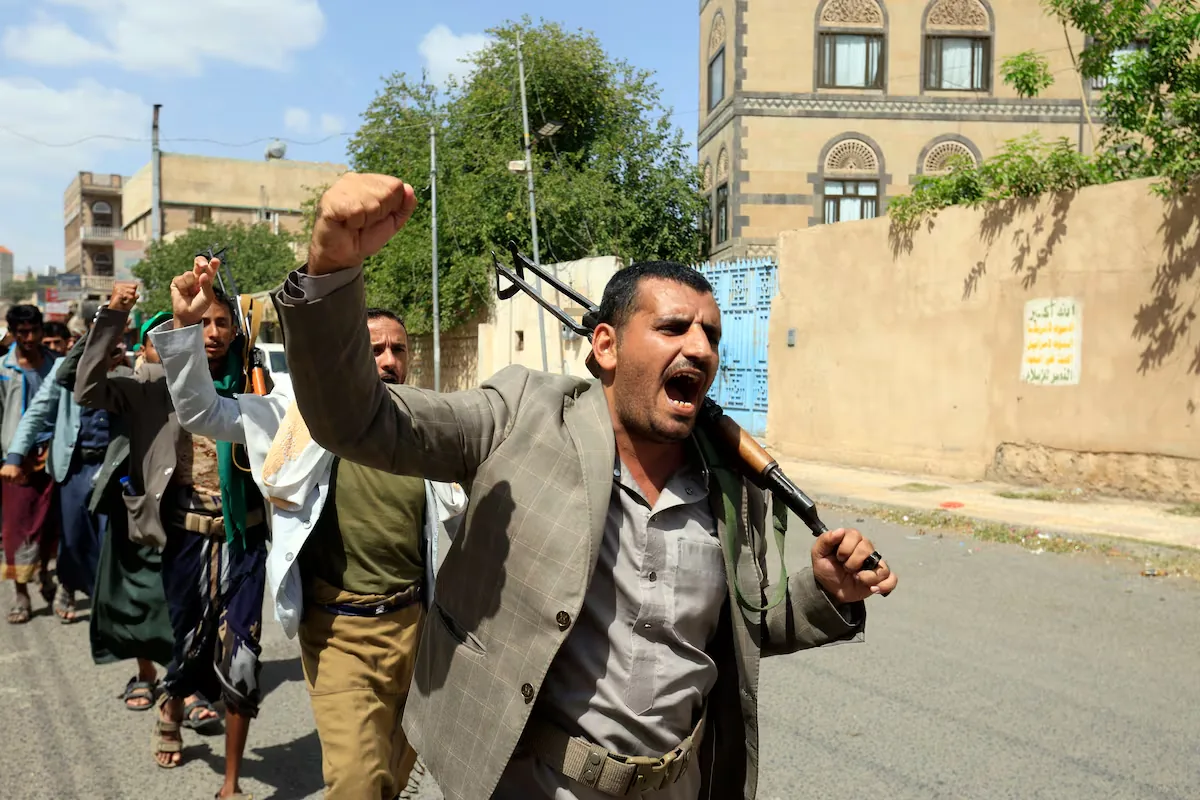
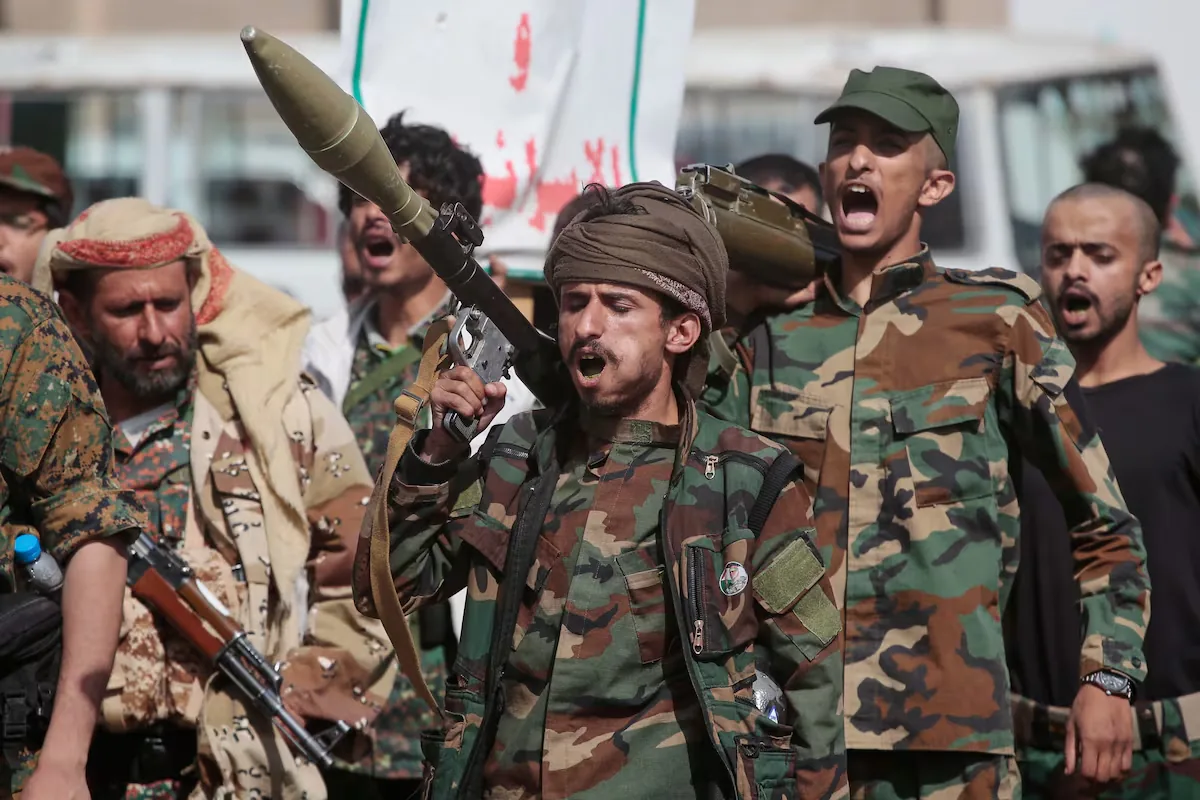
The prohibition of passage through the artery through which normally one-fifth of the world’s oil and gas transit also extends to “ships owned by persons, entities, or countries that have adopted a hostile stance towards the Resistance Axis in general, and towards [the Lebanese militia] Hezbollah and Ansarullah of Yemen [better known as the Houthis],” as well as “the PMU [the pro-Iranian Popular Mobilization Forces]” and “the resistance in particular.”
The draft of the new Iranian legislation on Hormuz finally includes another condition for ships requesting permission to transit the strait: in all communications with Iranian authorities, they must use the official and internationally recognized name of the Persian Gulf. In social media posts from the US Central Command—and in Arab media such as the Qatari channel Al Jazeera—that area had been referred to as the “Arab Gulf.”
Failure to comply with any of the mentioned conditions will result, according to the email sent to shipping companies cited by Ali Hashem, in “seizure and a fine of 20% of the cargo’s value.”
The bill on Hormuz has already received the green light from a parliamentary committee but still needs to be approved by the full chamber, reports the Efe agency. In a Parliament controlled by conservatives and ultraconservatives, that step is considered a mere formality.