

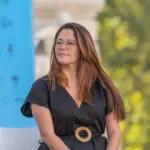





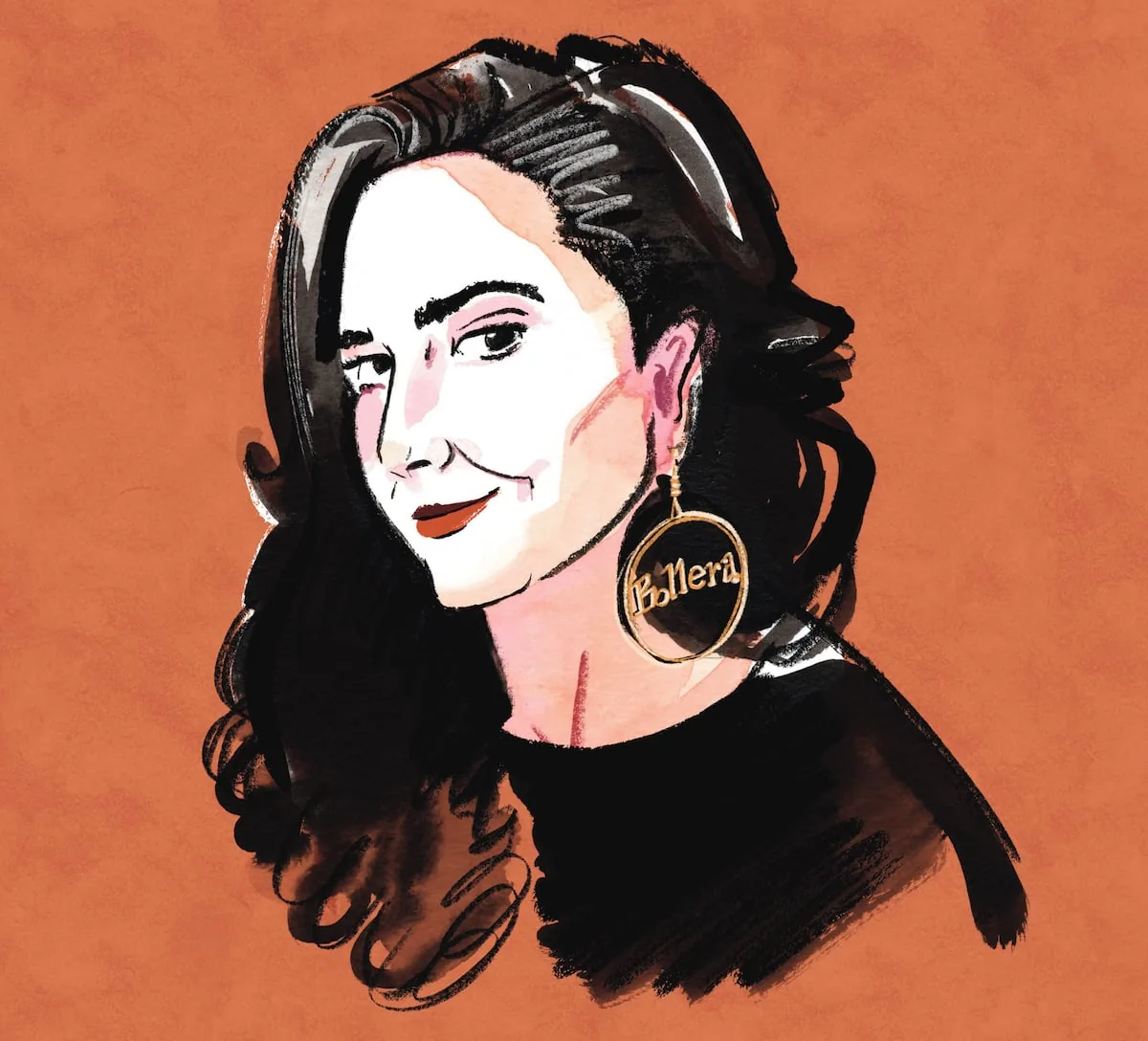
Irantzu Varela (Portugalete, 1974) says she is less bad than she seems and smarter than she should be. She attributes the first to her imposing figure, her hoarse voice, and her vehemence, although her loquacity dispels any fear. The second, far from being a problem, has made her one of the most relevant voices of feminism in Spain. She now publishes her first foray into fiction narrative with Setting Fire to Bilbao (Continta me tienes), a book with a punk spirit, full of activism, partying, and lots of love.
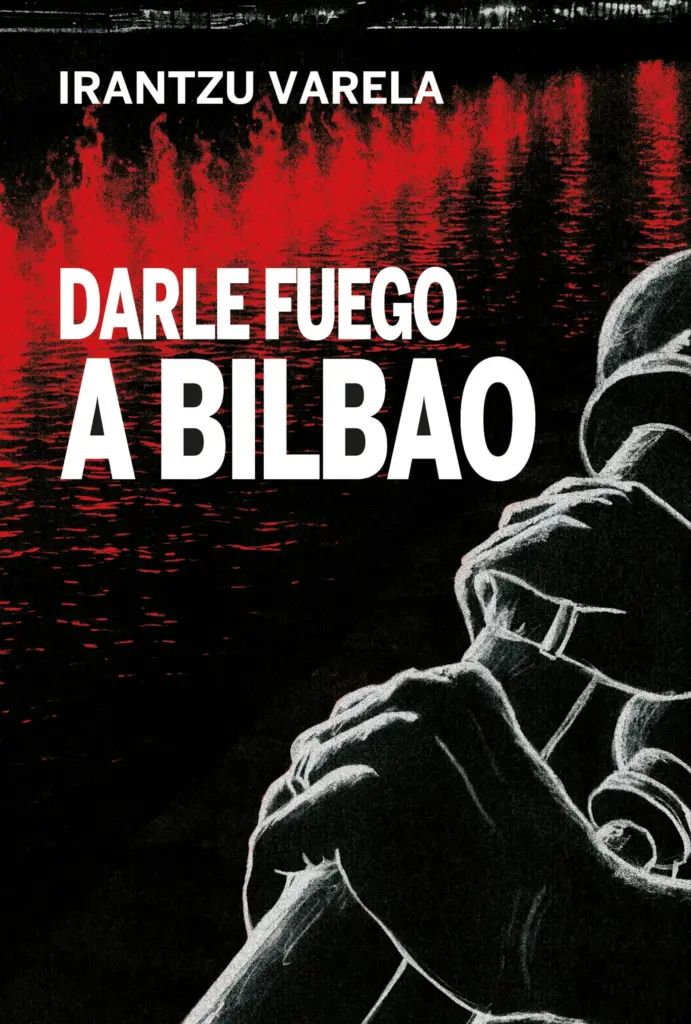
Question. After What Remains, her biographical stories, comes her first fiction novel. Did you have a story inside you?
Answer. When you like to write and have that drive, doing fiction is taking a step further. Being able to tell something that hasn’t happened to you that, in some way, comes from your head more than from your experience.
Q. There are many touches of your real life.
A. The plot takes place during the festivities of Bilbao’s Semana Grande. And in 2018, which was a year when we thought many things were possible. Some have come true and others haven’t. There are many themes that interest me like struggle, partying, love.
Q. Katixa Aguirre defined it as “lesbian costumbrismo.”
A. Love stories between two women have their peculiarities and different ways of working and I thought it was beautiful. So I wanted to tell, among other things, a love story and what it is like to meet someone from a lesbian perspective.
Q. At first glance, it seems like a typical romantic novel, but it is also about love for friends, activism, Bilbao. It’s like an anti-hate novel.
A. I find that very beautiful. When you write a book, you do it from a place, but you can’t control what people receive. People who have participated in the analysis of romantic love as a tool of inequality and patriarchy seem to reject it. But you can tell love stories that happen in contexts where people are fighting for the world they want to live in and the one they want to fall in love in. One thing doesn’t exclude the other.
Q. The age difference between the protagonists is 20 years. If the relationship were heterosexual, there might be red flags.
A. For me, there is a key issue which is that the difference usually present in heterosexual relationships is that of patriarchal power, the superior privileges of men compared to women. It also depends on age; it’s not the same to be 20 years older than an 18-year-old as it is with a 30-year-old. Any lesbian knows that intergenerational relationships between women are not crossed by patriarchal power: they can have the problems any couple has, but that clear oppression is not there.
Q. They both share the same interests, punk music…
A. Actually, the generational difference is designed so there is a kind of conversation and dissent about each one’s idea of punk. And that’s why the younger one is from outside, arriving at a place she idealized because of Basque radical rock and the political movements that took place, and someone who was there brings her back down to earth.
Q. In the novel, feminists organize in 2018 to protect other women from assaults during the festivities. Now there are purple points, what else can be done?
A. In the feminist movement, we have identified and conceptualized the different forms of violence against us. At first, it was violence within the couple, and now we are already talking about sexual violence, economic violence, vicarious violence. And we propose tools to combat them, but institutions and system instruments do not do their job. Impunity continues, and the chances of ending in reparation for the victim are very low. We are looking for our own reparation strategies, and this word seems very important to me.
Q. And what are they?
A. The fact that we live in a constant danger situation must end; they must stop counting on our fear. For me, it is very important to put on the table that there are collective paths. We are the only population in history that has been asked to trust the benevolence of their aggressors and oppressors. And Assata Shakur told us: no people or collective has achieved its freedom appealing to the benevolence of its oppressors. We will have to start responding, and it will have to be collective and organized.
Q. Many men are now questioning the classic masculinity model. What will be the result?
A. We are at a historic moment in which no prediction can be made about anything, because the world now is something impossible to predict. But I see that hegemonic stale masculinity is in the process of disappearing and that there will be a few stubborn ones, locked in their spaces of privilege. There will be men who will be better partners.
Q. You are multitasking. What are you working on now?
A. I am a bit of a whirlwind and I am also self-employed, so I am always working on new projects. Now I am working on the show Monologue, it turns out that using humor as a weapon against the violence and oppression we live has been a surprise that life has given me. Writing has always been there, but getting on stage has been a surprise and I am already preparing the next show.