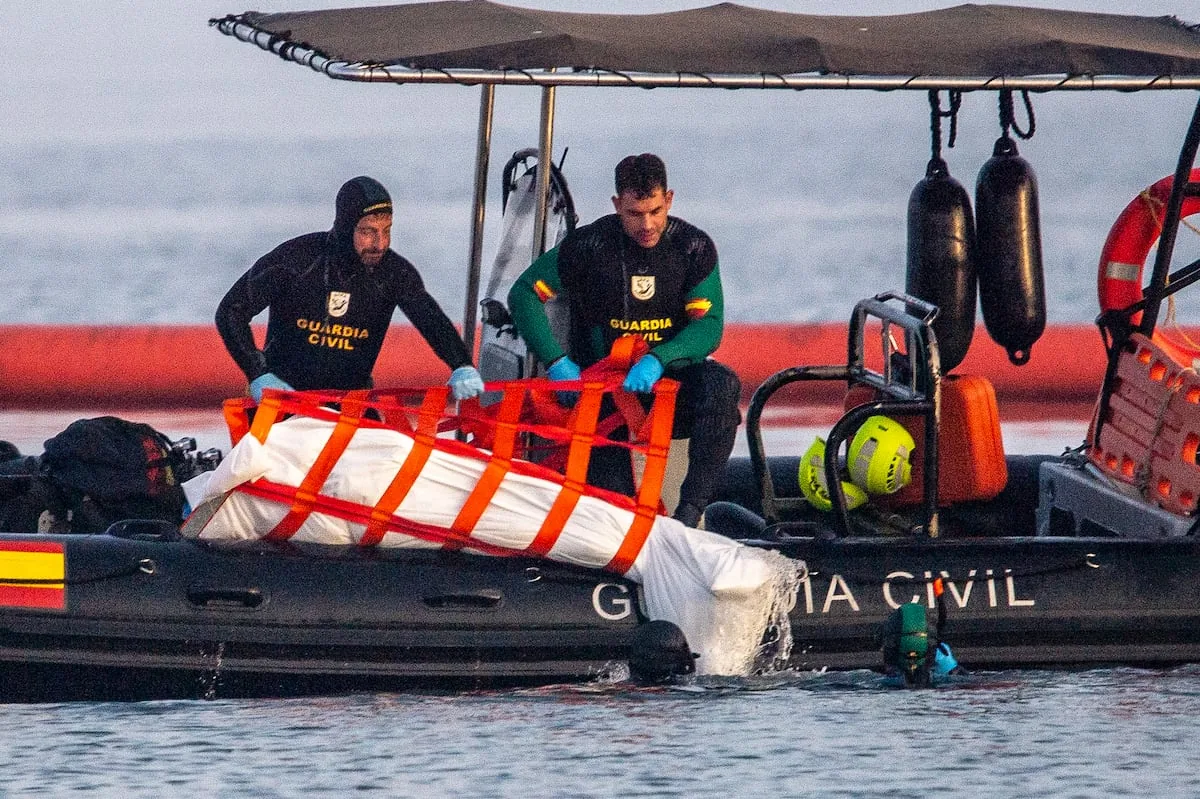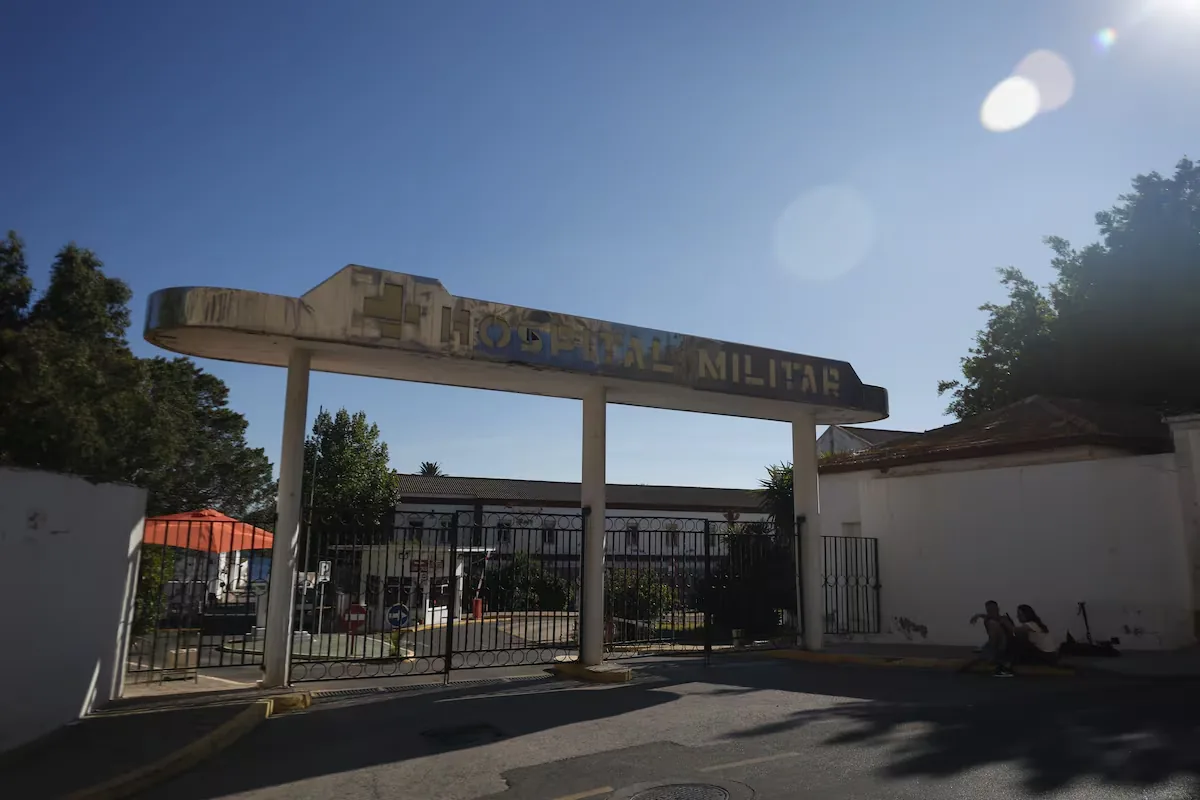
A large open room at -5° is the space that the bodies of the 77 people who lost their lives on Thursday in the latest mass entry of migrants from Morocco through the Ceuta border breakwater ended up occupying, and whose bodies were recovered on the Spanish side of the border. An intense smell fills the place, say those who have worked there these days. “Not even breathing slowly relieves it,” they affirm. As time passes, the brain dulls it and it moves to the background. The magnitude of this tragedy, in which the urge to get out of the water caused many people to end up climbing over others and sinking them into the sea, activated the protocol for major disasters with multiple victims. The old military hospital of Ceuta, a military complex with several buildings, ended up becoming a large morgue in a matter of hours. And a crisis cabinet was created, made up of forensic doctors from the Institute of Legal Medicine and agents from the Criminalistics Service and the Ceuta Civil Guard Command, in which military personnel also collaborated.
Read more The Ayuso Government paid 6.3 million for the Chamberí penthouse
In the first hours, after the irregular entry of more than 70,000 people on Thursday, 20 bodies were recovered from the sea. The next day it was about 40. And there was no space to house them. The city barely has six refrigerated chambers. One of the buildings of the old military hospital became the best available space to take them. It was deteriorated due to lack of use, but it had large rooms connected to each other and an old autopsy room. In its facilities, a whole mechanism has been set in motion in recent days in which forensic doctors performed autopsies “nonstop,” the military were in charge of transporting the bodies from one place to another, and civil guards worked on collecting fingerprints and DNA samples to be able to identify them. The longer it took, the more complicated it would be. Both to properly collect the samples and to preserve the bodies. Until Tuesday night, two had been identified.
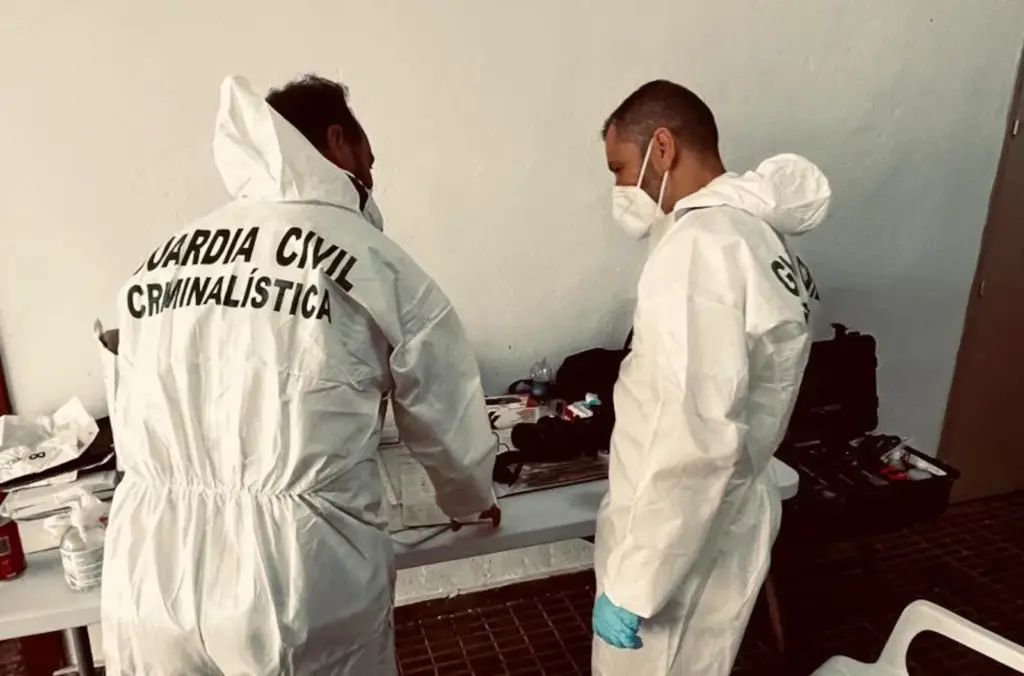
This delicate work requires methodical organization. Commander Sergio Munguía, forensic biologist and specialist of the Civil Guard Criminalistics Service, recited this Tuesday by heart how they arranged it. The first stop for the bodies was a room where they were marked with ties and an identification number. In a second space, they took fingerprints, inking the entire hand, and made the record, a registry that includes the person’s data, such as photographs, and other relevant information. Then, they were taken to the autopsy room, where they have had peaks of work between 20 and 30 examinations in a single day. The final destination of the deceased has been the hangar. In that large refrigerated room, on top of each body, a tube with DNA samples and the corresponding tie number has been placed. In addition to the 77 deceased from the avalanche on July 30, two other bodies recovered the same Thursday, before the large entry, and the day before are kept. Until yesterday, 77 autopsies had been performed and the remaining two are expected to be completed this Wednesday, although new victims may still be added.
Most of the deceased, among whom there is a woman and some children, were submerged in the breakwater area. From those same rocks that the migrants intended to reach, in many cases entire families, numerous pieces of clothing sunk to the bottom of the sea were seen this Tuesday. The swimmers’ attempts to climb up as soon as possible and reach the Spanish side caused those underneath to sink. A significant part of the victims have head injuries, according to sources familiar with the forensic examinations. Those who remained under this human mountain sank and ended up drowning, according to other sources.
The way the management of this crisis in Ceuta has been organized is inspired by the one already used in the Spanair flight accident at Madrid-Barajas airport in August 2008, in which 154 deaths were recorded. There they used the Ifema venue as a provisional morgue and a family assistance center. In this case, the office where families can file complaints was opened this Tuesday in the customs premises of the El Tarajal border. The center will be open from 8:00 to 21:00 and they also have an email ce-cmd-ceutapjlaboratorio-identificacion@guardiacivil.org to file missing person reports. The Civil Guard has asked complainants to provide as much information as possible, such as physical descriptions, medical operations, scars, tattoos, or personal objects they were carrying. Until Tuesday morning, the agents had two complaints.
Read more Sentenced to three years in prison the mayor of Guayaquil in the first of three trials he faces
The work to turn numbers into names still has a way to go. No one hides that it will be complicated and Morocco’s cooperation is essential. “Mechanisms of police cooperation are being sought with Maghreb authorities to allow them to cross-check information with their databases, especially fingerprints, since it is the fastest and does not require involving relatives,” Munguía specifies. “The Police Coordination Center of Tangier and the Interior attaché at the Spanish Embassy in Rabat are working on it,” assures Commander Munguía. In addition to the criminalistics agents, members of the Ceuta Judicial Police also participate in the operation.
The agents have checked if the victims’ fingerprints are in the Spanish databases. This is how they obtained the first two identifications. Some of the victims came with documentation, but “for now” this is not the route that will be used; instead, fingerprints and DNA, internationally recognized and endorsed by Interpol, are prioritized. “It is the most scientific method,” the commander emphasizes. The criminalistics agents have used Identisat in Ceuta for the first time, a proprietary system that allows transmitting fingerprints in real time via satellite, designed to speed up information exchange.
The first biological samples of the deceased were sent this Monday by helicopter to Madrid, properly refrigerated. “The chain of custody is fundamental,” notes the commander. “They are taken with swabs from heart cavities, blood, teeth (such as premolars), long bones (femur or tibia), or sternum. Families are also asked to provide these samples.” When matches occur, the agents will notify court number 3 of Ceuta, in charge of the case, which can authorize repatriation. Otherwise, the deceased will remain identified by a number and burial of their remains will be authorized.
Read more Leagues Cup 2026: schedule, times, and where to watch the group stage matches