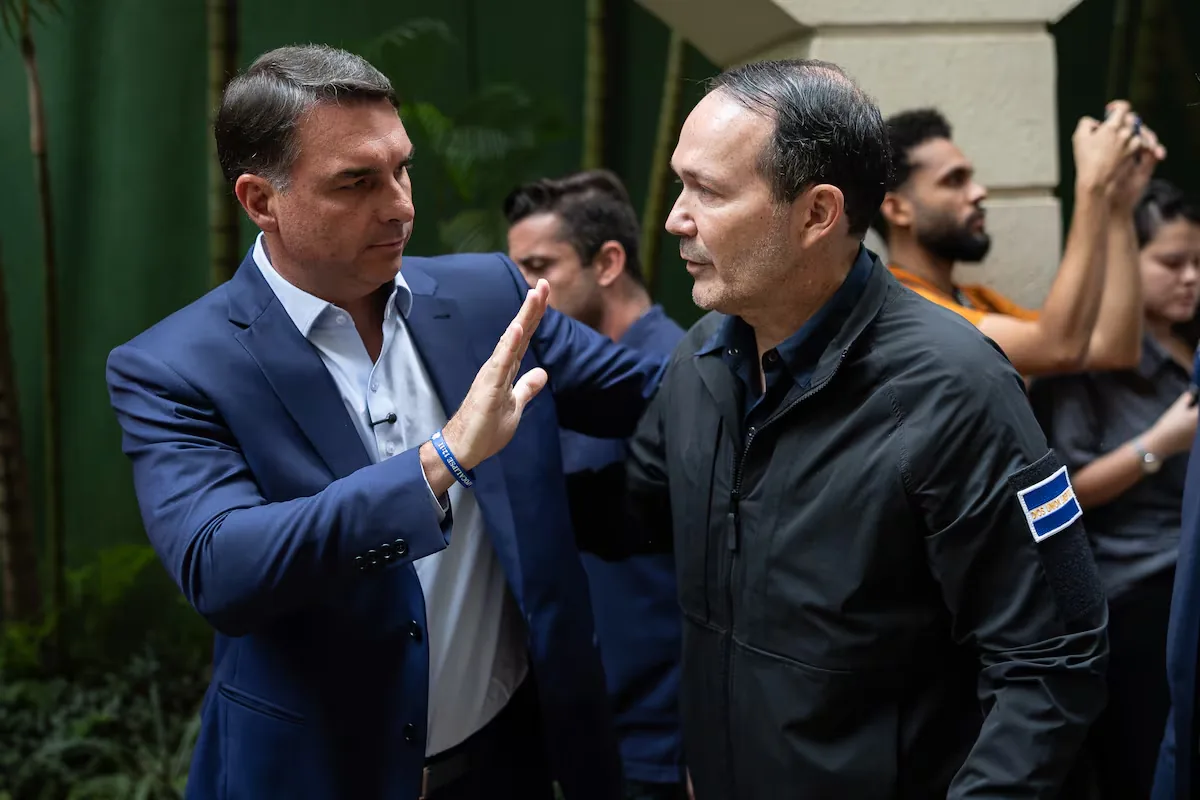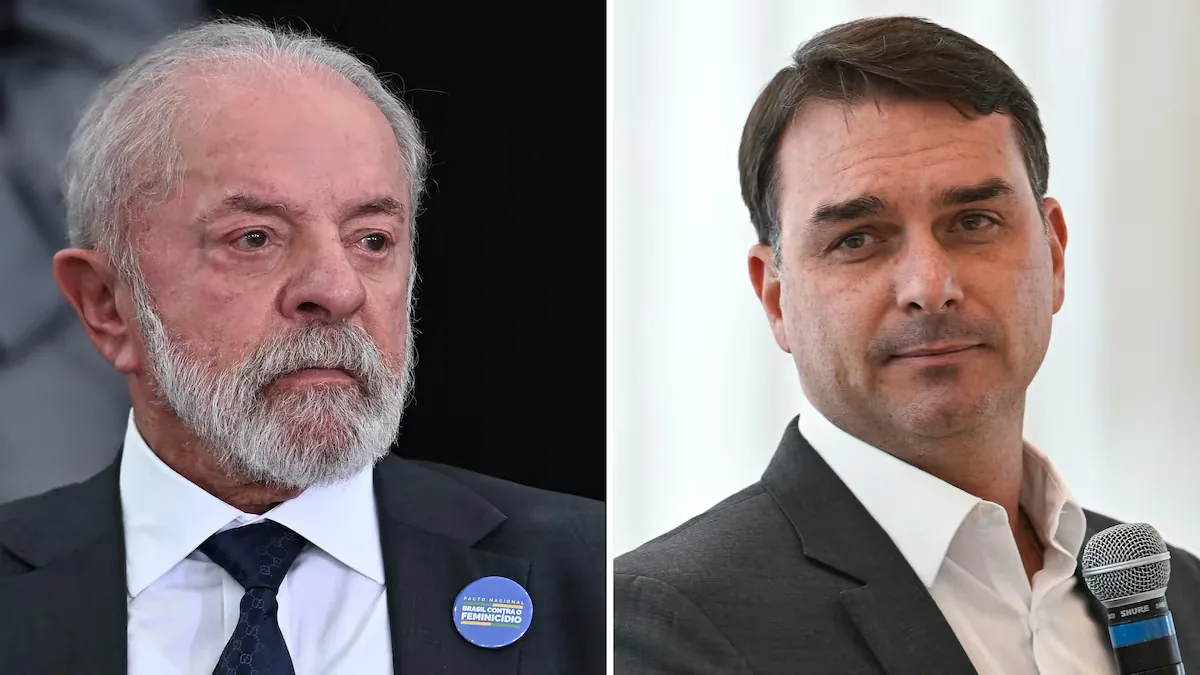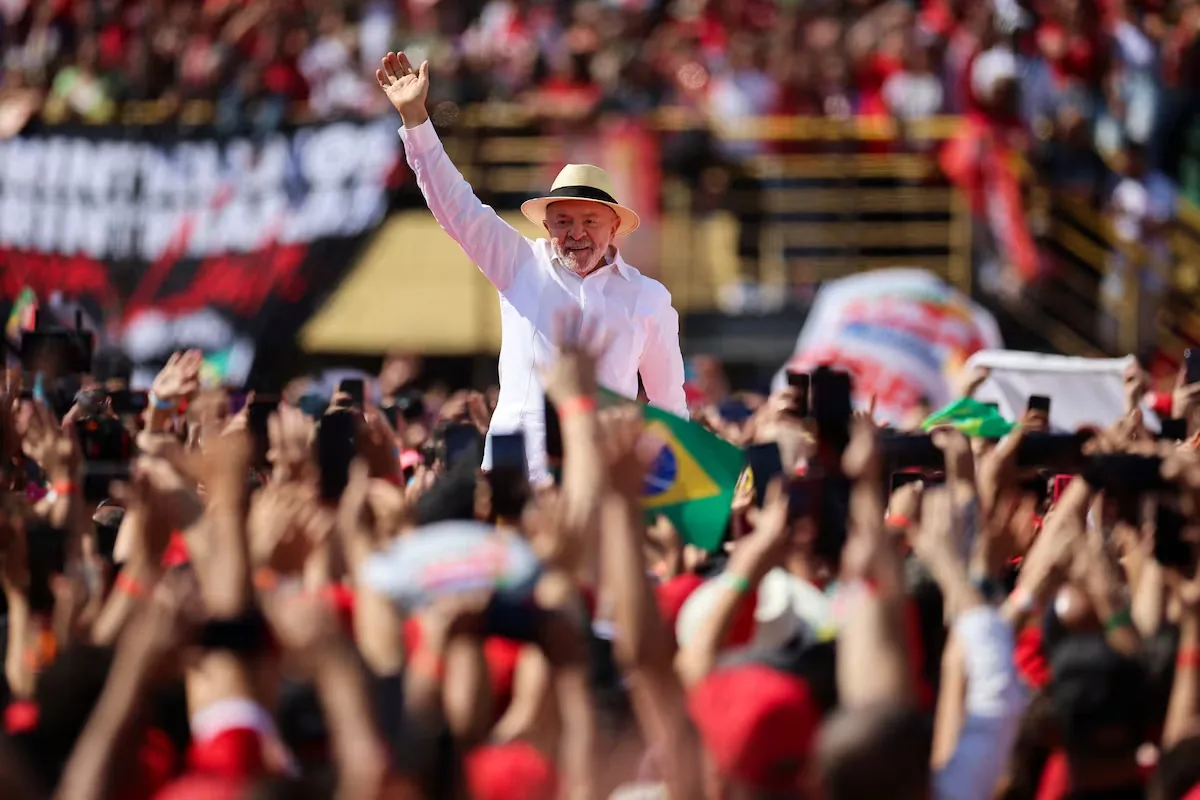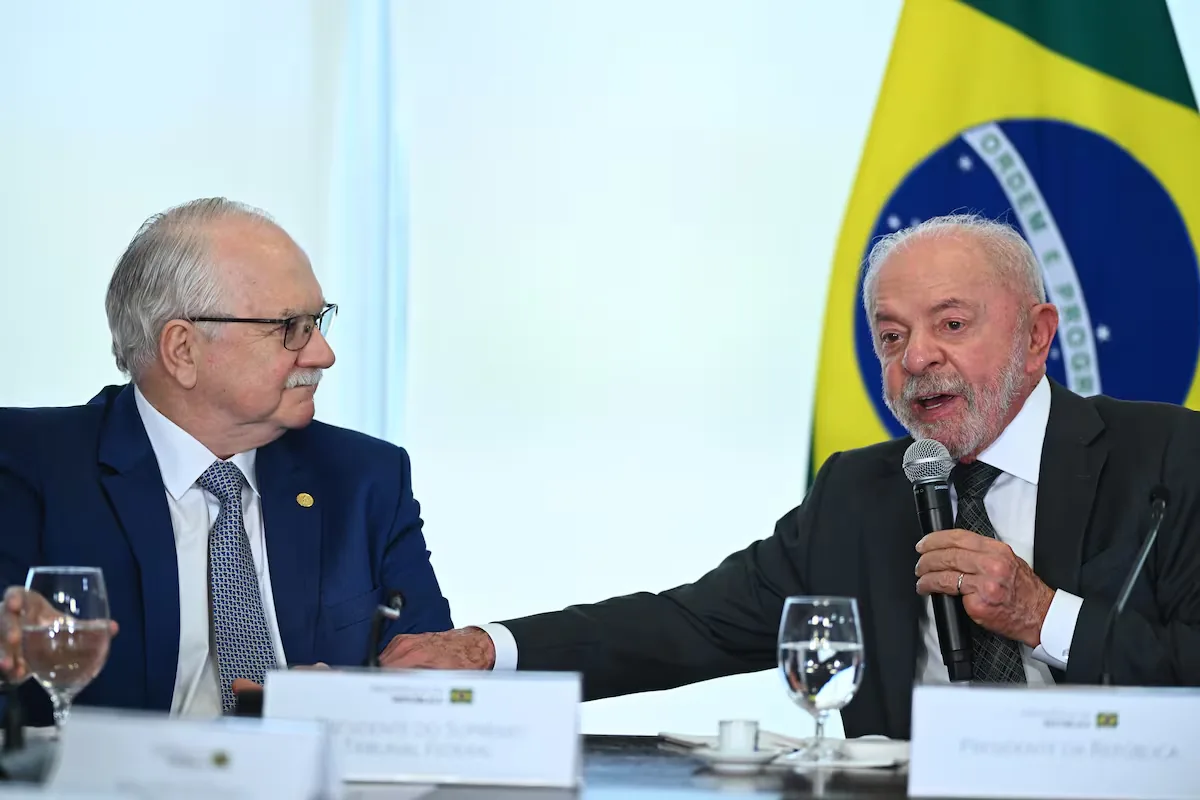
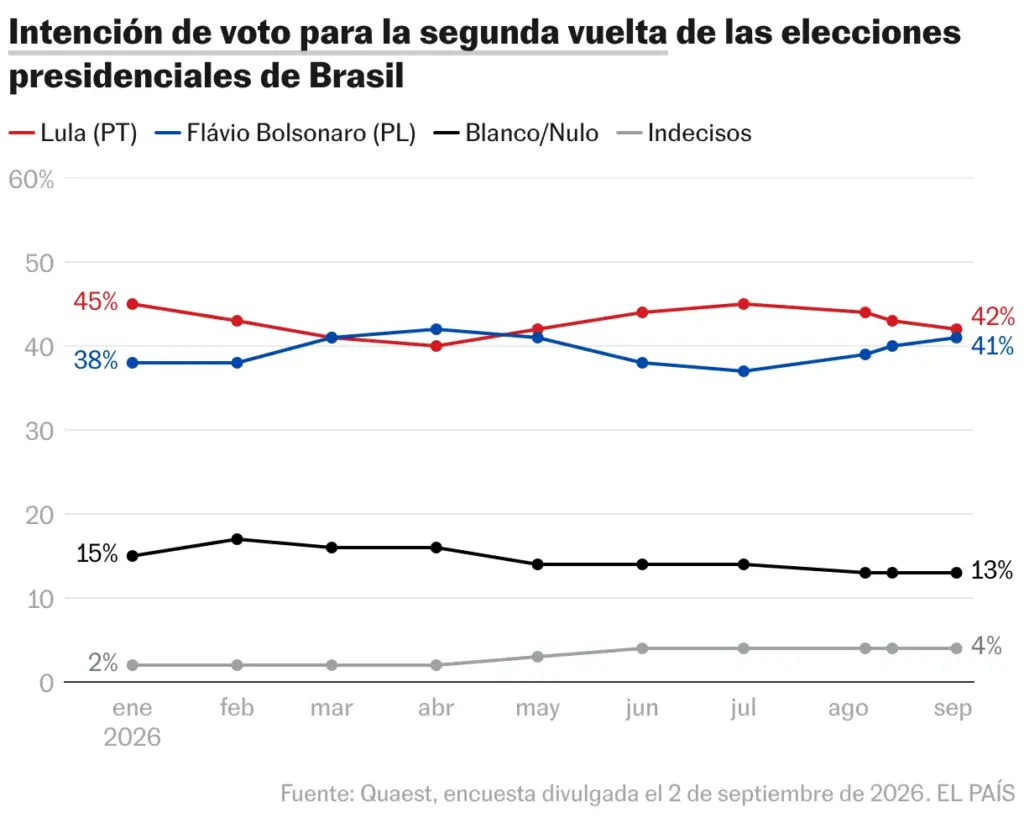
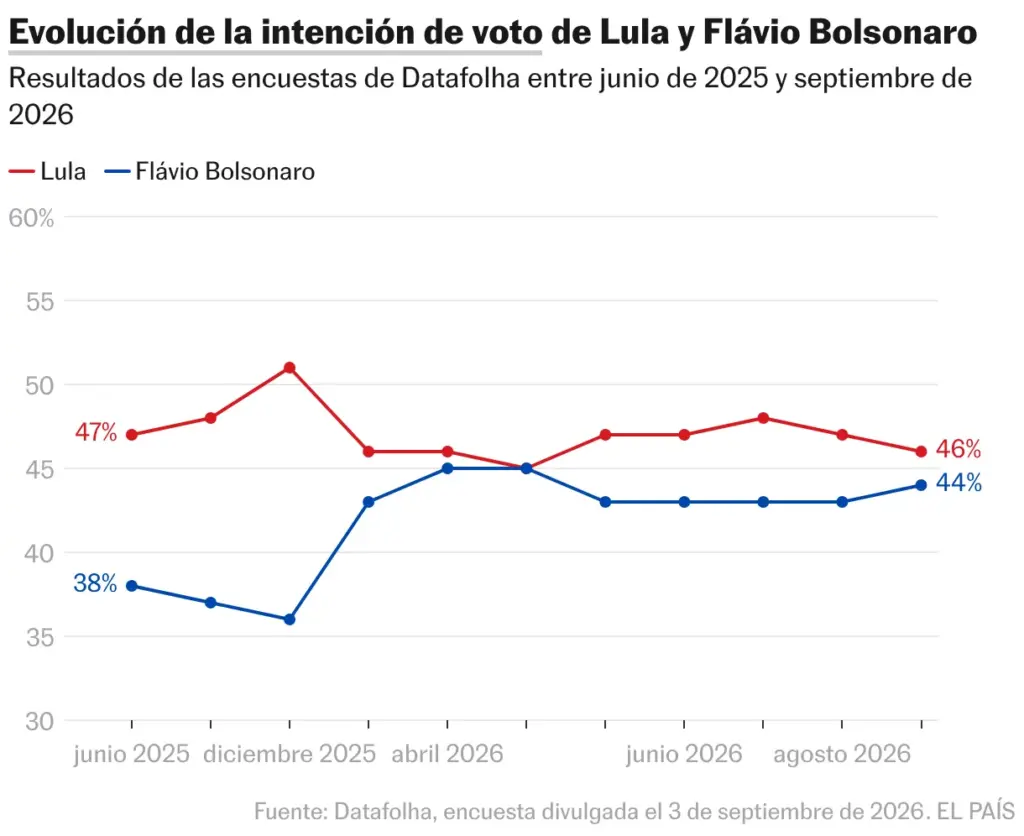
The legal-political scenario in Brazil has been extremely shaken in recent days with the outbreak of an open war within the Supreme Court, a matter with the potential to alter the dynamics of the campaign. Almost a month before Brazilians vote in the first round of the general elections, the dispute between President Luiz Inácio Lula da Silva, 80, and Flávio Bolsonaro, 45, appears even tighter than the one the leftist fought in 2022 against the senator’s father. The two polls this week point to a technical tie after Lula lost the slight advantage he enjoyed. And between them, a third contender emerges. Meanwhile, the Supreme Court, a key political actor, is experiencing one of the worst crises in its history due to corruption suspicions against the powerful and controversial Alexandre de Moraes.
Read more Mexico aims to join the semiconductor ‘boom’ in Arizona
This Monday, Independence Day, Lula presides over the official civic-military parade in Brasilia while Bolsonaro Jr. will lead a march in São Paulo against the leader of the Workers’ Party (PT) and Judge Moraes. The latest revelations may boost Bolsonaro’s desire to initiate an impeachment process against the judge.
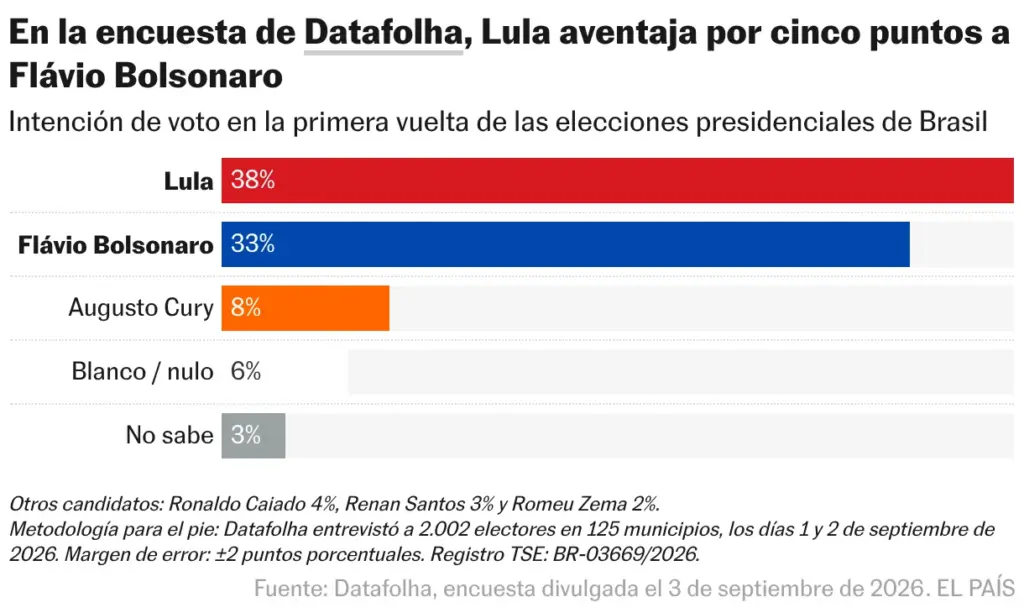
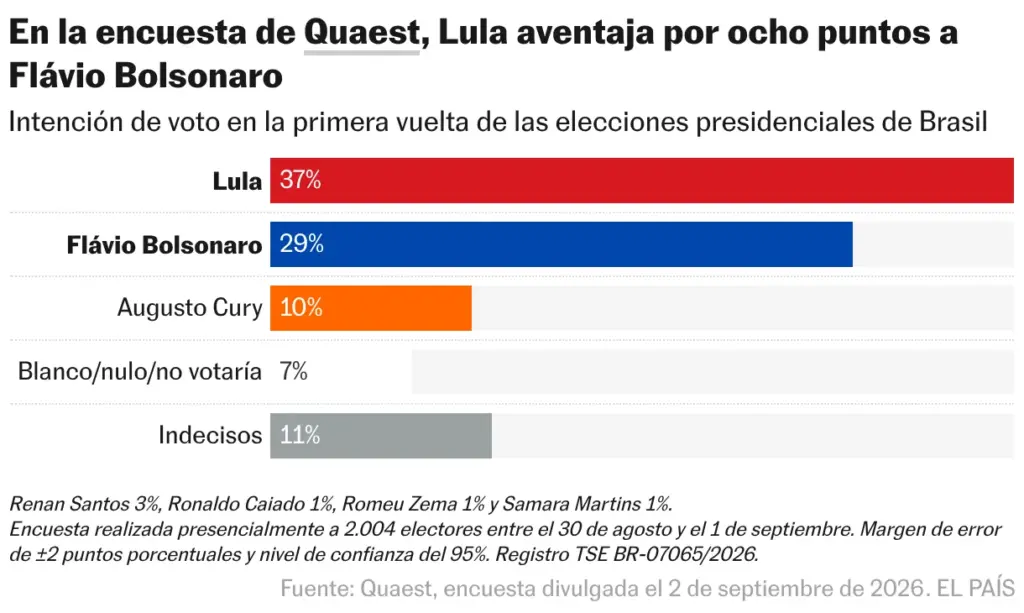
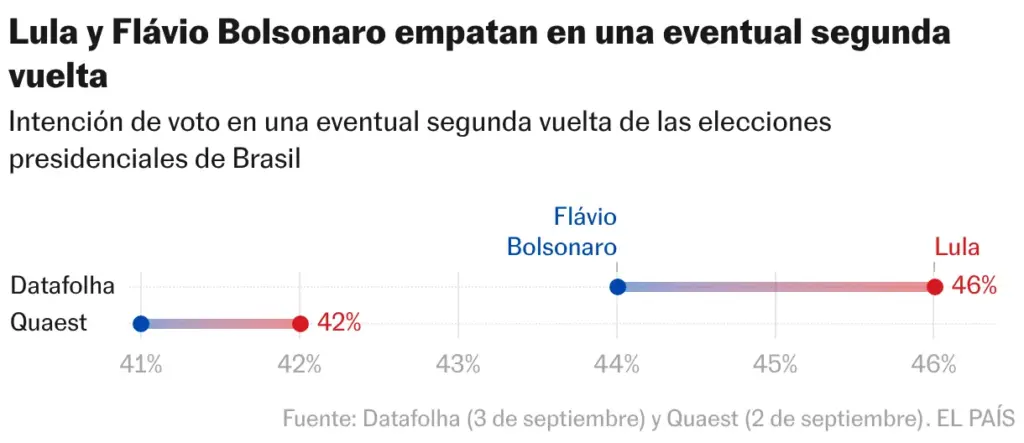
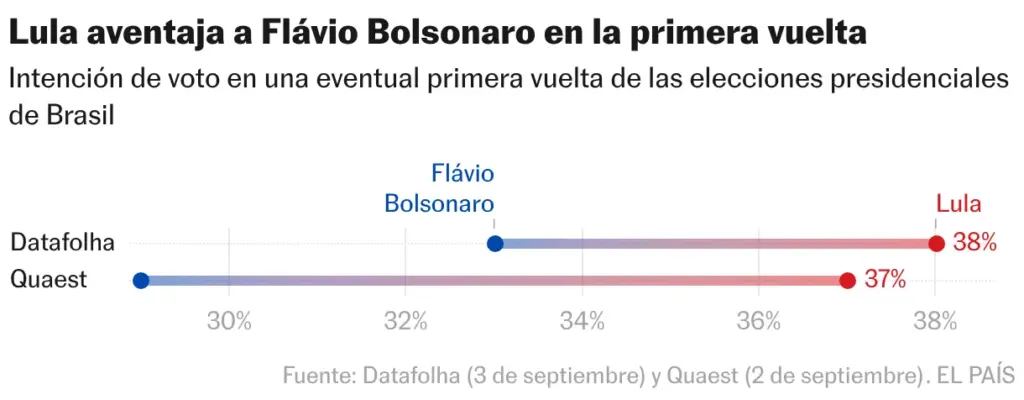
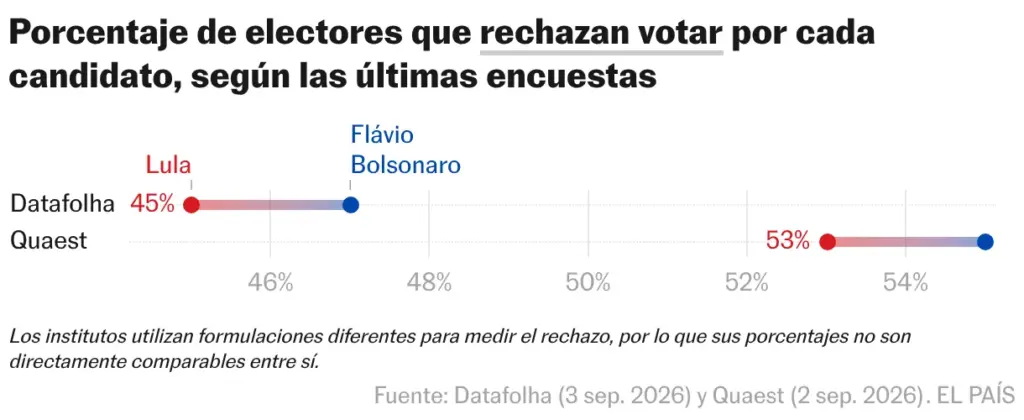
Lula remains ahead in the latest polls (Quaest and Datafolha), with a 5-7 point lead over Bolsonaro in the first round and 1-2 points in the second. On October 4, Brazilians vote for president, governors, Congress, and two-thirds of the Senate. They will return to the polls on October 25 if no one achieves more than 50% of the valid votes. In voter antipathy, Bolsonaro Jr. leads closely followed by Lula. The right-winger is rejected by 55% and the leftist by 53%, according to the Quaest poll.
Judge Moraes, hailed as the savior of Brazilian democracy against Bolsonarist coup attempts, is now suspected in a corruption case due to his close relationship with the banker accused of Brazil’s largest fraud, Daniel Vorcaro. The scandal involves Banco Master, liquidated in 2025 by the Central Bank with a multimillion-dollar hole.
The Master case has become a seven-headed monster that, in the style of the Lava Jato case a decade ago, has raised suspicions about dozens of men among the most powerful in Brasilia, both in the judicial top (see Judge Moraes), politics (see Bolsonaro Jr. and a PT leader), the Central Bank, or the Federal Police. Investigations indicate that the bank owner, who has been imprisoned for months and remains silent, distributed millions and all kinds of favors in the highest spheres of power seeking protection.
Police investigation points out that the banker had close contact with Judge Moraes, whom he begged to maneuver to stop the investigations and asked for advice on whether to flee the country on the eve of being arrested. The explosive messages from the banker to the judge — it is unknown what the judge replied — add to another known fact, that Banco Master had hired the law firm of Moraes’ wife for 25 million dollars, a price far above the market. For now, the judge is not accused of anything. He is not even formally under investigation because that must be authorized by the Supreme Court itself.
The editorialists of the main newspapers demand that he give explanations and resign or, at least, step aside temporarily while the investigation lasts so as not to further damage the highest court. While Moraes remains silent, the Brazilian media speculate about new revelations and the effects of what is already known, Bolsonarism rubs its hands, and President Lula proclaims that no one is above the law. “No one, in the name of democracy, can use the position they hold for personal benefit,” the president emphasized on Friday, trying to distance himself from Moraes, with whom he has maintained good rapport in recent years. “It is essential that everyone is investigated, without shielding anyone, no matter who it hurts. The Brazilian people have the right to know the truth,” he said the day before in a video message in which he demanded “transparency and firmness” from the institutions.
Read more Claudio Lomnitz: “Sheinbaum shares quite a few strategies of the war against drug trafficking”
Banker Vorcaro also had contact with candidate Bolsonaro, to whom he promised 25 million dollars to finance a film about the patriarch Jair, imprisoned. He delivered half, according to the police.
To add drama to the seriousness of the accusations against Moraes, the messages he received from the banker became known because one of his colleagues on the court, André Mendonça, ordered the lifting of secrecy over a police report dedicated to their relationship. The decision left many stunned because the Supreme Court usually washes its dirty laundry in private and, moreover, has brought to light the silent duel that Moraes and Mendonça have been waging for months. The former counterattacked by opening an investigation against his colleague for lack of impartiality.
The next president of Brazil will be able to appoint at least three of the 11 Supreme Court judges and, therefore, can maintain the current majority, seen as favorable to Lula, or form one closer to the Bolsonaros. Mendonça is the “terribly evangelical” judge appointed by Bolsonaro Sr.
The main novelty of the most recent polls is the rise of a third presidential candidate. The surprise is that the man who has carved out a space in what has been from the start a head-to-head between Lula and Bolsonaro is a psychiatrist, not one of the right-wing governors in the race or the anti-system aspirant who attracts the younger vote.
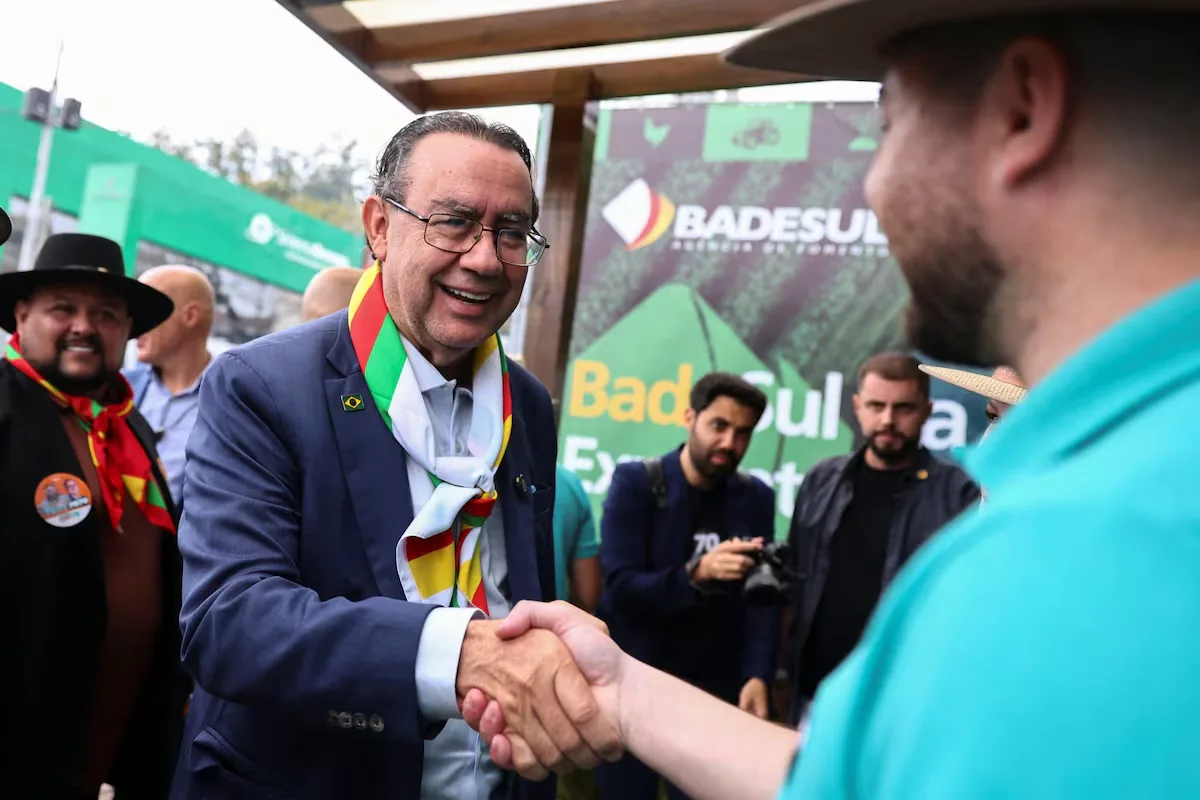
Augusto Cury, a bestselling self-help author with no political experience, has achieved 8-10% in the polls with his promise to pacify Brazil. The psychiatrist appeals to the neither-nor electorate, neither Lula nor Bolsonaro, with a simplistic discourse with large gaps in which he promises to apply the best of both right-wing and left-wing recipes to end polarization and redirect the country.
Read more Video analysis | The rupture they want