









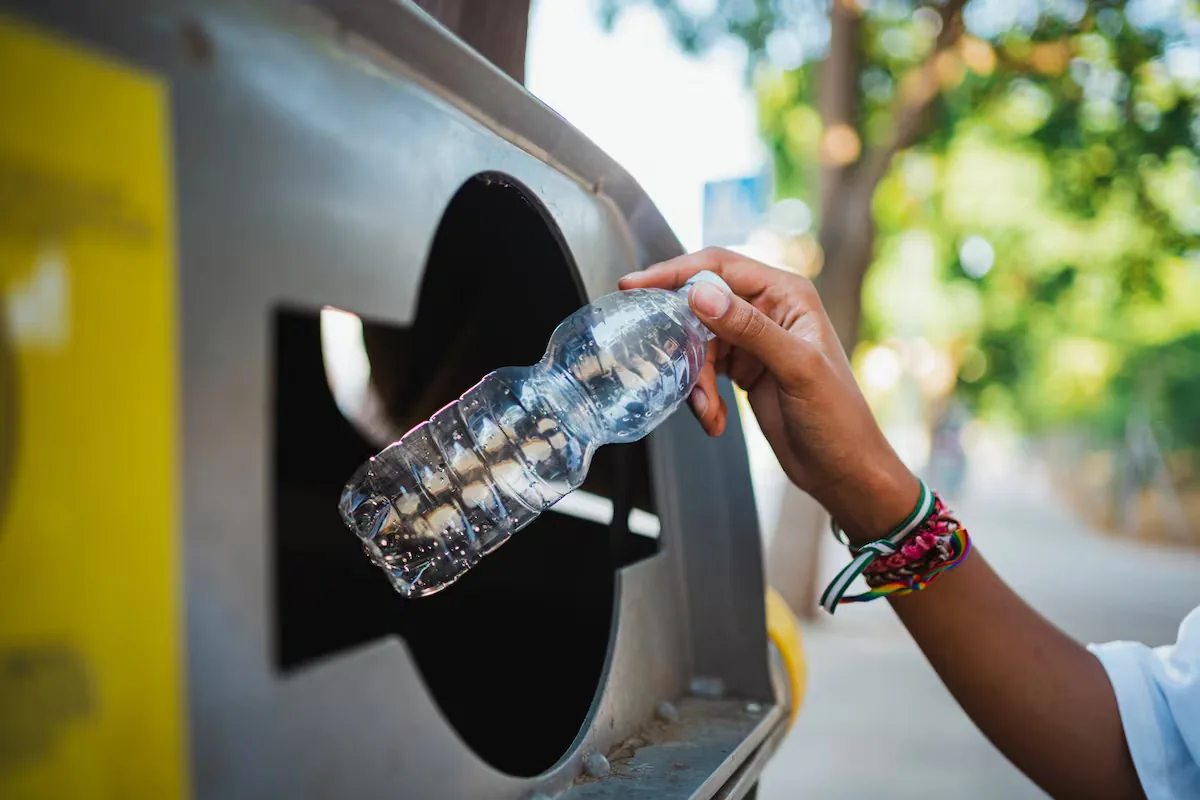
The great recycling revolution is taking place in the European Union (EU). From August 12, the regulation on packaging and packaging waste (PPWR, by its English acronym) begins to be applied in all EU countries. The law, which replaces a 1994 recycling directive, aims to gradually reduce packaging waste until 2040.
Read more Ferran Torres will become the image and ambassador of the Valencian Community
Responsibility increases upstream, meaning producers and manufacturers must take measures to include more recycled material in packaging and to increase its recyclability. Eco-design will continue to be key for the development of new containers. Citizens will encounter more complete and informative labeling. The number of bins for waste disposal does not change.
Some measures will be implemented from August 12 itself, such as the restriction of PFAS substances (perfluoroalkyl and polyfluoroalkyl) in food contact packaging. Other rules will be applied gradually, such as the obligation in 2027 for restaurants to allow customers to take leftover food in their own containers or that 10% of beverage packaging sold in supermarkets or other food stores must be reusable from 2030.
The previous directive depended until now on its transposition in each of the 27 Member States. The regulation guarantees harmonization throughout the European Union. Travelers in the common area will find the same specifications as in their home countries. Companies will not have to adapt their packaging to the rules when selling in other EU countries because the standard will be the same in the common area.
The targets set based on 2018 are a reduction of 5% in packaging waste by 2030, 10% by 2035, and 15% by 2040
How the targets will be met
more REUSE
Takeaway and delivery food, in reusable containers
more RECYCLABILITY
A minimum of 70% of the packaging must be recyclable
more ECO-DESIGN
Plastic packaging will incorporate between 10% and 35% recycled material
more LABELS
Common pictograms are created for the entire European Union and traceability is informed
more RESPONSIBLE PARTIES
The figure of the manufacturer arises, the one who puts the brand on the packaging and who is responsible for how it was made
REUSE BECOMES EFFECTIVE
All catering businesses offering takeaway food or drink must give customers the option to serve it in reusable containers. Transport containers (pallets, foldable plastic boxes, drums…) must be reused.
From 2028, all businesses in the Horeca channel (hotels, restaurants, cafes, and caterings) offering takeaway food, either on-site or through apps, will be required to offer consumers the option to receive or take food and drink in reusable containers. These containers are not disposable but are part of a circuit that allows their rotation. Customers must return them, and establishments must ensure their cleaning and recirculation.
- The reusable container must have the same price as the single-use one
- Traceability to know where it is at all times
- System and return points
- Cleaning and refurbishment
From 2027, establishments must allow customers to bring their own containers for food leftovers or takeaway food.
100% of transport packaging (pallets, boxes, drums) must be reusable from 2030
Exception: plastic films due to their role in load security and cardboard boxes
10% of beverage packaging sold in supermarkets or other food stores must be reusable from 2030
Exception: wine and spirits, dairy, and other perishables
The law provides that Horeca channel companies facilitate the return of reusable containers by customers. It is important to differentiate between return points for these containers in supermarkets, food stores, or restaurants and the Deposit Return System (SDDR) machines, where single-use PET containers and beverage cans will be left. The implementation of the SDDR is planned for 2029. These containers will have a small deposit added to the price (pending approval, but expected to be 10 cents) that is recovered when returning the empty container. This system has been operating in Germany since 2003 and is known as Pfand.
ALL PACKAGING MUST BE RECYCLABLE
From 2030, packaging must have a minimum recyclability of 70%. Otherwise, they cannot be placed on the market. This 70% will increase to 80% in 2038.
Recyclability means that the material they are made of (PET, HDPE, PP…) is suitable to be processed in a waste treatment plant to be converted into raw material again.
From 2030, the recyclability of each package will be classified into qualities (A, B, or C) and will condition its market access and the fee producers pay for waste management.
“The goal is for recycling plants to have enough material to then meet the demand for recycled material needed for the manufacture of new packaging. It is closing the recyclability loop. The obligations are staggered and increase over time.”

Ovidio Soler Coordinator of Regulatory and European Affairs at Ecoembes
Packaging producers are incentivized. The fee they already paid for waste management is lower the higher the recyclability.
In 2035, the 22 existing packaging categories will be analyzed and evaluated to see if all reach a minimum recyclability of 55%. If not, that type of packaging will be removed from the market.
A MINIMUM OF RECYCLED PLASTIC TO MANUFACTURE NEW PACKAGING
From 2030, minimums are established ranging from 10% to 35% recycled plastic content for different packaging categories. These minimums increase in 2040, reaching up to a maximum of 65% recycled material.
Minimum percentage of recycled material that plastic packaging must incorporate
In 2030
In 2040
Single-use plastic bottles for beverages
30% 
65% 
Contact-sensitive packaging made of PET (polyethylene terephthalate)
30% 
50% 
Contact-sensitive packaging made of other plastics (non-PET)
10% 
25% 
Other plastic packaging (not contact-sensitive)
35% 
65% 
The goal is to use less and less virgin plastic in favor of previously used and treated plastic to give it a new use. The challenge, says Ovidio Soler, is to have enough post-consumer recycled material from some Member State to use in the manufacture of new packaging: “To meet recycled plastic obligations, many companies now import material from outside the European Union, which in many cases is harder to prove as truly post-consumer recycled plastic and not virgin plastic,” he assures.
A NEW AND HARMONIZED LABELING IN THE 27 MEMBER STATES
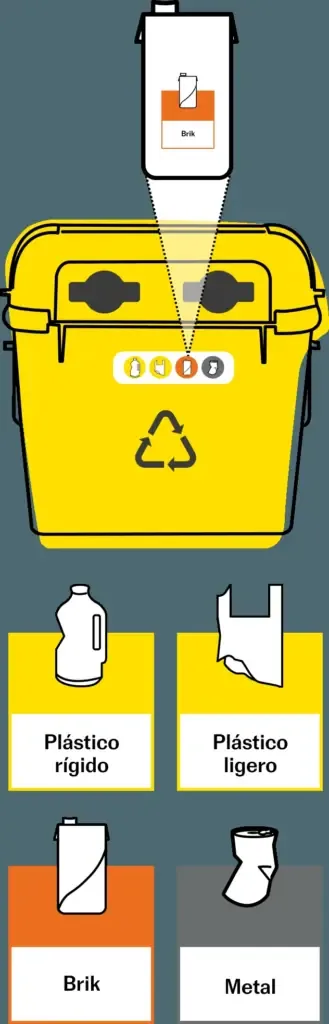
A common pictogram is created for the entire European Union. Containers and bins do not change in Spain, nor the waste that goes in them, but there will be new labels to differentiate materials.
Harmonized labeling will inform equally from 2028 in all Member States about the materials the packaging is made of. They will no longer only carry an icon indicating which bin to deposit it in (yellow, blue, green…), but a matching system will be established. A beverage can will have a gray logo (metal) and that same logo will appear on the yellow bin, where it must be thrown. A rigid plastic bottle will have a yellow logo reading rigid plastic, and that same logo will be on the yellow bin, where it must also be deposited. A milk carton will have an orange logo, and that same orange logo will appear on the yellow bin, where it must be thrown.
On the bin where these packages must be deposited, labels with the colors corresponding to each packaging type will be visible.
Before harmonization, if a Spanish company wanted to sell its products in France, it had to adapt to that country’s regulations and add appropriate logos or labels. A specific package had to be created for that market. As Soler says, “it limited competitiveness, especially for smaller companies.”
THE FIGURE OF THE MANUFACTURER EMERGES AS RESPONSIBLE FOR THE PACKAGING
The manufacturer of the packaged product, the one who puts their brand, is now legally responsible for complying with the eco-design packaging regulations.
Most provisions of the new law focus on the materiality and design of the packaging. Obligations related to recyclability, recycled content used to manufacture containers, labeling… no longer correspond to its producer, but a new figure is created: the manufacturer of the packaging or the packaged product. The producer retains responsibility for financing the management of packaging waste.
The manufacturer is considered to be the one who puts the brand on the packaging. An example: a supermarket chain commissions a third party to produce a product to then sell it under its own brand. The supermarket in question is considered the manufacturer by putting its brand and therefore is responsible for the packaging in which that product is marketed.
Read more How and where to get free certified glasses to watch the total eclipse in August?