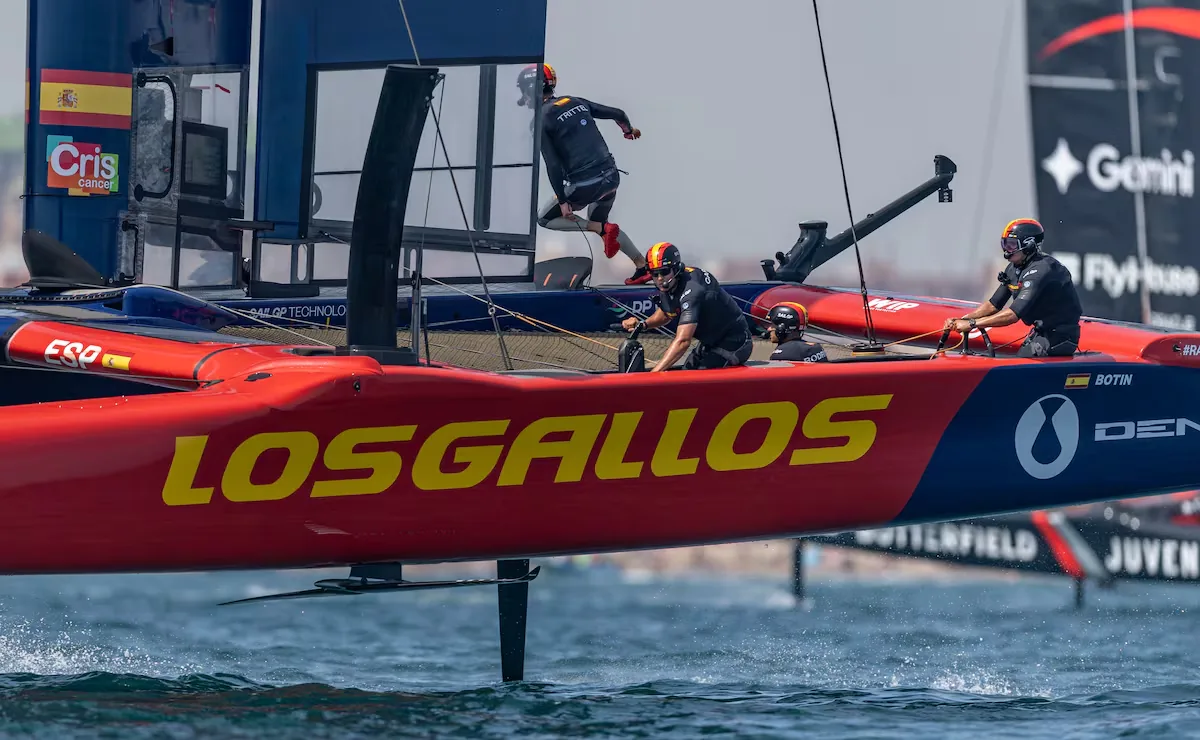
All philosophy dies, suffocated, when the wind does not blow towards the sand of Malvarrosa, nor the other way around. The different moral energy that makes Los Gallos a unique team in the SailGP jungle is worth nothing anymore. A bad start, a wall of catamarans, jibs, and wings nearly 30 meters long that steal every last breath that the Spanish F50 can move, unable to lift itself on its foils and fly, condemning it to last place in the Sunday preliminary. Saturday’s silk sea was sandpaper on Sunday, and the final evaporated. The Mediterranean was in solidarity with the Atlantic of the Bay of Cádiz, which always denied Diego Botín’s team access to a final in a Spanish GP.
Read more Van Aert, imperial, repeats success in the Vuelta a España
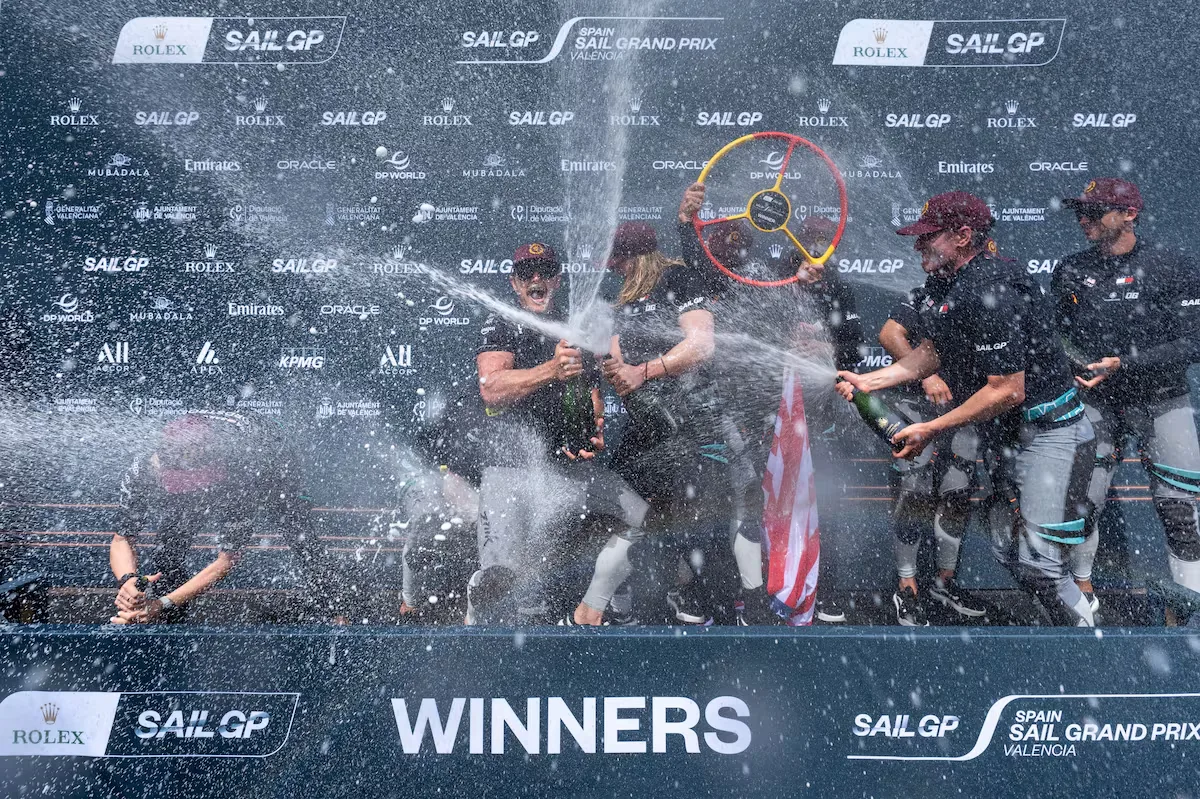
In the final four, Taylor Canfield, master of sailing without foils steering the United States, confused and tested the patience of the tremendous Tom Slingsby, skipper of the flying Australian kangaroos who tried to surpass him by taking the longer route at higher speed on the foils, and lost.
Spain finished fifth in Valencia but maintains second place overall. Australia leads, with 17 points more. Third is the United States, 12 points behind the Spaniards, and fourth, Sweden, 13 points behind. Three races remain before the grand final in Abu Dhabi (November 28 and 29), which the top three will contest. “The United States is a team that is very strong when they don’t foil. In Sydney, which was the other event where they didn’t foil, they also won,” says Diego Botín, the Spanish boat’s skipper. “They will be a tough rival for the final with the low-wind events coming up: Geneva, Dubai, and Abu Dhabi.”
The Spanish F50 Victoria, the proud Formula 1 that two weeks ago in the Baltic of Sassnitz flew at 106 kilometers per hour, splashed flat at 20 in the dead calm, and its crew didn’t even have a Fernando Alonso-style escape, blaming the tires, the mechanics, or the Aston Martin engine being a dud. All boats are the same, their sails, their wing, their foils, and their settings, and the wind, or its absence, is the same for everyone. Everyone knows what the others are doing. Down to the last detail, as all data is shared, millions per second. The winner is the one who sails best.
“We can’t, we can’t use excuses. Here it was us and yes, that’s how it is. We have to use this pain to move forward, to learn. I’m sure it will help us. We’ve been on a very good streak, reaching all finals, and I’m sure this will give us a boost towards the end of the season,” reflects Botín. “At the start, since there are few boats, only six, our intention was to start with good speed. We wanted to come with a little more distance to the line and thought there would be some gap to cross. And all the boats closed the gaps on us. And on the last close-hauled leg, we made the desperate decision to try to foil to stick to Denmark, but it wasn’t the right call because there was a little lack of wind and the boats that crossed in front gave us a bad wind that nailed us.”
Read more Family matters
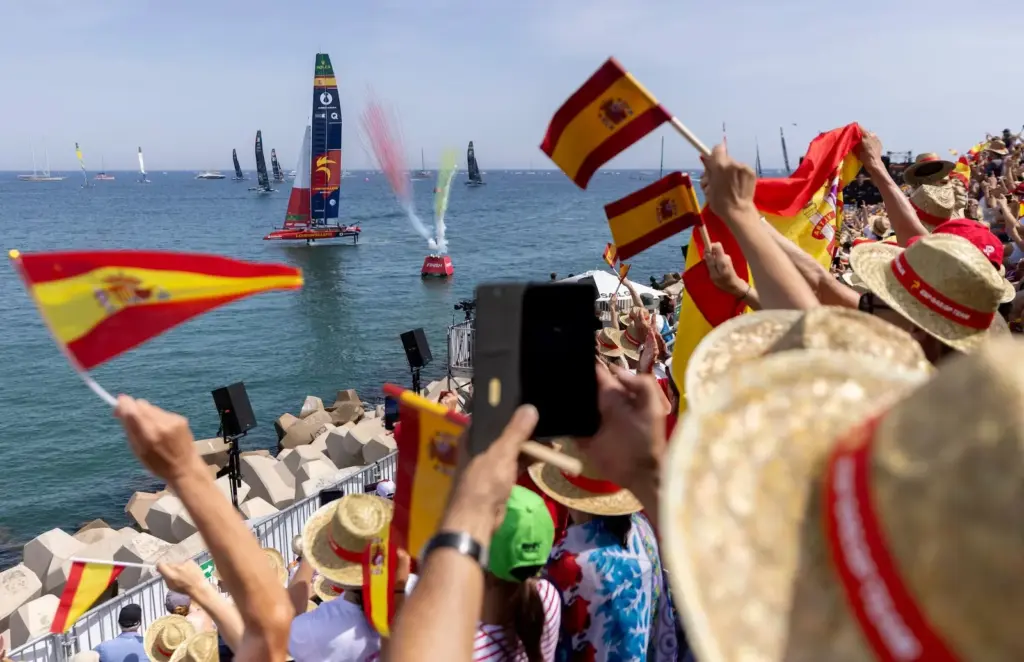
The frustration and pain of not triumphing before a devoted crowd in the stands – 9,000 paying spectators – and on the beach does not make Los Gallos forget the enormous value of what they have achieved with a different way of facing one of the toughest and most complicated sports competitions. While most rivals operate with a historic star of Anglo-Saxon maritime folklore – Slingsby, Burling, Outteridge, Robertson, Percy, Fletcher – and a makeshift crew, the Spanish team is a group that has grown together, with hardly any changes, going from desperate last in 2023 to first in 2024 and fourth out of 12 in 2025. An egalitarian team in which their former coach, the revered New Zealander Hamish Willcox, convinced them to all accept the same pay from the team – about 40,000 euros per annual campaign – and to focus more on fighting for victory prizes.
Two years later, Los Gallos have grown so much, are so good, that they have pocketed about five million euros in prizes (an amount fully shared among the crew), placing them third behind Australia and the United Kingdom counting the six seasons of SailGP’s existence. The league has a total annual prize pool of 12.8 million dollars. Two million go to the final winner. 400,000 is pocketed by the regular season leader and the same amount rewards the winner of each grand prix.
The next grand prix (September 19 and 20) will be held in the fresh water of Lake Geneva. “On a lake it’s always different. It’s a more confined area, but it’s also nice that there are differences between sailing in saltwater and freshwater,” explains Florian Trittel, head of the wing on the Spanish F50. “That translates into it being a little harder for us to take off and that the boat moves faster. It floats less, but also, with fewer salt particles in the water, the boat goes faster once it flies.” And all that’s missing for the story to be glorious is for a hurricane to descend from the Alps and blow hard, the foils to lift, and Los Gallos to fly again.
Read more Solving health emergencies that go viral, Abelardo De la Espriella’s first response to the crisis