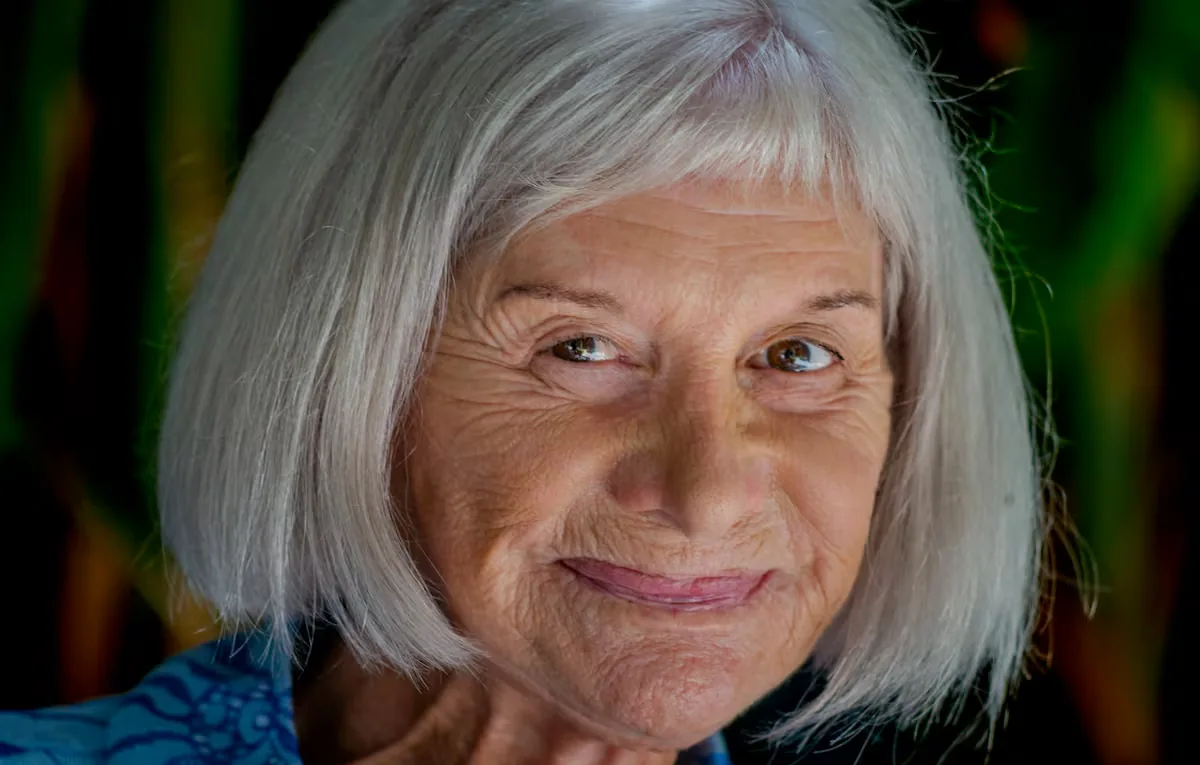





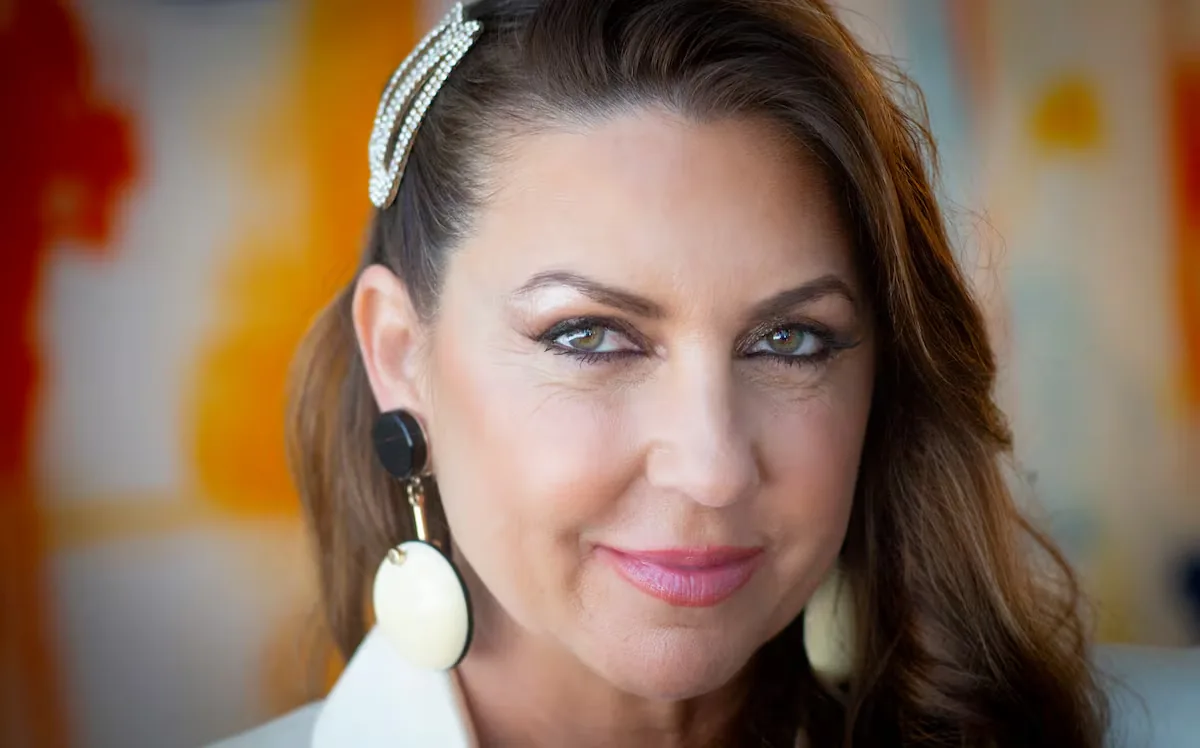
I arrive very late, and out of sorts, at the recording studio where María Rosa García García, Niña Pastori to the world for more than three decades, is giving interviews. After almost an hour of fruitlessly searching for parking in this chaotic Madrid industrial area where ultra-modern record producers on scooters coexist with pre-trial prisoners driven in police vans to a first instance court, I arrive so out of breath that I pass by C. Tangana in the courtyard without even noticing. Inside, however, everything is peace and love. Dressed in a white pantsuit, her hair pinned back with sparkly hairpins, XXL earrings, and exquisite makeup that highlights her sparkling green eyes, Niña Pastori looks like she just came from a nighttime pool party and exudes serenity and good vibes. On Sunday, June 6, she will sing before Pope Leo XIV at a meeting with Cáritas. If she is not in a state of grace, she certainly seems to be.
Read more I envy my grandmother
Is wearing all white because of the Pope?
Do you like it? No. I love white, and since the image of this album, Color Fania, is so colorful, we thought it looked nice for the photos.
When you sang in 2003 for John Paul II, you were 25 years old. Now, before Leo XIV, you are 48. What has happened since then?
A lot has happened. And if we go further back, I won’t even tell you, because I started singing at 9 years old, both an eternity and a blink of an eye. Staying in this profession for 30 years is not easy, you have to work a lot. I have seen changes in the industry, in the business; I have seen many people be in one place and then another. I am grateful because these have been years of great enjoyment, but in this, nothing is rosy.
When did you decide you wanted to dedicate yourself professionally to singing?
Well, I never really had another option to see other things, or to see what I wanted or if I was good at something else.
You didn’t want to, or couldn’t?
It could be all of that, I don’t know. I started very young because my mother sang, and I went with her to the clubs, then I started winning contests and, at 17, I was lucky to record an album that was very well received and the public caught me. Or I caught them. I don’t know. We caught each other. And then, you don’t think. When you dedicate yourself to this vocationally, as I do, I didn’t think about what would come after, what I would do when I grew up. I kept going, going, and going. I haven’t stopped. Singing has always been my life, my profession, the bread of my house, I never had another option.
But at some point you must have realized that what you have is a gift to live from.
I’m still not aware. I never considered myself good at this or that. I remember that at the beginning, everyone told me not to let success go to my head, that I was very young, that anyone can have a hit, but staying there is very hard. I’ve heard that since I was little. Then, I thought I was doing what I liked, and if it ended, it ended. What I do believe is that, back then, at that time, you had to be: be a singer, be an artist, be. And now, sometimes, it’s enough just to be.
So now there are those who are without being.
Without a doubt. In art and in many areas of life [winks].
I get the feeling you are smarter than hunger.
You think so? I’m intuitive, but I don’t consider myself smart or intelligent. On the contrary, sometimes I’ve been fooled, and I still am, because I’m very naive and very kind and a bit silly about some things. This profession is very complicated, and there’s a lot of everything. I haven’t always had the wind in my favor.
But you seem very calm.
I’ve always had that serenity, I’m a calm person. I have patience.
Do you know that this serenity is very hard to achieve and some people pay a lot to reach it?
More and more, my dear. I think it has to do with the fact that I’ve always been very clear about what I wanted to do. Maybe it wasn’t trendy at the time, but I’ve been very honest with art and with myself. In the end, what I think is transmitted is your truth. And, well, maybe it doesn’t work so well at some specific moment, but in the long run, you’re glad to have had the luck to be able to be truthful for so long. I believe I sing with my truth, from childhood until now, and with truth you can go to the ends of the earth.
In the video of your version of the song ‘El periódico de ayer’, surrounded by trumpets, you look like a classic Latin diva. How much did that poise cost that girl?
That comes with years, and I’m getting old. And experience, too. I’ve done salsa before. I have a band of Cuban and Gypsy musicians, and all kinds, who support me. That song is incredible, all the songs on the album are timeless hits that we’ve heard before from other wonderful artists. And I’m very comfortable singing them.
What is the spice of salsa?
The rhythm. That charm. That energy. That joy. When you listen to salsa, inevitably, your body moves. I listen a lot to Juan Luis Guerra at home, with my girls, and that music makes you want to dance. But there are also salsa lyrics that can make you cry and clutch your heart. And that is very, very flamenco.
What does a flamenco singer like you add to salsa?
Well, I think color.
What color?
The color of my voice, another sound, another explosiveness, another lament. In the end, El periódico de ayer is a song about heartbreak, and that also shows in the voice.

The saying “there’s nothing older than yesterday’s newspaper” has become outdated. Now, the old thing is today’s newspaper. How do you handle the speed at which we live?
Well, I have my own things too, but I’ve always disconnected very easily. Also because I started very young and haven’t lived any other way. When I was little, I would go up to sing at a club and then come down and be María with my friends playing in the street. I know very well how to separate my life from work.
Didn’t you lose your childhood, like other child prodigies?
Well, there were moments, at the fair in my town, for example, when if I had performances, I couldn’t scream, shout, or ride the rides like my friends, and I stayed home to take care of my voice. That responsibility, which I don’t know if it’s good or bad, has stayed with me forever.
You have two teenage daughters. How do you see their adolescence compared to yours?
My girls have a totally different life from mine. Both study, and that’s what I want them to do. Looking back now, I would have liked to study Psychology. And look, the oldest, Pastora, is turning 18 and will start Medicine in Seville, and she wants to be a psychiatrist. And the youngest, Mariquilla, is moving up to the third year of secondary school this year. They are two wonderful girls. God has rewarded me with my girls.
Are you a believer?
Yes. In my own way, I have a way of seeing faith that is not so orthodox, maybe not so rigid. It’s something that goes with me, as if it were another part of my body, I was raised with it, with my mother, with my people. So, being able to sing to Pope Leo XIV at this moment in my life, as I did before John Paul II at 25 years old and before a million people, is an honor, a privilege, and a pride. The fact that it is with people from Cáritas adds emotion. I believe that anyone who has a little voice in life should support these causes.
Well, some have criticized Leo XIV, and before that Francis, for their support of immigrants, regardless of their origin.
Well, but let’s think about the majority. I don’t think anyone is against the needy being a little better off. Generally, people want good things for everyone.
For you, beyond catechism, what is sin?
There are many things that upset me, but I can’t stand manipulation, manipulating people at your whim, poking your own ass, pardon me, without thinking about anyone else. That enrages me.
What do you ask for when you pray?
Nothing, I don’t ask for anything. I thank for all the beautiful things I have. Thank God for my life. I have two beautiful, healthy, good girls. My parents are with me, with their ups and downs, but here we are, my siblings and I, healthy. As for the rest, I ask for what we all ask for, that bad diseases have a cure, that hunger does not exist. My God, how can there be hunger in the world at this point?
What would you say to that 9-year-old girl who started singing at clubs almost 40 years ago?
Well, maybe that in this profession, sometimes the knives they put in you end up in a drawer. That the powerful people who told you where you had to go and who worried you, in the end, are not that much. I would say: calm down, if this doesn’t come, something else will. If one door closes, another opens. Always. And nothing ever happens.
FROM GIRL TO DIVA
María Rosa García, Niña Pastori (San Fernando, Cádiz, 48 years old) was twelve when the very Camarón de la Isla fell in love with her voice and gave her his flamenco blessing. The rest, and what came before, of course, she had done herself with the gift of her voice and her charm. Thus, the girl who had started at 9 years old accompanying her mother singing at sales and clubs, recorded, at 18, Entre dos puertos, the album that contained the legendary Tú me camelas as its banner, and became a star. Two million albums sold, four Latin Grammys won, and with all the poise of maturity after, she presents Color Fania, an album tribute to the great divas of salsa.
Read more The judoka ‘plumber’ and her failed hold