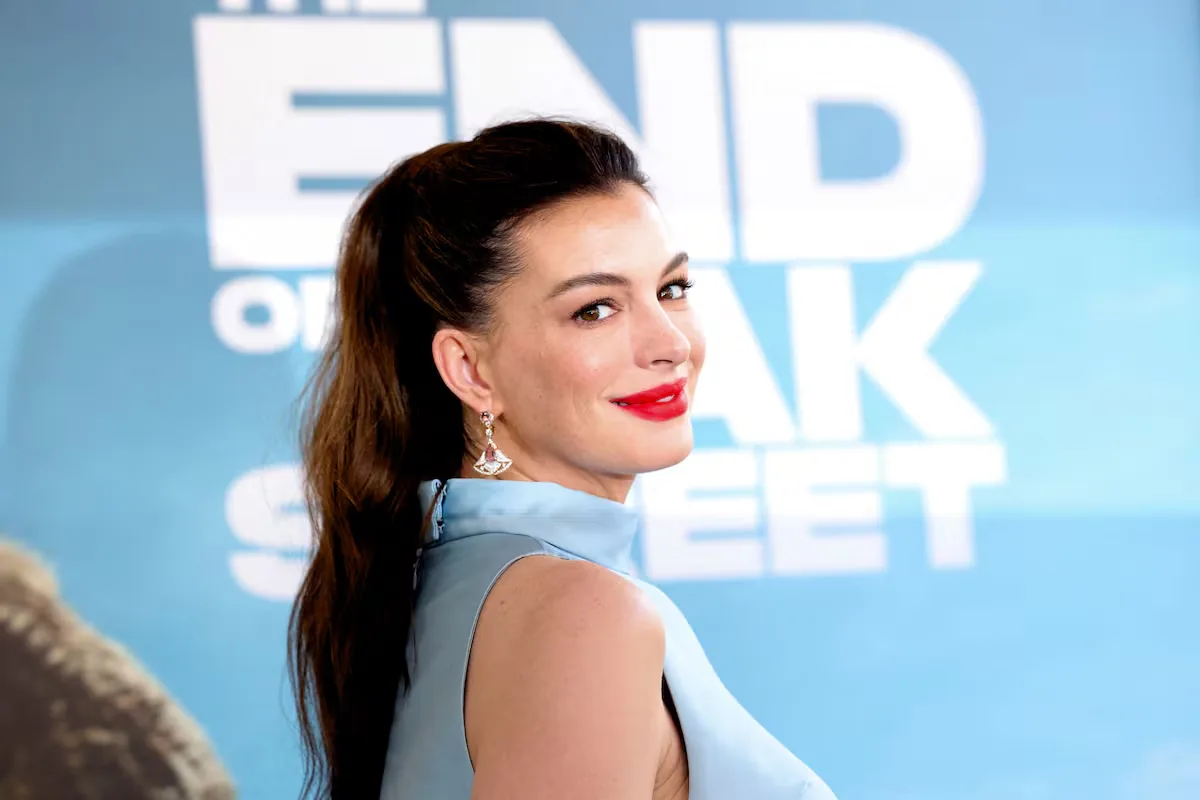
Anne Hathaway is doing everything right. This is shown daily by magazines, TikToks, and the most insightful critics. The public loves her. Social media loves her. But the thing is, she didn’t do anything wrong before either. Not specifically wrong. But back then the public hated her. The internet hated her. The world turned against her. However, this year the American actress is releasing five films; among them, two of the year’s blockbusters, The Devil Wears Prada and Odyssée. This Friday, the fourth, The End of Oak Street, a dinosaur movie set in American suburbs, arrives in Spanish cinemas. Ten years ago, that Hathaway would have been devoured by social media, ridiculed by screen snobs, and probably torn apart at the box office. But a decade has passed and everything has changed. For the public, for the box office, and above all, for herself.
Read more Nina Lykke: “Children in Norway are in charge in a crazy way. Authority is very much denigrated”
This 2026, Hathaway, 43, faces the most demanding year of her entire career. The actress herself has said that it is something that will probably never happen again. And that she had to be very prepared for it. She has been calculating it since the scripts started pouring in, which crystallized into shoots and are now being completed with impeccable promotional campaigns that will extend into the awards season in the first quarter of 2027. Also, this year has brought a cherry on top to show the world more than just her impeccable work: the good progress of her personal life in the form of pregnancy, which she announced in June. And with that condition, she has rounded off her perfect and calculated comeback. She made it clear in an interview with The New York Times when her unstoppable season began, laughing, her best promotional tool: “Before, I wasn’t prepared as a person or as an artist. I needed to develop more, because otherwise they were going to eat me alive.” She knew well what she was talking about because she had suffered that cannibalism a decade earlier.
The year for Hathaway began in April with the US release of Mother Mary (which arrived in Spain on July 31), a dark and independent film where she played a singing star, a stand-in for Taylor Swift (the director, David Lowery, explained to Empire that they had watched one of the artist’s tours, Reputation, on loop as inspiration). A small film followed a week later by another giant: the long-awaited second part of The Devil Wears Prada, where she reprised what she has said is one of the roles she is most identified with on the street, that of Andy Sachs, the clumsy and very human subordinate of the icy Miranda Priestly (Meryl Streep). Their impeccable chemistry worked again, accompanied by a brilliant global and million-dollar promotion, and the box office rewarded the film with $700 million (about 606 million euros).
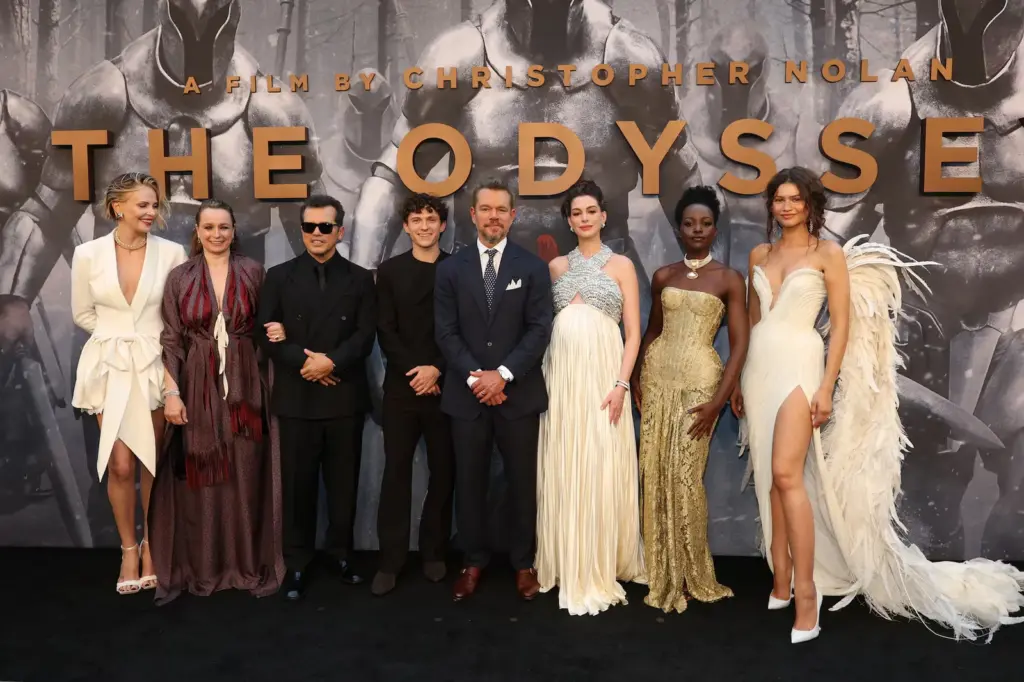
Many millions, but not as many as Odyssée, by Christopher Nolan, which has grossed $1.2 billion in less than a month (1.04 billion euros). After years of wanting to, Hathaway has finally worked with Nolan again, more than a decade after Interstellar (2014), which marked a leap toward a more powerful image after her more vulnerable role in the film adaptation of the musical Les Misérables, for which she won the Oscar for Best Supporting Actress in 2013.
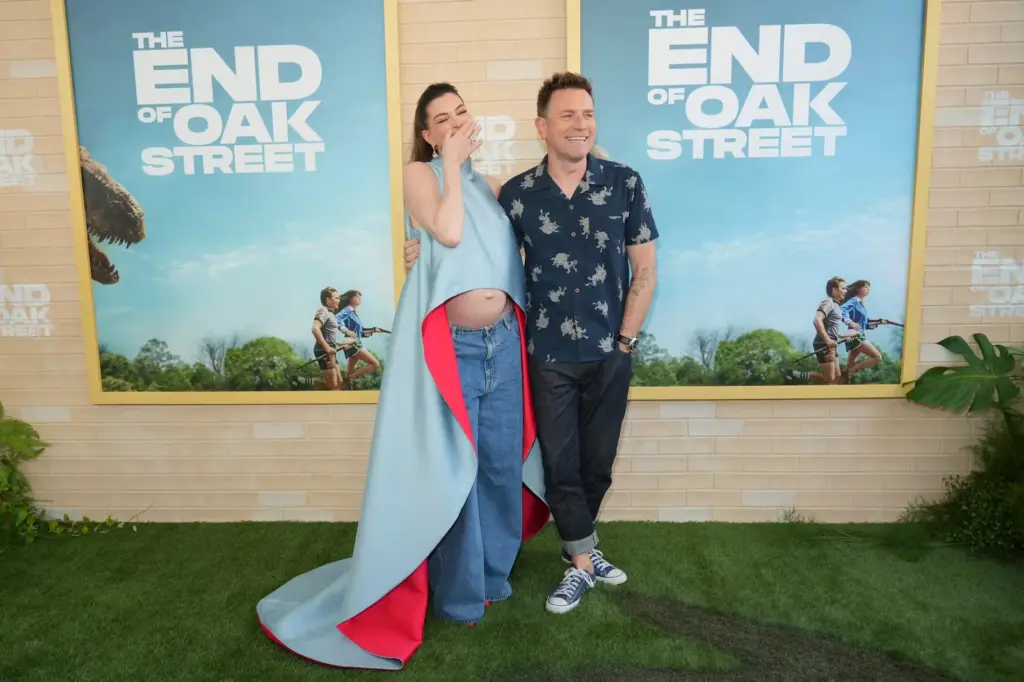
Now comes The End of Oak Street, an adventure film with Ewan McGregor, which she mainly shot out of eagerness to work with its director, David Robert Mitchell, as she told Europa Press at its premiere. Her pregnancy has progressed but she, omnipresent, is far from leaving: she hasn’t stopped joking on social media and visiting sets with McGregor in recent weeks. And she still has Verity left, in October, a thriller about a successful writer who, after an accident, is replaced by Dakota Johnson.
The actress has known how to mix projects: the indie, the more pop, the big auteur film, the family one, the horror one. In The Devil Wears Prada she shares scenes with Streep and Emily Blunt. In Odyssée she shines among a more global cast. In Oak Street she has shared play with McGregor. And in Mother Mary the more discreet promotion has focused mainly on her. Such variety and quantity don’t seem to tire an actress whom Hollywood decided to hate without a specific reason just a decade ago and who now doesn’t go a day without bursting out laughing in front of a photographer.
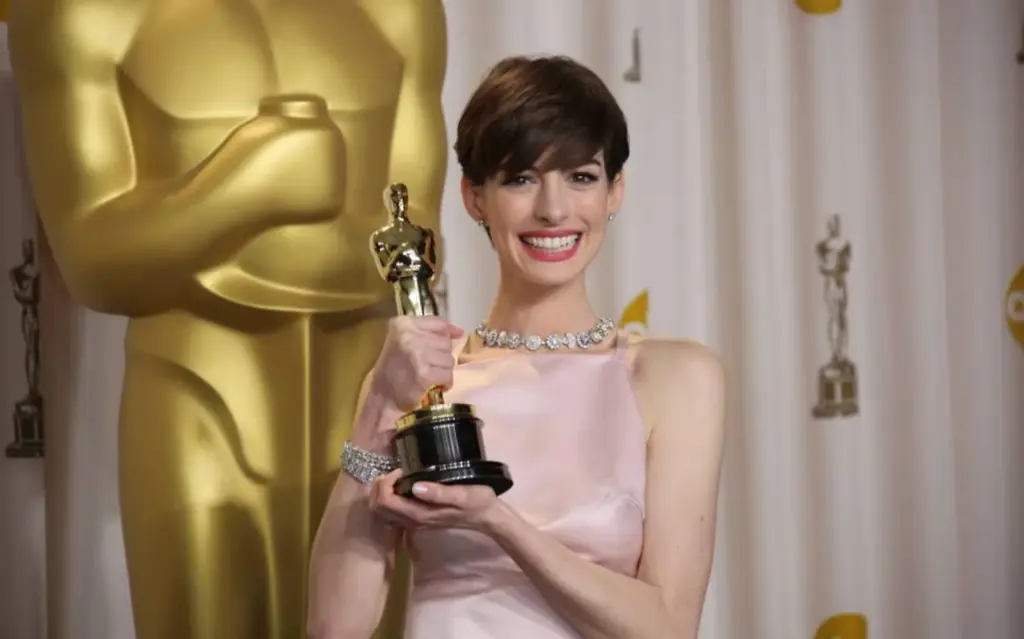
Maybe that’s the key, as cheesy as it sounds: Hathaway has gone from a smile to laughter. Before, she smiled discreetly. Now, she doesn’t hesitate to laugh in interviews, photocalls, even at herself. It all started when she won the Oscar for Les Misérables, with a very tough role. She told The Guardian that she didn’t feel that expected “uncomplicated happiness” when she went up to get the statuette, after a role that required her to fast, lose 11 kilos, and shave her head; back then, she seemed to apologize at every step. Her statements always sounded politically correct. For example, she said about the Oscar: “I felt bad being there in a dress that cost more money than many people would see in their lifetime.” She wore a custom Prada valued at 70,000 euros and a necklace worth 8.6 million euros. As expensive as those of any actress. As borrowed as those of any star.
That somewhat naive Hathaway irritated at a time when the film industry was changing. When traditional publications stopped having so much weight and fan comments, social media, and blogs started to matter much more. She didn’t fit the good girl profile her publicists tried to sell. The chemistry with the public broke. And the Hathahaters, as her critics called themselves, arrived.
Facebook pages criticized her, and for every one of her phrases there was a mocking tweet. That strange and ungrateful hatred was the subject of analyses and TV shows. She even declared, perhaps naively, perhaps seeking peace, that it affected her. As Carolina Bermudez said (or predicted), then a host of a CBS entertainment show, The Couch, in 2013: “Right now, there’s nothing Anne can do to avoid scrutiny. Her best option is to go away for a while, maybe take a long and necessary vacation and let the critics find someone else to vilify. In Hollywood, it won’t take long.”
And that’s what she did. She didn’t go on vacation, but shifted the focus. She went through the second decade of the 2000s with many projects, but not all recognized. The plan was not to stop being present, but to be more calculated. She herself said in that interview with The New York Times that she believed she was “in the indie and quirky section” of her career, and that the big things wouldn’t come back. Until a couple of years ago, two films gave another plot twist to her career.
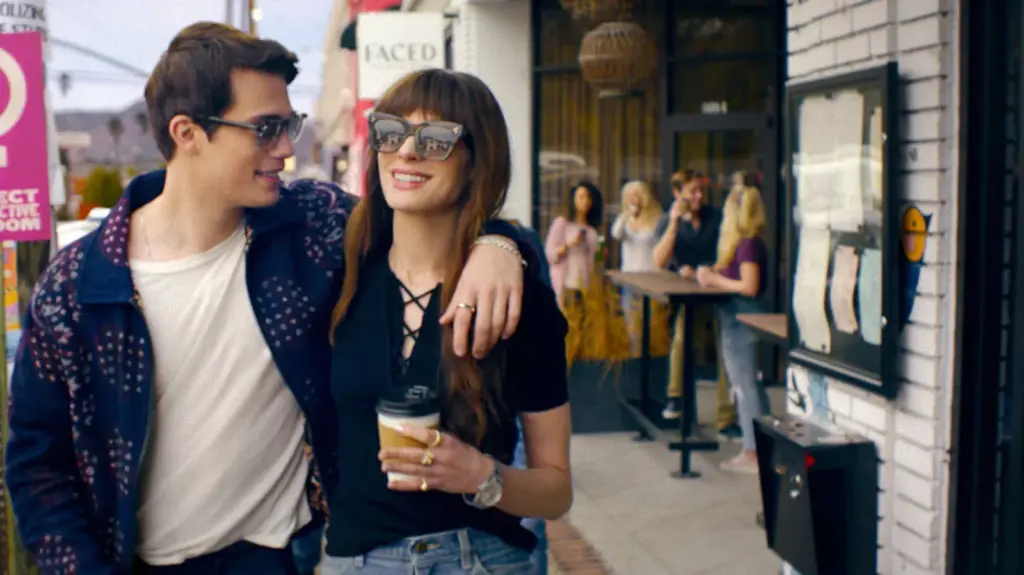
On one hand, the romantic The Idea of You, a platform hit, where she plays a 40-year-old woman who falls in love with a twenty-something musician, which gave her visibility among new generations. On the other, what she has defined as one of the most complex roles of her career, that of Céline in Perfect Lives, with Jessica Chastain, which placed her in a complex position regarding motherhood. By then, she was already speaking loudly and clearly about the Hathahaters: “Many people didn’t offer me roles because they were very worried about how toxic my identity had become on the internet,” she admitted in Vanity Fair.
Now, Hathaway is back. After this busy 2026, next year she will release Princess Diaries 3, where she will reprise her popular character Mia Thermopolis. This Sunday she will be proclaimed a “Disney legend,” a title held by stars like Julie Andrews, Miley Cyrus, Elton John, and George Lucas, among others.
Everything has added up. Her political commitment, with the Democrats, where she calls for votes with humor and pop culture references. Her personal image, increasingly refined, elegant but determined (she didn’t hesitate to show her pregnant belly openly at the Oak Street premiere, grabbing headlines), and a youthful face have placed her on the podium of the most admired. She no longer measures her words so much and her sincerity is straightforward, or as straightforward as a star can be within the scripted Hollywood machinery. This week, when asked about her baby’s sex on Jimmy Kimmel’s show, she said she knew but wouldn’t say. “Thanks for the support, I always feel very rude saying this,” she said with a big smile. The public, far from being annoyed, cheered her. There is no Hathahater left in her path.
Read more La Aemet warns of an “important” weather change over the weekend: heavy storms after the heat