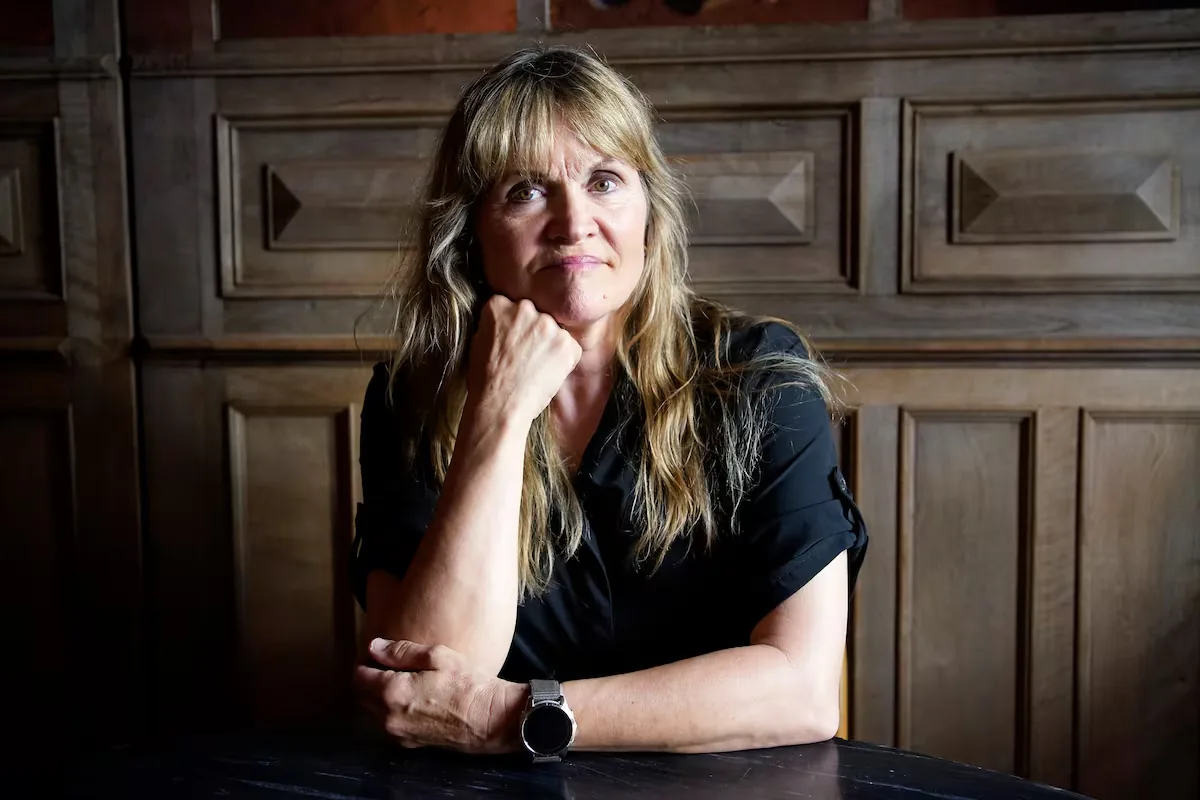
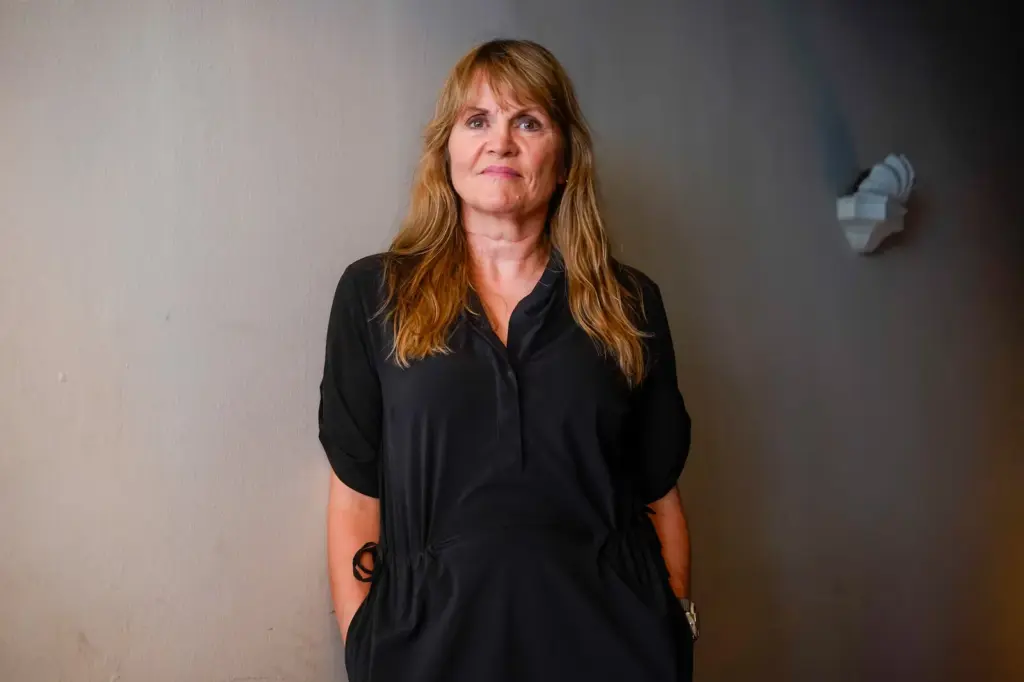
Nina Lykke (Trondheim, 61 years old) began publishing her novels when she was already in her forties. She grew up in the Norwegian capital, had two daughters, and worked as a freelance layout artist and graphic designer. A whole life outside of awards and the recognition of readers that this author, one of the most prominent and caustic voices in contemporary Nordic literature, has later achieved.
Since her grandparents bought a house on the Mediterranean coast in the seventies, Lykke has frequently traveled to Spain, but she visits Madrid for the first time on the occasion of the Book Fair. Affable and direct, the successful author, tall and blonde, dressed in black, is not provocative but frank.
The success of her third book, No and a Thousand Times No (Gatopardo), allowed her in 2017 to fully devote herself to writing stories filled with corrosive humor, not without tenderness. In Lykke’s books, the characters drink quite a bit, go through crises, and look with some disdain at the society they are part of. Lykke does not beat around the bush, nor does she fear saying something that might be uncomfortable inside or outside the page.
She says she lives in the Norwegian capital by the fjord and bathes there all year round, even if the water is four degrees. “When you leave the house and it’s snowing, you wonder if you’re really going to bathe, but you do it against everything, and that makes you feel crazy and strong,” she explains in a café in Lavapiés. Something of that controlled boldness is breathed in her books. If in We Didn’t Come to Have Fun she portrayed the indignities and hypocrisies of the literary world through a writer who had success two decades ago and is invited to a literary festival; in State of Discontent she dissected with irony the anxieties that consume the middle class of Nordic societies. With her latest novel Where Are the Adults? Lykke delves into the complex world of mother-child relationships and the generational gap that places the protagonist at a great distance from her relentless and difficult mother and also from her beloved son, who unilaterally cuts all ties with her.
Question. What has been the advantage of starting to publish at 45 years old?
Answer. Well, that I was ready, to put it simply. Unless you have extraordinary talent, the best works are written by mature adults who have more experience. And it’s good to have had a profession outside of writing because then you appreciate how wonderful it is to be able to dedicate yourself solely to this.
Q. How did you come to writing?
A. Through reading. As a child, I was a voracious reader, especially of fairy tales and traditional stories. I read all the books in my parents’ house. At six, I already knew I wanted to write, but then I felt intimidated; I thought authors were like gods.
Q. Is there any trace of those fairy tales in your books?
A. Maybe. Everything I have read is somehow in my books. In those stories, there is good and evil, temptations, challenges the hero must overcome. I recognize many of these things.
Q. What was the starting point of your latest novel?
A. A phenomenon I noticed a decade ago. I saw that, in the name of equality, children, at least in Norway, are in charge in a crazy way. Authority is very denigrated and seen as something very negative. Children, in families and schools, are given much more power than they can handle. They are not equipped to decide on everything.
Q. How did this come about?
A. It all starts from a well-intentioned and positive impulse to give power to those who don’t have it and not impose decisions on others. But in Norwegian society, it has been taken to the absurd. Students rule over teachers, can be violent without being able to be responded to.
Q. Is there victimhood?
A. Many things converge. There is this idea that no one should suffer and that if you suffer, it’s because of someone else. The sense of responsibility is outdated: if you ask someone to take responsibility for the situation they are in, they can always tell themselves that everything is the result of a bad childhood or that they suffered some kind of discrimination. The ultimate goal, to have an egalitarian society without oppression, is good, but you encounter this. I started to pay attention around me and observe how people talk to their children. The question “Where are the adults?” was hammering in my head.
Q. The title of your novel.
A. All my titles come from those phrases that come back to me again and again. When I was menopausal and angry with everyone, the phrase I had in mind every time someone asked me for something was no, and a thousand times no.
Q. What have your daughters said about the new book?
A. They like it a lot but might be worried about the inheritance, although I really don’t think so.
Q. The narrator of Where Are the Adults?, like other main characters in your books, is quite depressed.
A. I don’t like to use that word. It’s a very serious diagnosis. Today we call many things depression, but it’s something that prevents you from getting out of bed, eating, or being with people. My characters are not there; what they are is furious.
Q. Furious?
A. They can feel great sadness like the narrator of this latest novel. She has lost her mother, and that is natural, but that her son doesn’t want to see her or give any explanation, no. Many have told me about cases like that, and that was what pushed me to write the book. Mothers, because it’s usually them, feel they have done the best they could, have not developed any animosity towards their children, have gone to school meetings and fulfilled normal activities, but when they enter their twenties, the children decide to break all contact because they don’t understand them.
“It was strange to feel that I am part of a generation that has reached the age when children break contact with their parents”
Q. How do you explain this?
A. We have very, very high expectations, at least in Norway, and those young people expect to have a kind of soulmate in their parents, to be completely understood. But there is a gap, and trying to reach that total connection is somewhat destructive because you will never be satisfied. It was strange to feel that I am part of a generation that has reached the age when children break contact with their parents. And I’m not talking about incest, violence, or alcoholism. I was intrigued by that break in families where there have been no critical situations. Interestingly, from what I have seen, children of alcoholics tend not to break off contact because they keep trying to help.
Q. The only way the protagonist feels fulfilled is in the role of mother and grandmother; the partner is secondary. Independence doesn’t seem important; did you want to present a counterbalance to feminist ideals?
Read more La Aemet warns of an “important” weather change over the weekend: heavy storms after the heat
A. Yes, but feminism has always taken into account that women give birth. It’s something we can’t escape. When you become a mother, your life changes 100%. Nature demands that women be mothers in a very different way than fathers are. It’s a very deep difference, and of course, we try to remedy it and make it fairer. Each generation has to find its way to live with this. It’s easy to be a feminist and demand parity when a couple has no children. Then it’s another story.
Q. In Where Are the Adults? the narrator is always ready to sacrifice.
A. Mothers are taken for granted. And their capacity to endure and be there is one of the miracles in the world.
Q. In the book, there is also a therapy session of a woman with her thirty-year-old son with whom she has a pathological dependent relationship. Was the starting point of the novel the children and did it end up being a portrait of the behavior of different mothers?
A. The urge to care and raise can be perverted. That woman has that adult son who doesn’t work and lives with her and whom she can’t kick out. Maybe it would be different if there were a father. We think everyone should have children, but no.
Q. In fact, that woman’s mother insisted she build a career and not rush to start a family.
“Most likely you won’t have any children if you have a demanding profession”
A. This is what happens from one generation to another. Since the seventies, women in Norway, who were previously housewives or worked on farms, saw they could be doctors or lawyers and wanted that, and since for many it was late, they wanted their daughters to achieve it. And having children? They didn’t think about that. It’s hard to have a solid and strong career and also three children because you need nannies and belong to a certain class. Most likely, you won’t have any if you have a demanding profession.
Q. Are your books going against the tide?
A. Yes, I grew up with a communist father and a feminist mother. I know those positions. The birth rate is falling all over Europe and elsewhere too, and things are said like you can wait until 35 to start thinking about having children. That’s not true. You can talk about feminism or whatever you want, but the body is the body. We are more fertile when we are less mature. If you wait, things are not so easy. I seem like a very conservative person when I say this, but it’s a fact and we can’t avoid it.
Q. There are other experiences and positions.
A. Yes, but things get complicated when women try to have children and are older. Then more financial resources are needed.
Q. The tension between classes underlies your novel.
A. I am sensitive to this, and that’s why it resonates in my stories. I grew up with parents who belonged to radical groups, the communist movement that spread through Scandinavia in the seventies. In that circle, there were few working-class people; there were more upper-class with big houses and nannies. The funny thing is those who came from humbler origins became the aristocracy of that movement. Maybe that’s why I have a somewhat distorted perception.
Q. In We Didn’t Come to Have Fun you parody literary circles. Did anyone feel recognized?
A. I mixed many stories, but everything I wrote has happened, although not to me directly. But, for example, I was at that talk titled “How to Write a Novel” where they don’t talk about that at all. It seemed strange to me that no one protested paying for a conversation that in the end didn’t address that topic. No one wanted to become an unwelcome person, not be open enough intellectually to change, because that makes you a right-wing bourgeois.
Q. That not being afraid to be an unwelcome person seems to be a thread in your books.
A. Maybe. I am very much in favor of being civilized; I really like civilization. And there are so many strange things we tell ourselves and others.
Q. For example?
A. Things like telling your child “I just want you to be happy.” That is having very high expectations. It’s better to say “I want you to be a doctor like me.”
Q. What is life dedicated to writing like in Norway where there is so much support?
A. It’s likely that we have so many full-time writers because of that support. One of the things I find funny is that having worked as a graphic designer, I went to parties and literary meetings as part of marketing teams. When I became a writer, everything changed, and that’s what I wanted to talk about in We Didn’t Come to Have Fun. I heard and lived many things, like a very harsh critic writing a very good review of the husband of his wife’s best friend. It’s curious to see how the gears work.
Read more The ultra-British Farage retains his seat in Parliament after defeating the motley Count Trash Cube
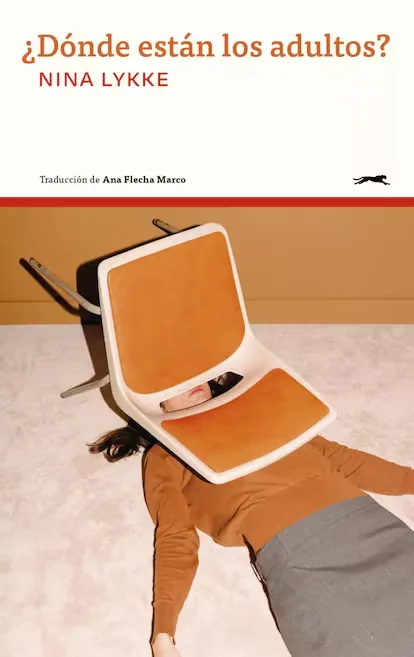
Where Are the Adults?
Translation by Ana Flecha Marco
Gatopardo, 2026
216 pages. 19.95 euros