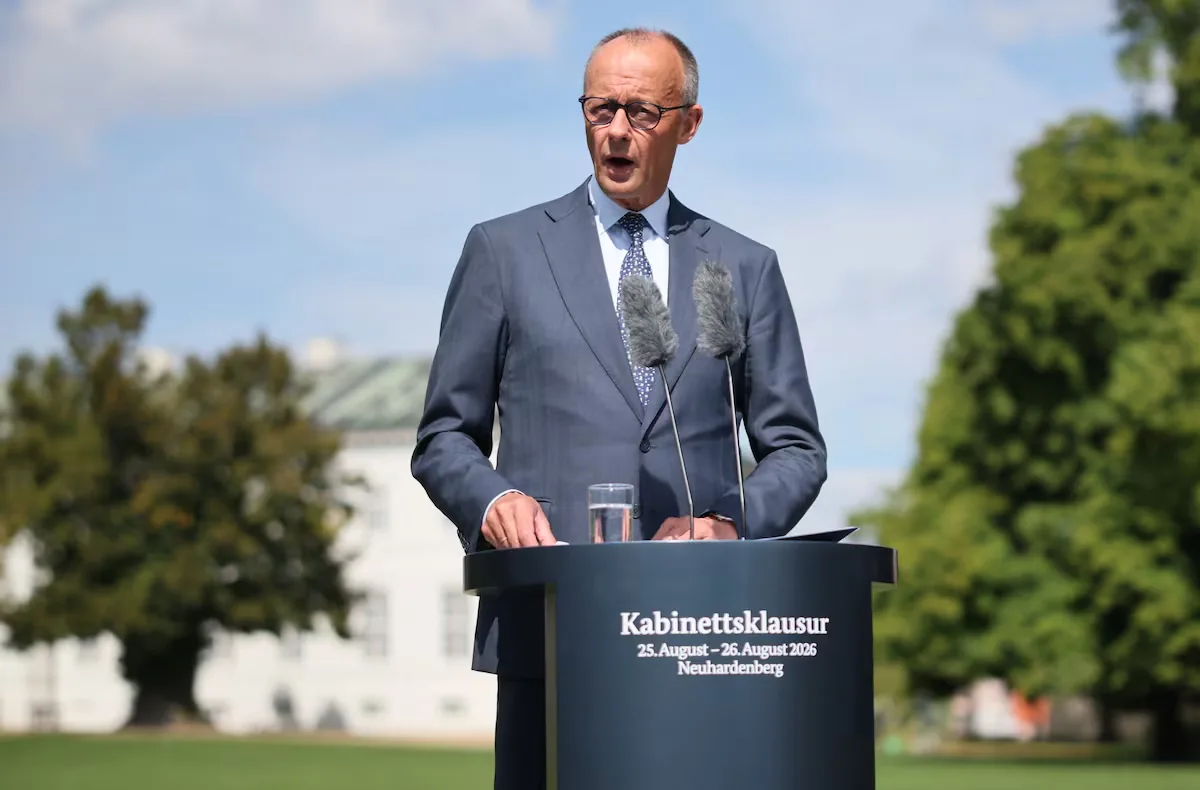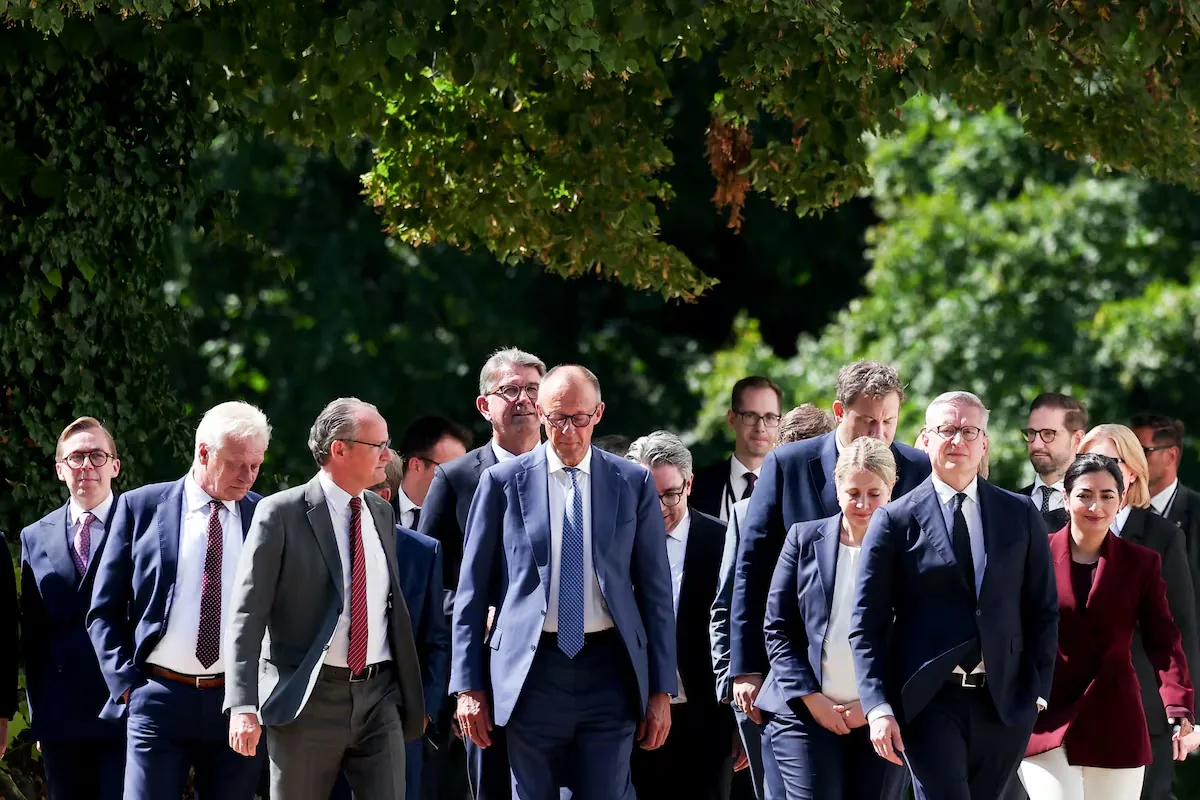
There is no one on the streets of Neuhardenberg except police patrols. The nearly 3,000 residents of this German town in the state of Brandenburg avoid going out despite it being the first sunny day in two weeks. At Neuhardenberg Castle, in the center of the municipality, members of the German government are meeting this Tuesday and Wednesday. It is the traditional summer closure in which the Executive sets the main actions for the upcoming political term. The meeting is marked by multiple open fronts, but above all because its leaders are on thin ice.
Read more Riki Blanco: delegated vacations
Germany assumes that in just one month much will have changed in the political landscape. In September, three regional elections are held in which the outlook is bleak for the two main government forces, the Christian Democrats of the CDU and the Social Democrats of the SPD. Polls assume that the former will lose the government of Saxony-Anhalt and that the far-right AfD could obtain an absolute majority. Polls also indicate that the CDU would lose power in Berlin. The forecasts are even worse for the SPD: polling centers give them no more than 7% of the vote intention in Saxony-Anhalt; in Berlin, they would become the fifth force in the regional parliament with 12% of the votes. Only in the elections of the state of Mecklenburg-Western Pomerania do the Social Democrats aspire to renew the government thanks to the popularity of their local leader, Manuela Schwesig.
Schwesig is the name on the lips of analysts and Social Democrat militants to take the reins of the party if she renews her government in Mecklenburg and the party’s setbacks in Saxony-Anhalt and Berlin are confirmed. The current co-chairs of the SPD, Vice Chancellor and Finance Minister Lars Klingbeil, and the Minister of Labor and Social Affairs, Bärbel Bas, are in the crosshairs. Party currents such as the migration policy section have already requested that an extraordinary congress be held in the fall to renew the SPD leadership.
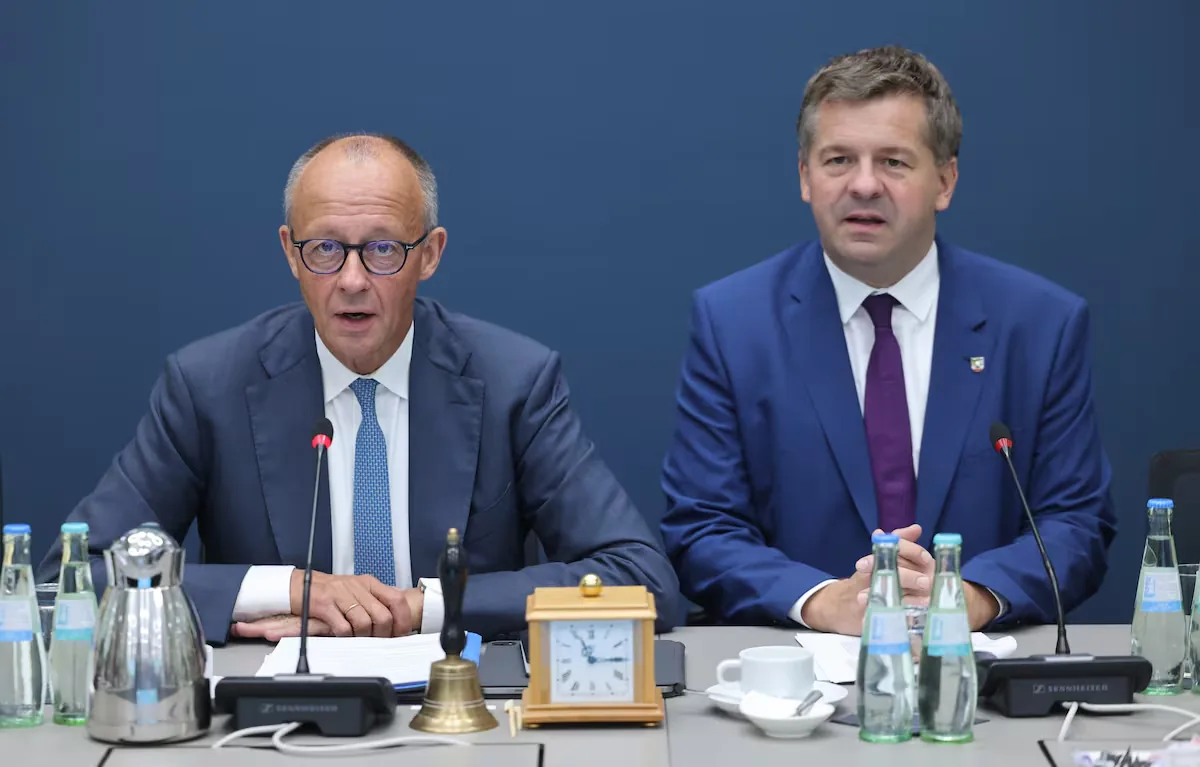
The situation is no more promising in the CDU. A YouGov center survey from August 23 states that only 23% of Germans believe Merz will manage to finish the legislature as chancellor in 2029. Something unusual in Germany, the chancellor was booed on Saturday in Eifel, in the west of the country, where one of the worst fires in recent years occurred.
Merz made changes in July in the government and in the leadership of the CDU parliamentary group to surround himself with people he trusts most and to strengthen his leadership. But more and more signs accumulate that a series of electoral disasters could cause an earthquake in the CDU and in the governing coalition with the SPD and the Bavarian Christian Social Union (CSU).
They caused a shake-up in the CDU this August with statements from Manfred Güllner, director of Forsa, one of Germany’s most important polling companies, in which he recommended that the Christian Democrats “seriously consider” finding a candidate to succeed Merz. According to data collected by Forsa and analyzed by Güllner in a study published earlier this month, the chancellor’s popularity trend is worsening without restraint and his decline is inversely proportional to the growth of AfD.
The main issues on the table during the working days in Neuhardenberg are industrial reconversion and climate change. It is a meeting that Merz reiterated this Tuesday serves to look forward with optimism and with the coalition united: “I am convinced that we can and must work together so that Germany becomes stronger, more competitive, and ready for the future again.”
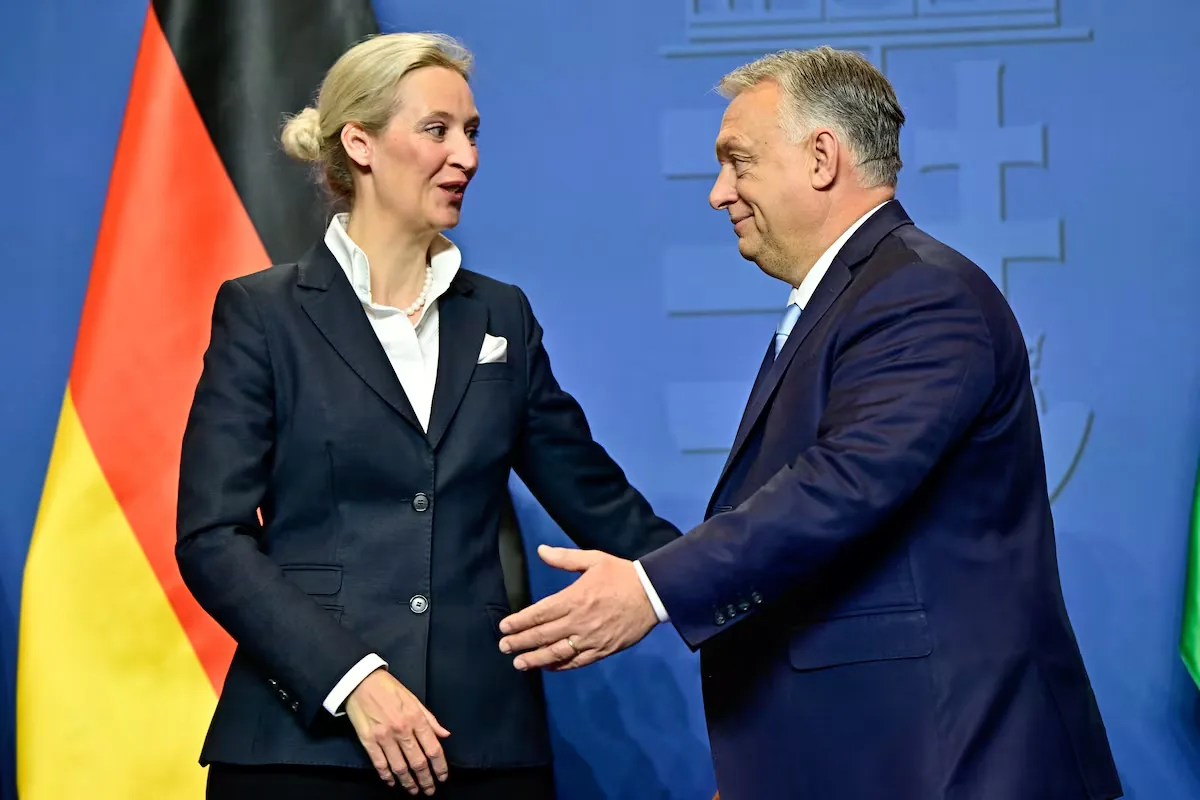
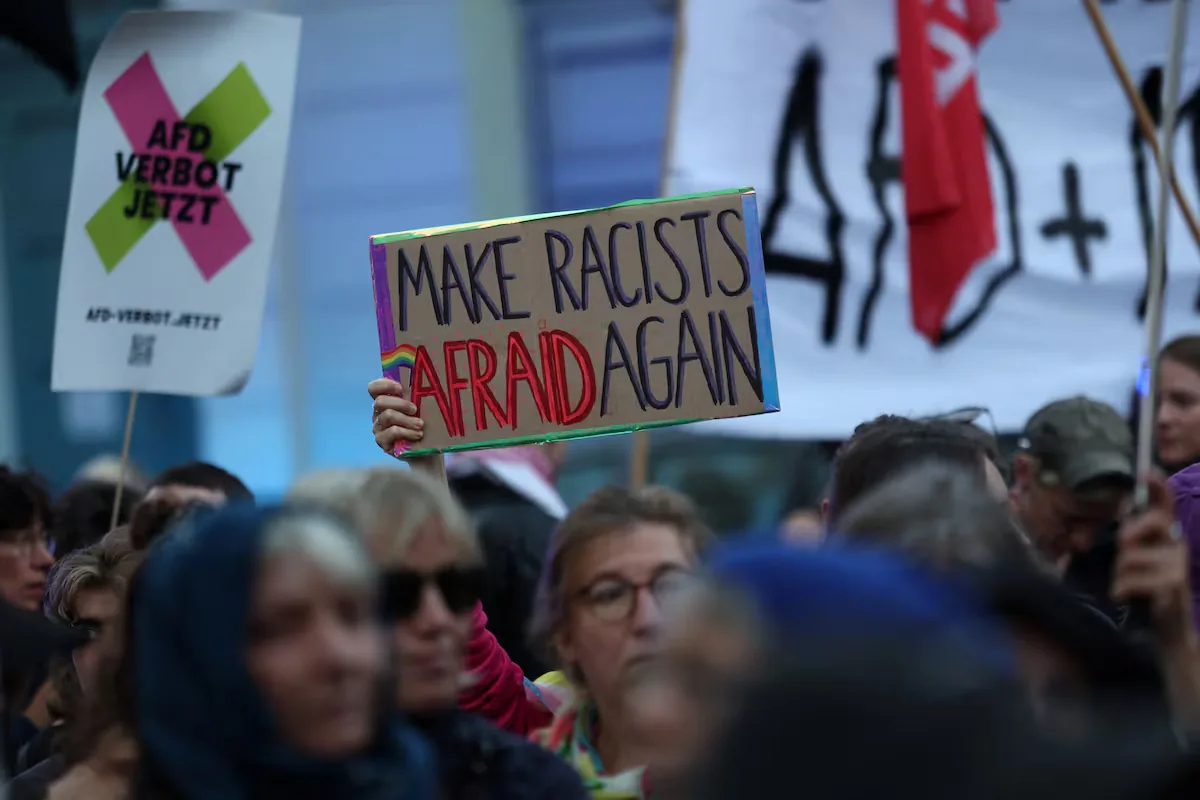
The problem for the chancellor and the Social Democrats is that the future they envision has an enemy, AfD. The anti-system party is growing without restraint, especially in East Germany, in towns like Neuhardenberg. In this municipality, it obtained 50.6% of the votes in the 2025 federal elections, five times more than the second.
Read more Women over 40: health or demands?
The ministers have emphasized two ideas: the first is that the coalition is not damaged. The second, that reforms must be implemented quickly, in the fall, to demonstrate momentum. “The government works united and will continue united,” assured the Minister of Housing and Public Works, Social Democrat Verena Hubertz. “I can tell you that Mrs. Bas [minister and SPD co-chair] has been taking notes during the meetings with a CDU-CSU pen, we are more united than ever,” added with humor the CSU Minister for Development, Dorothee Bär.
Hubertz announced that she and Klingbeil, the SPD leader, will present a new public housing promoter in the fall to address rising rents. The Social Democrats also want to counteract with this measure the electoral damage caused by the pension reform agreement they reached this summer with the Christian Democrats. Klingbeil has faced strong internal opposition in the party mainly because the reform, which must be approved by the legislative power, removes the possibility of retiring at 63 for those who have contributed for 45 years.
The pension reform is one of the government agreements that is providing electoral ammunition to AfD because it is especially in the former East Germany where the population benefits most from early retirement, as they have already worked more years by entering the labor market earlier during the decades of communist Germany.
Another front wearing down the grand coalition is the debate about the German bureaucratic system. There is unanimity in the country that bureaucracy is hindering the economy and social development. Merz came to power in 2025 promising to change the situation, but little has materialized and the polls are taking their toll. The Minister for Digitalization and State Reform, Karsten Wildeberger (CDU), admitted that “bureaucracy must be reduced quickly because it is affecting German competitiveness.” Hubertz added that the goal is to have changes in this area by the end of the year.
External threats
On the first day of the Neuhardenberg conclave, presidents of several technology companies participated. The main issue they discussed with the government is how to turn Germany into a power in artificial intelligence. Government sources detailed that the priority is to achieve “technological sovereignty” against the Chinese push in artificial intelligence. Berlin considers technological dependence on China a threat to the security of the country and Europe. The United States is considered a competitor, but the same government sources did not mention its companies as a security risk despite the European rift with Donald Trump’s White House.
Merz used his brief appearance before the media to deliver one of his harshest messages after stating they had indications of who was behind the failed August 4 drone bomb attack against Ukrainian cargo planes at Leipzig airport. Police revealed this Tuesday that they found a third drone that did not reach its target. “The perpetrators [of these hybrid attacks] increasingly show that they can be cruel and unscrupulous in causing serious material damage, and even injuries or deaths,” said the chancellor. “The federal government will make them pay a price, they will undoubtedly pay for it.”
Merz announced that they will “soon” provide evidence pointing to the alleged perpetrators but did not mention the possibility that Russia orchestrated the failed attack. The first day of the government meeting ended precisely with a demonstration of anti-air defense drone prototypes developed by the company Tytan. The fact that the drones were not detected in Leipzig caused a flood of criticism for the lack of security measures against such actions.
Read more ‘The loved one’: undeniable expressive talent, little emotion