








The European Commission presented this Monday its proposals to simplify the European law against deforestation (EUDR, for its acronym in English), whose entry into force has already been postponed twice due to pressure from countries and affected industries. Among other things, it now proposes to remove leather and retreaded tires from the list of products covered by the regulation, while suggesting the introduction of other products, such as instant coffee.
Read more The court acquits the agitator who called Begoña Gómez “Begoño”: “It is not inherently defamatory”
Despite this new exception to a law considered a milestone of the European Green Deal — so promoted in the previous mandate, and strongly attacked since the 2024 European elections that strengthened far-right groups in the chamber — environmental organizations have positively valued Brussels’ refusal to reopen the text of the law. The regulation, pioneering worldwide, has been subjected since its inception to constant pressure from industry and many countries to reduce its impact and delay its implementation, which will finally begin to apply from December this year.
“The Commission is not reopening the EUDR,” community sources concluded about the steps advanced this Monday, which are part of the “review clause” of the pioneering regulation in global attempts to curb worldwide deforestation. According to their explanation, what is now presented are “new simplification measures” to reduce the administrative burden especially on small and medium-sized enterprises, as agreed in December last year, “but all within the limits of existing legislation.” Because the “priority” now is to guarantee “legal stability, clarity, and predictability,” they explained on the eve of this Monday’s review presentation. The deadline for interested parties — States and the European Parliament — to comment on the proposals now launched expires on June 1.
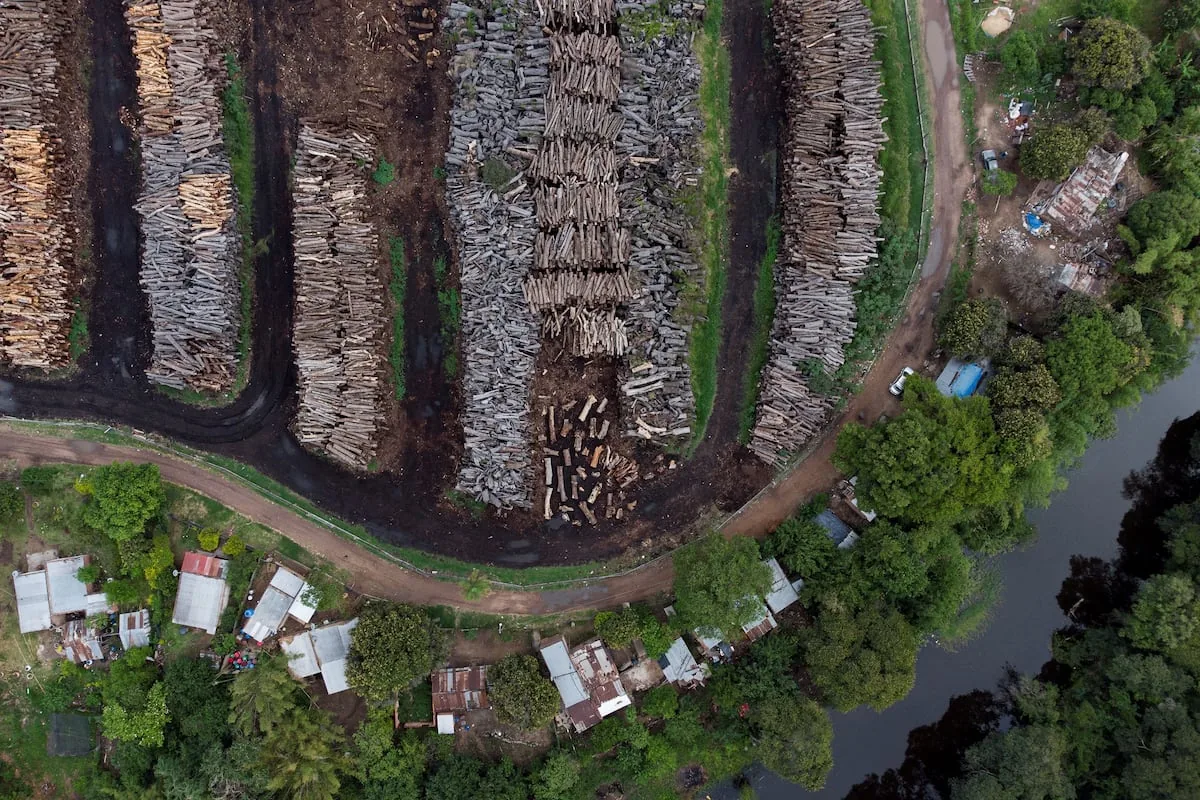
The regulation, adopted in 2023, seeks to prevent European consumption, responsible for 10% of global deforestation, from continuing to contribute to forest destruction in third countries. To this end, it imposes a series of obligations to ensure that companies wishing to sell seven “key” products and their derivatives in the European market have not contributed through their production to deforestation or forest degradation anywhere in the world. That initial list of seven products included palm oil, cocoa, coffee, rubber, cattle, wood, and soy, as well as their derivatives, among others, beef, leather products or printed paper, furniture, cosmetics, or chocolate.
“The main driver of deforestation is the expansion of agricultural land linked to the production of raw materials such as cattle, wood, cocoa, soy, palm oil, coffee, and rubber, as well as some of their derivative products,” Brussels recalled this Monday in its official statement.
Read more Three minors arrested in Palma for sexually assaulting a classmate
After pressure from countries and various sectors, it was already agreed last year to remove one of the initially listed derivatives, printed paper, from the list, from which it is now also proposed to remove leather and retreaded tires, as well as “exemptions” among others for product samples, some packaging materials, used and second-hand products, and waste. On the contrary, it proposes to introduce instant coffee and certain derivatives of palm oil to the list.
What has caused the most uproar is the decision regarding leather. The lobby of the fashion industry had strongly pressured to remove leather from the European list, as several environmental organizations have recalled, criticizing the proposal.
According to the Commission, the exclusion of leather and hides from the list of products subject to the EUDR is due, among other reasons, to the fact that although they are linked to deforestation, a risk of “imbalance” has been detected, since importers of processed leather goods, such as shoes or bags, are not covered by the regulation, while manufacturers of these products within the EU are. This “fragmented and inconsistent” approach may cause “relocation, instead of elimination of the deforestation risk,” argues Brussels. It also indicates that, given the “relatively low economic value of hides and bovine leather compared to meat within global livestock production, economic operators in the Union have limited room to demand the necessary information to comply with the regulation.”
Fashion brands
“Opening a legal loophole to please powerful fashion brands is inexcusable,” Greenpeace has criticized, reminding that “the leather supply chain remains as decisive a factor in forest destruction as it was when it was included in the law” in 2023. “The decision to exclude leather sends a worrying signal that products posing a risk to forests may be excluded despite their obvious environmental costs,” agrees WWF, for whom “any new exclusion would increase deforestation risks while creating a fragmented framework that would expose companies managing complex global supply chains to greater legal and market uncertainty.”