









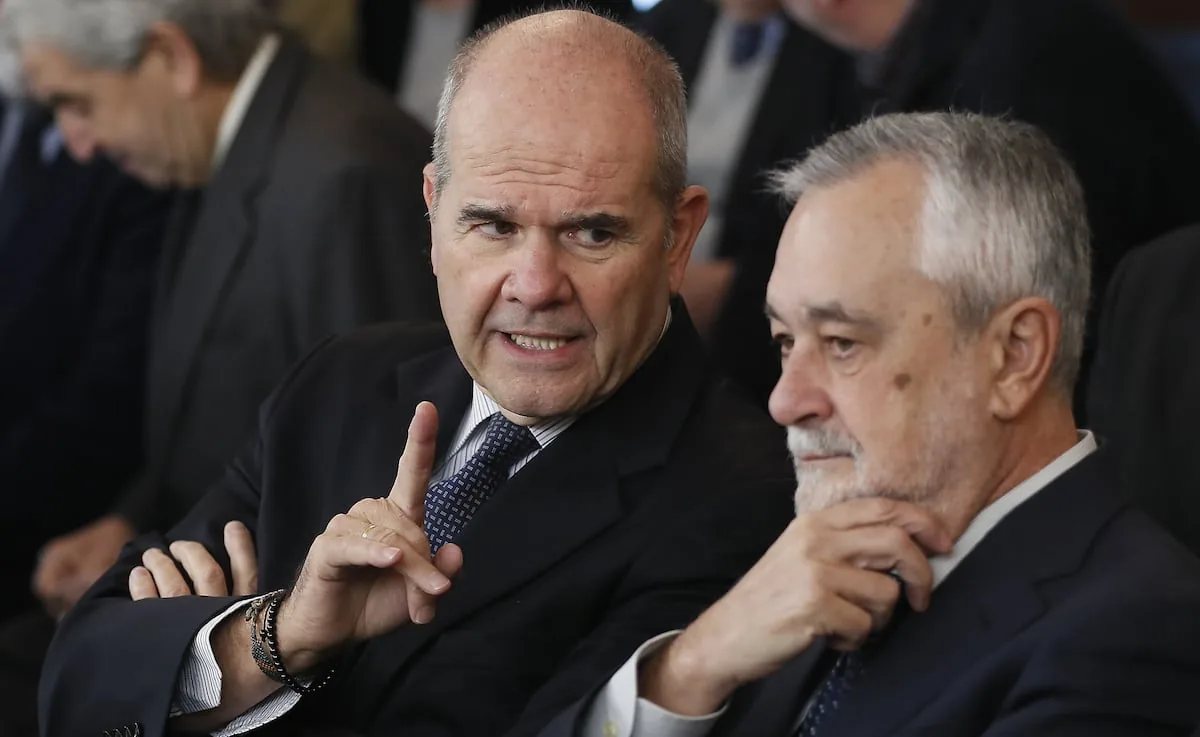
The European Commission has dealt a blow to the Provincial Court of Seville, which is demanding that the EU Court of Justice rule on the case of the fraudulent EREs in Andalusia, challenging the Spanish Constitutional Court. The technicians of the Community Executive, who have intervened with a preliminary ruling, consider that the CJEU, based in Luxembourg, is “manifestly incompetent” to rule on the annulment by the Spanish high court of the sentence against former Andalusian presidents José Antonio Griñán and Manuel Chaves, among others, by upholding their appeals for protection. Brussels believes that there is no direct link between the case and the community budget and that, therefore, the matter falls outside the application of European treaties. The case, however, does not end here, as the CJEU will rule—it is not yet known when, there is no date for the hearing—on whether it is competent or not, after the Community Executive’s response.
Read more A Washington-backed company buys the only company that produces rare earths in Brazil
“The Court of Justice of the European Union is manifestly incompetent to answer the questions raised by the Court of Seville by order of July 17, 2025,” the community technicians consider, according to the document advanced by Diario de Sevilla and to which EL PAÍS has had access. In addition, the four technicians indicate that they will not submit observations on the case, to which they attribute the lack of a “sufficiently direct link with the Union budget” and therefore with European financial interests.
This strikes a blow to the argument of the Provincial Court of Seville, which has elevated the case to European justice to clarify how the Constitutional Court’s rulings, issued in 2024, conform to European law and the jurisprudence of the EU Court of Justice. The Sevillian judges assure that they seek to avoid “a systemic risk of future impunity in similar scenarios (…) and to safeguard the financial interests of the EU,” according to the order.
Brussels believes that the CJEU is not competent in the case. “As the source of funding appears to be the budget of the autonomous community and there is no funding from the Union budget, the main matter does not fall within the material scope of Article 325 TFEU [Treaty on the Functioning of the European Union] nor within that of the provisions of secondary law relating to the protection of the Union’s financial interests mentioned in the preliminary questions,” say the European Commission technicians who, as in the vast majority of cases that pass through the Luxembourg Court, issue a preliminary opinion.
Read more The heartbreaking murder of eight children in Louisiana shocks the United States
In fact, Brussels technicians emphasize that not even the Provincial Court of Seville, which filed its preliminary claim alleging European and community budget interests, has indicated the existence of such a link. “In the judgments of the Provincial Court, the Supreme Court, or the Constitutional Court, there is no reference to Union funding in relation to the controversial program,” says the Commission.
After a long seven-year investigation and a trial that lasted another year, in 2019 the Sevillian Court tried the ERE case and condemned Chaves and Griñán and 17 former socialist high-ranking officials for prevarication and embezzlement. In 2022, the Supreme Court ratified its thesis with another conviction; and in 2024, the Constitutional Court (TC) significantly reduced the sentences and ordered the Provincial Court of Seville to reformulate its annulled sentences to adapt them to its criteria. However, the judges of the Provincial Court paraded before the Constitutional Court and, after the PP requested it as a private prosecution, rejected the order of the guarantee body and chose to open the channel for European justice to decide. Something that, despite the opinion of the community technicians, is still pending, according to their procedure, explain CJEU sources.
Read more Sheinbaum receives the U.S. trade representative, Jamieson Greer, on the eve of the USMCA review