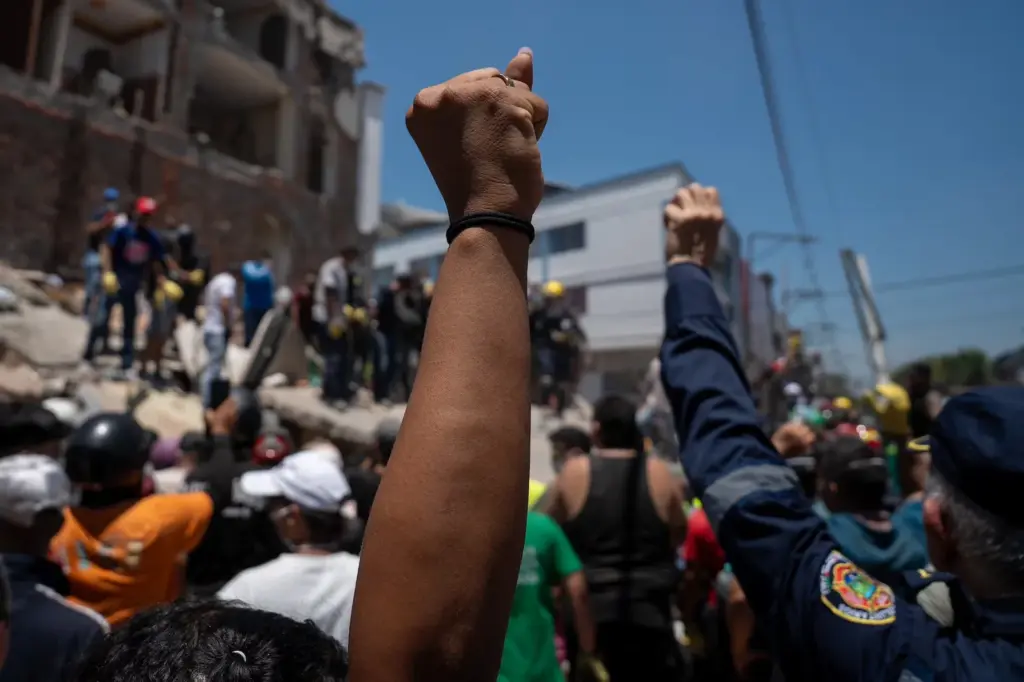
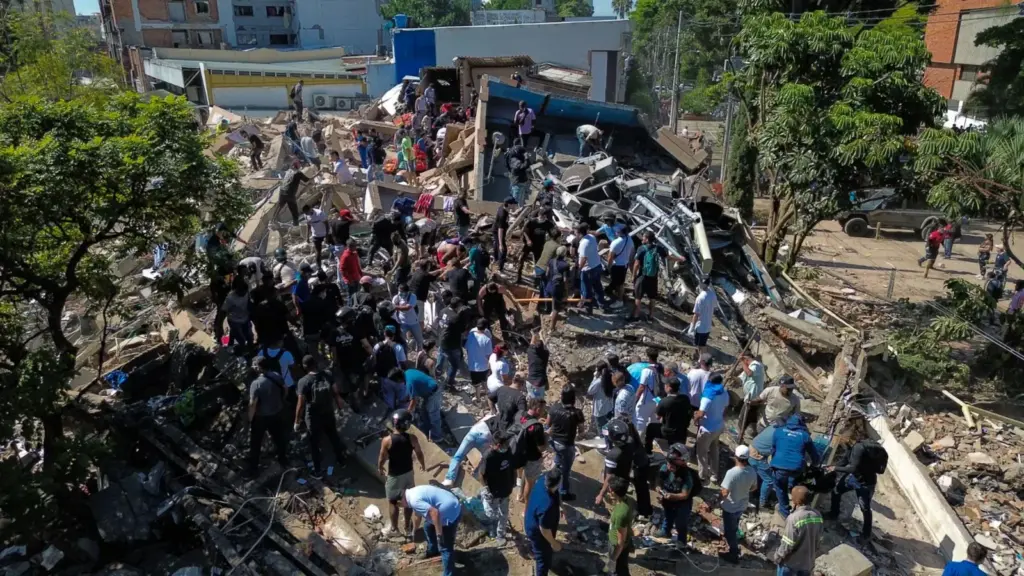
With a clenched fist raised to the sky, firefighter Danilo Prada shouts an order that everyone immediately obeys: “Total silence!”. On a pile of rubble, any noise can be crucial to saving a life. In the eastern corner of the La Alameda gallery, in downtown Cali, a drugstore operated until a few hours ago. Now pieces of concrete, bricks, and dust pile up. People have come closer to help remove the debris by hand. Two survivors have been transported by ambulance. Now, rescuers try to listen to those who might still be trapped.
The scene repeats at different points in Colombia’s third-largest city minutes after the magnitude 7.4 earthquake shook western Colombia at 7:34 a.m. this Monday. The city was partially cut off, traffic lights stopped working, water and electricity disappeared from large areas, and cell phones have weak signal. Many firefighters and rescuers who arrived at the most affected places did so on their own initiative.
At least 30 structures have collapsed, according to the report given this morning by Mayor Alejandro Éder, while rescue teams continue searching for people among the rubble. The governor of the Valle del Cauca department, of which Cali is the capital, reports at least 27 deaths in its other municipalities. The numbers, which grow as rescue efforts advance, barely begin to explain the scale of an earthquake that, according to the people of Cali, has been felt like the one in 1999, which left a thousand dead.
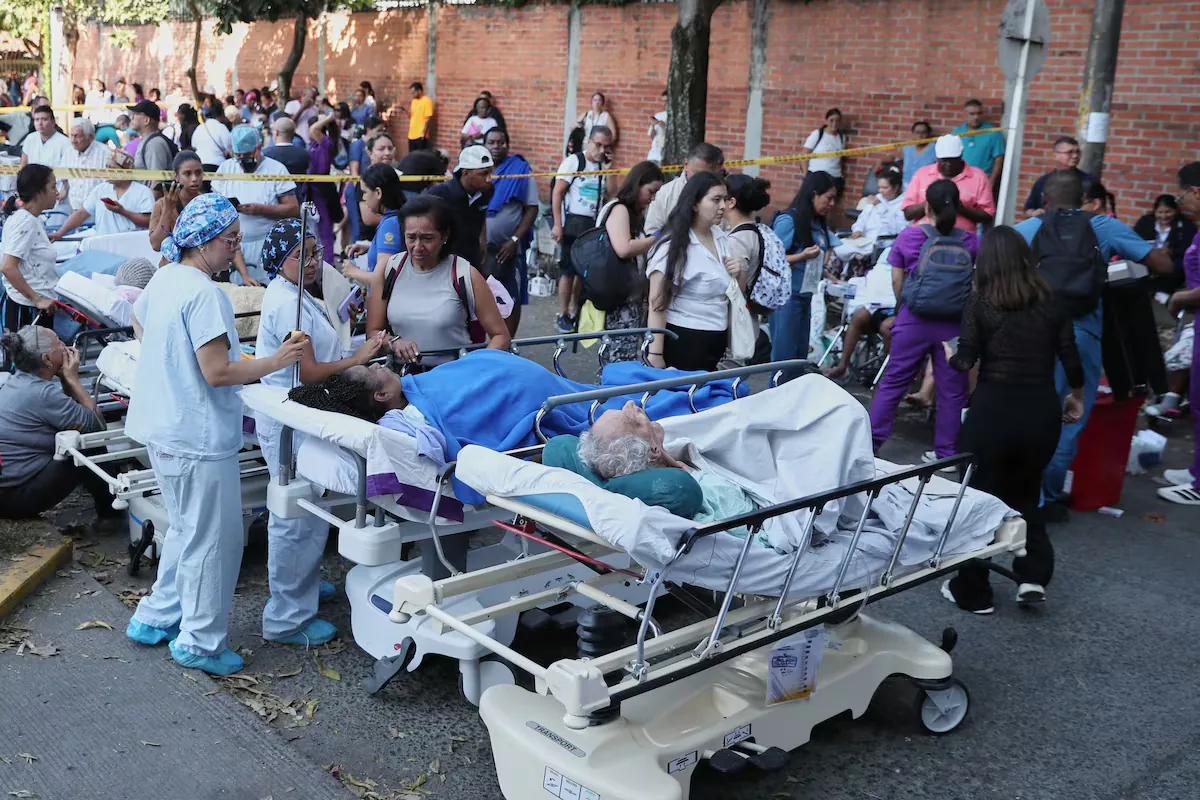
At the University Hospital, one of the affected healthcare centers, part of the cardiology intensive care unit collapsed. Amid the chaos, Stefanía Cedeño, head nurse of that unit, stayed with her six patients. As soon as the shaking stopped, she ran to identify them. On a white sheet, written with a marker, she noted their names to organize the evacuation. They were then moved to the parking lot, turned into an improvised care area where more than 100 patients from different wards are now located. Some, convalescing, remain outdoors. “I couldn’t leave and abandon them,” Cedeño says. The phrase sums up the anguish of those who, in the middle of the emergency, had to decide between saving themselves or staying by the side of those who depended on them.
A few blocks away, at the Los Andes clinic, Dr. Eduardo Rumbo was in a surgery room when the shaking forced procedures to stop. Upon exiting, the medical staff saw part of the facade of the building next to the Imbanaco clinic detach. In other parts of the city, the earthquake also left scenes of destruction. The two four-story towers of the Molino Rosa motel fell onto one side of the South highway.
Read more Colombia relives the trauma of the earthquake that devastated the Coffee Axis 27 years ago
In the north of the city, Graciela Malfitano, 80 years old, was alone in her house when a neighboring wall collapsed onto the laundry yard. Like her, other elderly people in the area experience the minutes after the earthquake amid fear and uncertainty.
From the north, along Carrera Quinta, to the neighborhoods of Tequendama, El Refugio, and Capri in the south of the city, the greatest damage is concentrated. Broken glass and bricks cover the sidewalks. The road runs at the foot of the Andean mountains that, to the west of the city, define the location of the city that less than 60 hours earlier was at the center of all Colombians’ attention for having hosted the inauguration of President Abelardo de la Espriella, in an unprecedented ceremony outside Bogotá, the capital. The barracks where De la Espriella gave his first speech as president suffered significant damage.
While emergency teams search for survivors, thousands of people in Cali remain fearful of new aftershocks, like the dozen recorded throughout the morning. They hesitate to return to their homes or workplaces, as the structures may have been weakened. The city, which was preparing to celebrate the popular Petronio Álvarez festival this weekend, the largest cultural festival of the Colombian Pacific, has been left stunned.