






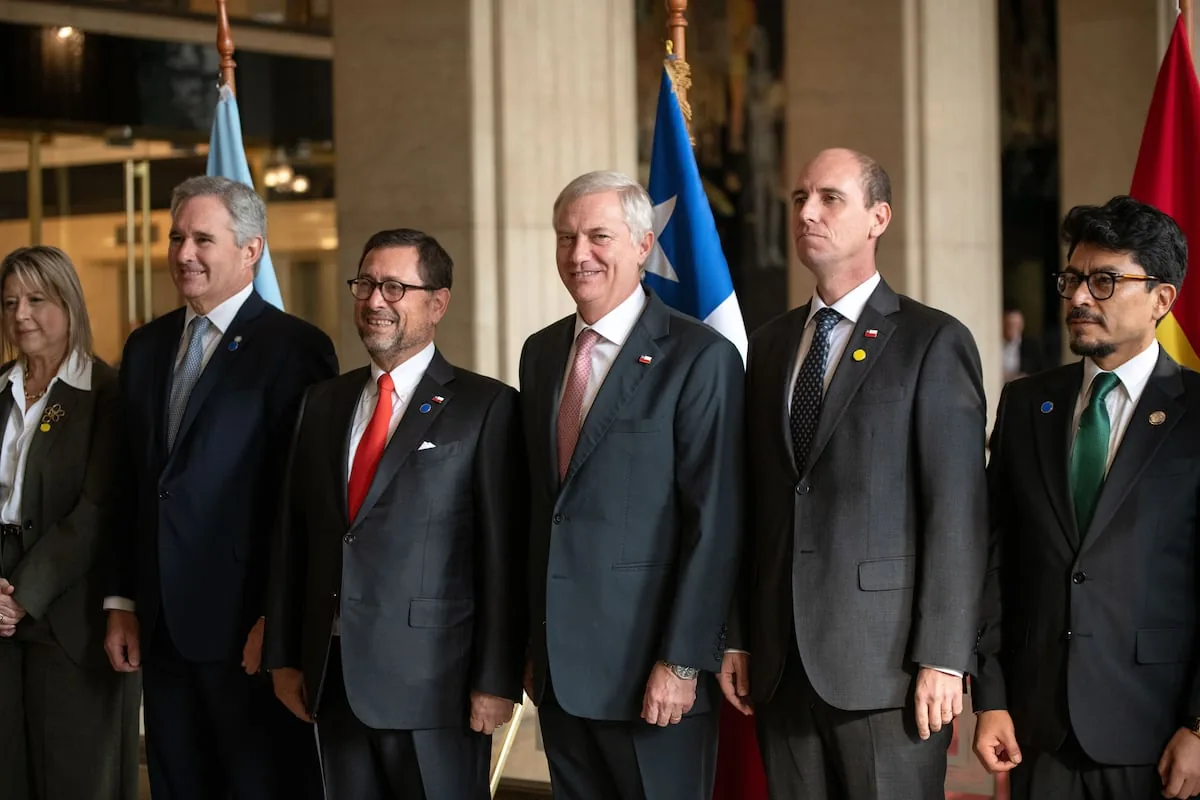
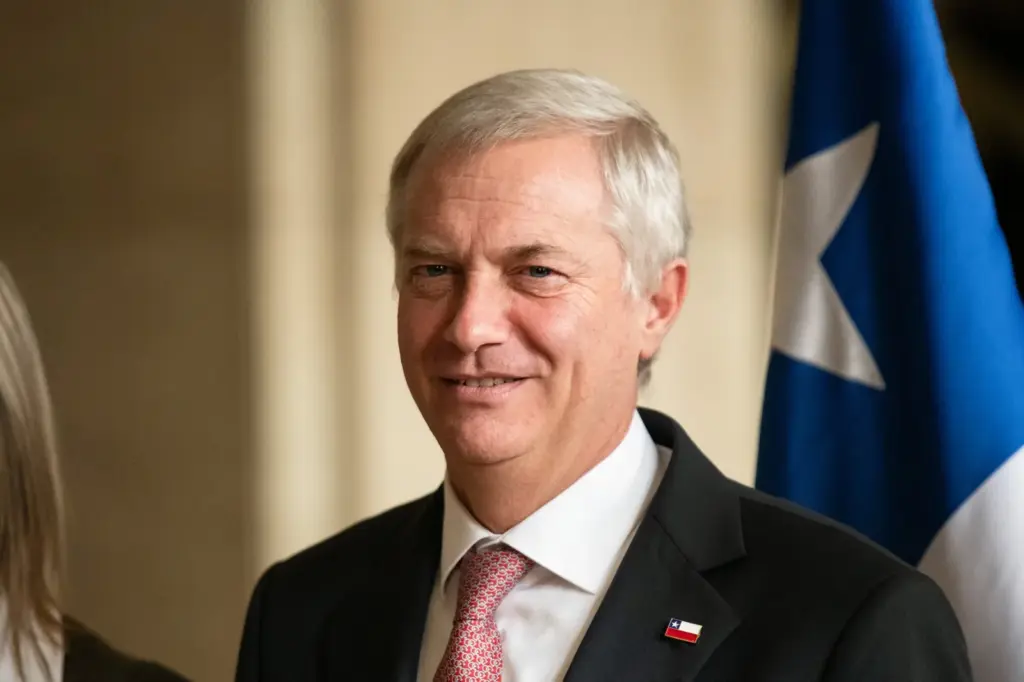
The Chilean government has convened three neighboring countries, Argentina, Peru, Bolivia, and has also included Ecuador, to the Santiago High-Level Regional Commitment Meeting Against Transnational Organized Crime, in which five foreign ministers, four security ministers, and one interior minister participated, who signed a joint cooperation agreement. In the opening, President José Antonio Kast, from the far-right conservative side, said that the meeting “is not just a political gesture, it is not a diplomatic milestone,” but rather “goes much further. Here there can be a before and after.”
Read more Sentenced to 15 years in prison a defendant accused of planning an attack at a Taylor Swift concert
Kast said that although the meeting, managed by his foreign minister Francisco Pérez, started in Santiago, it can also be held in other capitals going forward and “more people can be invited. This is a starting point for something that calls on all of us, because, at least, we can say that these five countries are tired of watching how organized crime is killing our youth, is subjugating our neighborhoods, is buying wills. And that must move from words to actions.” “Today our region is at a very privileged moment, a meeting point between nations to be able to combat this scourge. Organized crime is violating the human rights of all our compatriots, and that must be confronted with determination and strength, because freedom is, along with life, the human right we must protect the most,” he added.
Pérez, meanwhile, stated that “Argentina, Bolivia, Ecuador, Peru, and Chile” have decided “to face transnational organized crime united” and that a joint response is required. “Faced with a threat that recognizes no borders, the response cannot remain within national borders either.” “Here there is a real will, we will face crime united. Today the Santiago commitment is born,” said the foreign minister.
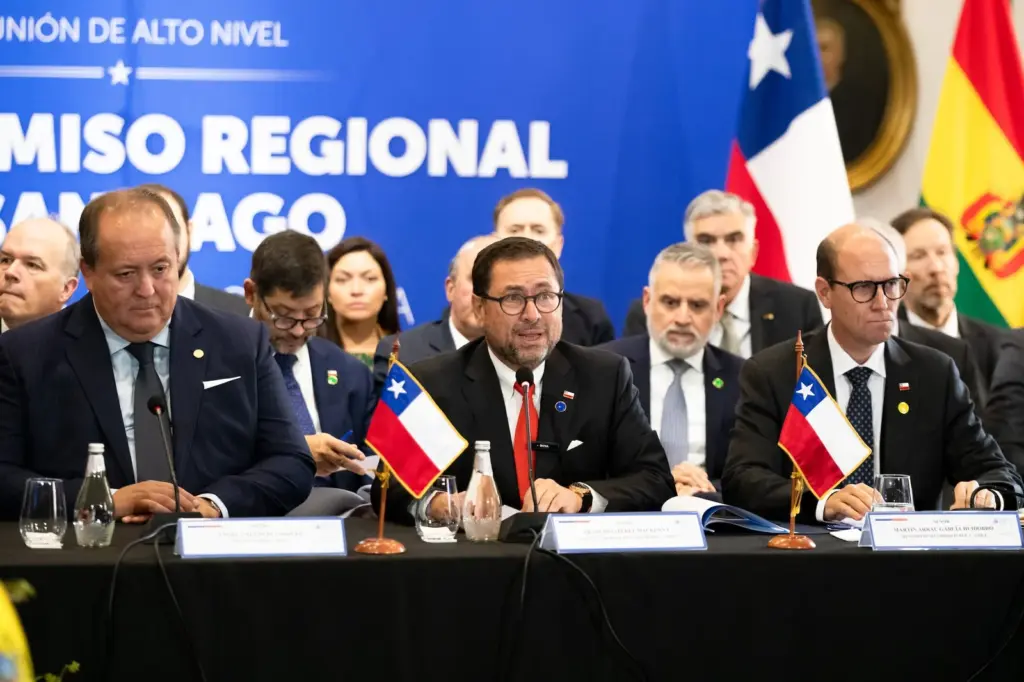
The five countries, which will meet again within 180 days, agreed to form a working group to develop a joint Action Plan “to confront organized crime with concrete actions and measurable and verifiable results”; coordinate technical-operational efforts within the next 90 days; and entrust the Working Group with raising proposals in security, financial and tax intelligence, traceability, and border control.
The Chilean foreign minister said the next step is for the Santiago Regional Commitment to be presented at the fifty-sixth General Assembly of the OAS “in order to invite more countries from the Americas to work together for the common goal, the fight against transnational organized crime. This is a starting point and the basis for future work.”
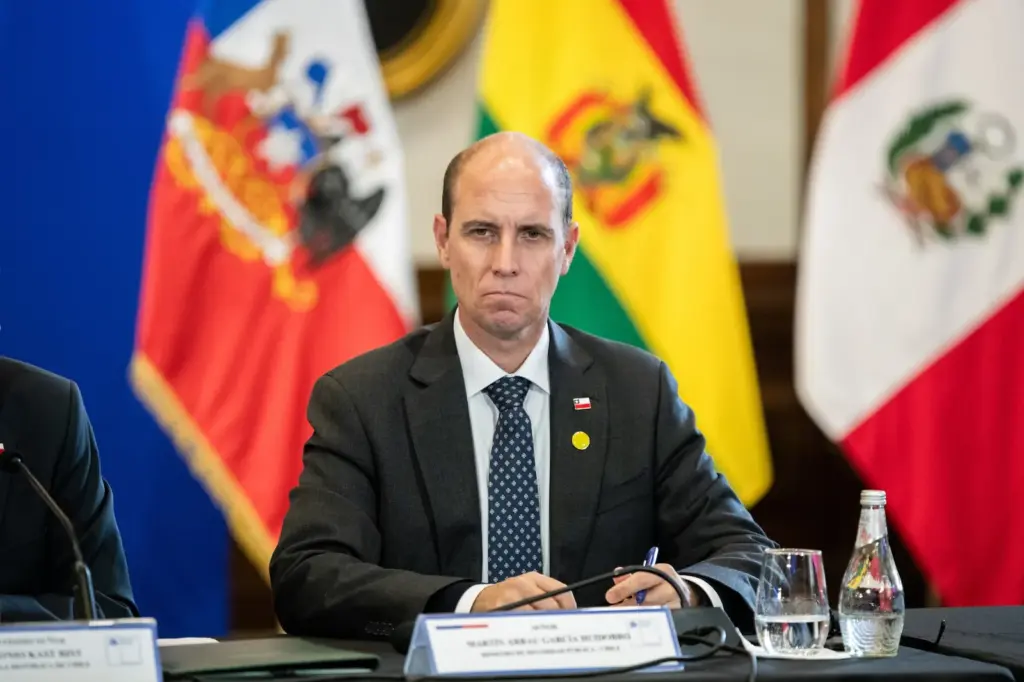
The meeting was also the international debut of Martín Arrau, the second Security Minister Kast has had in just over two months since the government started, after his cabinet reshuffle eight days ago, when he removed Trinidad Steinert from the position. “What we are going through as a country and as a region is a shared phenomenon that we cannot look at in isolation,” he said before his peers. “We have to start operating in a more coordinated way. It cannot be that organized crime has faced disorganized states. And that is where cooperation, trust, interoperability, data, and interagency are fundamental principles,” he added.
Arrau said the commitment is “very practical” and cannot remain in words. “The important thing is not that we meet and take a very nice photo, but that we will actually meet again to measure concrete results.”
Read more This is how Adriana’s life slips away: five hours of public transportation a day to be able to work
From Argentina, Javier Milei’s foreign minister Pablo Quirno and Security Minister Alejandra Monteoliva traveled, and from Bolivia, Foreign Minister Fernando Aramayo. Representing Ecuador were Foreign Minister Gabriela Sommerfeld and Deputy Minister of Public Security Jorge Rivadeneira. From Peru, Foreign Minister Carlos Pareja and Interior Minister José Zapata.
The national prosecutor Ángel Valencia was also called to the meeting, who gave a confidential presentation to the attendees. The lawyer took office at the beginning of 2023 and has focused his administration on investigations against transnational organizations operating in Chile for about six years. One of them is the Tren de Aragua, of Venezuelan origin, which has changed the crime landscape, resulting in crimes that were not frequent, such as extortion kidnappings, human trafficking, migrant smuggling, and contract killings. Several of its members, who have expanded with different cells throughout the country, have entered through unauthorized crossings on the northern border, which borders Peru and Bolivia. The Prosecutor’s Office and the Investigations Police (PDI) have dealt several blows to the organization since 2022, although it is a gang that reassembles. In June 2025, for the first time, its financial machinery was attacked when a money laundering network operating in Santiago, Valparaíso, and Los Lagos in the south was dismantled, which managed to take 13.5 million dollars out of Chile.
Another gang that has operated is Los Pulpos, which entered from Peru, mainly dedicated to extorting merchants, although much of it has been dismantled. With Bolivia, there is a problem that has dragged on for years: the theft of cars in Chile that are taken to that country and exchanged for drugs. With Argentina, meanwhile, arms trafficking has been detected.
Before signing the agreement, it was explained that it has five areas. It starts with the exchange of information between intelligence services, prosecutors, and police of all countries; border coordination for controlling the passage of people, goods, and illicit flows; traceability of illicit financial flows to pursue money laundering and the financing of organized crime; cooperation between national technical agencies such as customs, police, migration, and financial analysis units. It also includes strengthening regional response mechanisms for common threats.
For the signing of the agreement, Chile contributed information collected by the Ministry of Public Security, the Investigations Police (PDI), Carabineros, Customs, the Internal Revenue Service (SII), Migration, and the Financial Analysis Unit (UAF).
Read more Urdiales, through the Main Gate with the ‘friendly’ bull of Juan Pedro