





Among countries of Hispanic origin, the one that most resembles Spain is, without a doubt, Colombia. Its similarity in many existential aspects is so surprising that Spaniards who visit it often feel enchanted by the mirage of being in the same “motherland,” as Colombians are accustomed to repeating when referring to Spain.
Read more The Prado travels to Rome to reclaim its Italian roots
Certainly, there are numerous points of similarity between both nations that are politically evident, for example, in the plural territorial structure, or in the weight of idiosyncrasy in defining national consciousness. But if there is one thing where this resemblance ascends to look like two drops of water, it is in the role that credibility plays in their electoral processes in the form of social recognition of the effective operation of the institutions that preside over democratic elections.
Both Spain and Colombia have brand new neutral bodies that ensure the complete cleanliness of their elections; the Electoral Board in the former and the National Registrar of Civil Status in the latter. Precisely the impeccable functioning of both determines that the two democracies operate with social certainty —let’s call it credibility— that the results express exactly what the ballot boxes have collected. Without trickery or deception.
Otherwise, the functioning of electoral institutions in Colombia and Spain makes electoral fraud impossible. And more importantly, that their respective citizens perceive it as such, as has been happening for at least two generations.
Spanish democracy owes much to the credibility of the December 1976 vote that approved the Law for Political Reform. That was the key moment that made the change towards democracy irreversible in the form of a referendum that proved credible to Spanish society. One could even say that the Transition began on that date.
From that moment – technically Francoist – the Spanish people took the lead in political momentum and forced the heirs of the regime and the democratic opposition to reach a consensus on the democracy that would lead to the 1978 Constitution.
A necessary condition of that undeniable democracy was, and has been ever since, the credibility that an independent and neutral Electoral Board has managed to earn —and, above all, very accurate in its few but prestigious pronouncements— which is composed at its top by Supreme Court magistrates designated by lot and professors of Constitutional Law proposed by the parliamentary groups of the Cortes.
The best of Spain’s judiciary and academia have passed through the institution. Ángel Escudero del Corral, Federico Sainz de Robles, Antonio Hernández Gil, Manuel Alonso Olea, Fernando Garrido Falla, José Girón, Ignacio Lojendio, Luis Díez-Picazo y Ponce de León, Pedro de Vega —to name only deceased names so as not to offend sensibilities— are some of the personalities who at some point comprised it. With them, elections in Spain have always been in safe hands.
However, it is little known that the Spanish model of political Transition has its counterpart in Colombia in the constituent process that was unleashed after the 1990 elections, when, by the work and grace of a movement promoted by students from the main Colombian universities such as Fernando Carrillo, the National Constituent Assembly was convened, which led to the 1991 Constitution. That Constitution incorporates and consolidates the figure of the Registrar as the magistracy responsible for the effective conduct of elections.
Read more Chilean politics makes way for Franco Parisi’s Party of the People
The Registrar in Colombia is what is technically defined as an organ of constitutional supremacy destined to guarantee that the democratic political formula of the Constitution is effectively carried out. A single-person body that is in charge of a numerous team entrusted with the material execution of elections and which has exclusive attribution in everything related to them, including the census and issuance of identity documents, the latter task which in Spain falls to the Ministry of the Interior.
The Registrar is configured in Colombia as a neutral, impartial entity, independent of the Government —to which it is not subordinate—, endowed with its own budget and administration. Only subject to jurisdictional control.
A moral magistracy whose legitimacy is fostered by its selection system, in a double process in which candidates for the position are qualified in a prior merit competition, which leads to a subsequent designation by the presidents of the three courts: Supreme Court, Constitutional Court, and Council of State.
A legitimacy by objective merit that adds to that derived from its effectiveness and which is synthesized in the fact of making the results of the ballot boxes public within one hour.
All this is important insofar as from Colombia —which is currently immersed in presidential elections— President Gustavo Petro has just visited Spain and, in his usual style, has repeated something he has been saying for some time: he will not recognize the result of the elections if they are fraudulent, which many of us read as adverse to his candidate, Iván Cepeda.
Beyond the ridicule and discredit that pursue Petro and his picturesque and changing assertions wherever he goes, it is necessary to point out in law that Colombia has a clean electoral system, which enjoys full credibility among society and which is the basal pillar of a democracy in which rulers emerge from the ballot boxes —as Petro himself did four years ago— without fraud and with absolute cleanliness and honesty.
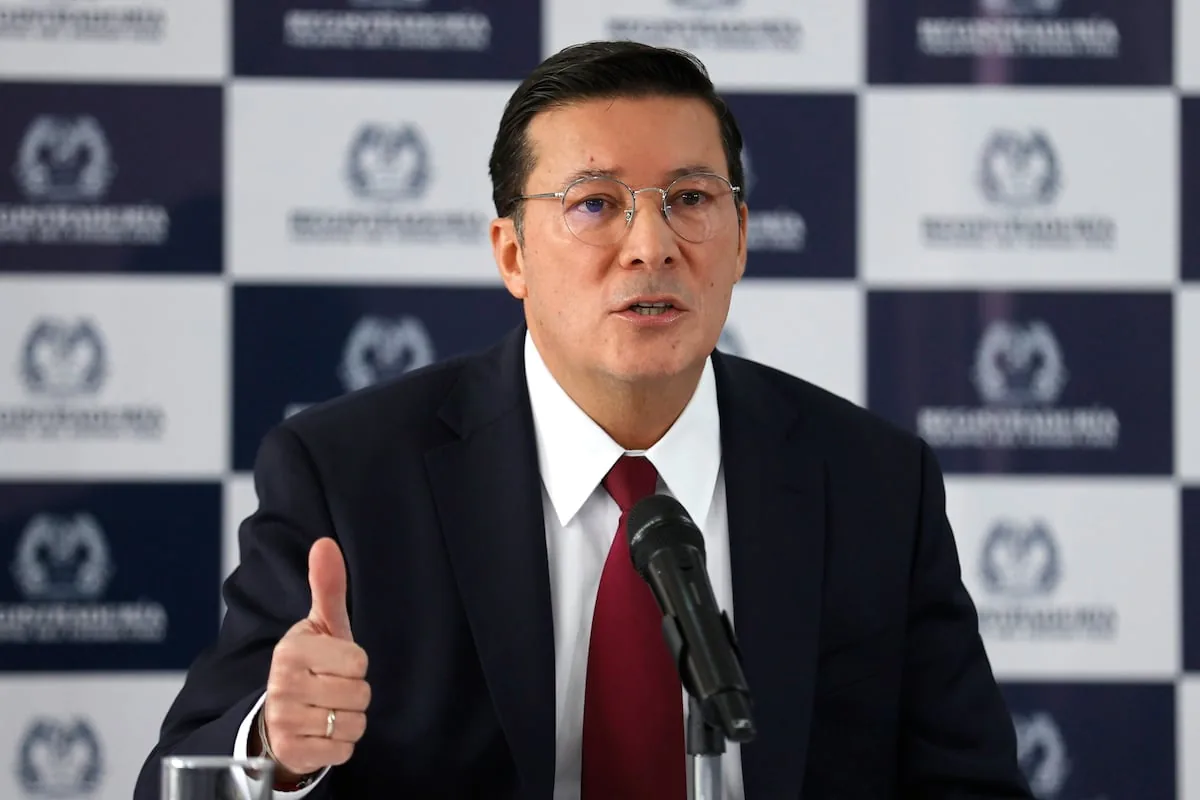
And it is important to anticipate this to Spaniards because in a few days we will have the opportunity to receive a visit from Hernán Penagos, the Registrar. A serene and moral person, not given to Trumpist whims —as will be seen— and who will certainly manage the Colombian presidential elections with the same independence and neutrality as the Central Electoral Board does in Spain.
Read more Young people at Sant Jordi’s signings: “This book, once signed, becomes a treasure”