










Confusion, uncertainty, and panic. This is the consequence of the latest move by the Donald Trump Administration to expel migrants from the country. On May 22, the U.S. Citizenship and Immigration Services (USCIS) issued a memorandum requiring applicants for permanent residency, known as the green card, to complete the process from outside the United States, which would force hundreds of thousands of people to leave the country. The announcement has hit immigration lawyers and their clients like a bomb, who, disoriented by the lack of information, do not know if they face detention if they continue the process known as adjustment of status, which for decades has granted permanent residency to more than half a million people annually without having to leave the country.
Read more Marvin Dunn, the Miami historian who challenges Trump’s presidential library: “It’s a business”
“We are returning to the original intent of the law to ensure that foreigners properly navigate our nation’s immigration system. From now on, a foreigner who is temporarily in the United States and wishes to obtain a permanent resident card (green card) must return to their country of origin to apply, except in extraordinary circumstances,” announced USCIS spokesperson Zach Kahler on May 22.
In fiscal year 2024 (from October 2023 to September 30, 2024), more than 1.3 million green cards were granted, about 780,000 of which were through adjustment of status, that is, from within the U.S. The other option to obtain permanent residency is through a consulate, which is what the government is now promoting.
“It was a surprise to all of us. The impact has been titanic compared to anything else we have seen from this Administration. Without a doubt, the response I have witnessed — from both clients and our own members — is unprecedented in my 30 years of experience,” said Jeff Joseph, president of the American Immigration Lawyers Association, this week. The organization improvised a virtual meeting last Thursday to address numerous requests from media, lawyers, and affected individuals, confused by the vague information provided by USCIS.
The professionals themselves admitted there is no clarity about who will be required to leave the country to apply for the green card, but most experts agree that those most affected will be people who obtain residency through a family member: those married to a U.S. citizen, have parents who are citizens, or have an adult child of that nationality. They also make up the majority of adjustment of status applicants. Beneficiaries of humanitarian programs, such as Temporary Protected Status or DACA (Deferred Action for Childhood Arrivals), who have already suffered harassment from the U.S. government, are also among those impacted by the new policy. Additionally, it would include people with approved employment petitions, diversity visa winners, and special immigrants — such as religious workers. Excluded are those who obtained residency as asylees and refugees, although Trump has already canceled these programs almost entirely.
The memorandum that has raised alarms states that adjustment of status applications within the United States should be considered an “extraordinary discretionary remedy” and an “administrative act of grace.” The guidance suggests these applications may be denied if the applicant fails to demonstrate, by other means, that they deserve a favorable exercise of discretion.
One day before the Department of Homeland Security (DHS), which oversees USCIS, announced the change, immigration officers already surprised those attending their interviews with questions previously only asked of those who had prior encounters with authorities, such as having been deported. Four questions were used to intimidate applicants: Why did you apply for adjustment of status instead of consular processing? Is there any factor preventing you from undergoing consular processing? Do you still have family ties in your country of origin? And why did you decide not to return to your country once your authorized stay expired?
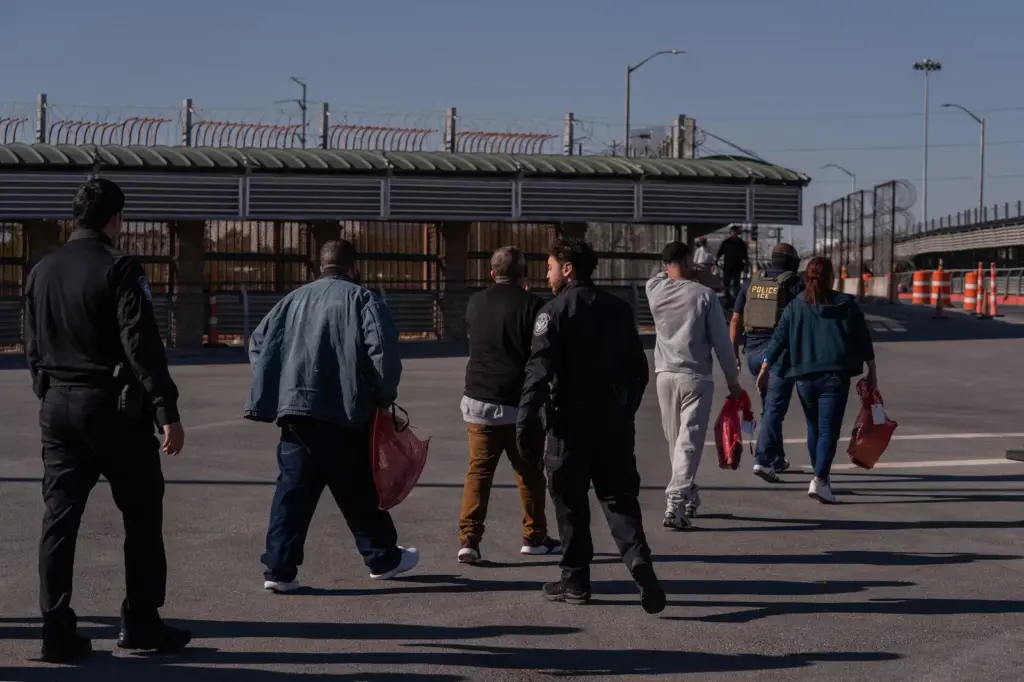
“There is an underlying presumption that things are being done incorrectly if one remains in the country beyond the allowed time and subsequently applies for adjustment of status,” Joseph states. “A standard usually reserved for the most violent criminals has been taken and transferred as an eligibility requirement for adjustment of status, so now it is necessary to demonstrate the existence of extraordinary circumstances just to access the green card application process,” he adds. Those who have already undergone interviews point out that even USCIS officers do not know how to follow the instructions.
Discretion is what keeps migrants and lawyers on edge. The Administration argues that adjustment of status was established as an exceptional measure, but experts and more than seven decades of tradition contradict this. In 1952, the U.S. Congress approved adjustment of status to avoid the burden, delay, and risk of leaving the country to process the green card through consular channels. Since then, Congress has repeatedly expanded, through statutory law, the group of people eligible for adjustment of status.
If someone who entered with a tourist or student visa, for example, fell in love and married a U.S. citizen, they could remain in the country while applying for permanent residency or green card. The obligation to leave the country to do so, as the memorandum points out, would cause family separation for years or indefinitely in some cases. The Administration has banned entry or visa processing for citizens of more than 90 countries, so reentry is not viable for them.
Read more Rodrigo Paz seeks a race-against-time solution to the crisis paralyzing Bolivia
“If people from those countries — such as Cuba, Venezuela, Afghanistan, and Iran — are told they must go to their country’s consulate to obtain a visa, they cannot do so; there is no way to carry out consular processing. Therefore, their only chance would be to obtain the green card while inside the United States, and now, apparently, that door is also closing,” explains Julia Gelatt, associate director of the U.S. Program at the Migration Policy Institute (MPI).
“More questions than answers”
Since the memorandum was made public, Wendy Rodríguez, an immigration lawyer from Texas, has been flooded with questions from her clients. Like everyone in her profession, she tries to decipher the meaning of the new rules. “There are more questions than answers,” she admits.
Rodríguez has sent a letter to all her clients explaining the new risks if they apply for adjustment of status. She tells them that if they attend the USCIS interview, they should prepare documentation showing they are good people: if they participate in civic activities, if they go to church, if they work, how indispensable they are to their family…
Her clients express the fear of having to leave the country. “There are many fears: the fear of not being able to return; the fear that when leaving, immigration violations occur that require a waiver that is not necessary while inside the United States; the fear of changing laws, and the general insecurity of their countries. The number one factor is the fact that there is no fixed time in which the process will conclude, and that means you will be away from your family for several years,” she points out by phone. Procedures carried out through consulates are slower, can take more years, and, moreover, cannot be appealed.
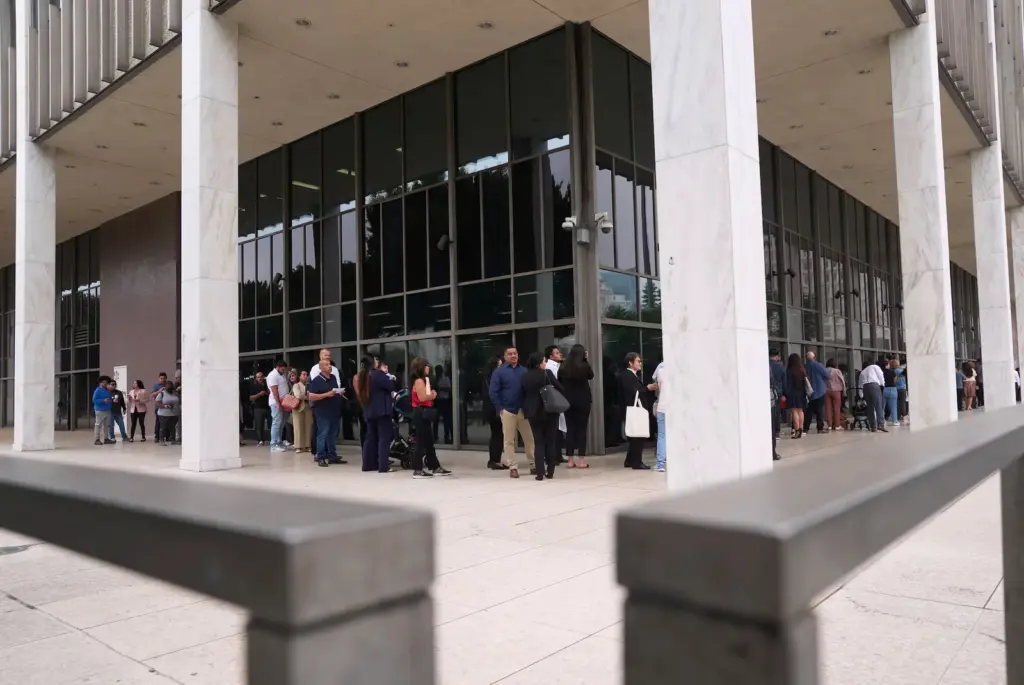
Rodríguez believes the memorandum will not be implemented. “The Administration is giving instructions that go against the law, what Congress has already voted on and agreed to, so I don’t think we will see it implemented. If a lawsuit hasn’t been filed yet, it is about to be,” she trusts. The American Immigration Lawyers Association is gathering cases of affected people to challenge the memorandum. They say it takes time to gather cases and arguments for this, but they assure they have already started to take the case to court.
One of the big unknowns is whether the memorandum will affect people who entered the United States with a temporary H-1B work visa for specialized professionals, who are part of the 1.2 million migrants with pending green card applications. The Cato Institute states that this group will also have to self-deport to continue the process.
In response to questions sent by EL PAÍS, DHS replied by email that “this policy will not have a noticeable impact on highly qualified applicants or skilled professionals who have complied with the law. These foreigners benefit the national interest, provide economic benefits to the United States, and will continue to deserve a favorable exercise of discretion.” The department confirmed the Administration’s desire to expel migrants with fewer resources: “The president continues to prioritize immigration that strengthens the United States culturally, socially, and financially, while preventing mass migration from the Third World, which harms our country and Americans.”
The new rules aim to increase the number of people who can be deported, since despite massive detention operations, the president’s goal of expelling one million people per year has not yet been met. The numerous obstacles the Administration has imposed on foreigners raise the question of whether it is worth continuing to stay in the country.
“Some people with a high level of education, who perform professional jobs and actively contribute to U.S. society and the economy, might think: ‘This is one more obstacle that jeopardizes my ability to stay here legally.’ They might question whether it is really worth fighting to stay,” Gelatt opines. “Perhaps that is precisely one of the underlying goals: to alter how people weigh benefits against risks, to the point that they conclude it would be easier to develop their professional career anywhere other than the United States.”
Read more The inexhaustible pen of inmate 89914053: Chapo’s letters from Colorado prison