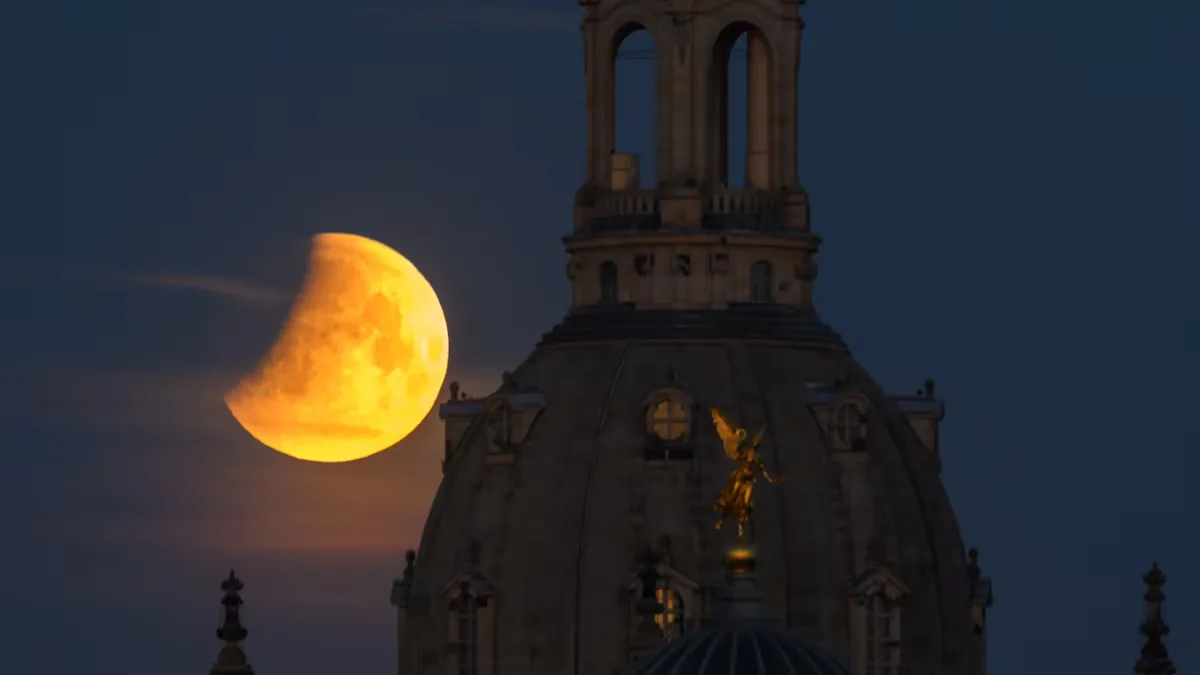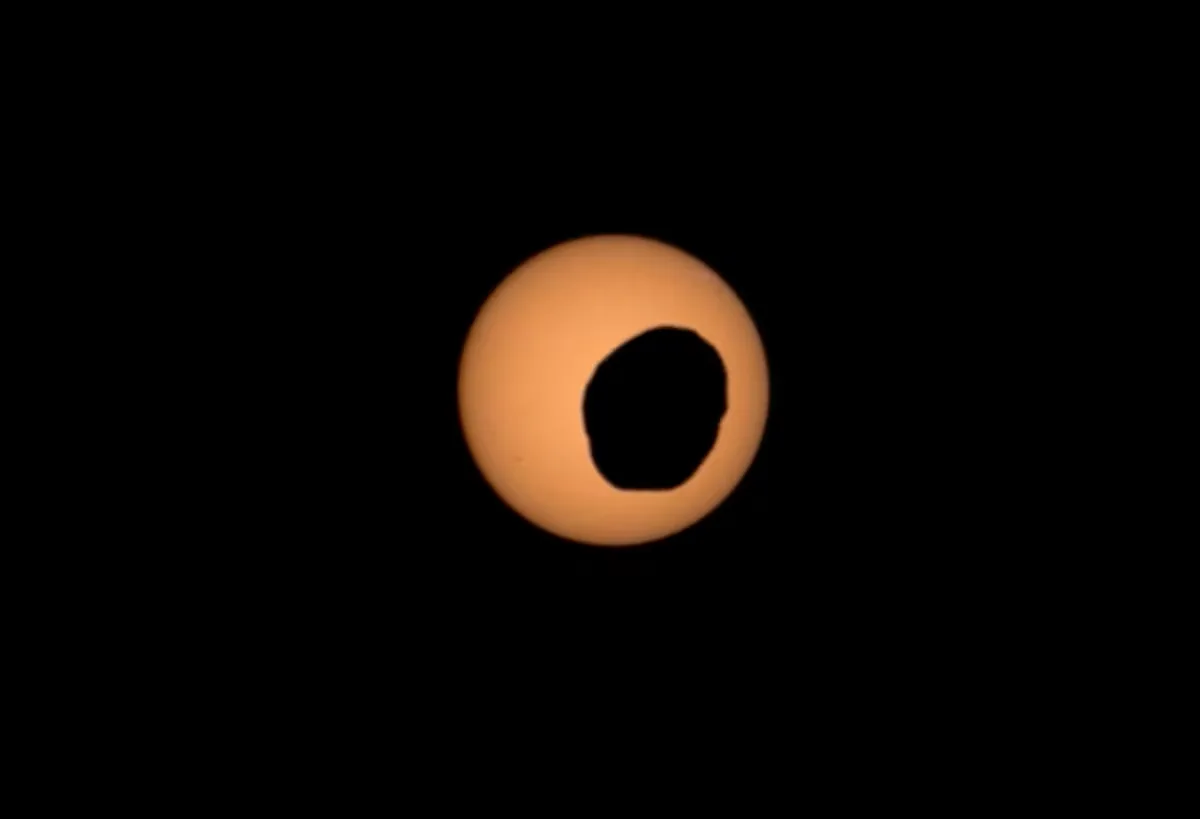







This summer, a unique astronomical event will take place in mainland Spain: a total solar eclipse. A total eclipse has not been seen on the Iberian Peninsula since 1905 — although there was one that passed over the Canary Islands in 1959 — so it will undoubtedly be something exceptional for millions of Spaniards who will enjoy an unparalleled sensory experience for the first time. Although we have already published many articles about the eclipse, EL PAÍS begins its special coverage today with a tour of the minute and a half of fame of depopulated Spain. Here, moreover, are the keys to not miss this phenomenon.
When?
The eclipse will take place on Wednesday, August 12, at sunset: the climax will arrive around half past eight in the evening, depending on the specific point in Spanish territory. It will enter through the Galician and Asturian coast at 19:30 and will begin to be total almost an hour later.
Where?
The next solar eclipse will be total in almost 40% of Spain, in a band that crosses the north of the country, entering through Galicia and Asturias and exiting through the Mediterranean coast and the Balearic Islands. It will pass through 13 of the 17 autonomous communities, covering at least part of 31 of the 50 provinces. In the rest of Spain, it will be a very pronounced partial eclipse.
Map with the time and visibility at each point in the country
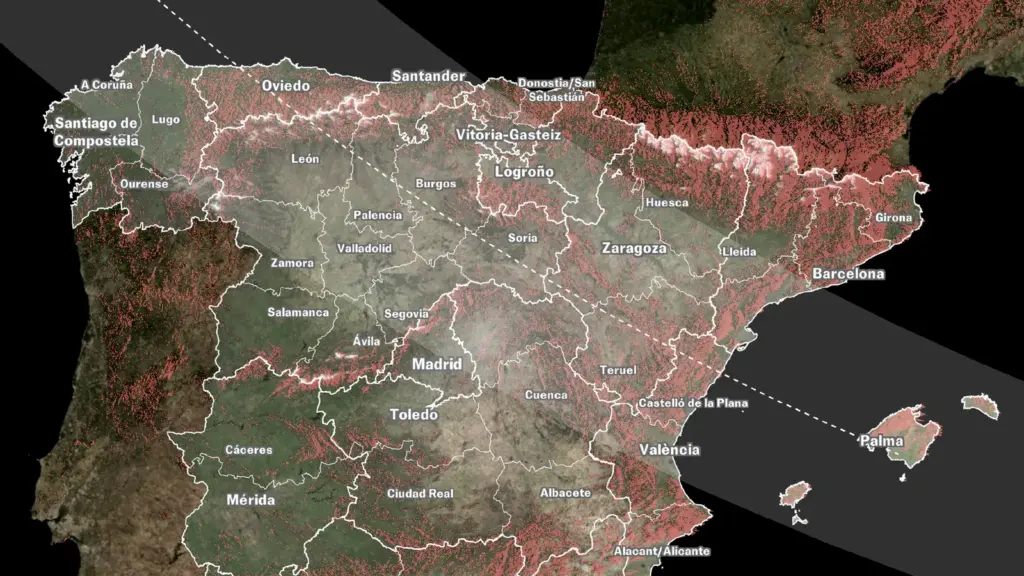
How the eclipse will be seen from each municipality in Spain comparing times, percentage of coverage, and duration, three key factors to understand the intensity of the event.
How long does it last?
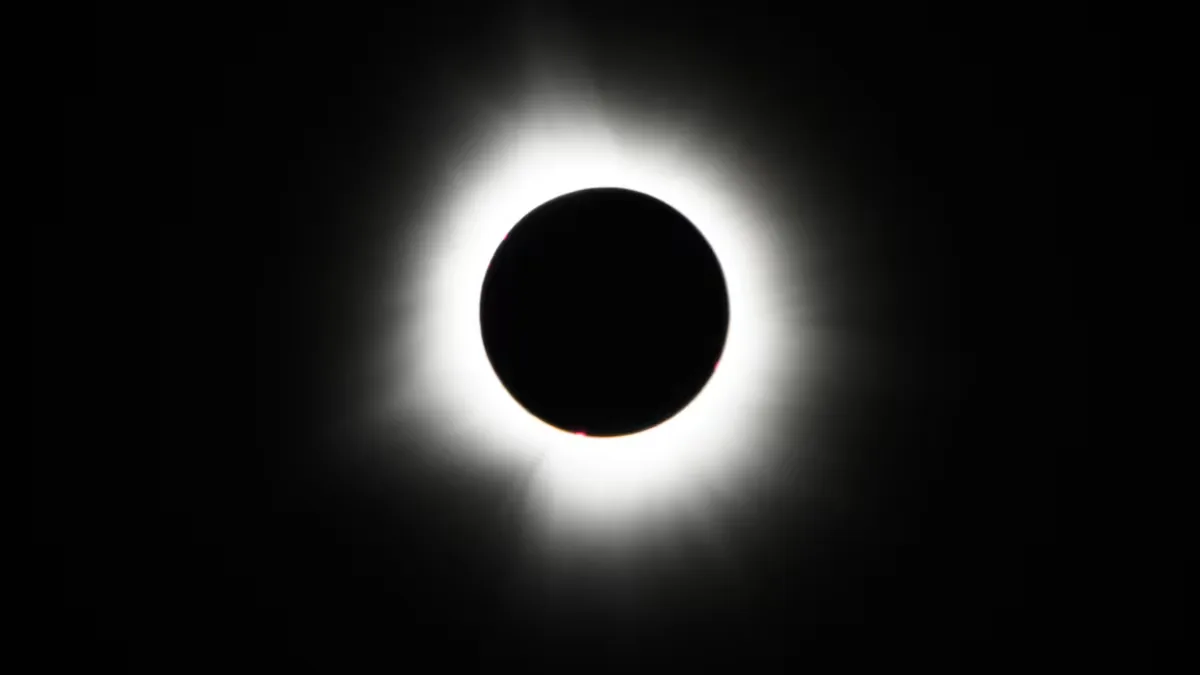
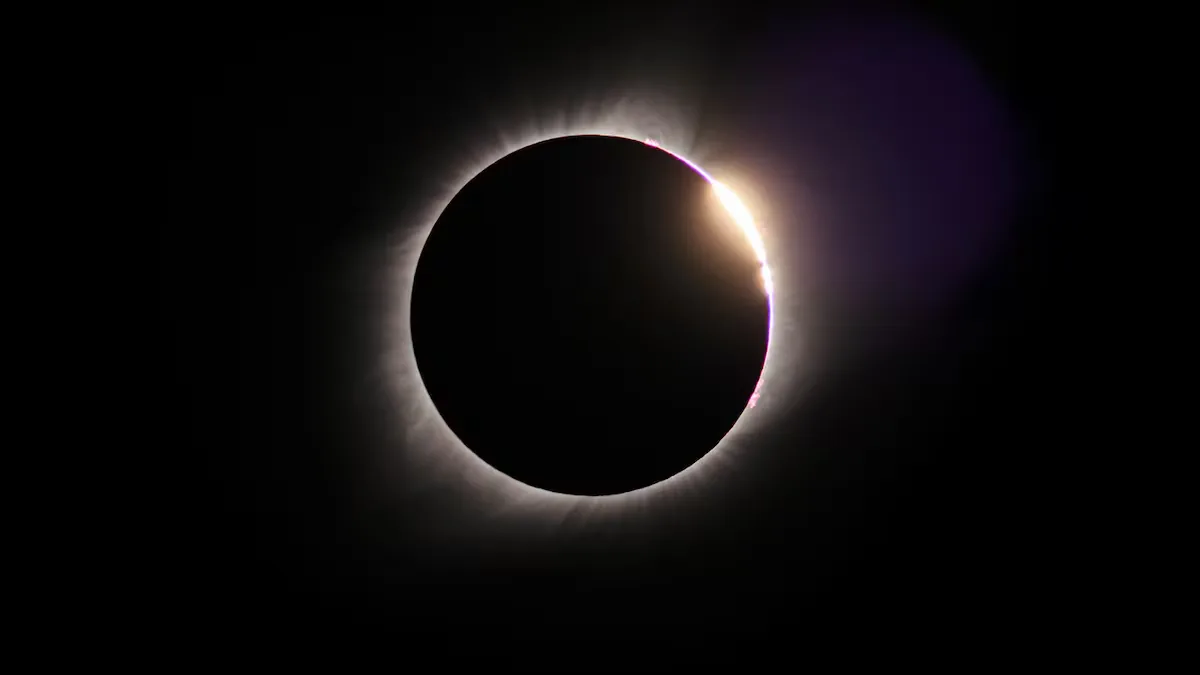
In the areas blessed with totality, it will get dark twice that day; the first — around 20:30 — if the clouds allow, a black sun surrounded by a white halo will be visible for up to 1 minute and 50 seconds.
Only in Spain?
Spain will be the only country where this eclipse can be observed with guarantees, although it will also pass through uninhabited areas of Greenland, the western tip of Iceland, and a small corner of Portugal.
Will it be unique?
Spain will experience three eclipses of the highest category in three consecutive years: August 12, 2026, August 2, 2027, and January 26, 2028. The first two will be total and the last one annular.
Where to watch it from?
The general recommendation from authorities to citizens who reside or spend their holidays in the totality zone and want to see the eclipse is to find their own observation points to avoid unnecessary travel that could congest roads or cause other problems. The involved municipalities and autonomous communities are choosing viewpoints capable of managing large crowds to observe the phenomenon. They can be consulted on this map prepared by EL PAÍS.
More than 350 official observation points to see the eclipse
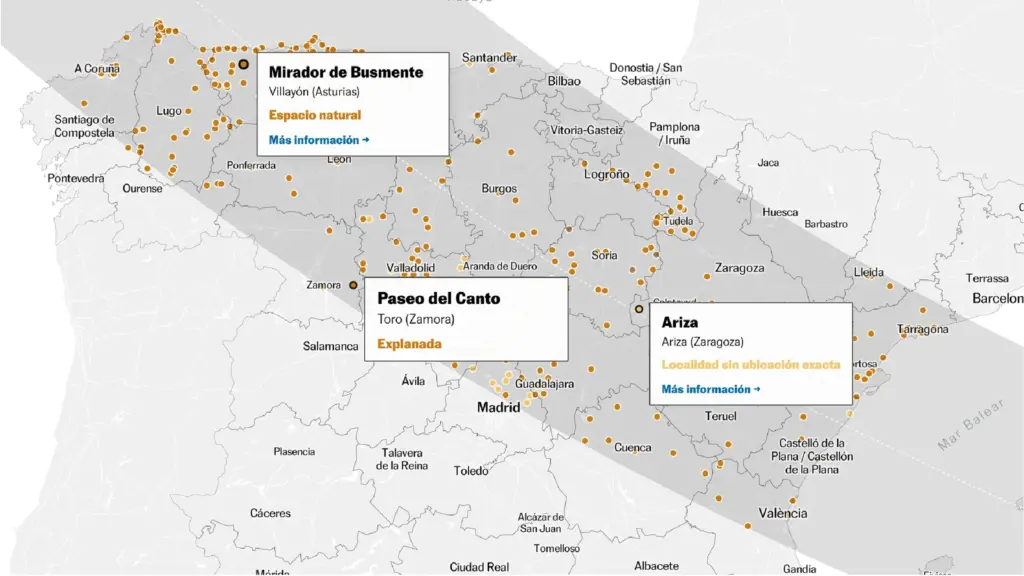
A map and a search tool allow locating the viewpoints enabled by communities and municipalities to observe the phenomenon.
What places to avoid?
The big drawback is that the eclipse arrives in Spain when the sun is setting. Therefore, obstacles near the horizon — such as buildings, trees, and mountains — can prevent its view. For example, it will not be visible in towns like San Lorenzo del Escorial (Madrid), located on the slope of a mountain that blocks the sun at sunset. The other drama that could ruin the show will be the clouds, which will depend on the weather of the day at each point in the territory.
How to find the perfect spot?
The general recommendation to “find a place with a clear horizon free of obstacles towards the sunset, between west and northwest” may raise doubts for many people. With these three free apps and a website, you can find the perfect place to see the eclipse (without needing to go to one of the official viewpoints approved by the various public administrations).
Will there be more astronomical shows?
The sky will offer an even more exceptional show. Just a few minutes after the Moon completely covers our star, the peak of the Perseids, the most famous meteor shower of the year, will arrive. The coincidence also has a unique advantage: the eclipse occurs at new moon, which will leave the sky completely dark to observe even the faintest shooting stars.
How to watch it safely?
The only safe way to look at the Sun at any time during an eclipse is to use glasses certified with the ISO 12312-2 standard, properly marked with this certification and with the European Union CE mark. They must also obligatorily include the manufacturer’s address, usage instructions in the language of the country where they are sold, and the expiration date. “It terrifies me that the possibility of using X-rays or photographic negatives is even mentioned,” warned Juan Cruz Cigudosa, Secretary of State for Science.
Is it very different if the eclipse is 99%?
A 99.9% eclipse and a total one are not almost equivalent: only in totality does the solar corona appear and the sky takes on a nighttime appearance. For example, in the center of Madrid city, the coverage will be 99.96%; but experts emphasize that such a pronounced partial eclipse has little to do with the sensations of a total eclipse, which will be visible for a few seconds around 20:32 from some streets in the northernmost neighborhoods of the city.
And you, how will you experience the eclipse?
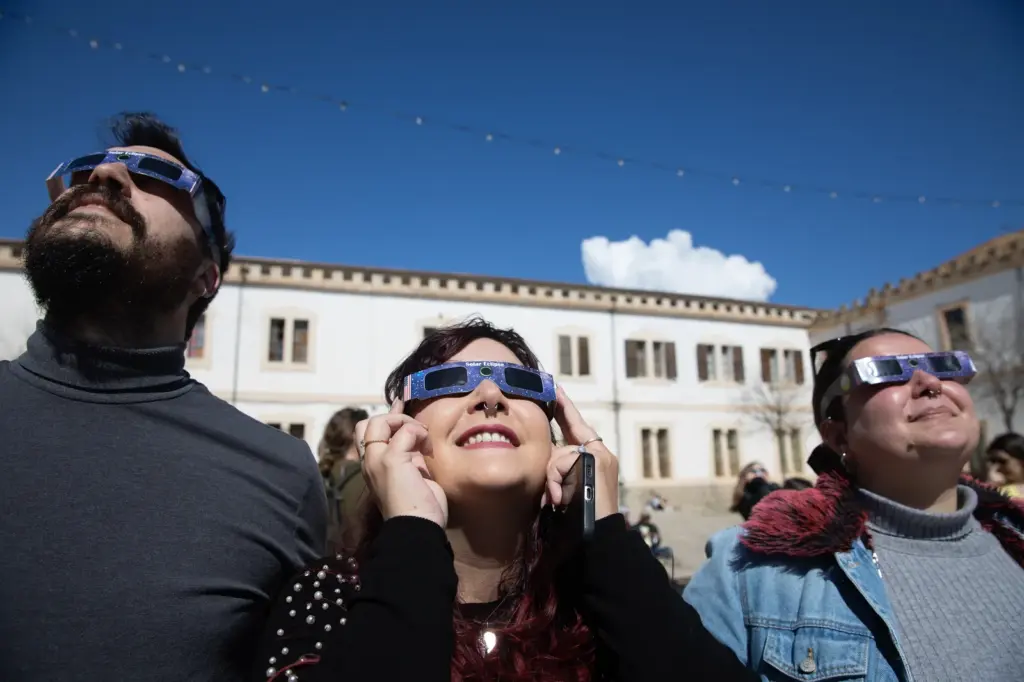
At EL PAÍS, we want to know how you, our readers, are preparing for the astronomical phenomenon of August 12. Send us your testimony of how you are preparing or how your town or city will receive the eclipse to participacion@elpais.es. You can include photos if you want. Next Monday, August 10, we will publish some of our readers’ eclipse stories.
Read more New York, California, and 23 Other States Sue the Trump Administration Over Its New Tariffs