






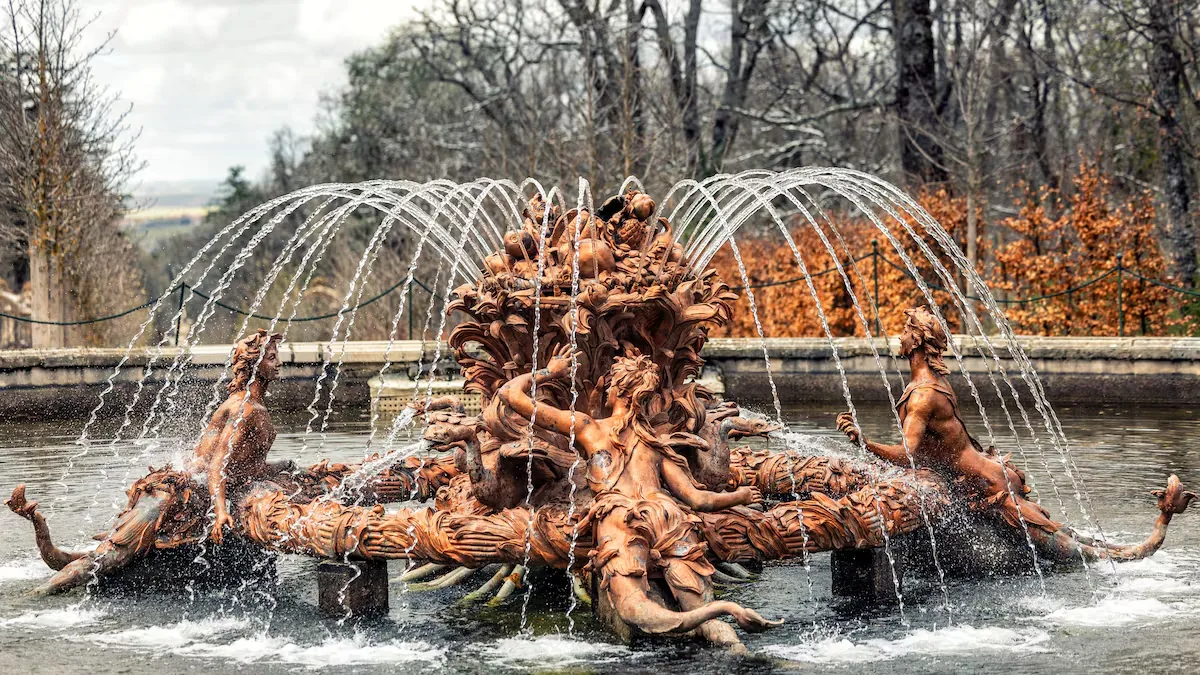
The refreshing spectacle of seeing the fountains of the La Granja palace (Segovia) in operation, some of which shoot water jets over 30 meters high, is over for this summer. Patrimonio Nacional announced this Tuesday in a statement that the “fountain season of the gardens of the Royal Palace of La Granja de San Ildefonso is canceled due to the water shortage affecting the municipality.” This royal site, with its palace, covers an area of 160 hectares and is visited by about 200,000 people each year.
Read more Countdown to Eclipse Day: Key Tips to Prepare for the Astronomical Phenomenon of the Century
The delegate of Patrimonio Nacional in La Granja, Nilo Fernández, stated by phone that “this problem was foreseeable due to the intense heat waves this summer.” “We have records from the last 20 years, and this year’s are undoubtedly the worst. The parameters we are observing at the beginning of August are usually seen at the end of this month.”
Patrimonio Nacional emphasizes that “despite the rain recorded this year, the unusual heat and the consequent increase in water evaporation already forced the early closure of the 2026 fountain season,” which is now definitive.
Fernández insists that the La Granja fountain system is “ecological and sustainable.” “The water the public sees is the same that ends up in the Pontón reservoir, which supplies Segovia city and some other towns. There are no losses; the same amount of water that enters is what comes out.”
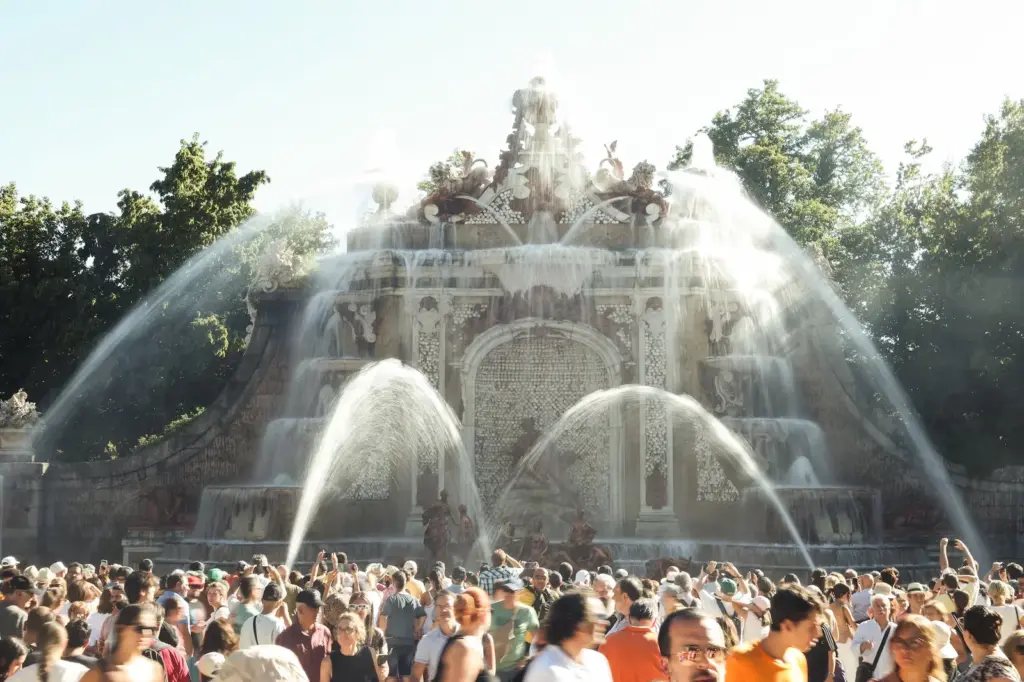
There are four streams that feed the royal site’s pond, called El Mar, with a capacity of 161,111 cubic meters, from which water flows to the fountains. Fernández explains that it works “like a bathtub.” “It fills with water from the streams until it overflows. When the pond stops releasing the excess water, the fountain season is considered over.” The current water resource shortage has led Patrimonio Nacional “to adopt this exceptional measure, which responds to criteria of responsibility and sustainability in water management,” the statement adds.
The La Granja fountain season always starts on Maundy Thursday, which this year was April 2. Usually, there are shows on Wednesdays and Saturdays at 5:30 p.m. and Sundays at 12:00 p.m. Four fountains operate one week and four the next, successively and for 10 minutes. La Granja has 26 fountains, with a total of 14 kilometers of cast iron pipes.
The suspension affects all shows scheduled for August, including the nighttime lightings of one of the most beautiful fountains, the Diana Baths, planned for the 8th, 15th, and 22nd of this month. The cancellations also include the traditional extraordinary show scheduled for the 25th, on the occasion of the San Luis festival. “It is very unusual that the fountains will not be able to operate on those days,” Fernández adds. However, this year, from the opening of the fountain season until the end of July, there have been “around 50 lightings of the monumental fountains of the La Granja gardens.”
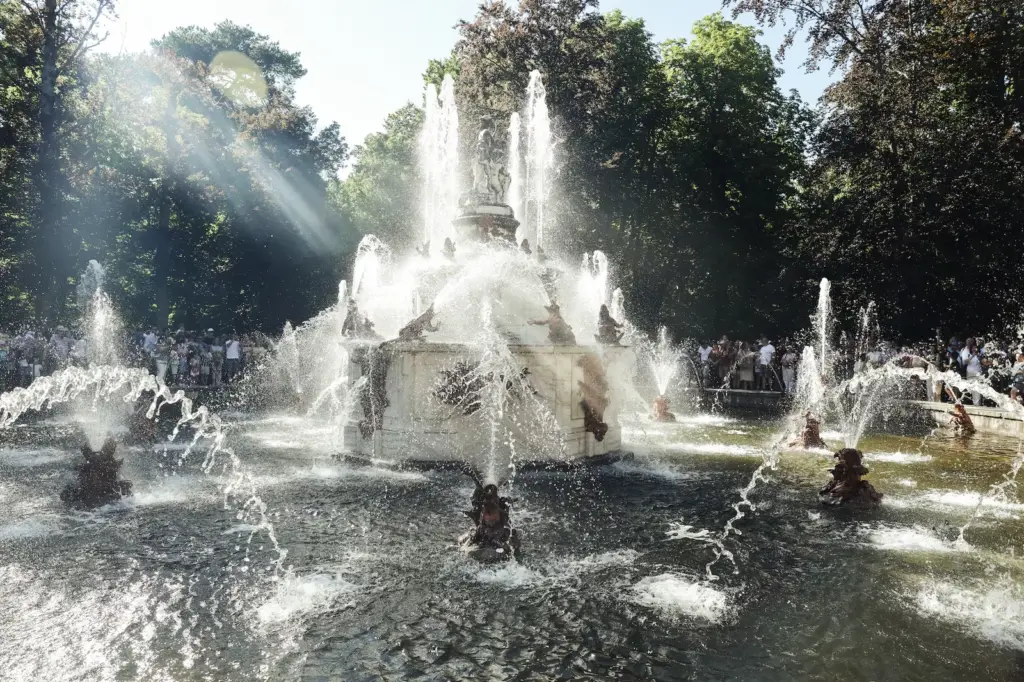
As for visitors who had already purchased tickets for the canceled shows, “a full refund will be made.” These people “will receive the refund through the channels enabled for ticket sales, without the need for additional procedures.”
This royal site has three centuries of history and was commissioned by the first Bourbon king in Spain, Felipe V, who was born in Versailles and sought a place in his kingdom to replicate the beauty and tranquility of the French monumental complex, perhaps to alleviate his depressive episodes. Featuring the fountains prominently, the monarch called French engineers to surpass those of Versailles in technology and height (the Fame fountain in La Granja reaches 47 meters high, while the highest jet in Versailles reaches 22 meters). The fountains, which almost entirely reproduce mythological scenes, were activated as the monarch approached them during his walks.