AIPAC is already a toxic word for many Americans. It stands for the American Israel Public Affairs Committee, founded in the 1950s to foster good relations between the two countries. But in recent years, this organization has become a polarizing element in the United States, flooding campaigns in favor of pro-Israel candidates with millions and seen by many citizens as synonymous with the dark influence of money in politics.
Read more City comes back against Atlético and ruins Kang-in Lee’s party in Seoul
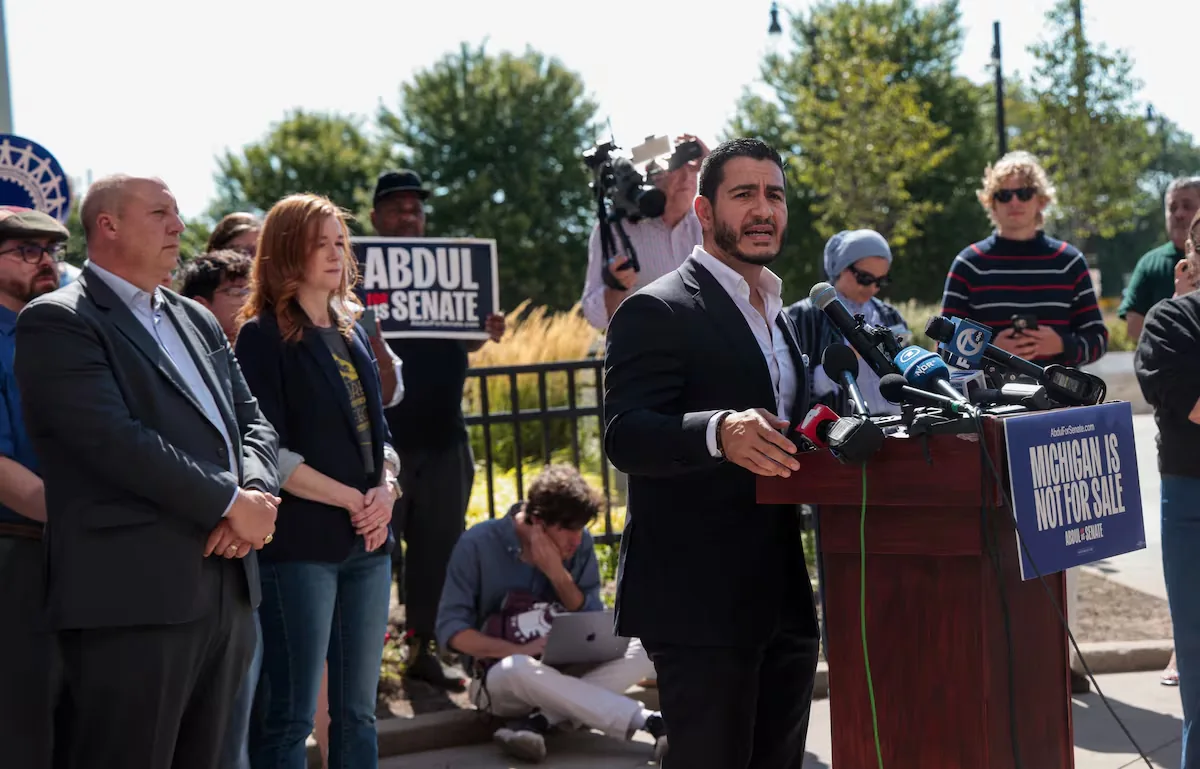
The latest to experience this has been Congresswoman Haley Stevens, who this week crashed in her attempt to be the Democratic candidate for senator from Michigan. She had the support of her party’s establishment and the generosity of the Israeli lobby, which watered her campaign with 30 million dollars [about 26 million euros], an absolute record. But she clashed with the magnetism of Abdul El-Sayed, the leftist candidate who has based his success on the idea of ending the influence of pressure groups in election campaigns. “Money out of politics. Money in your pocket. Medicare for all,” is his battle cry. And the first part is mainly aimed at one recipient: Israel.
In an interview with The New Yorker a few days before the primaries, El-Sayed acknowledged that the millions of dollars invested by AIPAC against him had allowed him to become a kind of David against Goliath. “You have given me a gigantic platform. Thank you very much, AIPAC donors. I am truly grateful,” concluded the man who, if he wins the November 3 elections, will be the first Muslim senator in United States history.
Three pillars under pressure
Aaron David Miller has been observing relations between the United States and Israel for half a century. The first 30 years he did so from the government — until 2003 he advised six secretaries of state in various rounds of Arab-Israeli negotiations — and the last 20 as an analyst. And he admits he has never seen a situation as difficult as the current one. “Throughout all these decades, the relationship between the two countries has been sustained on three fundamental pillars: shared values, common interests, and a solid bipartisan support base in the United States. All these elements are now under extreme pressure,” he says on the phone, now a member of the think-tank Carnegie Endowment for International Peace.
Aware of the complexity of the issue, Miller resists drawing a definitive conclusion about where the relationship of the — until now — close allies will go. But he points out two points that will set the tone: the name of the prime minister who emerges from the October 27 elections — Benjamin Netanyahu, he assures, is toxic for a majority of Americans — and removing from the conversation the 3.8 billion in aid that the United States gives to its biggest ally in the Middle East.
El-Sayed’s success is not a unique case. Democrats most critical of Netanyahu have made reality a virtue: they constantly mention AIPAC and the money spent against them to boast of cleanliness, while airing the links of their rivals with the Israeli lobby. It is a strategy that worked for the congressional candidates sponsored by New York Mayor Zohran Mamdani. But it is not a formula for guaranteed success: other Democrats with similar approaches have crashed. El-Sayed’s victory — by a very narrow margin, of just 15,000 votes — also shows the extreme division of Democrats on issues like Israel.

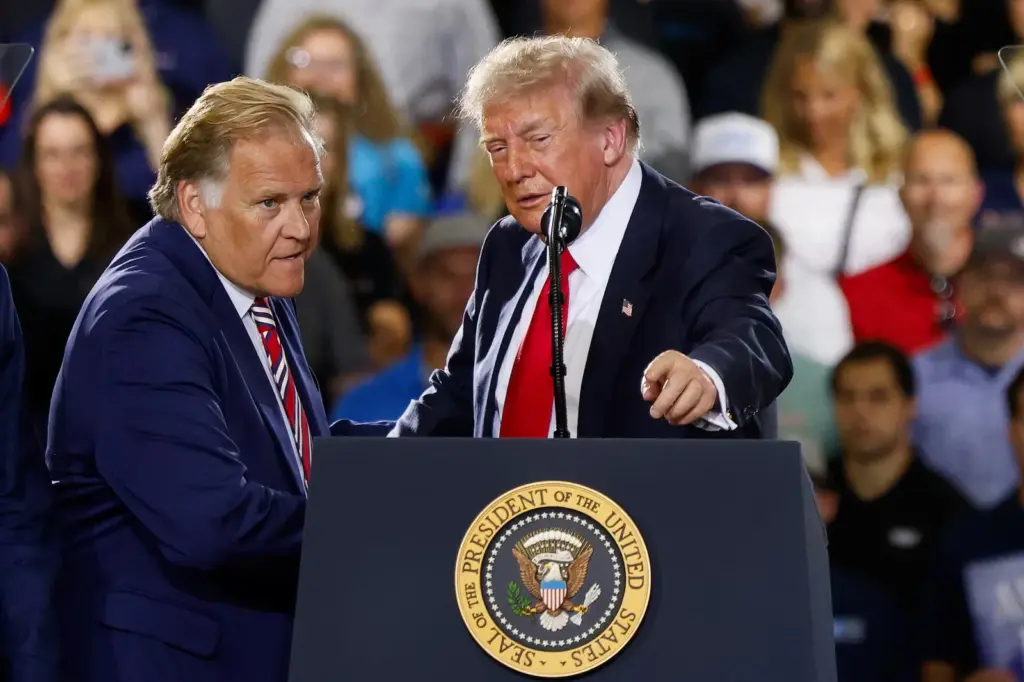
The Republicans, meanwhile, are already campaigning with the idea that El-Sayed hates Israel and Jews. They trust that this idea will help their candidate, Mike Rogers, to be crowned senator from Michigan in the November elections, a swing state that Trump won in the 2024 presidential election and that is key to seeing who ends up controlling the upper chamber. But Republicans are not monolithic in their support for Israel either. The scolding that Vice President J. D. Vance gave Netanyahu last June for the obstacles he put on the peace process with Iran still resonates in many minds. “I wouldn’t mess with the only powerful ally I have left in the whole world,” the Republican urged him.
Read more Damascus agrees with Moscow to maintain Russian bases in the Syrian Mediterranean
“El-Sayed’s victory suggests an increasingly likely change in Congress: a less exceptional relationship with Israel, with aid being equated to what other countries receive, an idea shared by both Democrats and Republicans,” says political strategist and Haaretz analyst Dahlia Scheindlin from Israel. “If a considerable number of Democrats very critical of Israel reach Congress after the midterm elections, the United States will give much more limited support. There will be a reduction in arms exports and financial aid,” adds Scheindlin, who holds dual nationality.
From nonpartisan group to funding campaigns
The injection of money into United States campaigns by AIPAC has grown as the interests of the two countries diverged. An organization that was born as a nonpartisan platform that acted as a lobby in Congress and sent parliamentarians to Israel changed its approach in response to what it saw as a growing anti-Israel sentiment in certain Democratic sectors. There were key moments such as the nuclear agreement that the Barack Obama Administration closed with Iran in 2015 or the arrival of a group of congresswomen known as The Squad, among whom was Alexandria Ocasio-Cortez, seen as too pro-Palestinian.
In 2022, AIPAC created a tool to finance the campaigns of candidates favorable to its interests and since then the money this organization invests has not stopped growing. If four years ago it allocated 29 million dollars, the figure in 2026 has increased to 67, becoming one of the most money-spending influence groups in United States politics. According to an analysis by The New York Times, AIPAC has funded 109 digital or television ads in the last four years, but only six of them specifically mentioned Israel, a practice that has increased criticism for carrying out a shadowy work in which its true motivation is not made clear.
I appreciate AIPAC proving it doesn’t belong in the Dem Party and especially our primaries.
— Alexandria Ocasio-Cortez (@AOC) August 5, 2026
From endorsing Jan 6th members to ensuring Congress remains in the hands of a 34-count felon, AIPAC is an org committed to undermining democracy at home and abroad.
See you in November. https://t.co/EKpNSaxcv3
After El-Sayed’s victory, AIPAC issued a statement warning that it would do everything possible to prevent a victory in the elections of the Democratic candidate, son of Egyptian immigrants, who does not hesitate to call the Netanyahu government’s actions in Gaza genocide and who wants to end unconditional aid to Israel. “I appreciate AIPAC showing that it has no place in the Democratic Party. It is an organization committed to undermining democracy, both at home and abroad. See you in November,” Congresswoman Ocasio-Cortez responded.
Despite protests from sectors more aligned with Israel, it is obvious that something is moving in American politics. Former Vice President Kamala Harris, who is increasingly less hiding her plans to run for the White House again in 2028, has just given her support to El-Sayed ahead of the November elections. It is a notable move for this politician, after many analysts pointed to the Biden-Harris Administration’s support for Israel as one of the elements that weighed down her 2024 campaign and ended with Trump’s victory. It is further evidence that traditional support for Israel is fracturing. And that the upcoming midterm elections will be the acid test to see to what extent the decades-long bond between the two countries is unbreakable.
Read more The Mossos investigate a shooting during a fight in Nou Barris