Rosalía seemed to be living her best summer until July 22 when she shared a video on her Instagram account that changed, to some extent, the strict script she has followed since releasing her album Lux. The artist was singing Spain’s World Cup goals while sitting in the stands next to Penélope Cruz and Javier Bardem to the rhythm of her song Despechá; she was starting her Latin America tour with the preview of what seems to be her new song; until that day she reposted a video critical of the Argentine national team that caused an outpouring of anger and indignation on social media from her fans in that country. The singer, as she has done on other occasions, apologized through the same channel and later did so at one of the concerts she gave in Buenos Aires. Almost at the same time, Ariana Grande announced that when she finishes the tour she is immersed in, she will step away from “public attention” exhausted by the scrutiny of her physique through direct messages on her accounts. Meanwhile, Miguel Ríos, 82 years old, with more than half a century of career and a strictly professional relationship with social media, resolved a possible controversy in seconds when an attendee at a concert shouted at him not to do politics on stage. “How am I going to be silent? I am a political being,” he replied and settled the matter in all dimensions of the reality we inhabit.
Read more Democratic primaries show the declining political influence of Israel in the United States
These are just three recent cases that exemplify the new era in which the brief history of the relationship between social media and cultural stars finds itself. After a few years in which a fictitious perception was generated that anyone had direct access and, therefore, almost a personal relationship with their idols; the big names in the cultural industry are raising new walls to limit this entry into their private lives in a measured exercise of damage control.
“Authenticity is the gold of 21st-century artists and everyone wants to sell one that is very pale, very bland, and that does not raise any controversy,” say Yeray S. Iborra and Oriol Rodríguez, journalists expert in popular culture and authors of Buscando a Rosalía. La promesa, la voz, la empoderada, la Motomami, la Santa (Libros del Kultrum), in which they analyze the complex, and often enigmatic, trajectory of an artist about whom there is barely any bibliography. “When Rosalía comes out with the Spanish flag and scarf, it has an ideological and political connotation. When she does something that causes the slightest controversy, such as hurting the feelings of her Argentine followers, she immediately withdraws from it and that’s it. That is a very artificial authenticity, so it is not authenticity. At the same time, it is good that a person like Rosalía educates about the fact that we don’t have to have everything so clear,” they opine. “That spontaneity is now more linked to TikTok where videos seem less professional and faster,” adds Gemma San Cornelio, director of the Information and Communication Studies at the Universitat Oberta de Catalunya.
View this post on Instagram
In recent years, there has been a shift from sharing supposed spontaneous intimacy that included not only private videos and photos but also reflections of any kind from people who could only be known — and with nuances — through interviews; to an intimacy mediated by armies of publicists and communication consultants who devise strategies that dose and measure these contents. In addition, they are tasked, together with the artists, with managing not only their accounts but all those videos and images shared by other users, which the algorithm rewards and which, ultimately, end up appearing recurrently in the infinite schroleos of any user, points out San Cornelio.
Already in 2023, a group of researchers published the report Presentation of celebrities’ private life through visual social media in the academic journal Journal of Business Research, in which they analyzed the accounts of 1,437 celebrities and more than 350,000 Instagram posts. They concluded that “as their career advances, stars proportionally post more professional content.” They call it an inverted U-shaped evolution between private content and popularity. “Sharing some intimacy helps, but too much exposure ceases to be effective,” they proposed, assuming a consequence: “They post less private content than would maximize their popularity.” Or what in digital language is called risking a drop in engagement, that is, the gradual reduction of that massive base of followers they would not have managed to gather only with red carpet interviews or press promotions.
View this post on Instagram
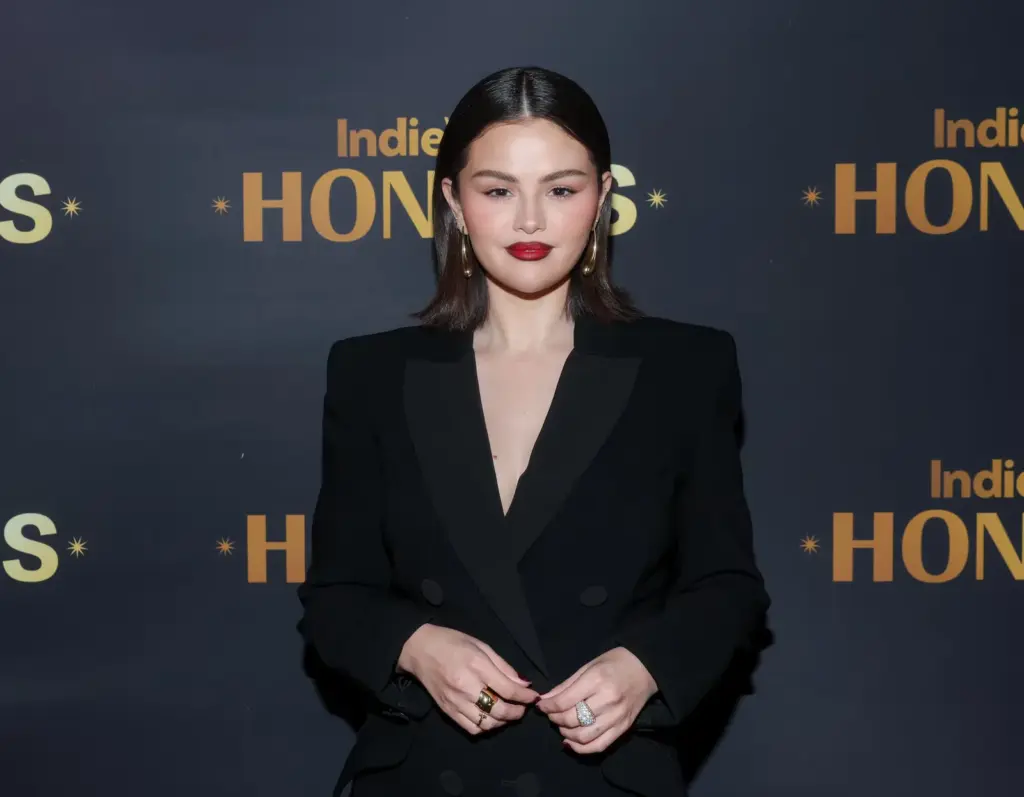
Miguel Ríos, Manolo García, and Leiva, in Spain, a megastar like Selena Gómez in the United States, have chosen to entrust both personal and professional content to their teams. In 2017, the actress and singer with the title of being the woman with the most followers in the world on Instagram handed over control of her account to her personal assistant and later to her team. She decides which photos and messages are shared, but she does not have the app installed on her phone nor does she know the password. In 2024, during the TIME 100 summit, she revealed that she was away from Instagram for four years and described it as the best gift she has given herself.
Álvaro Rebollo, head of Los Amigos Digitales, a digital agency specialized in the music industry that manages social media accounts for artists, festivals, and events, explains that their work focuses more on the promotional part: “Announcements of concert dates, last tickets, collaborations with brands.” It is the representation offices themselves that request this service. “Our recommendation is that the more personal communication be managed by the artists,” he adds.
In the same vein, publicist Shahar Levi has been working for almost two decades, having collaborated with actresses Nicole Wallace, Adriana Ugarte, Ana Fernández. His agency manages professional content with the prior authorization of the artist. “My advice is that if they want to share topics like social causes, they should do it. They can generate controversy or raise awareness among many people who might not get it otherwise,” says the public relations expert who, so far, has not had to manage a crisis. “The greatest risks are assumed by women because of the hate they receive in comments about their appearance, race,…” affirms San Cornelio. “If you are a woman and a feminist, for example, it is something that will be questioned until it is evaluated whether you are enough of one.”
Read more City comes back against Atlético and ruins Kang-in Lee’s party in Seoul
The experts consulted do not consider that the number of followers an artist has determines, for now, their access to work. Although it is starting to be a relevant data point linked to box office. In 2025, Casting Networks, one of the largest audition platforms in the world, presented social media as part of the performer’s “professional kit” and gave casting directors direct access to their Instagram, TikTok, YouTube, and follower count.
A complicated recalibration
After an initial stage of greater personal exposure, although ultimately performative, a new phase came in which entry to that supposed natural and spontaneous intimacy was charged for. The price was imposed by surveillance capitalism, monetization, and the profitable and opaque analysis and sale of data from millions of users who believed they were only exercising fandom like groupies in the 20th century.
Then came what actress Jennifer Lawrence, star of the Hunger Games franchise, called the phase of “complicated recalibration,” in an interview with The New York Times at the end of 2025. “I am an artist and, with the current environment, with how easily something can get out of control, I don’t want to scare the audience away from movies just because they don’t like my political opinions,” said an actress who was very critical of the first Donald Trump administration in the United States.
“We have learned, election after election, that celebrities have no real influence on how people vote,” she added. That conversion between an artist’s positioning and a possible electoral swing fell on the last U.S. election on Taylor Swift. With more than 273 million followers on Instagram, poll analysts — and bar analysts — predicted that if the singer spoke out, the polls would change. Swift called for votes for Kamala Harris without success.
View this post on Instagram
“There are great actors with incredible careers, who have done amazing things and great contributions, and suddenly, half of the internet or the country can’t stand them anymore. It’s very unfair,” concluded Lawrence, who has decided to show her political position, she says, through her work.
Lawrence only had one public Instagram account in 2020 to call for voting. She is part of that group of artists who have allowed themselves to leave social media, like actors Tom Holland, Brad Pitt, Scarlett Johansson, and Kristen Stewart, in a kind of great escape that had its peaks between 2020 and 2022. “Most don’t want to give them up because they don’t want to lose that part of the market,” explain S. Iborra and Rodríguez. “Although if there is someone who could make this decision and change the rules of the game, it is precisely them, not the majority of users who are pure victims of this system. But they don’t do it for an identity issue, media culture, because they are digital natives or because they understand that this is also an expressive part of their career.”
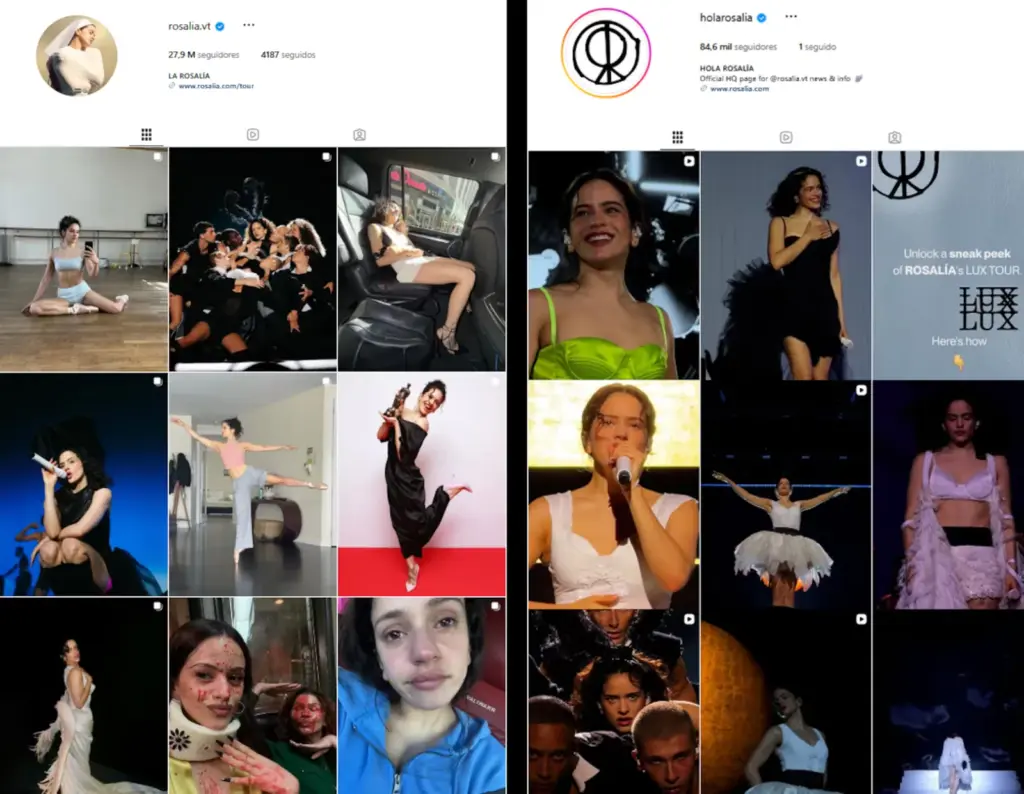
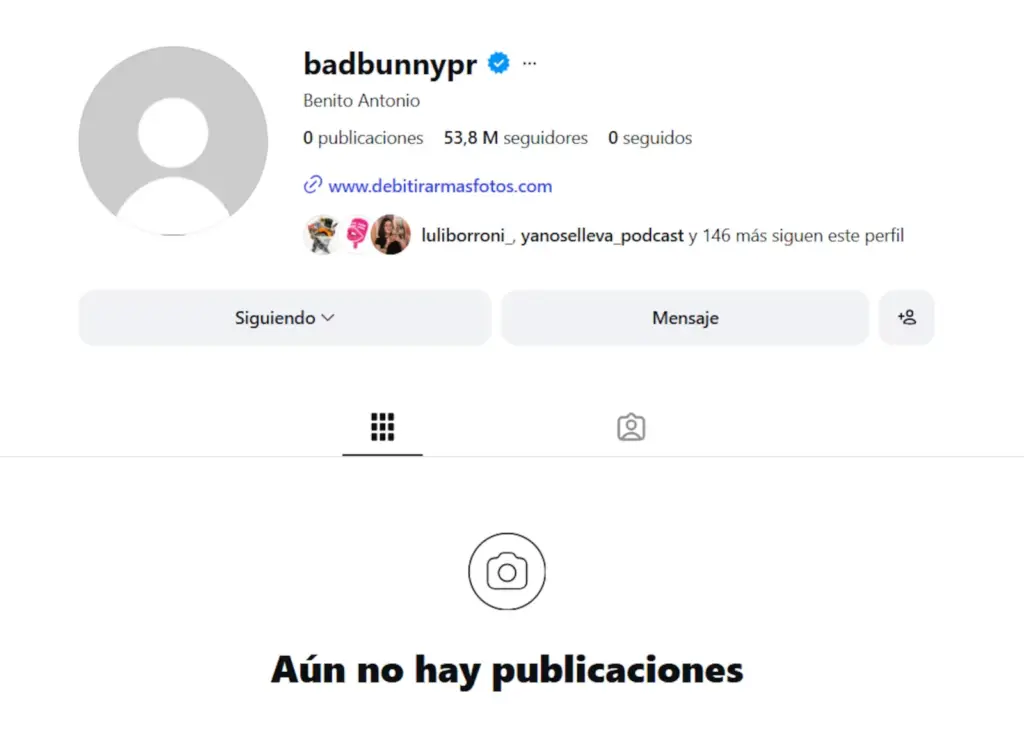
In this new social era, there are other experiments, such as the day Bad Bunny, before starting the tour of his latest album DeBÍ TiRAR MáS FOToS, deleted all the content from his account; or Zendaya’s decision to reset the count of who she follows to zero in 2024, since then her feed is a portfolio. There is also Rosalía’s strategy of having two Instagram accounts, one where some more personal content still slips in (@rosalia.vt) and another that is a diary of everything happening around Lux (@holarosalia). A plan she tried to complete with the opening of a newsletter on the Substack platform that initially served to find clues about her new album and tour, then went silent until she recently used it to reflect on the nomadic life of a world tour artist. “Even making these turns of apparent spontaneity, in the end, it turns out equally very boring, that is, with very little content beyond herself, her tour, and her way of being cool, which is ultimately what sells, especially on her social media, much more than her music. The great brand of most artists is that sophistication, that luxury product they promote all the time on social media,” opine S. Iborra and Rodríguez, “we are at the most brutal basic paroxysm: seeing how someone tries to show a mundane life when they don’t have one.”
Read more Damascus agrees with Moscow to maintain Russian bases in the Syrian Mediterranean