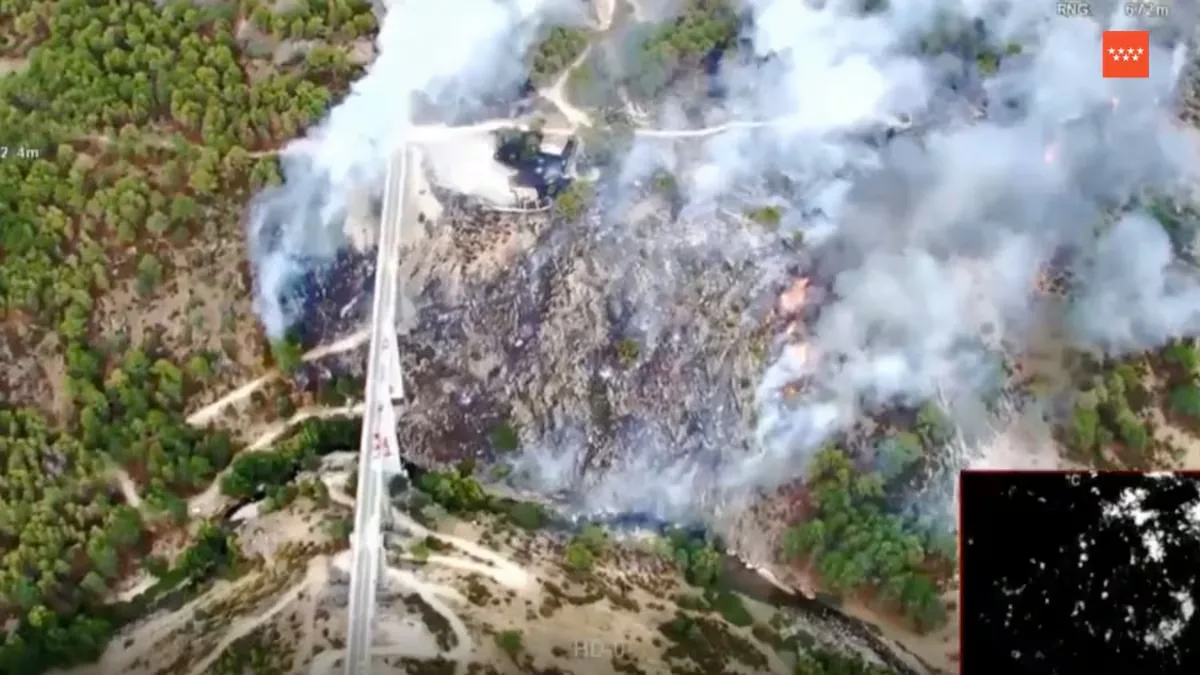
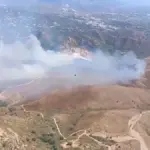

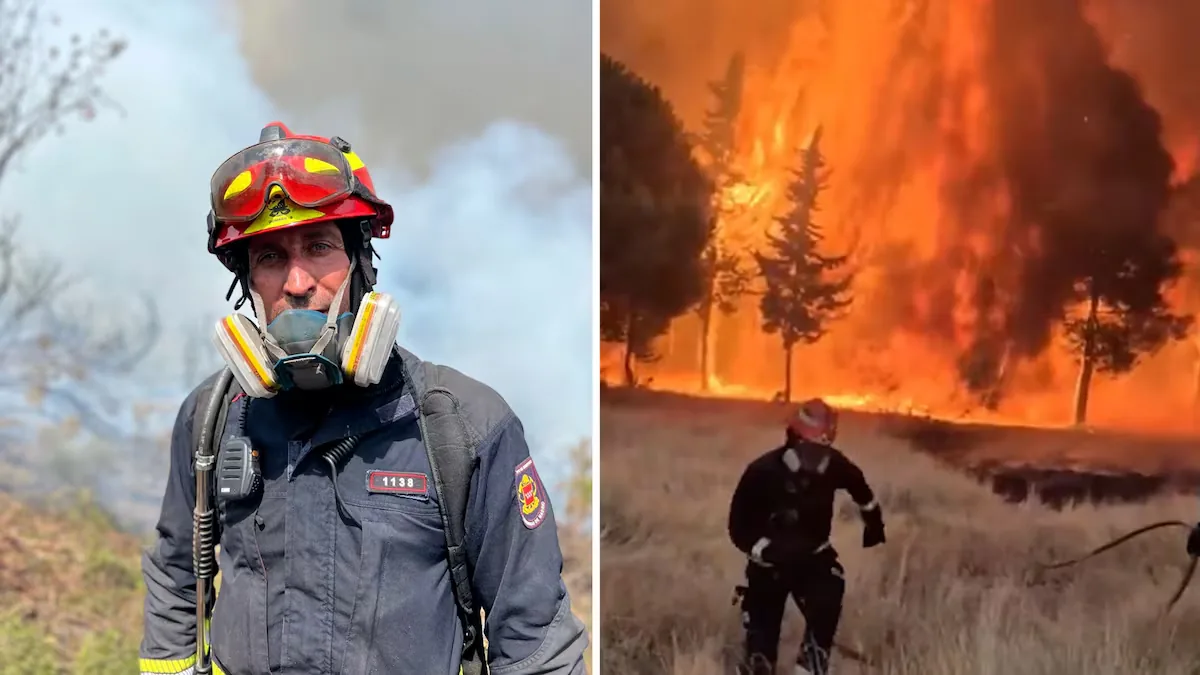
[This story, written in the first person, is the result of an interview conducted on Monday with the spokesperson of the Firefighters’ Union, Israel Naveso, at the end of his workday. More than half, from 8:00 p.m. Sunday to 12:00 p.m. Monday, was spent at the Sierra Oeste fire in Madrid, in Fresnedillas de la Oliva. It is the fifth day of fighting the flames and the fire continues burning out of control in the greatest environmental disaster in the history of Spain. It is accompanied by footage recorded by the firefighters themselves, which is especially valuable since journalists cannot access the area]
My name is Israel Naveso, I am 45 years old and I am a firefighter. I have been doing this for 22 years, all at the Villaviciosa de Odón station (Madrid). I have also been a union representative since I was a kid, and these days, at the request of the commanders, I have been fighting on another front, the phone front, looking for people to cover shifts. Although I have contributed more by filling out forms than on the ground, I was dying to go and, today [Sunday], finally, it’s my turn. No matter what they tell you, the destruction is so brutal that you only understand it when you see it.
I start my shift at 8:30 after going to bed early and spending the night eating roof, like a champion. Nights like this weigh on you. I have permanent insomnia, which I carry like someone carries a limp. They say firefighters live 10 years less: because of harmful substances, schedules, and this, the anxiety, which never goes away.
In the morning, five colleagues go straight to the fire, to San Martín de la Vega, and the other five of us have to stay at the station living a normal life, waiting to relieve them. First, put in the 20 euros for the trus —we call food and dinner that, don’t ask me why—, do the shopping and cook. Then, check vehicles and attend calls, which keep coming because life goes on. Usually four or five a day. We do three, nothing remarkable, one is even a false alarm because there is a lot of psychosis now.
We just want the hours to pass. At 6:00 p.m., we get a call from Headquarters: in two hours we have to be in Fresnedillas de la Oliva. I put on the forest PPE, the U1, a light suit that weighs five kilos and breathes better. The other, the structural one, the U2, is for house fires, it’s 25 kilos with the tank and with the heat we wouldn’t last even 10 minutes standing.
While I gear up, I do the usual: preview. Imagine where I’m going, the San Juan reservoir, Robledo de Chavela, the NASA antennas. I know the mountain range by heart. And there is the emotional load, very complicated to manage: when you go to help another community or another country, you go eager, but it’s not your land, you don’t feel it. This is totally different, sorry to get emotional, but I have run it a thousand times, by bike, with my daughters. What is burning is your community, you see it devastated and you think it’s over, I will never see it as it was again because it will take 30 years.
We arrive at Fresnedillas at 7:55 p.m. and our mission is to monitor the burned area. We relieve the colleagues and the first thing I feel is that it’s covid again. Empty streets. A colleague nails it: “We are Will Smith in I Am Legend.” We are alone in a town that, in summer, should be bursting with life. The contrast, it’s impossible not to think about it: a week ago the streets were packed with happy people celebrating the World Cup. And now silent, evacuated.
Our commander lives in Valdemorillo and knows the mountain inch by inch, so he leads us through the forest tracks, a good call. We spend the whole afternoon and night going through them, tense, reaching hot spots, putting out trees with a tiny flame. You can’t let your guard down, if you do, you’re in trouble. Since one part hasn’t burned and a wind change is expected, any ember could turn this flank into the head of the fire right above us.
You know that a little column of smoke you ignore can blow up Chapinería, Colmenar del Arroyo, Navalagamella again. It has already happened in the El Encinar del Alberche urbanization, where 41 homes were destroyed the first day, and you wonder how it can come back. This fire is an absolute madness, I had never seen anything like it, so unpredictable and so virulent. It is showing to have a life of its own and an absolutely strange behavior, like coming back like a boomerang over what has already burned.
The fire is divided into eight or nine sectors with more than 225 personnel. In mine, there are five firefighters from Pozuelo, 15 from Zaragoza, 10 from the airport, and us five. Other crews don’t stop, going full throttle all night, ours is a boring but essential job: stop every now and then, pull the hose, extinguish, pack up and back to the truck. The radio is about to explode, the colleagues from the San Román reservoir and Costa de Madrid urbanizations desperate, asking for reinforcements and aerial support drops.
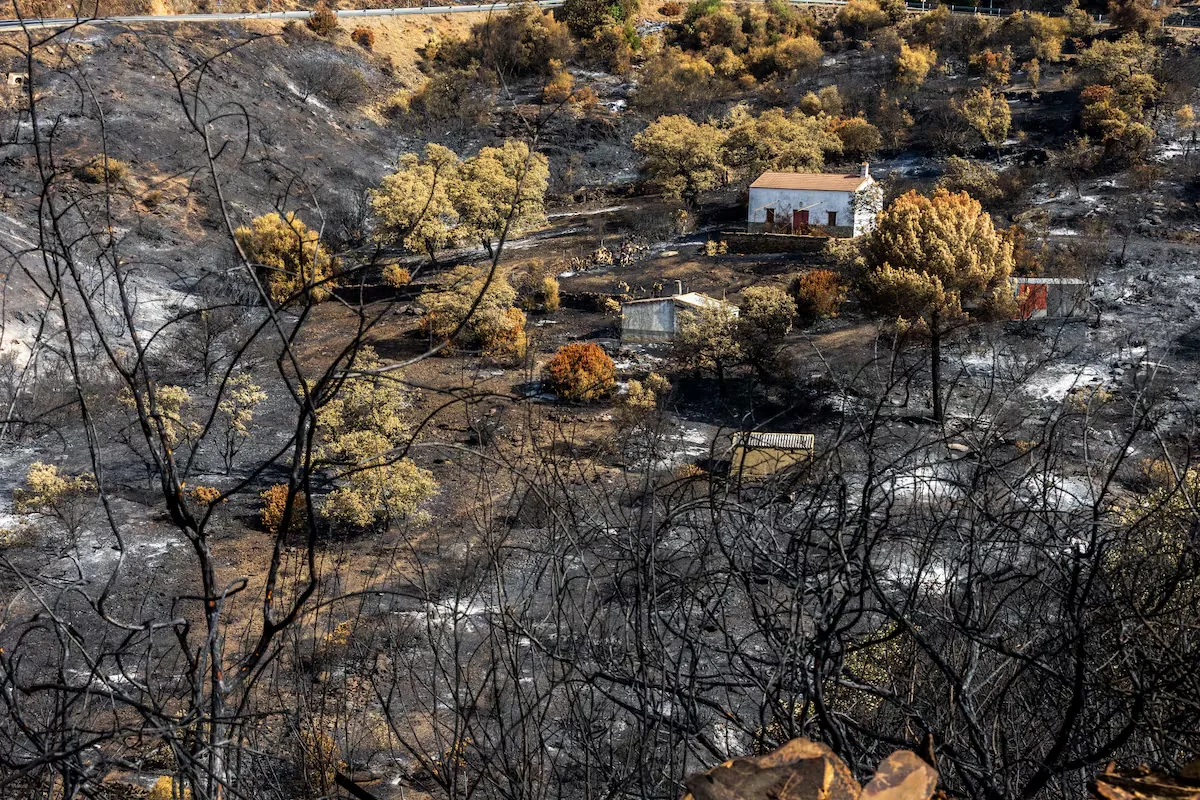
And, amid the devastation, small joys you look for not to sink: many whole trees have been saved, it seems impossible with such a fire load, but it happened because it was so fast that in certain areas it only burned grass. We stop to feed and water three horses. We find green islands in the middle of nowhere, where animals graze, the forest defends itself.
Night falls. Fires are more dangerous, but that’s when they are best seen. We have dinner in half an hour, around 11:00 p.m., a salad, a plate of pasta and an Aquarius, paid for by the administration and that we have fought for years to be decent, before it was crappy Pepi sandwiches and now, from Viena Capellanes. And then I see it: on the other side of the slope, the glow of the fire, the smoke column. The only thing separating us from the fire is a slope.
We are scared shitless. I think it’s good to have that fear, although I prefer to call it respect: the day you lose it is the day you lose your life. We have to leave the track to refuel via the 501 to Pelayos de la Presa, 35/40 minutes away and, at the Navas pass, the scene changes completely: everything is devastated. It’s a brutal corridor, it’s where the Madrid City Council colleagues go in that video where you only see fire. It’s the closest thing to hell I’ve seen, if hell exists.
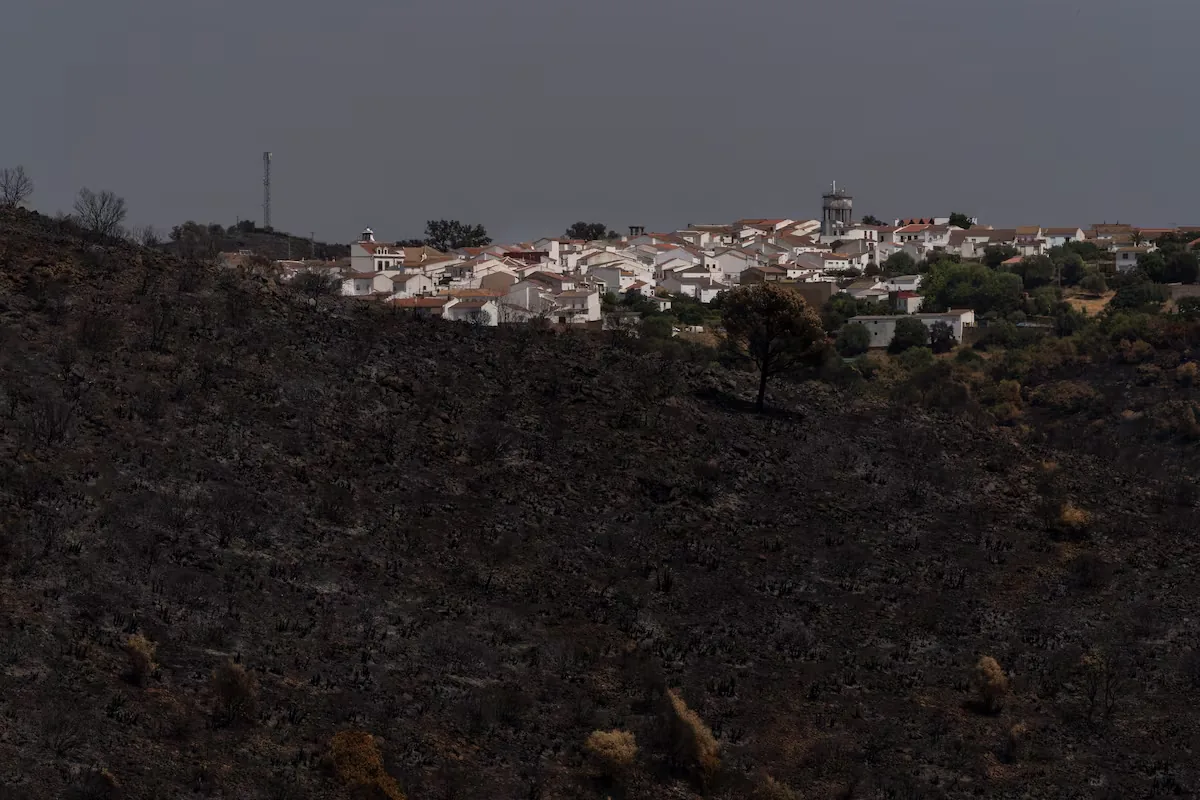
After refueling, we enter Pelayos and see the structural damage. Burned and saved houses, which the colleagues defended way beyond human limits, they risked it big with the forest team. That no one got hurt is a miracle. Every time you hear the word “entrapment” on the radio your skin crawls, we are dragging a very bad streak: Rafa, dead in the Valdemoro rollover, the two colleagues from Alcorcón… And it’s impossible not to think about them and your family. Our self-defense method is black humor, risking your life one minute and, the next, making jokes.
With us go two guys from the last class, with two guards backing them up defending Pelayos. They spend the whole night like a jackhammer: “Call Headquarters, send us to the fire.” Seeing them so eager restores your faith: they say the profile has changed, they come with a degree, with a cutoff score of nine. But I see that vocation has not been lost. And that fills me: they are the future that will defend what we are.
We stop to pee between 4:00 and 5:00 a.m., we have each drunk six liters of water with salts. It’s cold, 11°, the smoke becomes a dense layer stuck to the ground with a burning smell that’s awful, the dead moon, the fire glow… And I think: “What the hell are we living through.” Covid, Filomena, the dana in Aldea del Fresno, Ukraine, the blackout and now this. Ten years of madness one after another that people with 40 years of career hadn’t seen even one.
We have breakfast at 9:00 a.m., coffee and pastries. The mayor of Fresnedillas invites us with a soot-covered face, four days without sleep, in the only place alive in the town and that is open only for us, the café El Rincón de Cristina. Those moments restore your hope in society.
At 12:00 the relief arrives. Before getting home, I learn that our slope has fallen. Robledo de Chavela is in bad shape, the front is moving up towards Valdemaqueda and, if we don’t stop it, it could reach the Guadarrama mountain range. All our work has gone to waste, but this is how it is, it’s common to do things knowing they might be useless. Today I start again at 8:30 and I haven’t been able to sleep. All the night’s efforts have focused on the Cofio river, 400 personnel working so it wouldn’t reach the Valdemaqueda road and it didn’t. Today [Tuesday] is definitely the most important day. All the cavalry is in Madrid, but it keeps advancing and we don’t have the balls to stop it.