
Dawn breaks in Havana. It is May First, Labor Day, and people begin to gather early at four strategic points in the city to march with signs and banners to the grounds of the Anti-Imperialist Tribune, the stage that Fidel Castro ordered to be built in 2000 to speak directly to the United States or demand the return of Elián González, the six-year-old boy whom Cuba turned into a political trophy against Washington. It all seems so distant: Castro died a decade ago and Elián, now 32 years old, graduated as an industrial engineer and had a daughter. However, some things remain intact: the eternal cold war with the Americans and the warning to Cubans that if they skip the parade, they could lose the little salary of the month, even their job, or earn the boss’s disapproval.
Read more Video analysis | Surveys: 4 definitive weeks
Irma, an epidemiologist who asked to keep her name hidden for caution, is no longer even worried about getting into trouble. “I’m not going to the Tribune,” she says by phone from her workplace, the Institute of Immunology and Hematology in the El Vedado neighborhood. “I can’t take that walk on an empty stomach, none of that, you have to save energy.”
Some got up at dawn and joined the crowd that walked toward El Malecón. José Luis Amador, a resident of the Palatino neighborhood, told the state press that the homeland was in danger and, therefore, they had to “defend it.” A taxi driver from El Mónaco heard the music of the urban singer Bebeshito at full volume near Carlos III street, while some neighbors were finalizing preparations for the patriotic event.
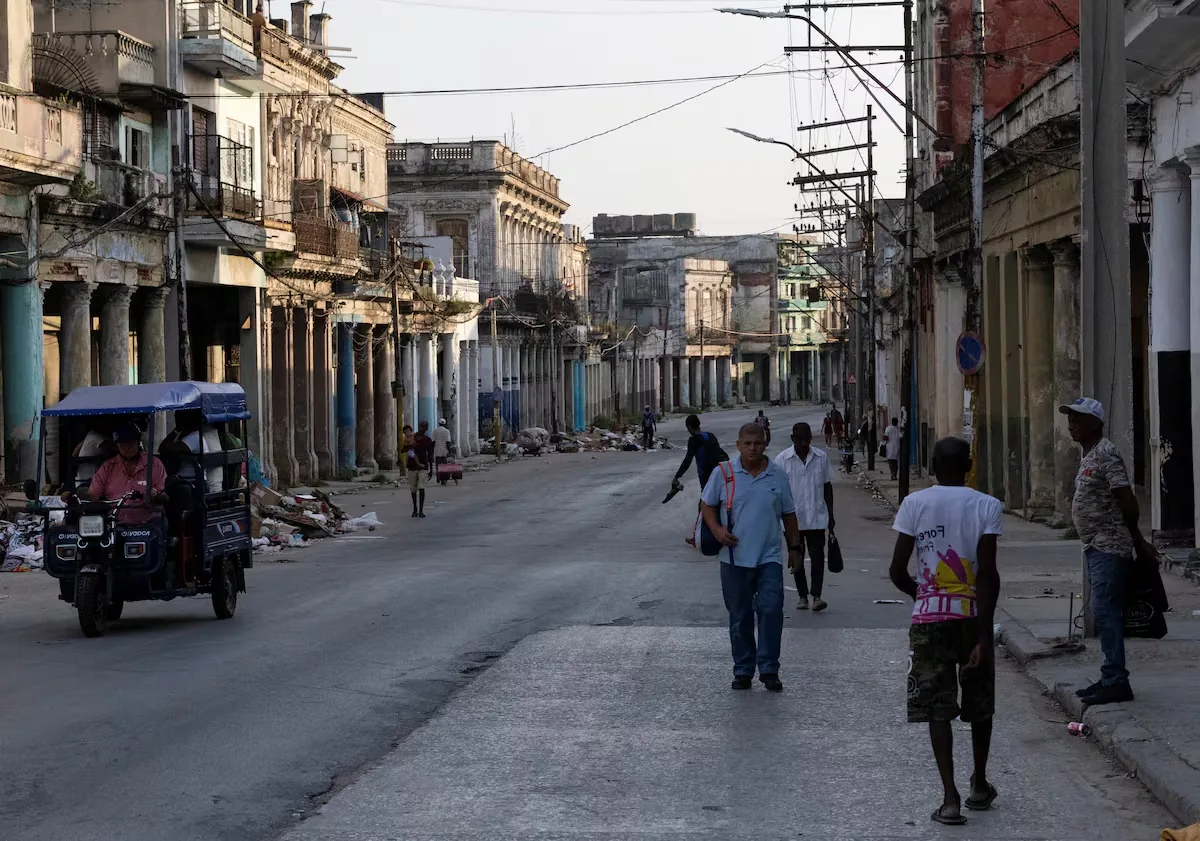
In other areas of the capital, however, there was silence. People were confined; it did not seem that the Government had called for an important parade. “Most are not in the spirit of May First,” says the taxi driver. “People are hungry, people are upset. Right now I’m at the hospital and I’ve taken care of the girl’s tests because I know how to get around. With a little money to the doctors, the antibiotic appeared.”
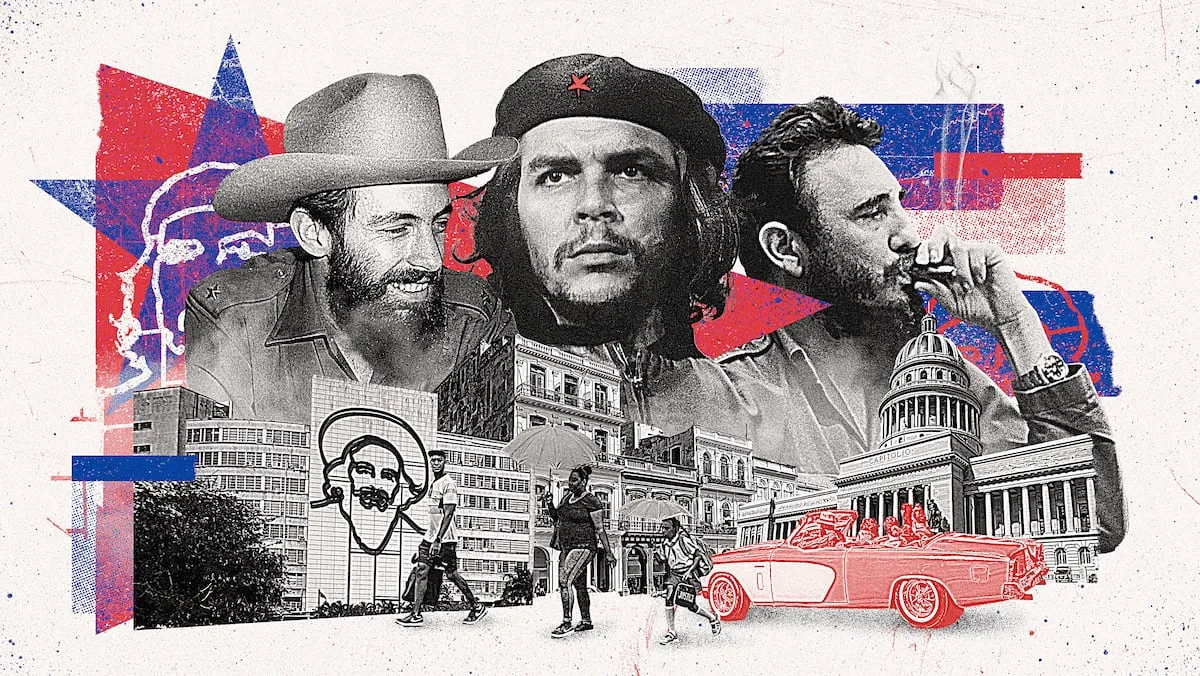
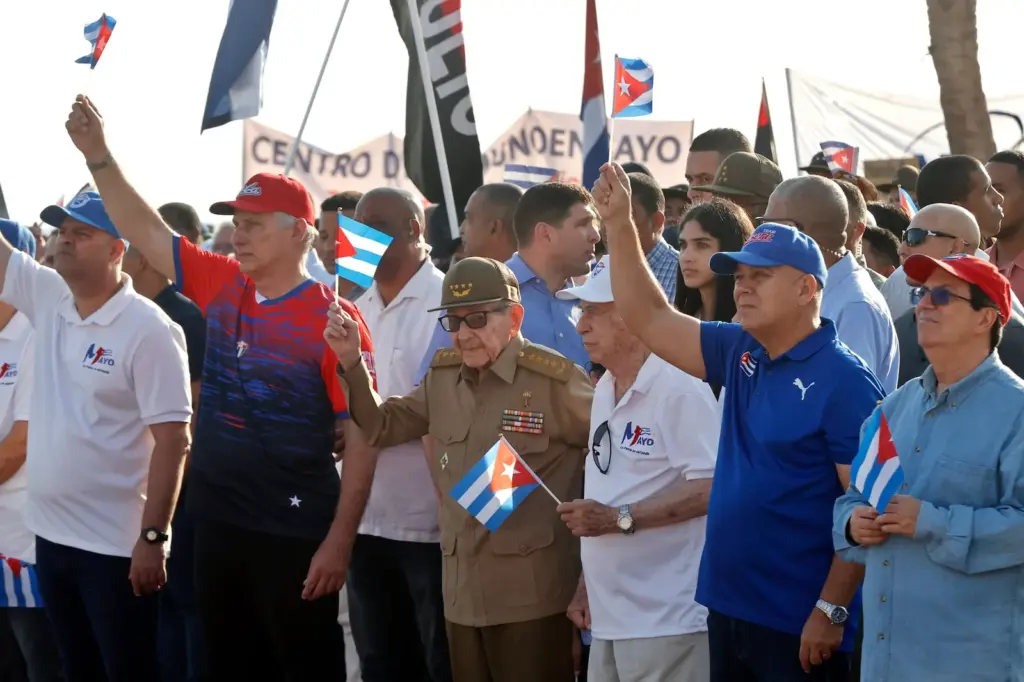
The workers’ caravan, which according to official figures included more than half a million Havana residents, carried flags of Cuba and Palestine, a banner that read “Our weapons are ideas”, a sign demanding the release of Nicolás Maduro from a New York prison, and portraits with the faces of José Martí, Camilo Cienfuegos, Che Guevara, and, of course, Fidel Castro. None of Castro’s images showed him in his last years of life, when he was already an elderly man diminished in his Adidas tracksuit, but as the young olive-green guerrilla, strong, vital, capable of sustaining a fight against an empire, as a warning that the revolutionary leader remains intact in the nation’s consciousness. An industry worker grabbed the microphone and said at the event: “Fidel continues to call us to resist and overcome.”
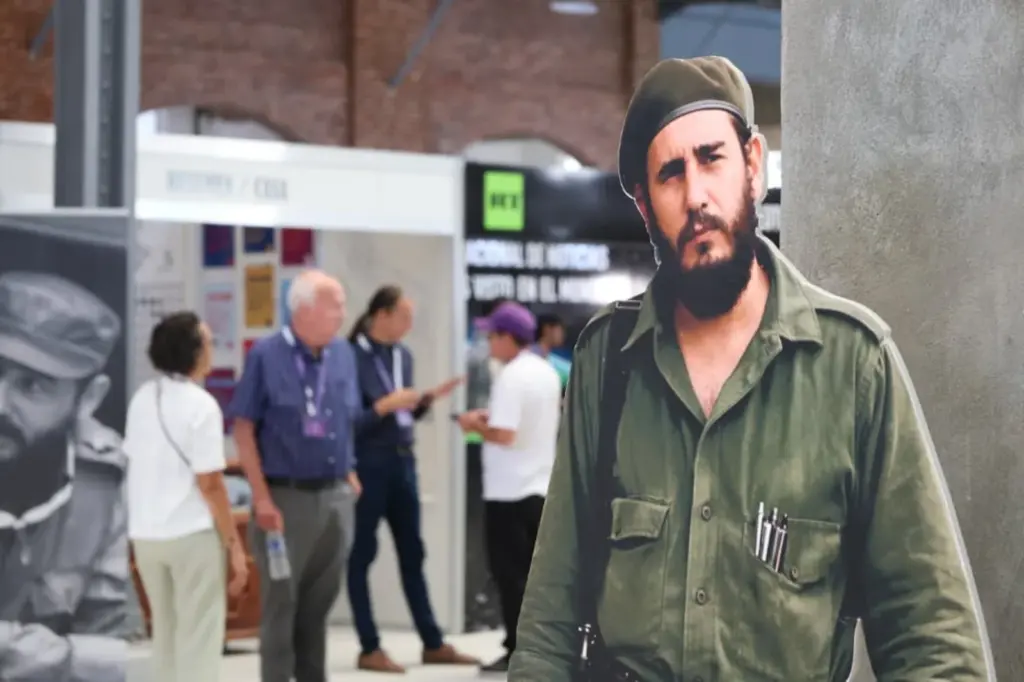
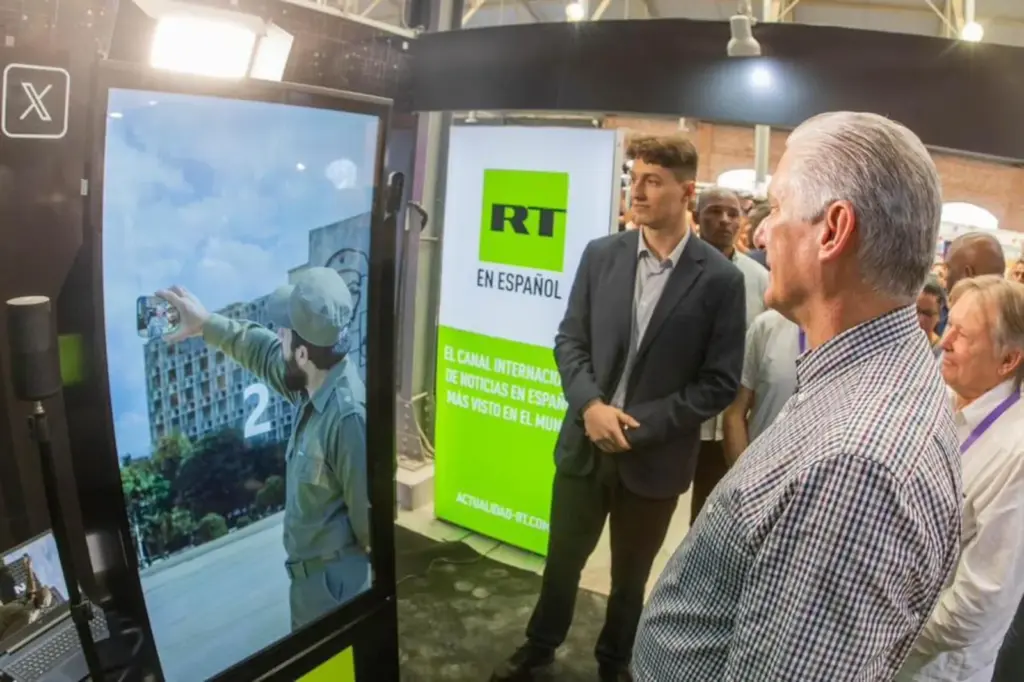
Cuba’s leadership does not intend to let the figure of its supreme leader die. Recently, they installed a screen in Havana that, with artificial intelligence, invited Cubans to take a photo with Castro. “Hello, compatriots,” Fidel could be heard saying. People posed and the intact voice of the deceased leader said: “Until victory… one, two, three… Always!” President Miguel Díaz-Canel had his photo with the Commander and several Cubans took their selfie, a gesture from the Government to remind them who is the man who brought them all here.
The Philosophy professor at the University of Havana, Emilio Basilides Alfonso, strongly believes that Castro is “more alive” than ever. “Fidel’s influence is as omnipresent as the misery that defines everyday life on the island. And I’m not only referring to material hardship, which is already quite serious, but to a deeper desolation: the deformation of the national character.” However, there is a part of Castro that, according to the university professor, fades with time. “Castro survives only in the minds of the ‘sleepers,’ those who fear admitting they were deceived, and in those of the ‘awake,’ who know exactly where power lies. Outside that circle of nostalgia or cynicism, his figure fades into irrelevance.”
That is the fear that castrism has today: that people forget the man who for decades kept an ideology afloat despite the country’s collapse, especially now, when there is not only a crushing economic crisis but also a notable leadership vacuum. Leading the workers’ caravan this Friday was Raúl Castro, guarded by his bodyguard and grandson, Raúl Guillermo Rodríguez Castro, known as El Cangrejo, the man who met with Secretary of State Marco Rubio to negotiate Cuba’s future.
Raúl had not appeared in public since the announcement of the death of 32 Cuban soldiers in the attack on Venezuela in January. At 94 years old, some say he still pulls the strings of power in Cuba. To his left walked Army General and National Assembly Deputy José Ramón Machado Ventura, 95 years old — who once hinted he wants to last about 200 — and to the right, Miguel Díaz-Canel, 66 years old, who was born when all the others were immersed in the 1959 Revolution. Amid talks with Washington, the possibility of removing Díaz-Canel from power in Cuba leaked, but the president has said he will not step aside. “I’m not afraid,” he assured. “I am willing to give my life for the Revolution.”
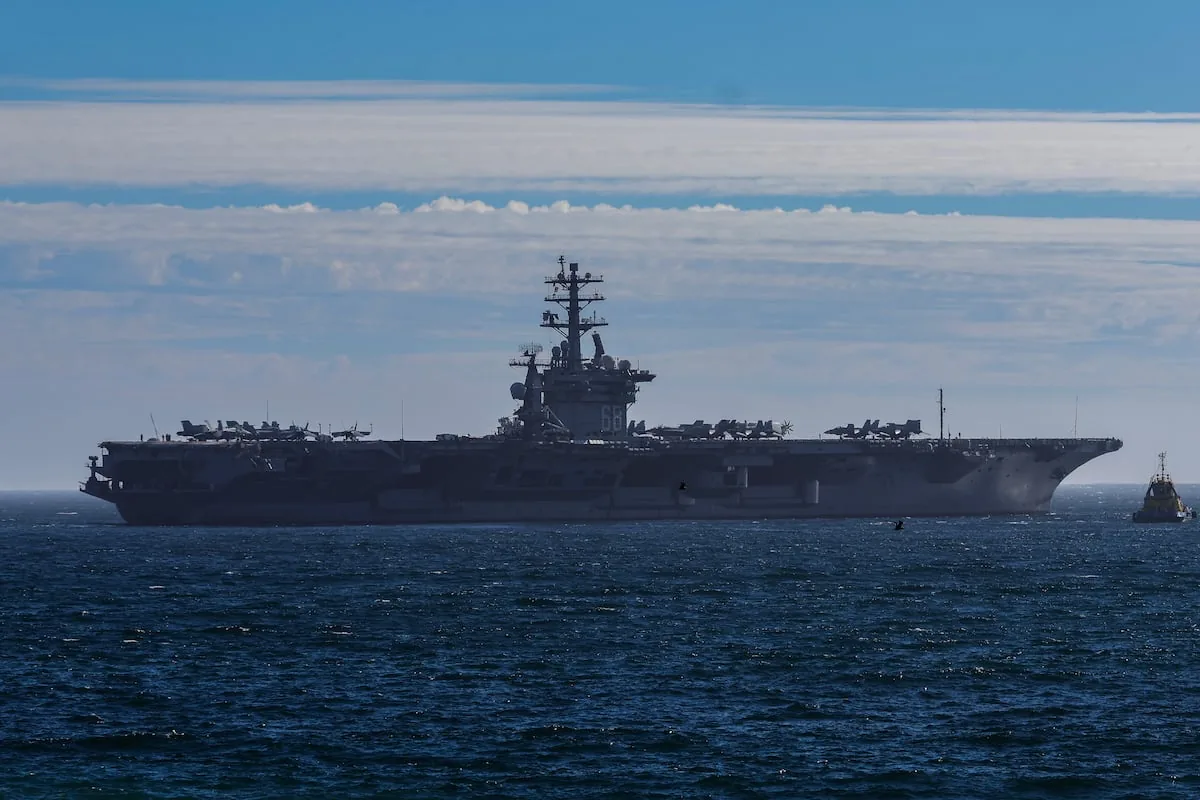
This Friday, as the Cuban people marched in Havana, President Donald Trump, from Florida, announced new sanctions against the island. He promised to end the war in Iran to send an aircraft carrier to the Caribbean and take Cuba “almost immediately.” Díaz-Canel responded to the threat: “No aggressor, no matter how powerful, will find surrender in Cuba,” he assured. Rather, “they will stumble upon a people determined to defend sovereignty and independence in every inch of national territory.”
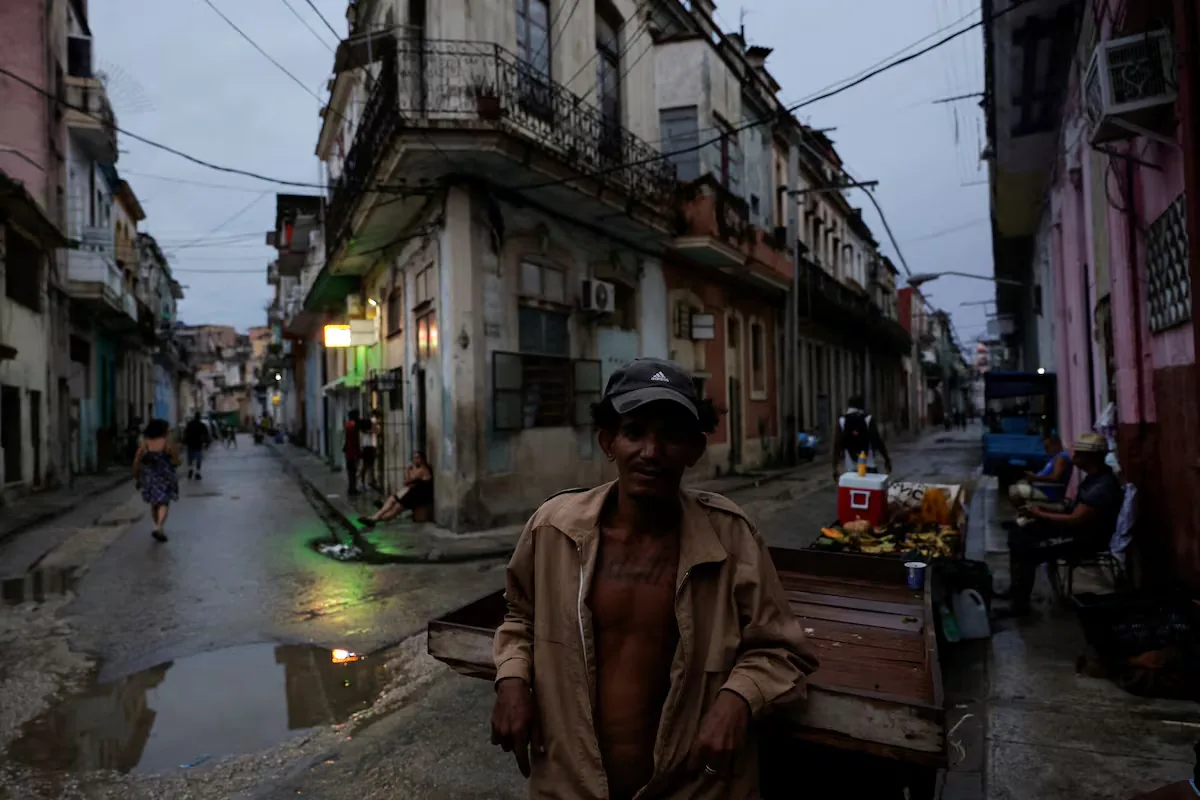
At first glance, this seemed like a march like those of previous years, but castrism knows it is a particular gathering: they not only celebrate Fidel’s centenary but also reach 70 years of the Revolution with a completely devastated economy, blackouts of more than 20 hours daily, a migratory exodus of almost three million people in the last five years, discontent that has driven people to the streets, and real tension with the United States, which has promised “a new dawn for Cuba.”
The castrist Government, faced with this scenario, has asked Cubans for their commitment to the homeland. On the stage of the Anti-Imperialist Tribune, a repentista rehearsed some décimas in front of the parade attendees: “If the socotrocos enter the Cuban capital, they will know that in Havana there is a bunch of crazies.” Some applauded him.
The defense of the homeland
Among all the parade signs, one stood out with a relevant fact: more than six million Cubans, according to the official registry, have given their “Signature for the Homeland,” a new initiative launched by the Government a week ago for Cubans to commit to defending the Revolution’s achievements at any cost. This amid the small cold war played out in Cuba’s eternal summer, with threats from Washington, an oil blockade for more than three months, drones flying over the island’s sky, and U.S. Navy military exercises in Caribbean waters.
According to Díaz-Canel, the campaign is about more than just a signature. “It is an action of unity in defense of national sovereignty,” he assured. The signature also supported a declaration titled “Girón is today and always,” making clear that Cuba is willing to defend itself with arms, just as it did 65 years ago when Cuban exiles came to fight for their country. The message was explicit: the Cuban Revolution “will never negotiate its principles.” It was necessary to repeat this amid a discontented people who have taken to the streets not only to demand food or electricity but also freedom.
Read more Joel Embiid’s Sixers make an unprecedented comeback to eliminate the Celtics from the playoffs
Katrin Hansing, an anthropology professor at the City University of New York, who has spent the last three decades researching race, migration, and inequalities in Cuba, has noticed how today the official discourse speaks to very few Cubans. “The political, ideological, revolutionary part is not even felt. In Havana, slogans and signs are no longer seen as before on almost every block; those that exist are old. Most people are exhausted from the daily struggle, but also from politics, from lies. There is a collective fatigue. The symbols, the codes, everything looks very old. Everything is very worn out.”
Still, the Government insists, says the anthropologist, on continuing to speak to the people as it did 40 years ago. People, however, have changed. People are tired.
Some government delegates came to Irma’s neighbor’s door, the worker from the Institute of Immunology and Hematology in El Vedado, to ask her to sign her commitment to Cuba. The lady, 80 years old, came out upset: “I’m not going to sign,” she told them. “I’m diabetic and don’t have milk for breakfast, bread comes once a week, and if I’m surviving it’s because of my daughter and grandson. Otherwise, I would have already died of hunger.”
Irma herself was forced, like her colleagues, to sign the commitment book at her workplace. She did. “If you don’t do it, they don’t pay your salary,” explains the woman, who earns about 5,000 Cuban pesos a month, almost 10 dollars, and who after her workday must go clean houses. “They want to make the world believe that the people sign voluntarily and that’s not true. It’s outrageous, this is no longer a country, this is the end of Cubans.”
The delegate from the Maydelis Solano neighborhood, residing in Bayamo, in the east of the country, did not come to her door “because she knows” what she thinks of the system, but she did approach other homes to ask for the signature for the defense of the homeland. “People don’t want to sign, they say they have nothing to sign,” she says. Yesterday she heard a commotion, and when she looked out the door, it was a neighbor arguing with the delegate. “He said: ‘What am I going to sign? Lack of electricity? Lack of food? Lack of medicine?’” Solano warned her children that they could not sign any document at school without her consent.
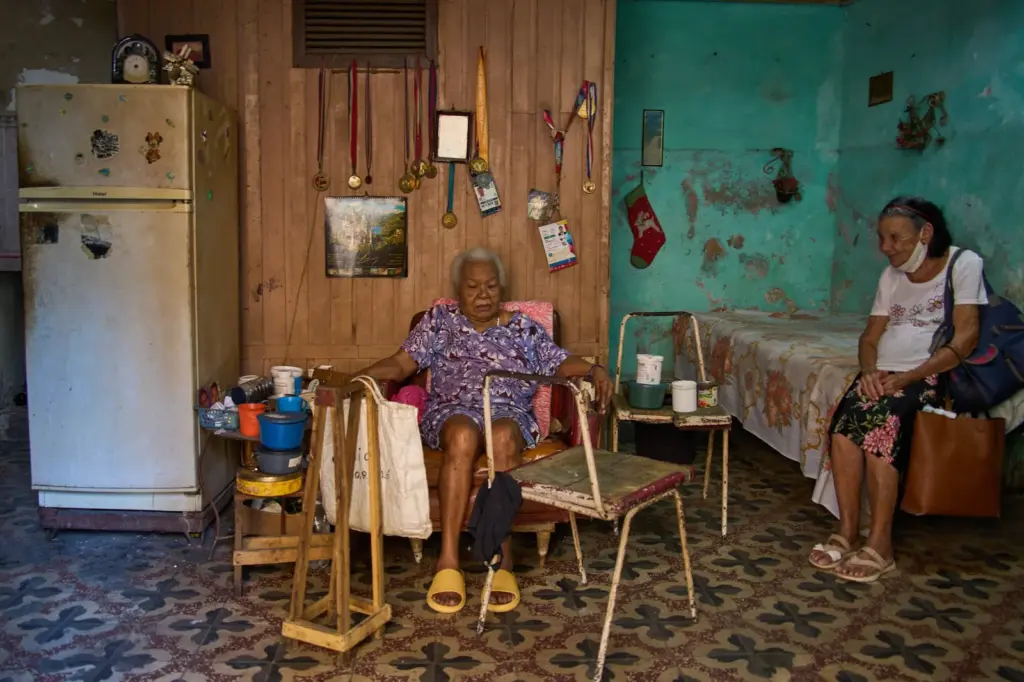
Yoel Acosta and his wife’s great fear is that the Cuban Army will recruit their son, who is 17 years old, the military age in Cuba. Their fear has grown now that Díaz-Canel talks about the “war of the whole people,” and that Donald Trump does not entirely rule out the possibility of a military attack against Cuba. An Interior Ministry officer showed up at their home in Baracoa, Guantánamo, for the son to start the required exams for military service. “Neither I nor his mother agree,” Acosta points out. “We fear he will be recruited to participate in wars or sent abroad as a mercenary, as they have already done with other young people. Now, with the tension between the United States and Cuba, we fear even more for his physical integrity or what might happen to him.”
Young people in military service, according to García, are also being made to sign the commitment book “to defend the country against aggression.” Otherwise, they will be “labeled as counterrevolutionaries and could go to prison,” he says. In hospitals, according to those interviewed by this newspaper, authorities threaten staff with restricting participation in medical missions abroad, which, despite the Government keeping a considerable part of the salaries, gives health professionals some relief. Some workers in small and medium enterprises are also being forced to establish a written commitment to Cuba.
But on the island, says Solano, people only have their minds on whether Trump will come or not. “One lives waiting to see what he will do. Will he come? Won’t he come? That is today the hope of many Cubans, because day to day is heavy and becomes overwhelming,” she says. “It’s like climbing a mountain with a heavy backpack and never reaching the top.”
The creative resistance that no one wants
This Thursday, a day before the May First march in Cuba, Díaz-Canel met with dozens of workers to tell them it was essential to appeal to “creative resistance,” the concept he has been pronouncing since he took office as president of the country, eight years in which Cuba has not emerged from its deep crisis. In a talk with Pablo Iglesias, the former Spanish politician who visited Havana in March as part of a humanitarian flotilla, the president seemed almost proud that Cubans creatively resisted this crisis. He referred to people who gather to watch the soap opera in front of the only working television in the neighborhood, tricycles converted into ambulances for hemodialysis, or neighbors who improvise a collective kitchen or cook with charcoal.
“With the concept of creative resistance, they not only resist but develop,” he explained to Iglesias. “It is not resisting with submission, but resisting with creativity.” He also said he understands that “the people are suffering, that there are limitations, there are shortages, but that spirit of the Cuban to overcome, solidarity, joy, is not lost.”
“It is rhetoric that comes from a political construction from power, which tries to highlight certain convenient aspects amid the deep structural crisis that Cuban society is experiencing,” points out sociologist Elaine Acosta González, associate researcher at the Cuban Research Institute. The expert explains that, “by highlighting certain aspects of the Cuban sociocultural identity, the ineptitude of the leaders and what could constitute everyday survival strategies that citizens have had to build to face the different impacts of the crisis are deliberately hidden.”
Some, those who can, keep leaving. Writer Jorge Fernández Era was accompanied by State Security until the last moment, when he boarded a plane to Spain to leave Cuba a few weeks ago. It hurts him to see how what he gave his best years to has ended. “The Revolution stole my dreams,” says the 63-year-old writer. “There is nothing left of the Revolution for a long time, even less of socialism. That is a mix of capitalism, feudalism, and slavery with a pinch of primitive communism. The rest is crude propaganda.”
Fernández Era does not say goodbye to Cuba with relief but with sorrow. He knows something was taken from him. “I leave behind a country I love, but that has ceased to be a country.”
Read more Kiko Veneno, the tender gaze of the endearing rogue