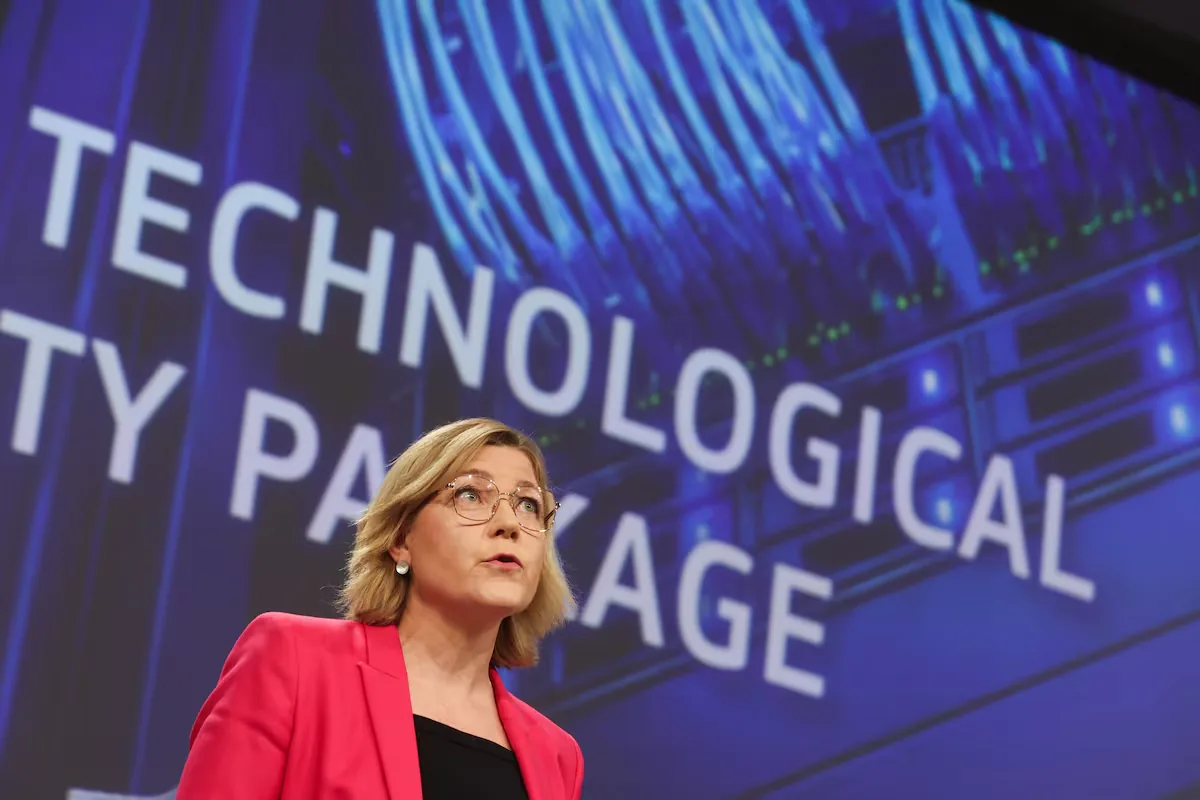
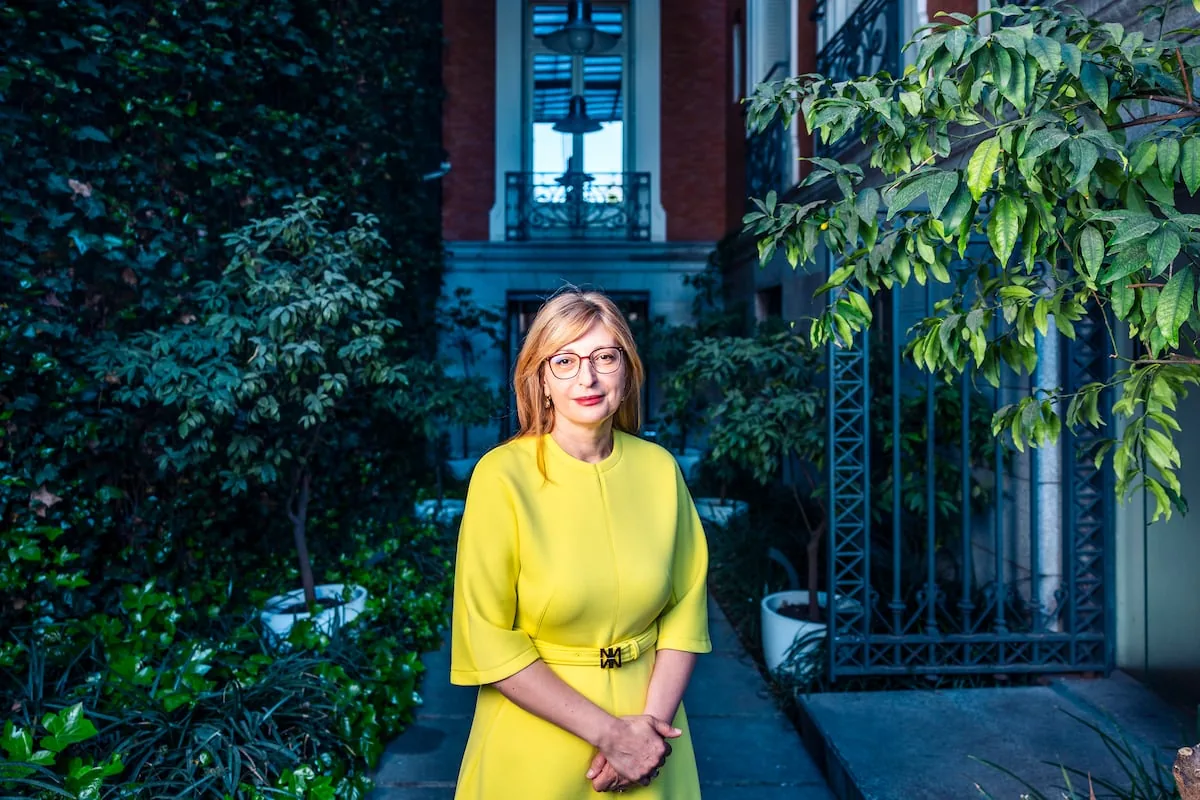
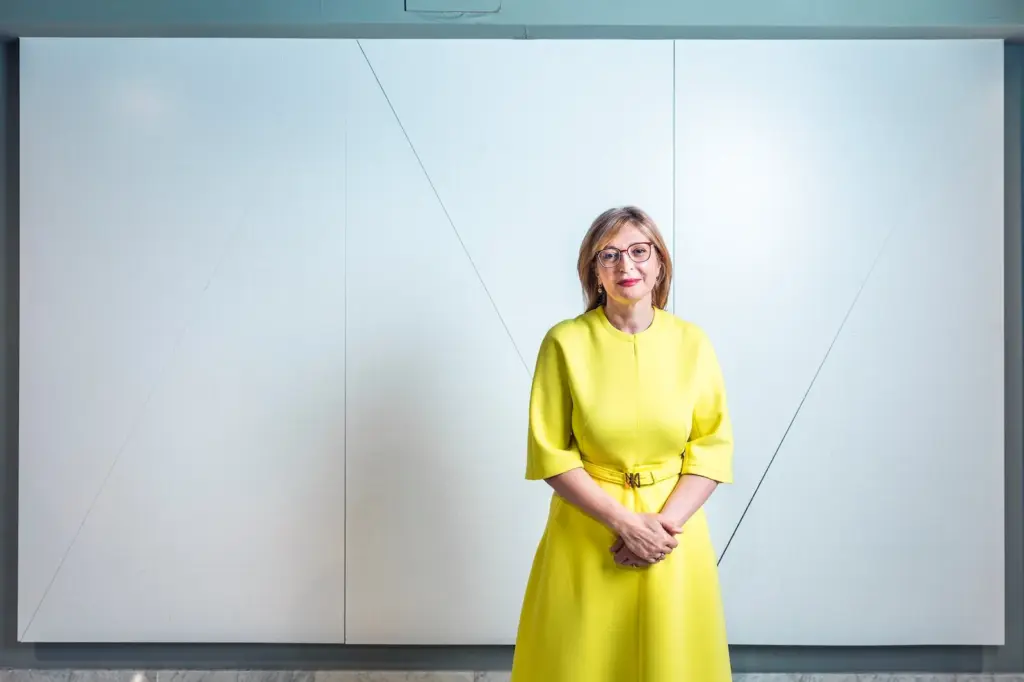
The names resonate one after another: ASML, Novo Nordisk, SAP, Spotify, Mistral AI, Siemens, Airbus, and Nestlé. It is the combative response of Ekaterina Zaharieva (Pazardzhik, Bulgaria, 50 years old), European Commissioner for Startups, Research, and Innovation, when asked about how the technological balance tends to tilt towards the US — the five largest companies in the world by market value are five American tech companies. After speaking this Tuesday at the Wake Up, Spain! Wake Up, Europe! forum, Zaharieva insists on contradicting that narrative of a Europe lacking global champions from a stay at the Linares Palace in Madrid.
Read more Economic discomfort and lack of expectations: why young people are moving away from the tax system
Question. Is it possible to close the gap with the United States?
Answer. I am asked that question very often, and I believe we have a very comprehensive plan to make Europe the best place to innovate and grow. The goal is not only to close the gap but to improve and create the right conditions for the brightest people and companies in the world to stay and grow from Europe. Because we are truly excelling in innovation and research. We have very talented people, excellent educational systems, fantastic researchers and innovators. What we really lag behind in is capital to grow, expand, and become global from Europe.
Q. How is that solved?
A. We are focusing on harmonization and addressing the problem of fragmentation. I believe the main and most important task ahead for all governments and the Commission is to deepen the Single Market. We have a clear plan, a strategy for it, and we have just adopted the regime 28, which is also a fundamental part for innovative companies to operate more easily in the Single Market. We must motivate the private sector to invest in advanced technology and venture capital funds; that is the task ahead. But we are not falling behind in innovation, and this is something we must keep in mind and reiterate. We must focus on how to help companies grow from Europe, rather than being pressured to leave it and seek capital elsewhere.
Q. In which sectors do you see the most potential?
A. Everyone focuses on artificial intelligence, and I think it is an opportunity, but there is more. We are champions in renewable energies. We have excellent companies in health technology, biotechnology, space, and quantum, which are two sectors with very promising European firms.
Q. Do you agree with those who say AI will be a tsunami for employment?
A. The reality is that AI is already here, and it will change the economy and the way we work. We cannot stop it. And of course, as happens after every revolution, some jobs disappear. But new jobs that did not exist before are also created. So I really think we should see it as an opportunity for growth and competitiveness, not as a threat.
Q. The European regulation for AI received criticism.
A. What was the alternative? Having 27 different laws? Other countries like the United Kingdom are also regulating it. I am aware that there were some concerns from the private sector and innovators, but we addressed them in the amendments to the law. We have a duty to have reliable and human-centered AI. We do not want our AI models to train our children to make bombs or to take their own lives, and this is happening. If we want it to be an opportunity, we must guarantee it. Also, the AI Act excludes research, meaning research can be done freely and projects developed.
Q. It is often said that the EU is very good at regulating but not at creating an innovative ecosystem.
A. I think one of the biggest propaganda points against Europe is that we only regulate and do not support innovation. The fintech sector is an example of how, through European regulation, we manage to create and support the creation of these huge multibillion-dollar companies worldwide.
Q. Have you noticed more interest from US researchers in coming to Europe amid the offensive against science and universities by the Trump Administration?
Read more How should Europe respond to Iran
A. We launched the Choose Europe initiative, and we had already been working on it for some time, but the truth is that, with what is happening in the US, yes, there are American scientists looking to continue their work in Europe. We see it in our calls, in the applications… There is much more interest. We receive up to five times more applications from American scientists [applications to the European Research Council (ERC) grants have increased by 400% in advanced grants and 230% in grants for researchers with between 7 and 12 years of postdoctoral experience].
Q. Do they choose to come even with quite lower European salaries?
A. The best talent pursues the best opportunity. In the end, it is also about having the best laboratories, the best infrastructures, the environment… It is not just the money, not just the salaries. It is also the freedom to research. The freedom to choose whom to work with, the freedom to tell the truth without fear of being fired. The equality of rights for women and girls in science. It is the ecosystem, it is the whole environment. So yes, I think we have the best place for that.
Q. In the face of geopolitical turbulences, Europe has focused on military spending. Do you fear that this will reduce resources?
A. I do not fear that at all. I think Europe has to invest in security, and I am glad that more and more governments decide to do so. It is a great opportunity for our researchers and innovators because in the modern world, practically everything has a dual use. Drones are always used as an example: they are not only military, they help with medical care [quickly transporting blood, vaccines, medicines, and organs to hard-to-reach areas or with heavy traffic] or for remote deliveries, which can have a great social impact in the most remote regions.
Q. What would you say has been your greatest achievement and your biggest frustration during this almost year and a half in office?
A. It is too early to take stock, but I think it is the trust of the community [of researchers and innovators] and the feeling that we are together. We have constant meetings and online conversations with them. We do not fit the stereotype of the Brussels bureaucrat detached from reality. I think this is the greatest achievement.
Q. The bad part is missing.
A. I would prefer our legislation to reach stakeholders a little faster. When we propose something, the approval process should be a bit more agile. Although this can also be seen as an advantage, since we do not change legislation overnight. The fact that we discuss and debate is a sign of predictability. That is democracy.
Read more Peridis: the PP goes through the hoop