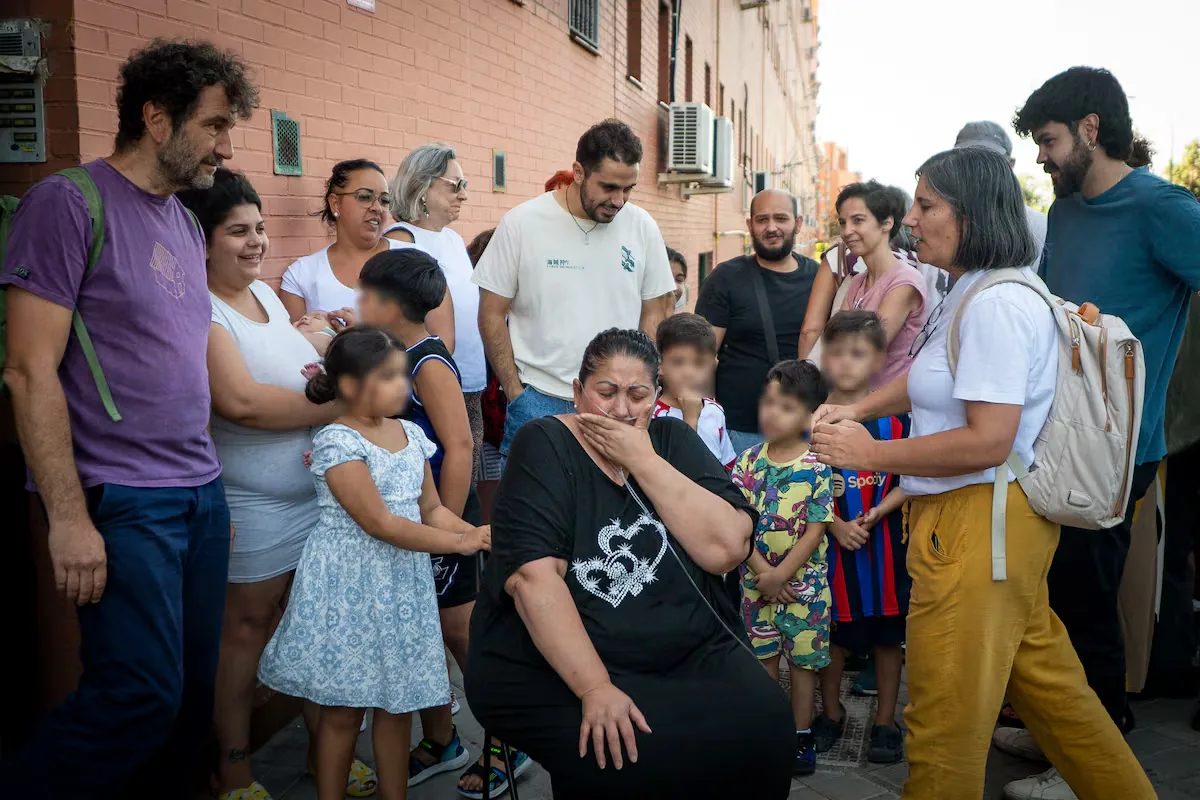








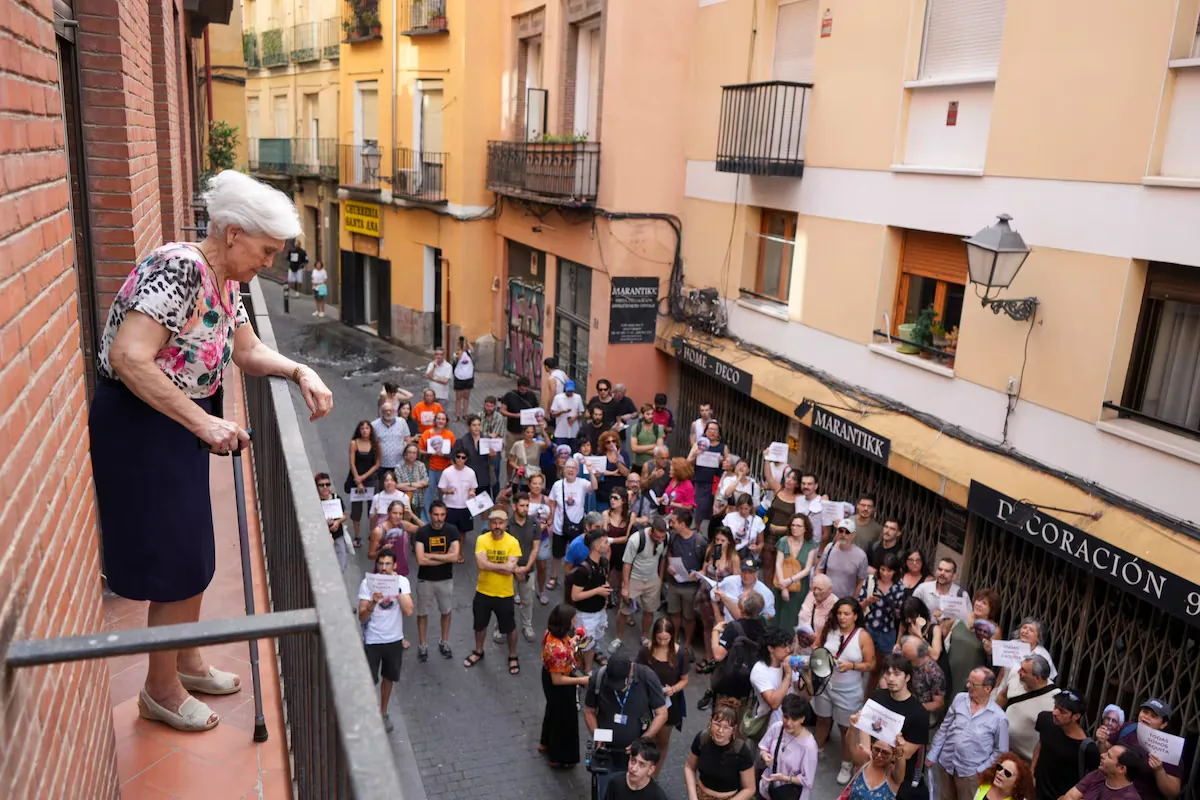
Francisca López Ruiz, *Paquita*, looks from her balcony, with a mixture of joy and sadness, at the dozens of neighbors from the La Latina neighborhood of Madrid who gathered this Wednesday at her door to prevent her eviction. The enforcement of the sentence has been temporarily suspended by a court after confirming that the City Council has not yet sent the requested report to assess her condition. The judicial decision has prevented, at least for now, this 82-year-old woman, with Parkinson’s and the highest degree of dependency, from losing the home where she has lived for almost three decades with her 47-year-old son.
Read more PSOE and Sumar agree to freeze the price of rents until July 2028
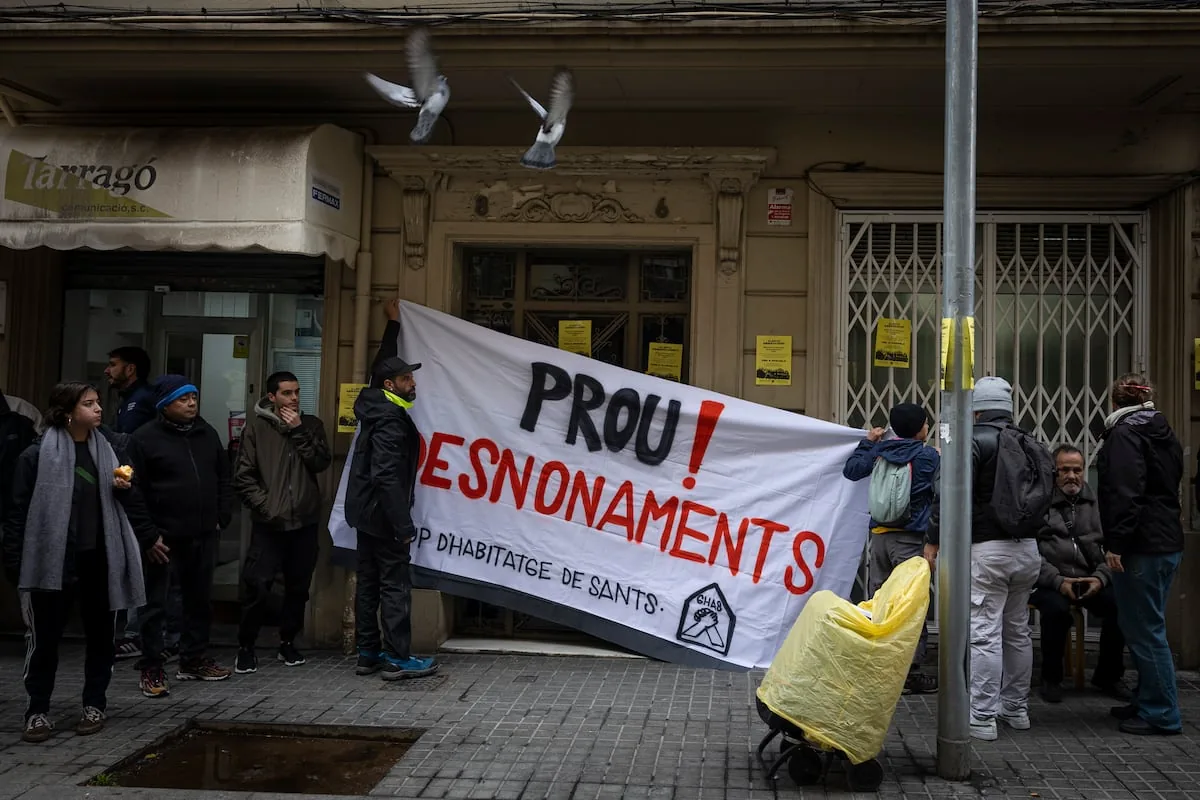
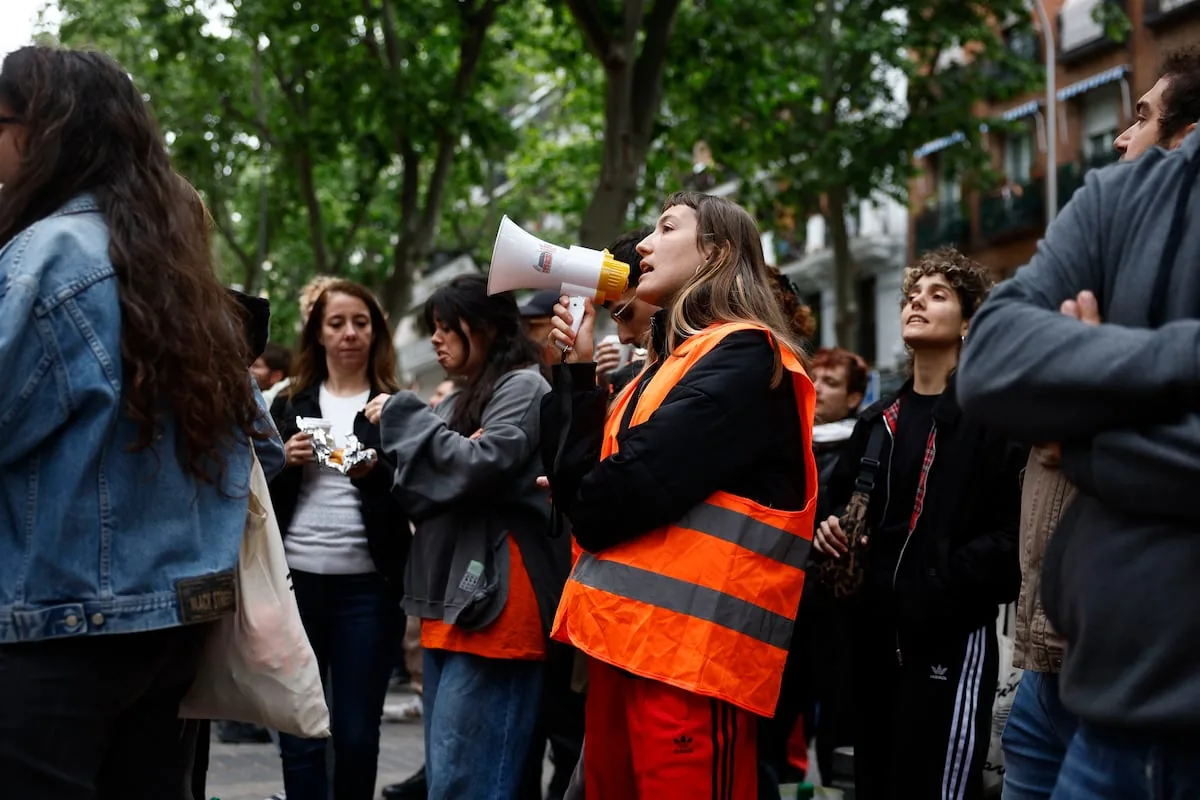
The postponement, which occurred on Tuesday, has not demobilized the neighborhood. At eleven o’clock, 45 minutes before the judicial commission was scheduled to arrive, neighbors, representatives of associations, unions, and collectives for the right to housing occupied the narrow Santa Ana street, where the apartment is located at number 6, with posters, banners, and photographs of Paquita’s face. Some held sheets with her image, others raised a sign with a message that summarizes the fear of many residents in the center of Madrid: “Without neighbors, there are no chulapas.” The slogans followed one after another for more than an hour: “We won’t tolerate one more eviction,” “Neighbor, wake up, they’re evicting at your door,” or “Paquita stays.”
From the balcony, Paquita responds with a raised hand to the applause. Minutes later, she slowly descends to the street, helped by volunteers from the La Chispera Neighborhood Association, and the path that opens among the attendees becomes a chain of hugs. The first to approach is Matilde Menéndez, a 96-year-old woman who lives right on the opposite balcony. She arrived half a century ago from Uruguay and has known Paquita for decades. They embrace in a long hug, one of those that seem to summarize an entire life sharing a patio, conversations, and daily routines.
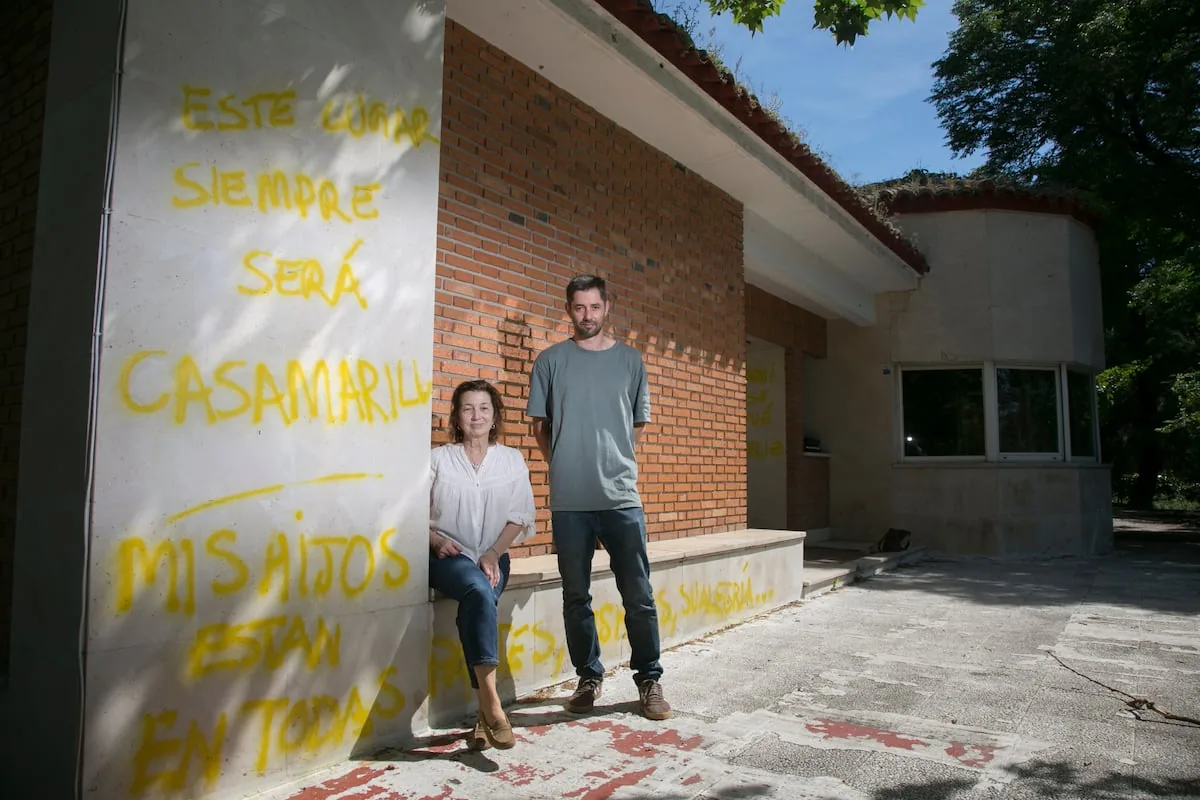
Among those waiting to greet her is also Alejandro Ibáñez, 82, one of the last residents of the San Francisco Municipal Apartments, immersed in another conflict that has made his name a symbol of neighborhood resistance. The City Council intends to temporarily evict tenants to undertake rehabilitation works, although he distrusts that he will be able to return afterward. The two elderly people shake hands and talk for a few minutes. They are different stories, but crossed by the same fear: losing their home and, with it, the life built over decades in the neighborhood.
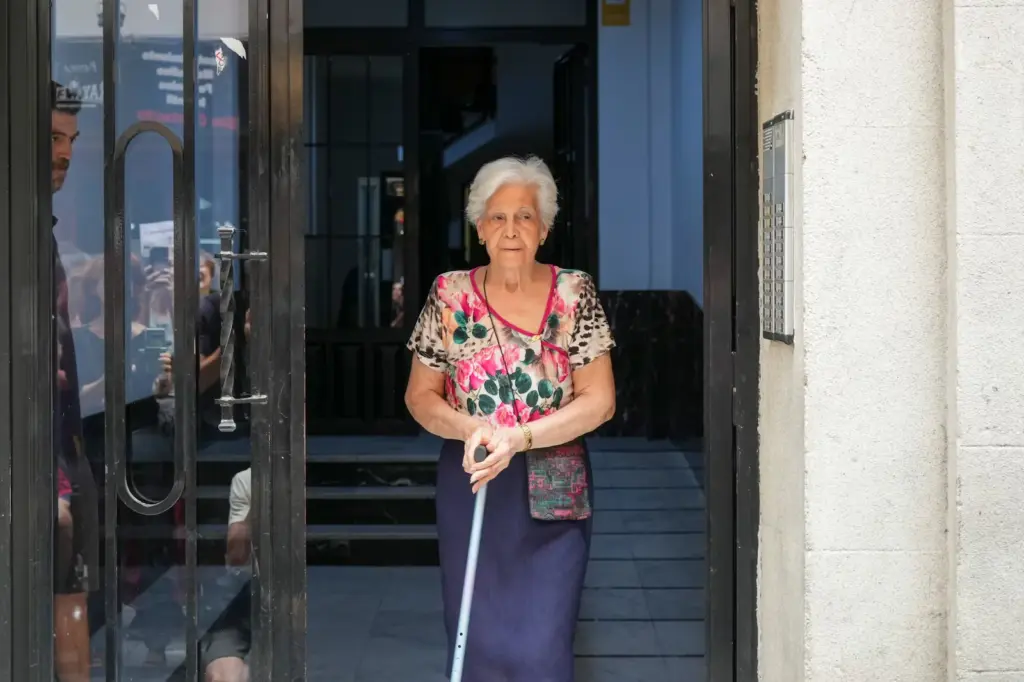
Paquita’s case has become a new symbol of the real estate pressure denounced by neighborhood associations in the historic center of the capital. The woman has lived in this building since 1998, where, according to La Chispera, there are already at least 21 tourist-use homes. She claims to have seen how, little by little, lifelong neighbors were leaving the building while transient visitors arrived. “They want to turn my house into a tourist apartment,” the octogenarian warned in a statement this week.
The suspension of the eviction came just 24 hours before the scheduled date for the eviction. In the order, the judge recalls that the court had already communicated the procedure to the administrations involved so that they could evaluate the vulnerability of those affected and, if necessary, propose an alternative. However, he adds that, “without having received a response from the competent local administration,” he agrees to reiterate “urgently” the request for the social report, “suspending the eviction as a precautionary measure.”
A spokeswoman for the Social Policies Area of the City Council maintains, however, that “the family unit is not in a situation of economic vulnerability” and assures that those affected have rejected the alternatives offered by municipal social services. The City Council adds that Samur Social was scheduled to attend the eviction this Wednesday to carry out an assessment of the case and, if necessary, offer temporary accommodation within the social emergency device. Finally, that intervention did not take place as the eviction was suspended.
The mobilization transcends Paquita’s particular case. Among the attendees are lifelong neighbors, merchants, and housing rights activists who see this eviction as an example of the transformation La Latina is undergoing. “Today it’s Paquita, tomorrow it could be anyone,” they repeat from a small public address system installed in front of the entrance, echoing the slogan with which La Chispera had called the concentration.
‼️PAQUITA NEEDS US‼️
— AV LA CHISPERA ✨ (@avlachispera) July 17, 2026
📌 Santa Ana Street
Paquita is 82 years old. She lives in La Latina. She has Parkinson’s, a grade III dependency and, if no one prevents it, next Wednesday the 22nd she could be evicted along with her son Carlos 💔
We need help #PaquitaStays pic.twitter.com/68mcVvX2pt
The origin of the conflict dates back to 2023. That year, the original owner of the property died, and her heirs informed Paquita, through the company Tolesanta SL, that they would not renew the rental contract and that she had to leave the home where she has lived since 1998 with her son. The octogenarian assures that during these 28 years she has punctually paid the rent, which currently amounts to 1,150 euros per month. In fact, she states that she has only stopped paying this month’s rent on the recommendation of her lawyer, within the framework of the judicial procedure that has led to the attempted eviction.
The precautionary suspension now opens a period of uncertainty. The court has given a deadline for the City Council to submit the requested social report before deciding the next steps of the procedure. Among those present, relief predominates, although few speak of a definitive victory. Many recall that other evictions have been postponed before being carried out weeks or months later.
As the morning progresses, the initial tension gives way to a more relaxed atmosphere. The chants cease and conversations move to small groups scattered along the street. Some neighbors comment on the judicial order, others exchange experiences about the increase in tourist apartments and the departure of lifelong residents. The concentration, called to prevent an eviction, also ends up becoming a demand for the right to continue living in the neighborhood.
Paquita listens to these conversations with emotion. She smiles, hugs those who come to congratulate her again and again, and thanks them for the support received. After a morning marked by uncertainty, she finds the words to summarize what the support of her neighbors has meant: “I want to ask the City Council, the mayor, and all those involved who do not look out for the people or for vulnerable families to please have a little heart.” Paquita has a grade three dependency, which is recognized when a person completely loses their physical autonomy (her case), mental, intellectual, or sensory. She pauses briefly as she looks back at those who still remain in front of her building. “Thank you all for making a place for me to live here. Thank you all.”