

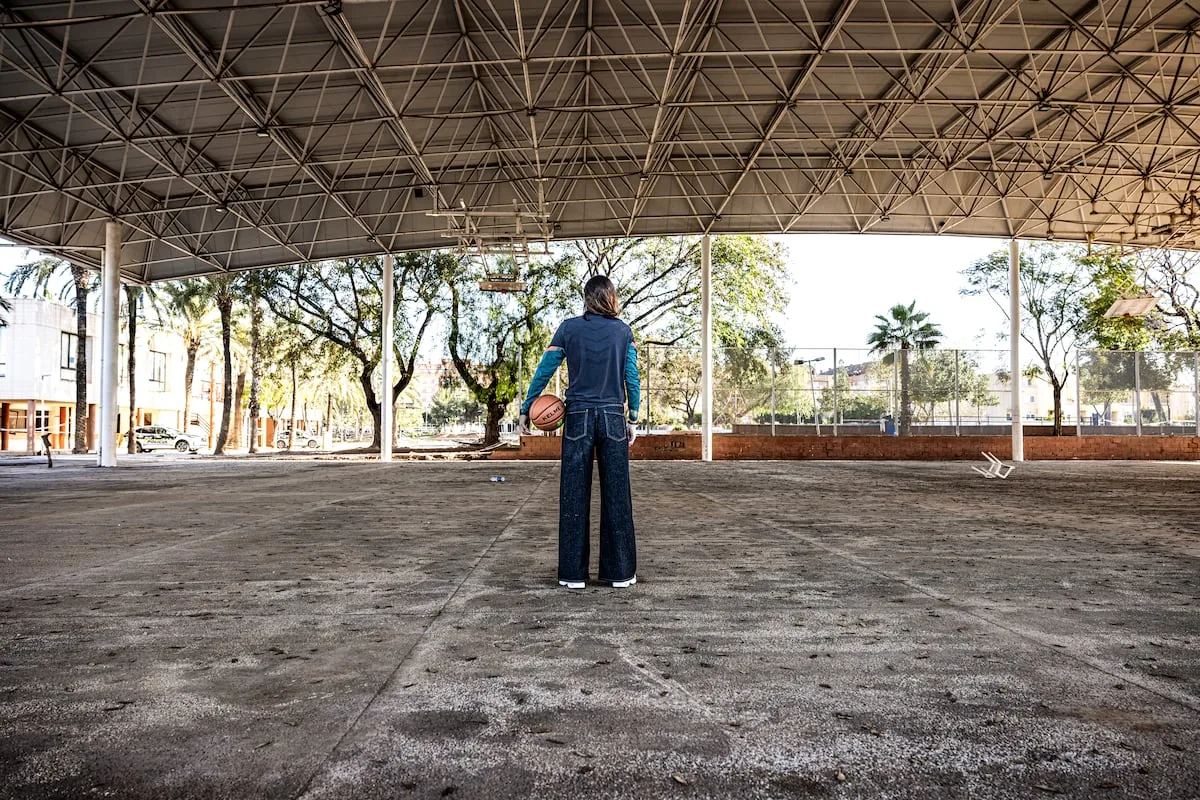
The time has come: your ideas are needed. With a gesture, you can help change the lives of hundreds, even thousands of people. The Cancha Solidaria Endesa project already has five finalists chosen from 247 participants and after more than 30,000 votes. These are five projects in which basketball highlights its values, its true potential as a tool for social change.
Read more Singer Taylor Momsen hospitalized in Mexico City due to a venomous spider bite
Baskets that give strength and encouragement to oncology patients; courts that, once rehabilitated, erase the stigma of marginalized neighborhoods and reclaim them for their residents… the projects are as diverse as they are impactful in their action.
Which one would you support?
The five finalists
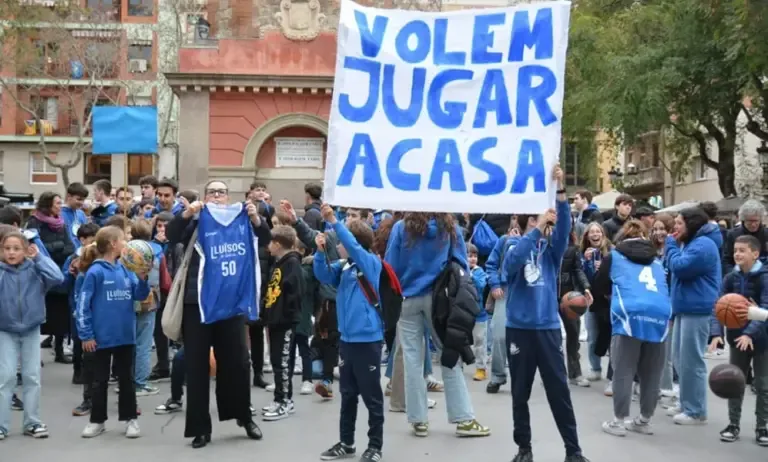
Lluïsos de Gracia, ‘Volem jugar a casa’
This non-profit organization was founded in 1855 in Vila de Gràcia (Barcelona). It has more than 30 basketball teams and almost 2,000 weekly beneficiaries. But its court, which is over 75 years old, needs renovation.
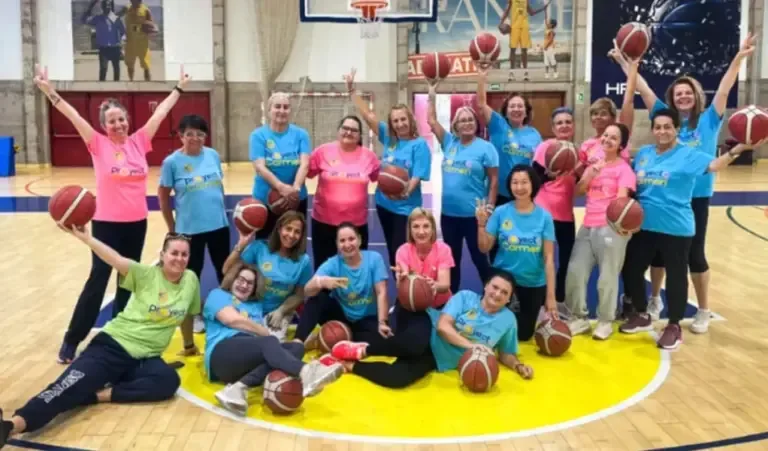
CB Gran Canaria, ‘Proyecto Carmen’
“Scoring baskets for life,” summarizes Rosi Sánchez the project. This former player, with over 100 international caps, has managed to give oncology patients a reason to get out of bed and practice sports. The funds raised will cover materials, travel, and the coach’s salary.
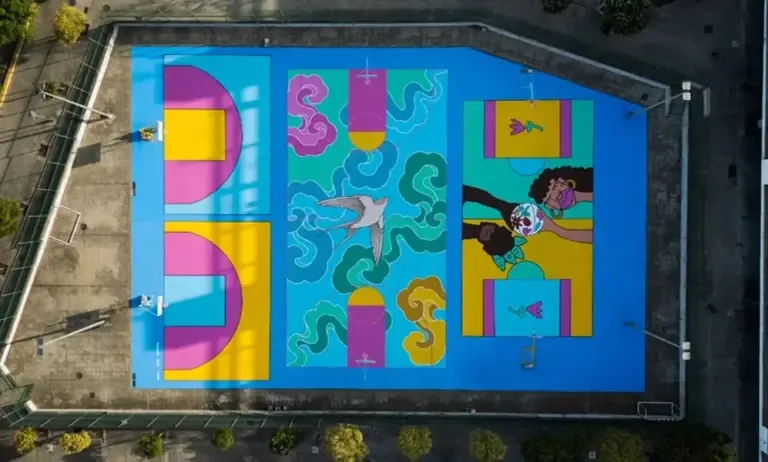
Hoops Outside, ‘Floreciendo’
Returning to people a space that was already theirs, public courts in Nou Alacant (Alicante), that is the purpose of Hoops Outside, which aims to “promote the use of the court as a meeting point and place of belonging through an artistic proposal that dialogues with the neighborhood and its culture.” They have already achieved this by painting and rehabilitating more than 40 courts worldwide.
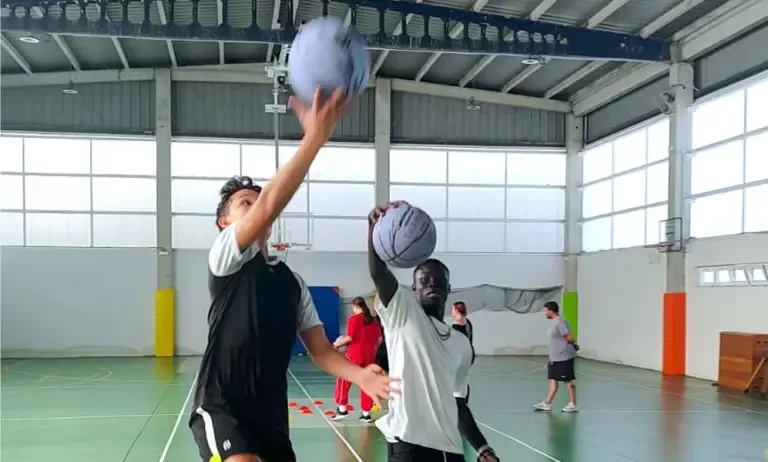
Fundación Breogán, ‘Proyecto Ícaro’
Lugo is a basketball city. Around it, Fundación Breogán has launched a program that provides a structure for weekly basketball practice (and other sports!) for boys and girls aged 14 to 18 at risk of social exclusion. The funds raised will be used to grant scholarships to Ícaro’s pupils, so they do not drift away from a practice that gives you “values that you later apply to adult life.”
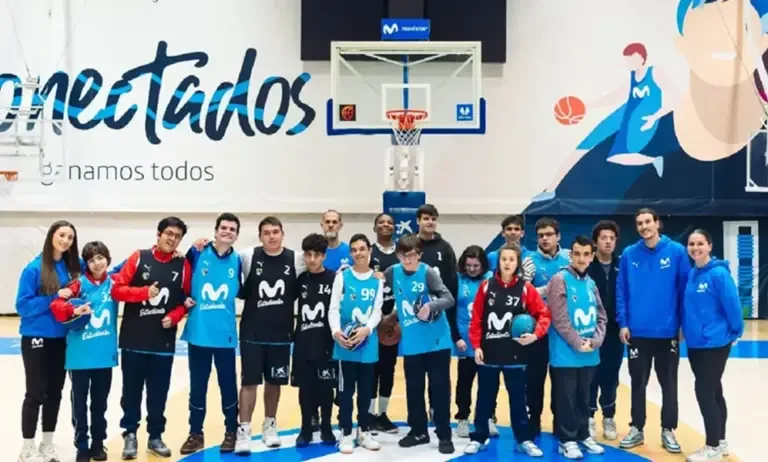
Movistar Estudiantes, ‘Escuela Inclusiva’
They were not only looking for sports but a space to grow: improve psychomotricity, socialize, make friends, and gain autonomy. Movistar Estudiantes already has 29 boys and girls with different abilities integrated into this project that combines basketball and diversity. The funds raised will be used to subsidize the fees of these thirty young athletes.
Being finalists guarantees them, from Endesa, an investment of 7,500 euros. But from there, it is all or nothing. For three weeks, each of the five projects will have to fight to reach sums that, in each case, range between 12,500 and 16,500 euros as fundraising goals.
Until May 5 at 8 p.m., you can contribute with your donations to make them a reality. The process is as follows: if they manage to reach the minimum requested funding, Endesa will provide them with an extra 2,500 euros; otherwise, all the money will be returned to the donors.
Their success is in the hands of the public: it depends on you. And, for that reason, we bring you their stories.
The ailing home of more than 2,000 Barcelonans
Rafael Giménez can boast of presiding over an entity approaching two centuries of existence, Lluïsos de Gràcia, declared of Public Interest by the Generalitat, one of the 200 neighborhood athenaeums still surviving in Catalonia. Its headquarters, in Vila de Gràcia, Barcelona, is home to 30 basketball teams, including two for people with physical or intellectual disabilities. An old house that is beginning to show its wear: the rooftop cover, where the basketball court is located, is made of asbestos cement, and due to the risk posed by asbestos, they had to close it. “Imagine the work of families and volunteers to coordinate those more than 350 boys and girls who practice basketball with us. It is enormous logistics to keep them bouncing the ball and playing around the neighborhood without their own court,” says Giménez, who maintains that “shared leisure spaces are more important than ever today; young people must be able to interact with others outside of screens.”
Basketball, in his view, is social cohesion, training together but also, and above all, the gathering after a game, a fabulous tool for integration. “In projects like this, competition is not as important as the bonds we weave through teamwork.” Giménez’s hope, therefore, would be to be laying the first stone by the end of 2026, so that the school season after the summer of 2027 would bring basketball back to that home. If they manage to raise the funds, they will be one step closer: “It will achieve two important goals: first, visibility, more people will know what we do; and second, economically, it will likely allow us to pay fees and equip the court.”
Read more Koldo García, that “particular” being
The best possible tribute to her mother
About ten years ago, Rosi Sánchez’s mother, a member of the team that won bronze at the 2001 Eurobasket in France and 2003 in Greece, died of breast cancer. That left a deep mark on her. Until in 2023 she decided how to shape her concern: she approached Sitapha Savané — another basketball legend in Gran Canaria, current club president — and said, “What if we launch a plan where basketball is sports therapy for oncology patients?” Her mother, “her number one fan, a basketball fanatic,” would have loved to have such an outlet — “besides psychologists, the only things offered were activities like painting, all very passive,” she says — and that is why the initiative was named Proyecto Carmen. In honor of Carmen Luján, her mother.
There are, Sánchez says, women who had never held a ball in their lives and who after a few months not only come ecstatic to train, but also progress in aspects like shooting or driving to the basket! Sometimes they even play games. Although that is not the most important: during that time on the court together, with those teammates, the conversation never revolves around chemotherapy or the stage of the disease. They move and regain hope and energy. From the beginning, they collaborate with the Spanish Association Against Cancer (AECC), and since their real dream (“Hopefully to be able to close the project because there are no more women with cancer”) still seems unrealistic, Sánchez would love initiatives like hers to spread beyond the Canary Islands. Even in mourning, when they lose a team member (two in three years), they support each other and share the weight of grief.
The Carmen project has become essential for them: “There are players who, when the pain is greater than them and they cannot train, do not stay home. They take a bus to come and walk around the court during that hour with their teammates. This is a boost for them. It is scoring a basket for life.”
Art (and basketball) to revive neighborhoods
The reason behind what Daniel Arróniz, photographer and filmmaker, and artists Guillermo Uralde and Mariela (the Seville native, resident in Mexico, signs her work this way) do is better understood through the story of an example. They are Hoops Outside, a creative studio that, through basketball and art, seeks ways to build community. Two weeks before the outbreak of COVID, they painted their first court in India, and from there the project took off.
The example: basketball courts in Amanecer Square, in the San Pablo industrial estate, in Seville. Neglect had led to degradation, and this to a feeling of insecurity. “People sadly told us that now no one used them and what was there were broken large beer bottles,” says Mariela. That is when they intervene: they repair the backboards and hoops, the lighting, and paint. The community first approaches out of curiosity and then with involvement. They participate. Art, Uralde and Arróniz say, proves in those moments not to be merely decorative: it changes the space, restores it, and returns it to the neighbors. “It is full again: girls and boys play, people then have a drink at the bar next door, even the Seville City Council is promoting music video shoots there!” explains the Sevillian artist.
Their process always takes into account listening to the neighborhood: whether in Tijuana, on the Mexico-US border, or in Camas, Seville. They try to involve as many local agents as possible to ensure the project’s survival. Now, in the Cancha Solidaria Endesa project, in Nou Alacant, CB Lucentum Alicante supports them, and it will be SCD Carolinas, a basketball club with more than 70 years of history, that will primarily enjoy the recovered courts. “We are all born painting and then forget. Just as we stop playing basketball with friends. This is a way to recover those values. To do it to give people back what already belonged to them: public space.”
Breogán: basketball to save vulnerable teenagers
Luis Abel, director of Fundación Breogán, says that although Lugo has futsal, volleyball, football teams, triathletes… excellent athletes, nothing represents the city’s feeling like its basketball club. The Pazo, its pavilion, beats to a different rhythm, and this foundation, born four years ago to try to give back to the people of Lugo what they contribute to the club, is also based there.
“Young people today carry the weight of huge expectations. Sports taught you to sacrifice, work as a team, be patient; a series of values that you either acquire in adolescence or you disengage,” says Abel, who points out how much harder it is to enjoy that for boys and girls aged 14 to 18 from vulnerable families at risk of exclusion. That is where the Ícaro project focuses: trying to offer them regular training, sports, and a safe environment.
“These kids don’t usually experience many joys; sports is the place where suddenly they can enjoy a small success, which ignites huge motivation.” Abel gives an example: one of his boys from last year. Basketball is the base, but every month they try a new sport. He was good at all: boxing, table tennis… Or rugby, where he showed so much talent that the club wanted to sign him. “What we would like precisely with the Cancha Solidaria Endesa fundraising is to be able to grant scholarships to our students so that, when prioritizing, they don’t have to give up sports practice,” explains Abel, who says the club has put signed jerseys, balls, and all kinds of symbolic items on sale so people have more reasons to donate. “We are here to help,” he says, “because for the people of Lugo, the sense of belonging to Breogán is absolute.”
A legendary and inclusive youth academy!
It all started in 2022, when a mother and president of the Una Mirada en Marte Association asked Club Estudiantes for an opportunity for young people with different abilities, passionate about basketball, to be part of an inclusive youth academy. They wanted to find a space where those boys and girls could grow in many ways: improve psychomotricity, socialize, gain autonomy, and create bonds with others. Make friends through basketball.
Since then, the club has maintained that area, and today 29 young people are part of the project. Some members even train with other youth teams or help with coaching tasks. “Because when you believe in people, everything is possible,” say Movistar Estudiantes.