









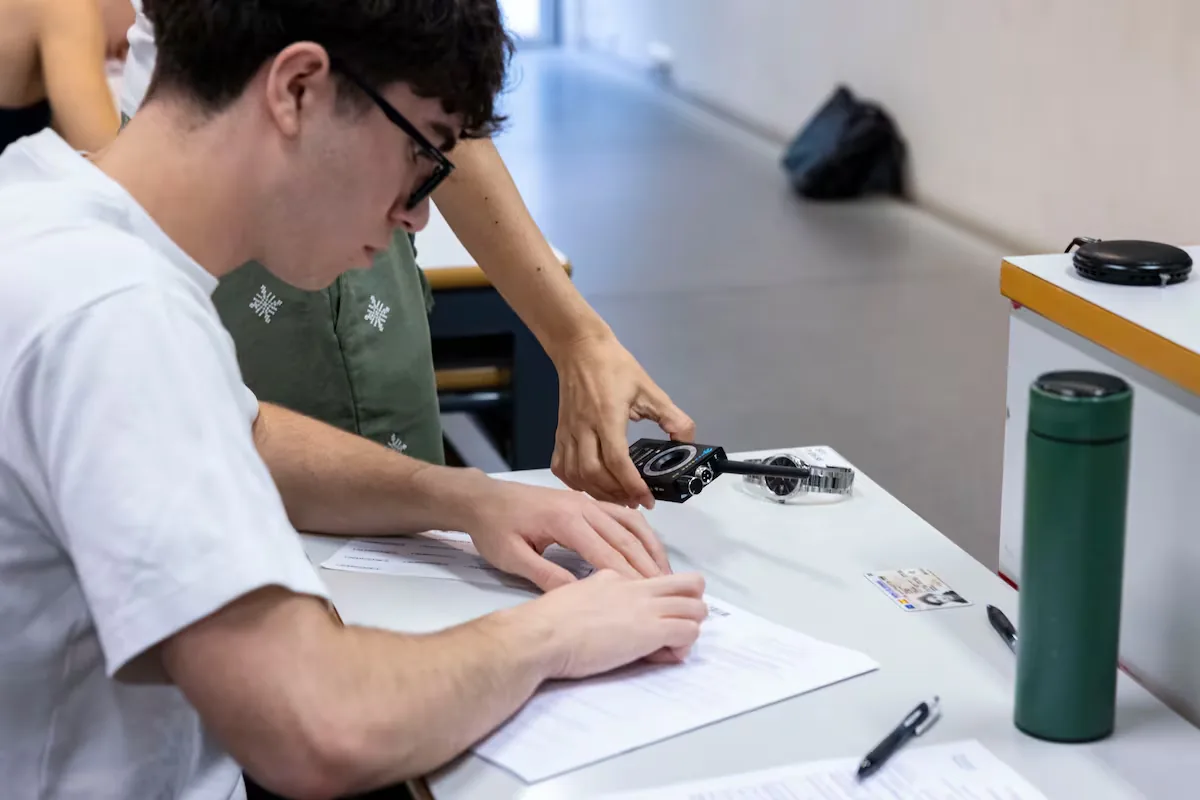
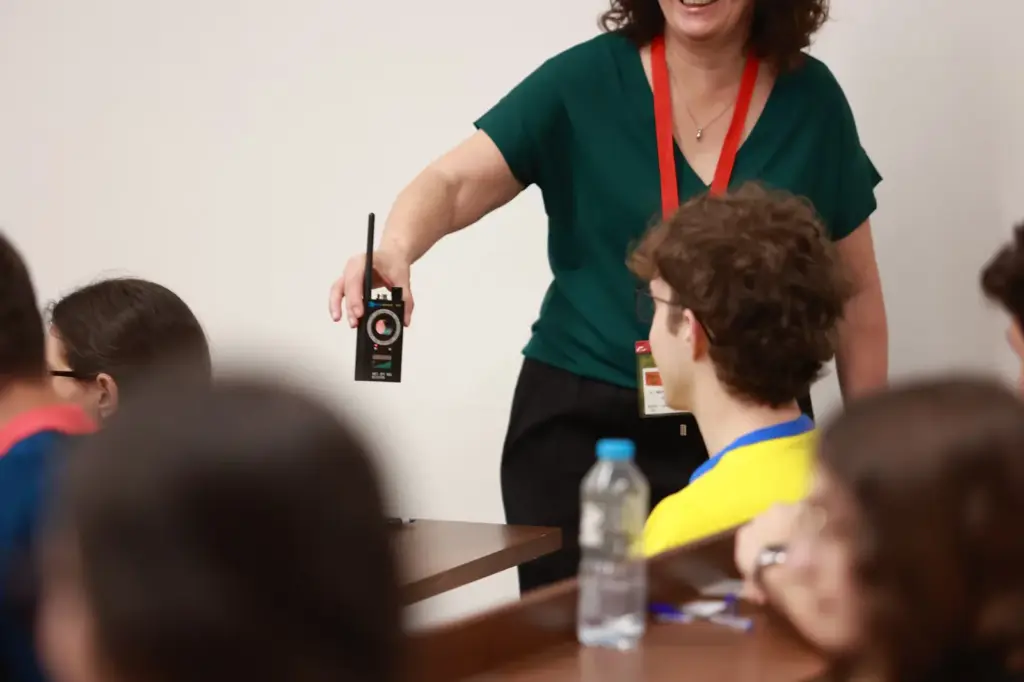
The worried faces of dozens of students at the Complutense University of Madrid turned to fear at the phrase: “Those of you who have headphones, smartwatches, or smart glasses will have to hand them in. We are going to pass with a detector, it beeps and, if we see there is reason for fraud, that means zero on the evaluation.” Frequency detectors have been the novelty in the University Entrance Exams (PAU) of 2026. Seven autonomous communities — Galicia, Murcia, Catalonia, Aragon, Valencian Community, Asturias, and Cantabria — announced their use to combat fraud in exams. To which, in practice, Andalusia, Balearic Islands, Canary Islands, Castile and León, La Rioja, and Madrid were added — Euskadi has warned students that it might use them. But in Madrid, the change is even greater: from detection to recording as evidence of possible cheating, a practice that experts warn threatens data protection.
Read more How will the weather change this summer due to the ‘El Niño’ phenomenon
On the first day of the Selectivity in the capital, a classroom monitor at the Faculty of Information Sciences gave the warning just before starting the Spanish Language and Literature II exam. Within seconds, most students began rummaging through their belongings to hand over wireless headphones, watches, bracelets, mobiles, and even their house keys — someone claimed to have a device emitting a signal on their keychain. No one wanted to expose themselves to being accused of fraud.

Search engine: check the cutoff score for each degree in Spain
In Spain, the use of inductive signal detectors in exams is not new. Galicia was the first autonomous community to adopt this practice in 2019 and has been deploying guards with detectors that randomly patrol classrooms for over five years. The innovation is that Madrid chose not only to identify possible fraud but to reinforce detection with a second device — a mobile application — capable of listening to and recording what is emitted in the identified signal. The vice-rector for students at Complutense, Rosa de la Fuente, stated that, given the proliferation of new digital methods for cheating — such as nanoring earpieces — it was necessary to tighten anti-fraud measures.
The rise of digital cheat sheets
In a 2023 video that has accumulated more than 1.6 million likes, the Spanish influencer Izan Oviedo explains how to use a nanoring earpiece to cheat on exams. He shows the earpiece — which could be mistaken for a small magnet — a ring that connects via Bluetooth to the mobile, a pen with a microphone, and a magnetic bar to remove the earpiece when necessary.
These cheating systems work in two directions. The student hides the tiny earpiece in the ear, so small it can only be removed with a magnet, and at the same time transmits the exam content outside via a microphone or microcamera camouflaged in a pen, glasses, or bracelet. For the audio to reach the earpiece, the student also carries an induction signal receiver — hidden in clothing or a personal object — that captures the information coming from outside and converts it into the sound heard in the ear. It is precisely this open signal that allows a third party, with the appropriate equipment, to intercept and also listen to what is being transmitted.
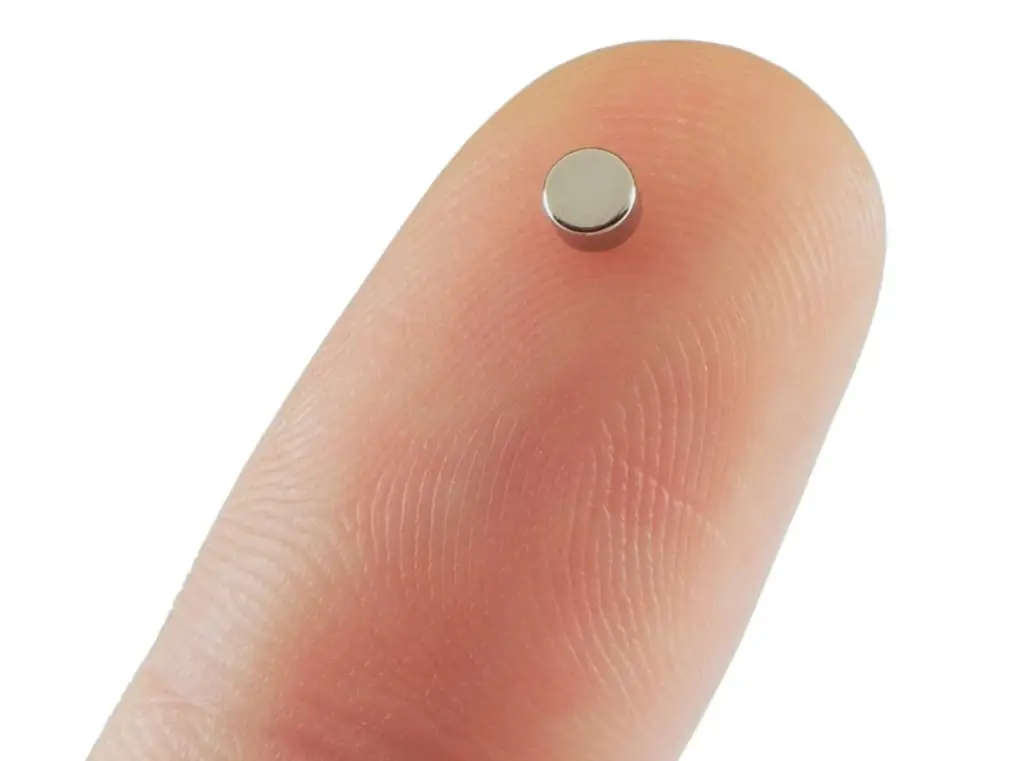
On the other side, an accomplice or an artificial intelligence tool prepares the answer and dictates it back to the ear within seconds. The entry price to buy this system is around 40 euros and it is openly sold on sites specializing in spy gadgets and platforms like Amazon. Additionally, on networks like TikTok, they are promoted as tools that serve to “cheat on exams without being detected.” To avoid what has become an increasingly common practice, some try to go further against cheaters.
Guillermo Pacheco is the high school teacher who patented the signal detection and recording system used by Complutense in the PAU 2026. The Detector de Pinganillos app, available on the Google Play Store, and its physical complement — a hardware device that connects to the mobile via USB-C — are sold for 120 euros.
Read more The rush changes sides in Iran: Trump seeks a way out of the war with time against him
The idea was born in 2017 at the request of a teacher friend who suspected one of her students was using earpieces to cheat. Pacheco then developed a detector that worked like a bracelet with a coil that amplified the audio signal through transistors, and the teacher listened with an earpiece. Almost a decade later, the physics teacher has perfected the invention and tried to introduce it into the educational circuit. A high school in Madrid has been using it for a few months, and the teacher says that even the State Railway Safety Agency has asked for his help in train driver exams.
Pacheco argues that conventional detectors are not enough against new technologies. Identifying a signal without evidence to accuse the offender is, in his words, “doing nothing.” Without evidence that what is transmitted in that signal matches what is written in the exam, it is not possible to sanction the student. It is precisely that recording that has raised legal doubts.
Detect a signal, but record what is transmitted?
There is a considerable technical and legal distance between identifying a device receiving a signal and recording the content of what is transmitted. Sandra Somastre González, a cybersecurity expert at NTT DATA, warns that if the programs used lack encryption layers, capturing the content could constitute a privacy violation with consequences such as identity theft or digital account cloning.
José Luis Díaz, CEO of Advens in Spain and Portugal, warns that information emitted in an open signal can be considered personal data, even if it does not contain a person’s name. “It is enough that it allows direct or indirect identification of someone, for example, through a device identifier, location data, or an online identifier. The key is what I do with it. Capturing it fleetingly so that a connection works is not the same as collecting it, storing it, cross-referencing it with location, schedules, or cameras, and using it to profile movements. There we clearly enter data protection territory.” He adds that if an educational center uses software that reads, intercepts, or records a student’s communications, it may conflict with the General Data Protection Regulation and Spanish legislation on privacy and secrecy of communications. “Moreover, if we talk about minors, the bar is higher,” he emphasizes.
To back himself up, Pacheco consulted the Spanish Data Protection Agency. The AEPD responded that “the issue raised does not fall within the scope of personal data protection regulations” because no protected communication or private conversations are captured. The teacher adds that, according to article 18.3 of the Spanish Constitution, “those forms of transmission configured as open communication are excluded from constitutional protection,” something that is not secret. Nevertheless, Pacheco recommends recording only upon founded suspicion and not storing the collected information. What centers do with the systems once adopted is no longer in their hands.
Vice-rector De la Fuente insists that no privacy rules are violated. Complutense requested a legality report from a legal advisory before deploying the devices and, according to the vice-rector, “education inspectors have said they are possible.” The recordings obtained will be kept as evidence so that the university tribunal can determine the corresponding sanction. The student caught will be allowed to continue the exam so as not to disturb the classroom, but their test will be marked. The punishment can range from suspension of that specific evaluation to loss of the entire Selectivity.
Read more Russia intensifies attacks against Ukraine and its threats to Europe: “Their peaceful dream is over”