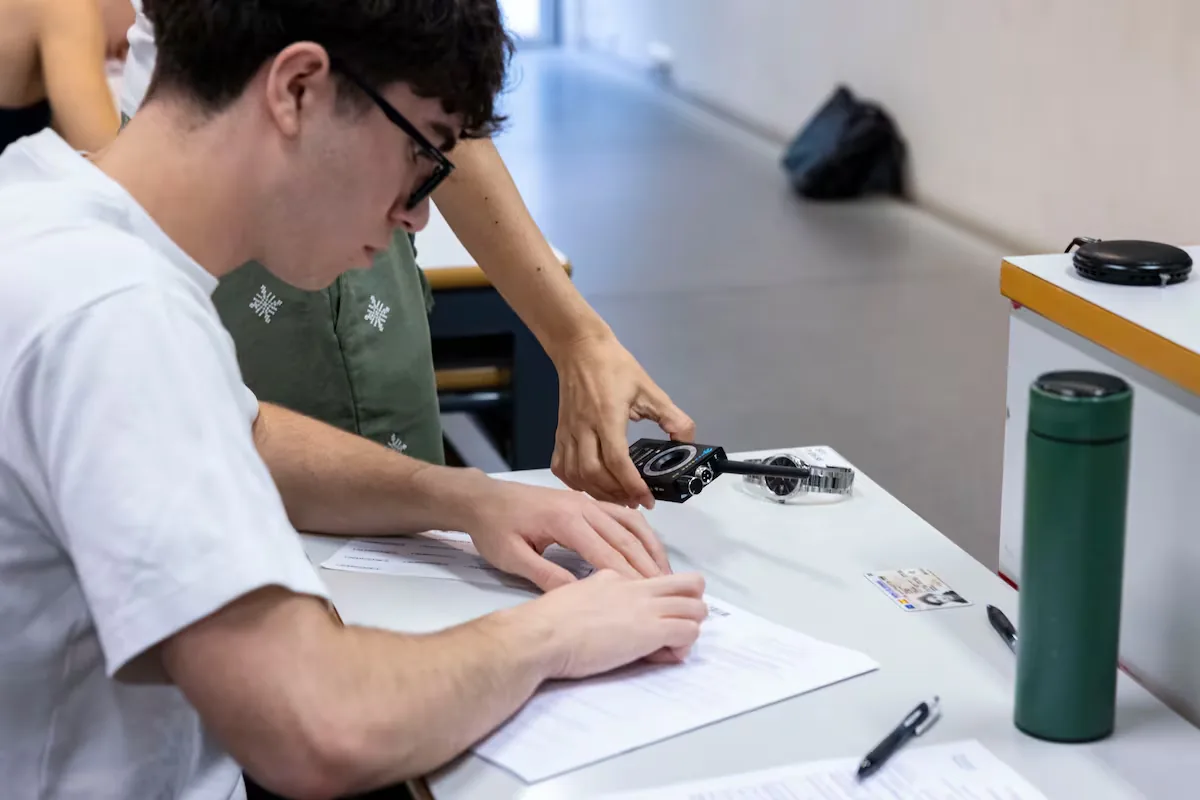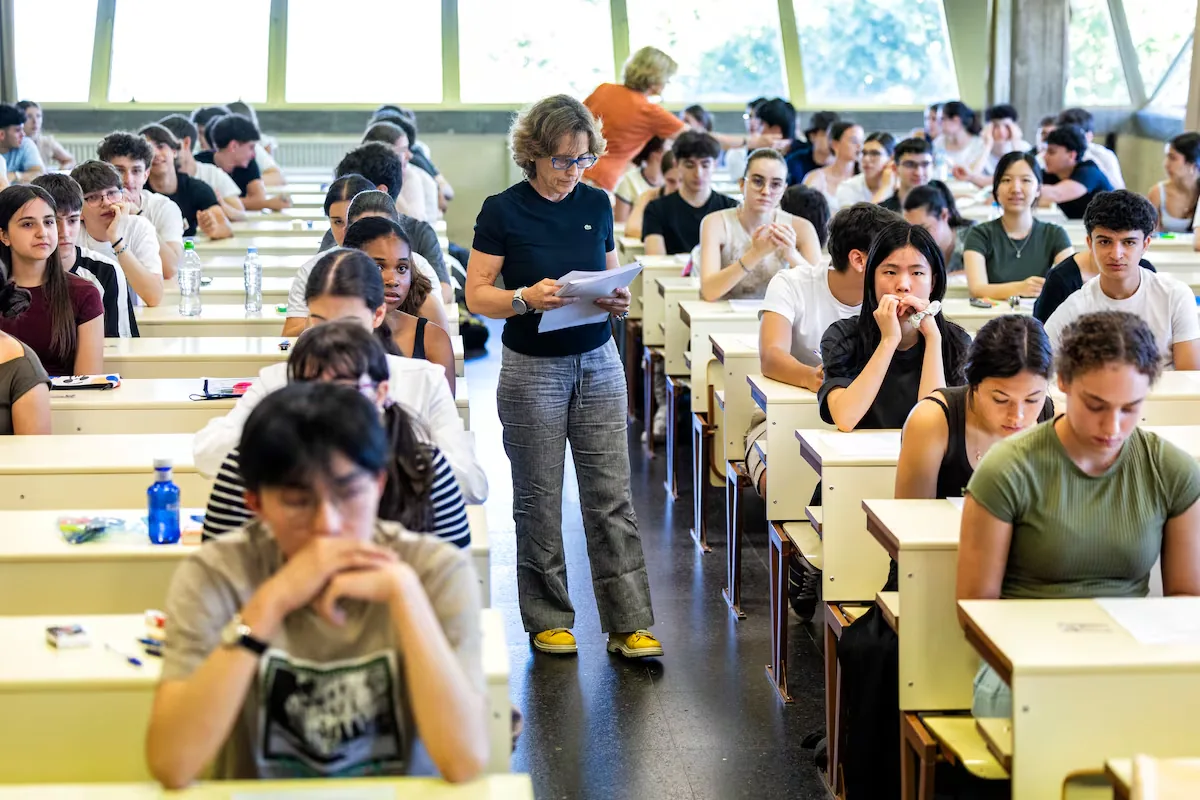







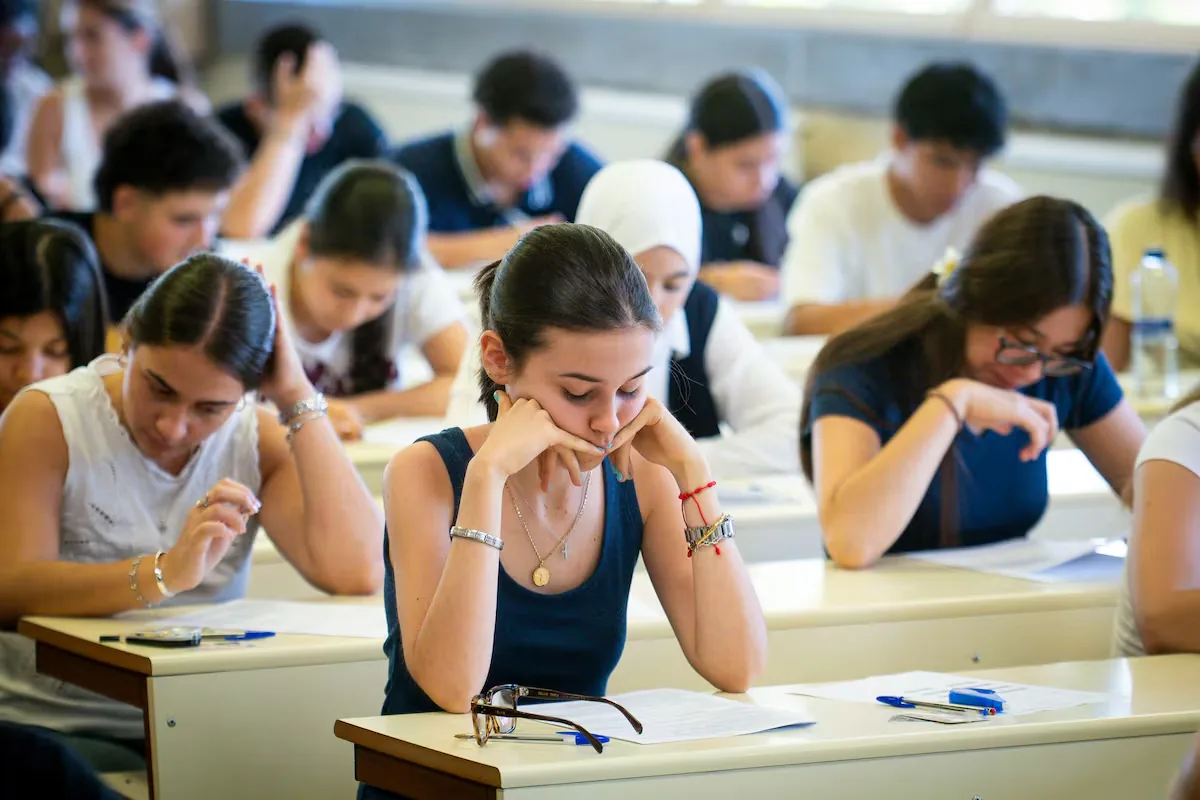
PISA evaluates competencies, but the Selectividad (PAU) continues to assess something less demanding: content and recipes. Comprehension and reasoning are more difficult to train than the reproduction of procedures, and when an exam can disadvantage the “local” students compared to those from the rest of the country, immobility prevails. The PAU shapes secondary education more strongly than successive educational laws, so freeing it from that corset by changing absolute grades to relative positions would help make it a powerful lever for educational improvement.
Read more Yaga
The poor results of the recently published PISA Report, which show a more pronounced decline in our country than the OECD average in all the competencies evaluated, require concrete measures to be taken as soon as possible. As its director Andreas Schleicher reminds us, this test has already worked in the past and must continue to do so in the future as a “catalyst for serious educational reforms.” We propose that in our country this reform should start precisely by changing another evaluation, the one that most deeply conditions secondary education because, unlike PISA, it is annual and has a strong personal impact: the Selectividad. The PAU exerts a powerful drag effect on the entire Bachillerato: What is asked there ends up determining what and how is taught. This is the washback effect: Alderson and Wall showed decades ago that evaluation systems decisively condition teaching practices and learning. We cannot continue to act as if the exam were a neutral appendix of the curriculum. Changing the Selectividad is changing the Bachillerato, and with it much of the pedagogical model of secondary education.
The PAU we say we want is not the PAU we dare to design. We repeat that it must value reasoning, comprehension, and analytical capacity, not the simple reproduction of learned procedures. But, reform after reform, we continue producing predictable exams, broken down into blocks and sub-blocks and easily trainable. Even many exercises presented as “competency-based” are limited to wrapping the same old routines in artificial contexts (often with a localist wink). Barely a change of scenery.
The inflation of PAU grades over the last two decades (the top grades in the general phase have almost quadrupled) contrasts with the data provided by PISA for high performance levels: in Spain, the percentage of those students does not reach 4%, approximately half the OECD average. This is a sign that the Selectividad has been losing its ability to distinguish between deep understanding and superficial training. The increasingly abundant quasicatorces of the PAU no longer guarantee the former, but rather adaptation to a system that rewards the ability to reproduce recipes or regurgitate data more than to solve problems and connect ideas, which are the competencies PISA evaluates. Thus, this PAU does not promote excellence.
It would be easy to attribute this inertia to the administration, regulations, or supposed resistance from secondary school teachers. But the criticism must start with those of us involved in designing the PAU at the university: the people responsible for preparing the tests in each of the 17 districts know that an innovation perceived as more demanding can harm “our” students compared to those from the rest of the country. And, faced with that risk, we almost always choose the safe option. We have turned institutional caution into educational immobility. No one wants to bear the cost of being more demanding than others, and for that reason, we all receive the same incentive: to design increasingly predictable exams. Given the frequent concern expressed in universities about the level of incoming students, it is also worth considering the impact that the design of the PAU has not only on selection but on the very training of future students.
Read more The fake bank employee scam
The distortions introduced by the PAU are not only territorial: one subject may be more generous than another; one call, more accessible; an exam may be affected by an incident. Demanding an identical test for the whole country has rhetorical appeal but fits poorly with a system where educational competencies are transferred to autonomous communities (not even communities governed by the same party have managed to agree on exams). Clinging to an unlikely uniformity only postpones the solution. The issue is not how to agree on identical exams, but how to fairly compare results obtained in different contexts.
To respond, it must be remembered that the main function of the PAU is not to certify what has been learned; that task already corresponds to the Bachillerato. The PAU serves, above all, to rank applicants when there are not enough places. Therefore, what matters is not the isolated absolute grade, but the position each student occupies relative to those competing under comparable conditions. That is why we proposed and insist here that, for admission purposes, grades be expressed by relative position (for example, using percentiles) within the same evaluation context: the same test, the same call. If the highest grade on an especially difficult Philosophy exam were an 8.5, that result would occupy the top position in its group. The system would eliminate territorial grievances, stop punishing those who had a more demanding exam, and stop automatically rewarding those who had a more lenient one, without dismantling the current university access structure.
The decisive advantage, however, is educational. The use of relative grades (based on position) would free commissions from the fear of harming their students and allow them to design more varied and competency-based tests. If we eliminate the incentive to lower difficulty (because the only important thing is the ranking), we could ask less about recipes and more about ideas; less about the flawless repetition of a pattern and more about the ability to interpret, argue, and relate that PISA tests; we could include “for grade” questions, an expression now almost out of use, essential to detect, even stimulate, true talent. That change would inevitably reach the classrooms. Students would spend less time guessing which exercise might “come up” and more time understanding what they study. Classrooms would thus recover part of the formative ambition they currently sacrifice to train for a test that we all criticize and that, nevertheless, those of us involved in it help perpetuate. With 17 “free” exams, districts could “compete” for the most stimulating, most competency-based proposals, for the best-designed tests to obtain the desirable normal (or Gaussian) distribution of grades, qualities that now rather upset students and families for harming their “absolute grade” compared to students from other communities, as happened this year with Mathematics in Catalonia and a few years ago in Castilla-La Mancha. With relative grades, variety would bring richness, not grievances.
We are not, therefore, facing a technical discussion reserved for specialists nor an adjustment thought only for those aspiring to Medicine or certain double degrees. We are deciding which behaviors the system rewards. As long as we continue to treat grades from different exams as equivalent, we will continue to promote homogenization from below, grade inflation, and teaching oriented to recipes. The plurality of tests is compatible with equity; what is not compatible is comparing results as if that plurality did not exist. Standardizing grading instead of imposing a single exam would allow revaluing diversity and, at the same time, improving the Bachillerato. The alternative is to keep lamenting every year the defects of a Selectividad that we ourselves refuse to change.