









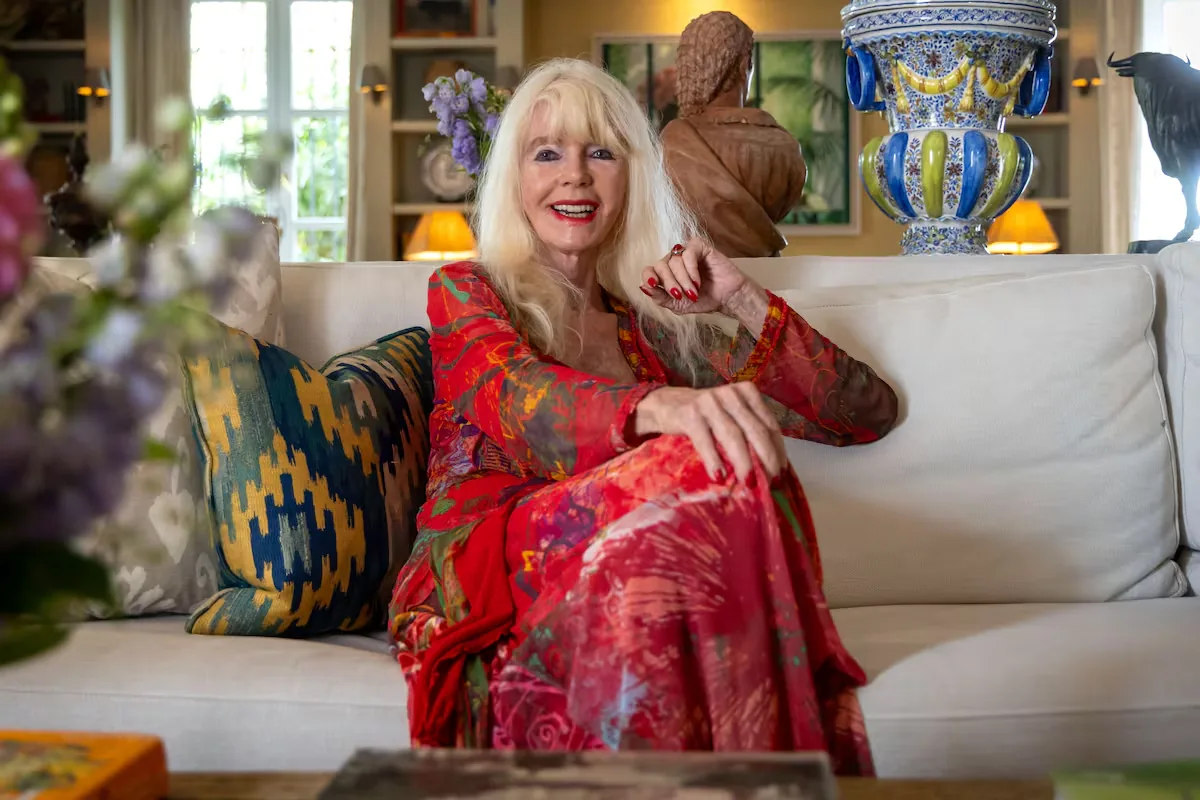
Gunilla von Bismarck (Friedrichsruh, Germany, 1949) believes in climate change. “This year has been too much…”, she said this Monday with her characteristic German accent on the other end of the phone. She was speaking from her home in Switzerland, where she spends the winters, and to which she has returned earlier than expected. “Although it’s still hot here too… it’s everywhere!”. This elevator conversation has a special value when the one talking about the weather is the indefatigable queen of the Spanish summer, the top representative in Spain of what society journalist Igor Cassini coined as the jet set for being a social group capable of taking planes all year round across the world in search of eternal summer.
Read more At least 23 dead after a truck crashes into a bus with patients heading to the hospital in Brazil
Her mother, the Swedish-born socialite Ann Mari-Tengbom, arrived in Marbella in the sixties in search of a mild climate on the shores of a sea in which to soak a broken leg that wouldn’t quite heal. Gunilla, at 76 years old, escapes the heat. Back then she was a 10-year-old girl. She perfectly remembers that landscape of olive trees where there were no palm trees yet, much less urbanizations or golf courses. “There was a motel with four houses and very primitive rooms, with barely a bed and a sofa,” she says, as if reciting from memory a story she has told hundreds of times.
That estate and its surroundings are the ground on which the Marbella Club was established, a kind of Andalusian village filled with lush gardens created by an Austro-Hungarian prince (and agronomist engineer) friend of the family, Maximilian de Hohenlohe. It was precisely at the Marbella Club that she summoned us at the end of July for our first conversation, which ultimately was also by phone due to an unforeseen event. A day before, her house hosted a party with more than 30 guests (although, according to her, “the perfect number is 60”) with the excuse of the national team’s matches in the World Cup. “I like being a hostess more than a guest because I know exactly what I have to prepare to eat. For example, these days, since many children are coming, well, tortilla, meatballs, guacamole…”. This journalist, with a naive middle-class innocence, replied: “Easy things to pick up…”. To which she clarified: “I don’t cook or clean up. I eat and if the team wins… to the pool!”.
It was precisely by the Marbella Club pool that she met Luis Ortiz, another of the great legends of glamorous partying, which, according to Gunilla, no longer exists: “It was in the champagne room. His friends had told him about me and I about him. He didn’t know a word of English and I very little Spanish, but we spoke with our eyes.” They married in October 1978, separated in 1989.
Read more Trump proclaims «the greatest economic war» against Iran
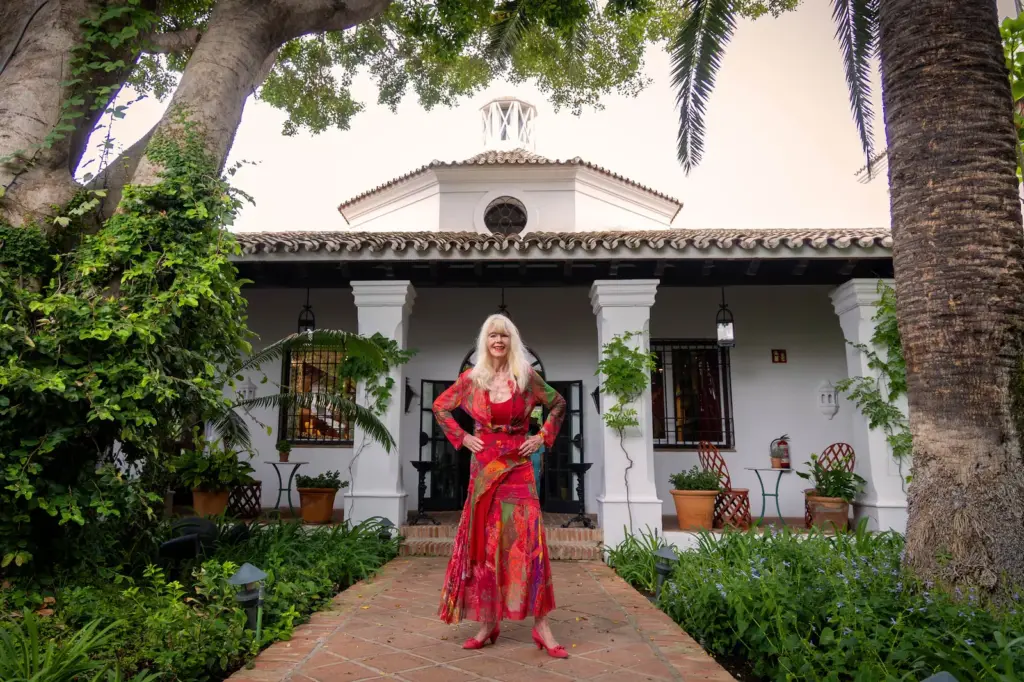
“The reason was that he drank a lot and took a lot of drugs and I didn’t, which created a clear distance between us. He would come home at ten in the morning, I was always worried, looking for him. He promised to quit or at least most of them and after three years we got back together.” During this time it was she who left the spectacular mansion where they lived, Villa Sagitario. “I went to Brazil,” she explains mysteriously. Was there another man? “I left him but not to go with another, because, honestly, there was no one like him. He was a joker, hilarious, unique,” she lists tenderly. Did the separation work? “He didn’t change one hundred percent, because in fact, smoking was what ended up killing him, but he did improve.”
Gunilla von Bismarck assures that “Marbella is no longer as safe as it was. My friends have experienced several assaults” and that the parties have changed a lot: “We used to be fewer and everything was more intimate. We also liked to make it prettier, we dressed wonderfully. And there were no social networks, although I had an official photographer.” She no longer lives in that house she showed so many times to the celebrity press: “Since Luis left it felt too big for me,” she explains, omitting that it was for sale long before the sad passing, in September 2024. Perhaps because, as she said several times throughout our conversation, she doesn’t like to talk about problems and much less about money. In fact, she is slightly offended when asked if she is stingy: “Obviously I watch the spending, especially because there is always someone to help, but right now I am financially calm. There are no clouds on the horizon.”
This summer she has returned to one of her favorite authors, Frederick Forsyth, although she also likes historical novels and reading about her great-grandfather, Chancellor Otto von Bismarck: “The greatest lesson he left us is that you must not attack Russia.” Although she doesn’t want to get into politics, she dares to give her opinion about Europe: “I see Spain much better than Germany.” And about the future of the world: “For the moment, no good times are coming, because with Trump you never know what will happen.” Still, her assessment is that it has been a good summer in which she has let the hours pass playing ping pong at Villa Vanessa (“smaller, but more comfortable”) with her two grandchildren aged 12 and 14: “They took after their grandfather in having a great sense of humor, but they are very sporty and not yet at the age to go partying.” That said: she has missed Luis more than ever. “In Marbella everyone mentions him and that stirs everything up.” Although she speaks from Switzerland, the sadness is palpable.