









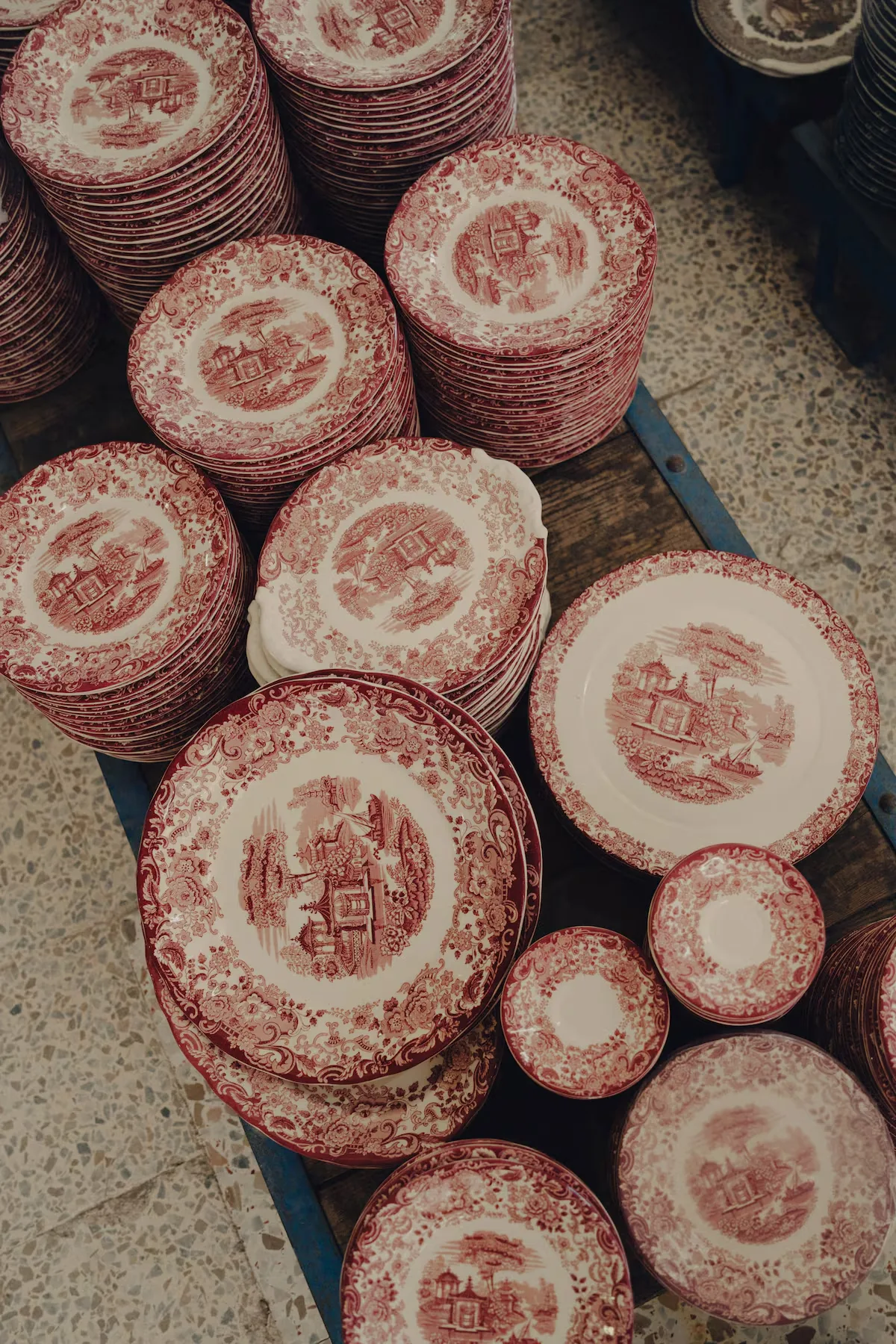
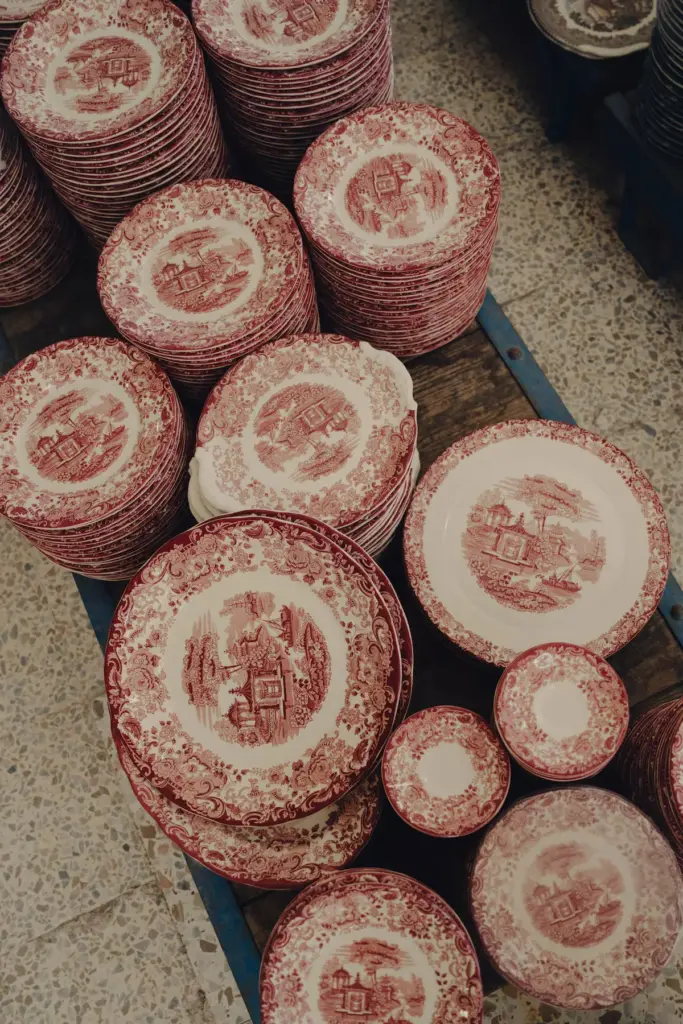
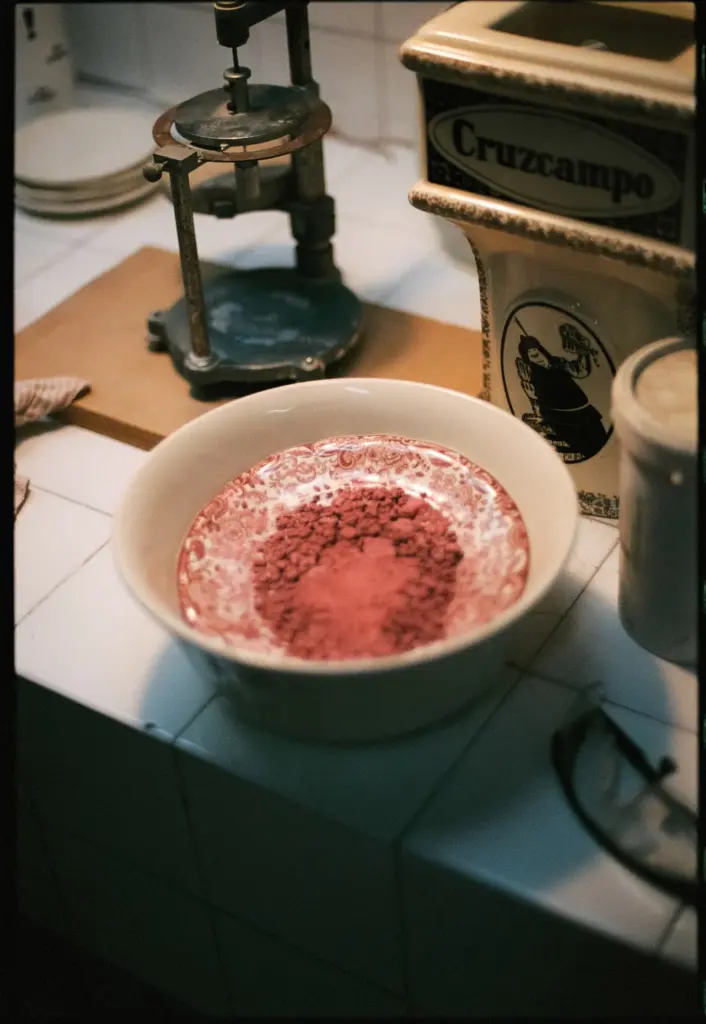
On the wall, there is a shelf with an old radio, a deli weight, and a calendar with a religious image. On the countertop, a lamp illuminates several plates and a Cruzcampo beer tap, all made of cream-colored earthenware with old-fashioned curves. Their design, color, and pattern clearly indicate their Sevillian manners and their place of origin: the legendary La Cartuja de Sevilla dinnerware factory, intimately linked to the city’s history. A year ago, this company was on life support in the middle of bankruptcy proceedings, but the arrival of new owners has breathed new life into it. So much so that orders are piling up. Among them, the 270 beer taps that, like the one kept in the company’s quality laboratory where the pieces undergo a rigorous examination, will soon arrive at bars to remind that the firm founded in 1841 is more alive than ever. And olé.
For the collective imagination, La Cartuja de Sevilla has always been there. It is a classic in country houses and bourgeois dining rooms on Sundays, although its reach is transversal. It is part of a mythical trousseau, a heritage consolidated across generations. It is even present in the collections of institutions such as the National Museum of Decorative Arts in Madrid. Its long history connects it with the turbulent lives of Spanish dinnerware manufacturers: the Basque Pontesa (now defunct) or Sargadelos (which survives but not without effort). La Cartuja, for better or worse, has a “bourgeois and conservative” audience, in the words of María Hernández Macías, a researcher at Pablo de Olavide University. This earthenware, “discreet but intoxicating,” as highlighted by writer Inma Aguilera in La dama de la Cartuja, was born from the English decorative style, with orientalist inspiration. It perfectly illustrates the intimate Sevillian relationship with the British Isles, fostered by companies such as the Portilla foundry, White & Co., or the Seville Tramways Company, and which is even at the origin of the Sevilla FC football team. A pure example of Sevillian identity, Anglophilia is now part of this city that accumulated power thanks to trade with America and still lives off that heritage today.
For La Cartuja to breathe again, many coincidences were needed. And very varied ones. The first, that the Spanish governments of the early 19th century imposed tariffs on imported products. The second, that an Englishman who brought dinnerware from the United Kingdom to Cádiz decided to counteract those measures by establishing a factory in the Carthusian monastery of Santa María de las Cuevas, which he was able to buy thanks to the famous Mendizábal disentailment. It was Charles Pickman who remodeled that building with characteristic bottle-shaped kilns that still stand out in the complex, located next to the Guadalquivir River and the remains of what was Expo 92. From there, it made a name worldwide and forever merged with the history of Seville. The company experienced many ups and downs when, decades later, it passed into the hands of its heirs. There were high points and major crises due to the arrival of cheaper competition. It became state-owned after the expropriation of Ruiz-Mateos’s assets in the eighties. Its decline since then was slow and steady until it approached disappearance. Until the third coincidence occurred. That a Chilean businesswoman, granddaughter of a Croatian immigrant and member of the richest family in her country, became enamored with some Cartuja cups in a hotel in Jerez de la Frontera during a trip with a Madrid friend who convinced her to buy them using ChatGPT.
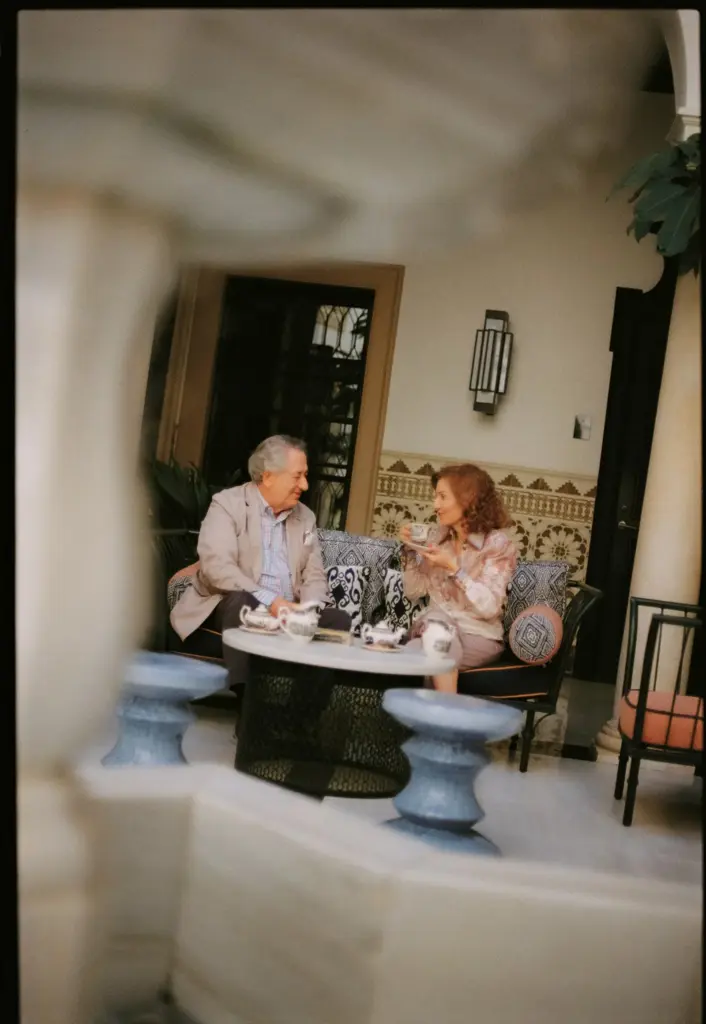
“I fell in love the moment I saw it,” summarizes the protagonist, Gabriela Luksic, recalling that night, at the end of last November, when she held pieces of the historic Sevillian dinnerware for the first time. She told her host, Mar Madrid, while a waiter served them a sherry. Then the waiter intervened: he told them that the company was in liquidation, Luksic changed her expression, and Madrid called Javier Targhetta — her husband and president of Atlantic Copper, one of Europe’s leading metallurgical companies — to get information about that process. Meanwhile, the women delved into the company’s history by asking artificial intelligence. “That’s when I realized the legacy behind it,” says the businesswoman. “I couldn’t buy it, but I encouraged her to do so,” adds Mar Madrid. Two months later, they signed the acquisition of La Cartuja de Sevilla and all its brands for 225,000 euros, in a deal that amounted to around two million euros by assuming debts with Social Security and committing to keep 30 of the 36 workers (the rest were retiring). Luksic and her sister Paola kept 80%, and the Madrid Targhetta couple the remaining 20%. “We are very excited,” say the women, still with sparkle in their eyes after rummaging through the Municipal Historical Archive of Seville and finding old company files and copper plates of the first original prints.
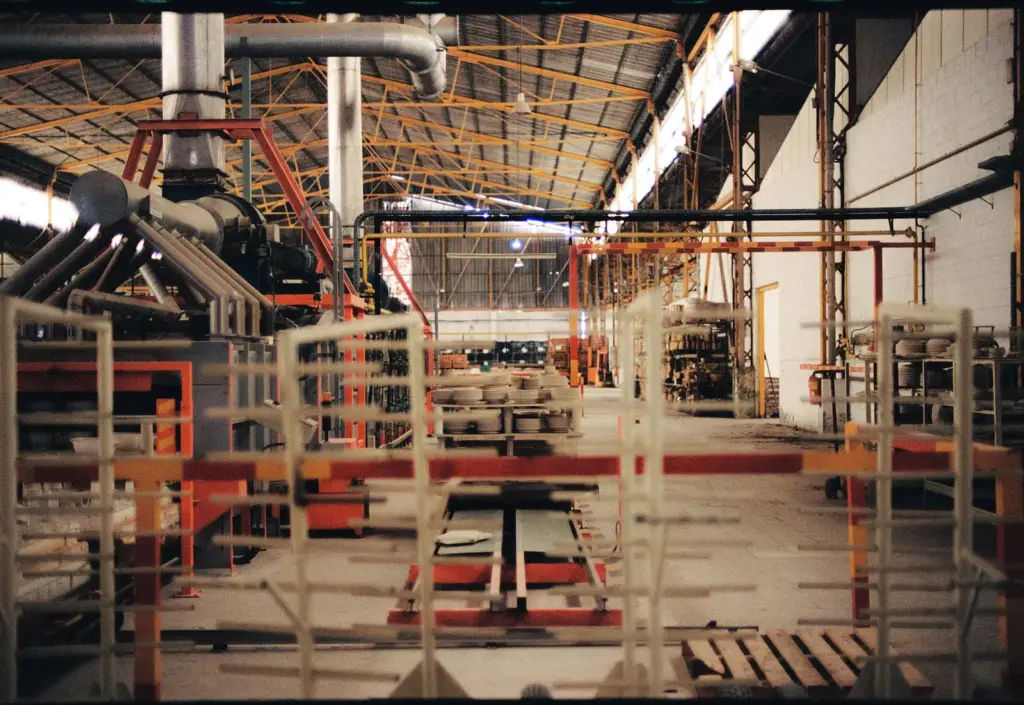
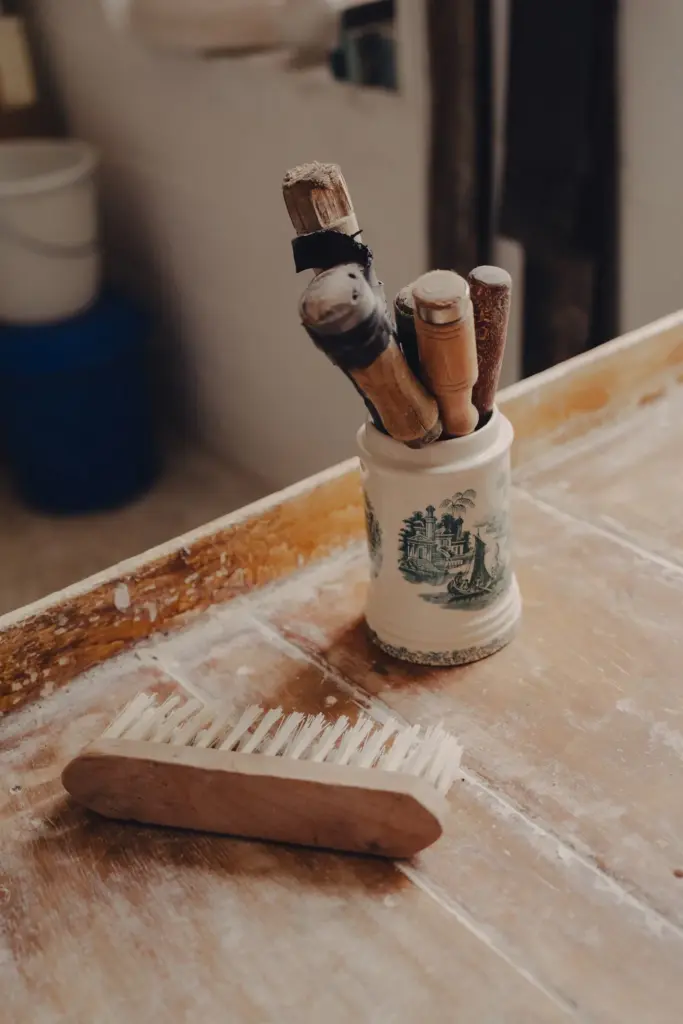
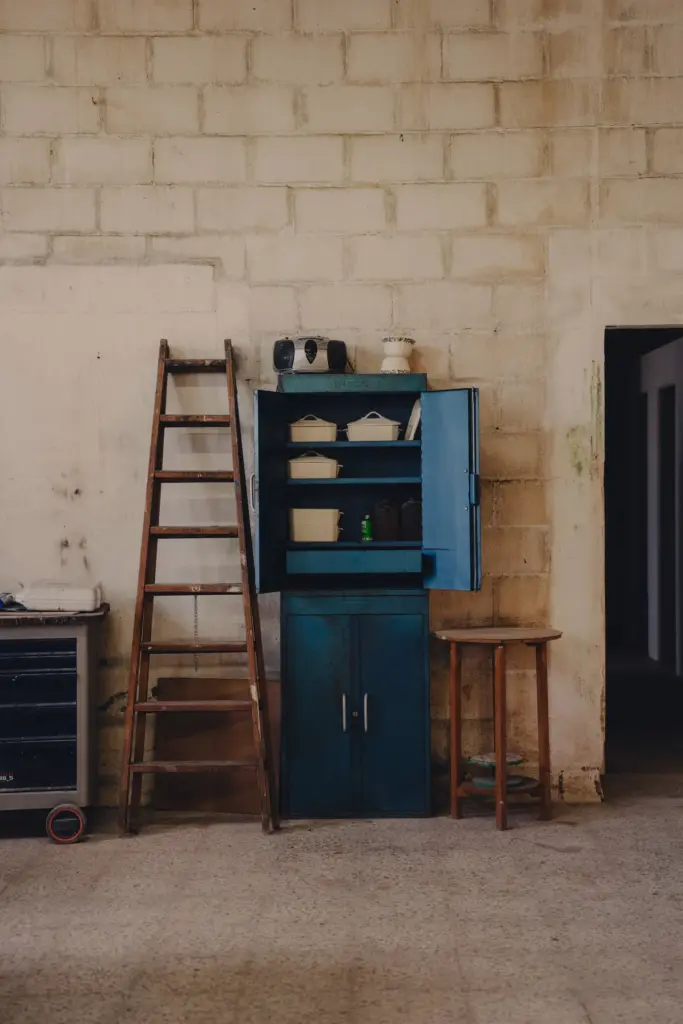
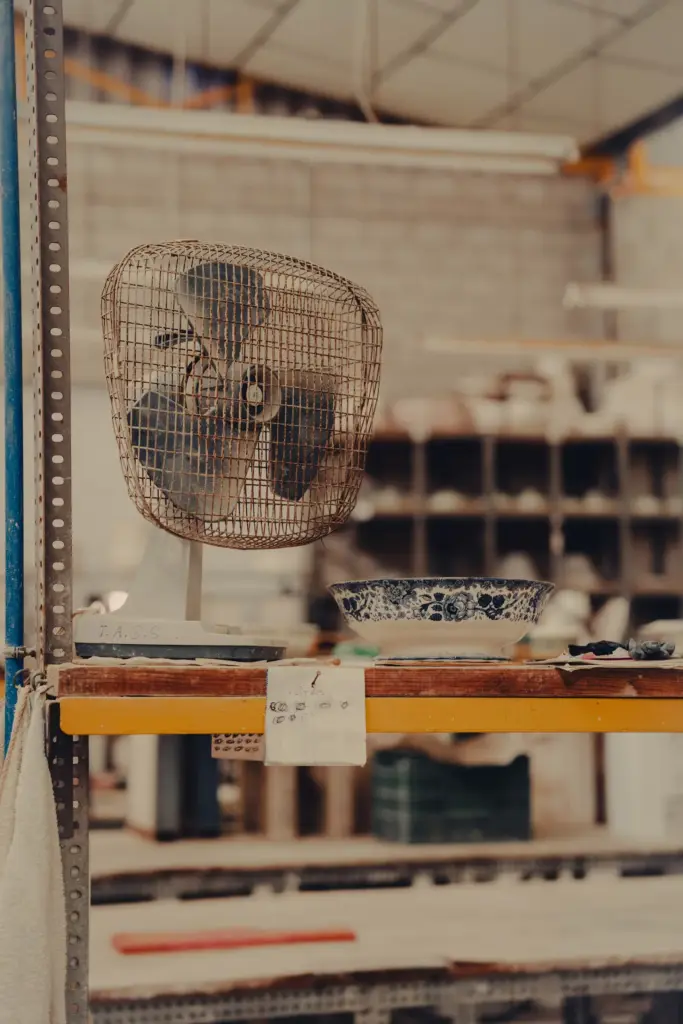
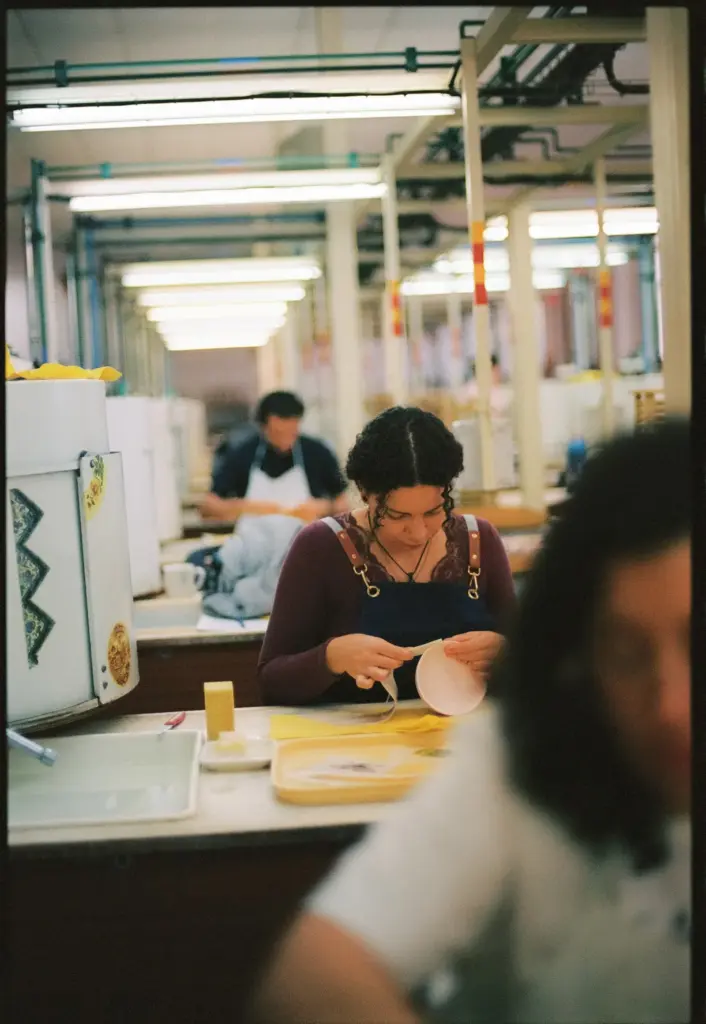
Closed since July 2025, without electricity supply and with a lot of accumulated dust, restarting the factory was not easy, but in early April the staff returned to activity after an ERTE of almost a year. With hardly any maintenance in recent decades, the facilities seem anchored in the eighties. Signs, labels, machinery, lights. Everything has a retro aesthetic closer to a pottery workshop than industrial facilities. This is discovered by following the manufacturing process, which lasts about four days, requires three firings in the kiln, is determined by the two hands of each artisan, and seeks a single goal: perfection. To refine even more, the company has hired the Sevillian industrial engineer Carmen Granja, who left her comfortable position at Flex mattresses to fulfill a dream. “This is a vocation project in which I always wanted to be involved,” says the woman who is smitten with her new job. She shows it with a permanent smile while acting as a guide through the 21,000 square meters of the factory. “The good thing is that it is very big. The bad thing is that it is very big,” points out the new production manager, the Navarrese Sebastián Fernández, still getting used to the gigantic place. Sometimes it seems empty: today only about 30 people work scattered here and there. It was not always like this.
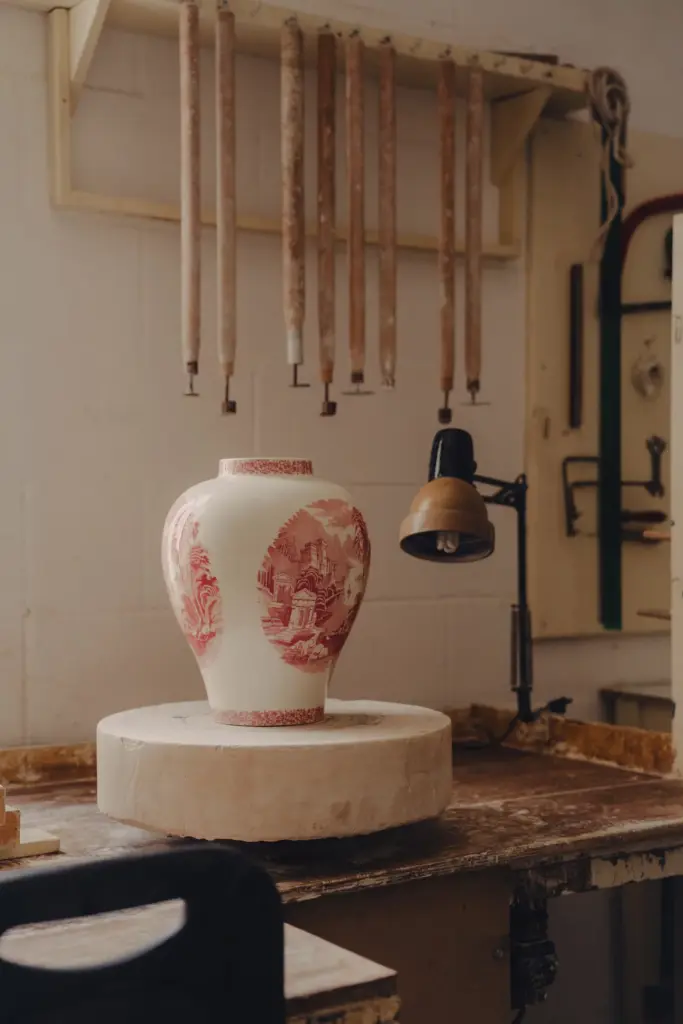
“I have been here since this was really Cartuja Pickman, when we were 300 workers and you always had people around you,” recounts Rosario Llave, 53 years old and known in the pottery world as Chani. The woman from Cádiz has been with the company for almost three decades and plays a fundamental role. She is the matrix maker, the only one who knows the secrets to create a matrix, the origin of the molds. “It is like the sourdough of everything that happens here,” she says. We are in the gigantic room that serves as a plaster library: a treasure that only she knows how to read, made up of more than a thousand original copies, all originals, stored on shelves. Here, 27 dinnerware models are made with 27 different elements each, as well as objects such as candy dishes, champagne buckets, soap dishes, cotton holders, or vases. In the past, lamp holders, sinks, or even virgins were also produced. Options, for now, discarded.
Read more At least 23 dead after a truck crashes into a bus with patients heading to the hospital in Brazil
Everything looks like a bakery. From the earthenware — a mixture of clay, kaolin, and feldspar, among other materials — to the way it dries after passing through the molds, or its name when it is half done: biscuit. And, as in the food industry, although nothing is left to chance, there is also some magic. Every tiny imperfection is eliminated. Andrés Vázquez, born in Bormujos 50 years ago and with 21 years in this company, does this in the early stages of work. For this, he uses a “piece of bent and sharpened sheet metal” which he simply calls iron. Then, with a sponge, he makes the edges “nice and round,” he clarifies with a strong Sevillian accent. It is a repetitive task that he celebrates more than ever. “When the new owners came, I was very surprised. It was the first time I heard a businessman say he wanted to expand the workforce. And I have already seen five pass through here,” he warns. He assures that the fresh air will do the company a lot of good. “This factory cannot be understood without Seville,” he states. Nor Seville without this dinnerware.
After a drying process, the pieces travel to the kiln, where they spend 24 hours at a temperature exceeding 1,100 degrees. It is a huge installation, capable of holding up to 3,500 pieces at once. Then, some pass through the quality laboratory. And all are inspected by Lola Benítez, 50 years old, born in the capital. Her work is thorough. She checks stability, absence of imperfections. And removes defects if any. She uses a stone that sands, a vacuum that removes dust, and an ink that prints with a teacher’s eye to grant its certificate. Then her sister Cristina, 39 years old — here since she was 20 — applies a pink liquid that comes from a centrifuge with the mission of sealing the pores of the earthenware.
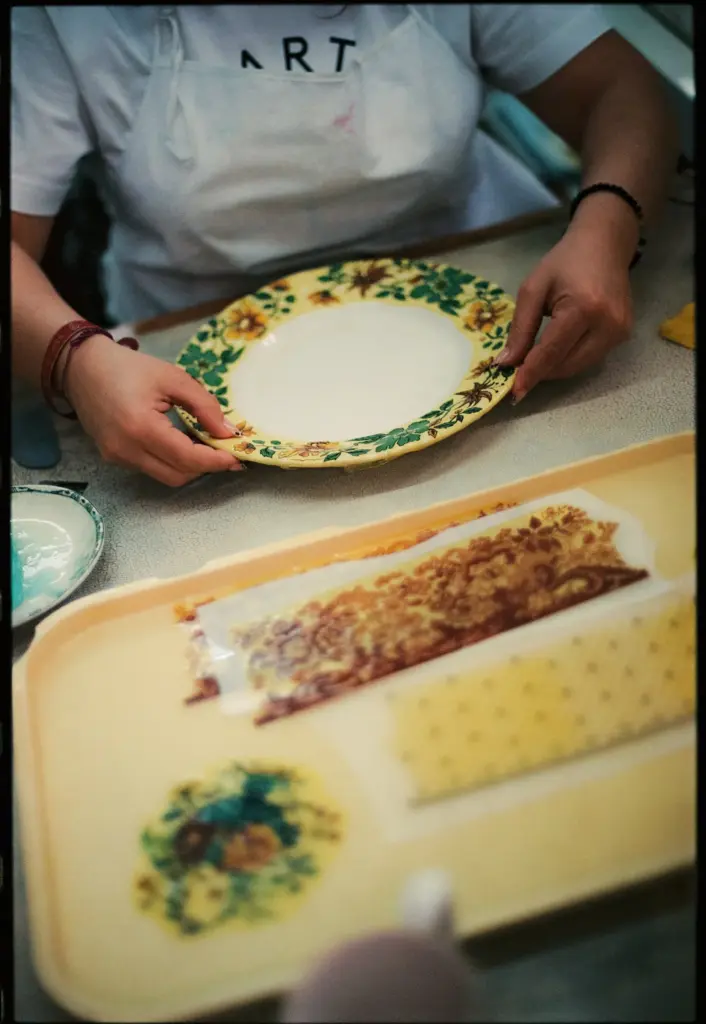
A few meters away — quite a few, everything here is far — Virginia González, 35 years old, from Dos Hermanas, sighs before explaining her work. She tries to be technical and ends up making it simple. “It’s like applying decals,” she summarizes. That is literally her job. The prints on each plate, cup, and platter are applied like vinyls to glass. It is a delicate task. Everything must be in its place because, after a second firing of seven hours, the designs are permanently printed on the earthenware. Then a neighbor from Pino Montano, Juan Martínez, 44 years old, half of his life in this job — where he followed in his mother’s footsteps, 33 years in an office — applies the varnish. Finally, the youngest on the staff, Sergio Contreras, 23 years old, fills three small wagons with the dinnerware, pushes them with strength and precision along tracks similar to a train so they can be reheated. The last journey is to the warehouse, with a small stop at the laboratory to subject part of the collection to high-pressure washing and check for cracks.
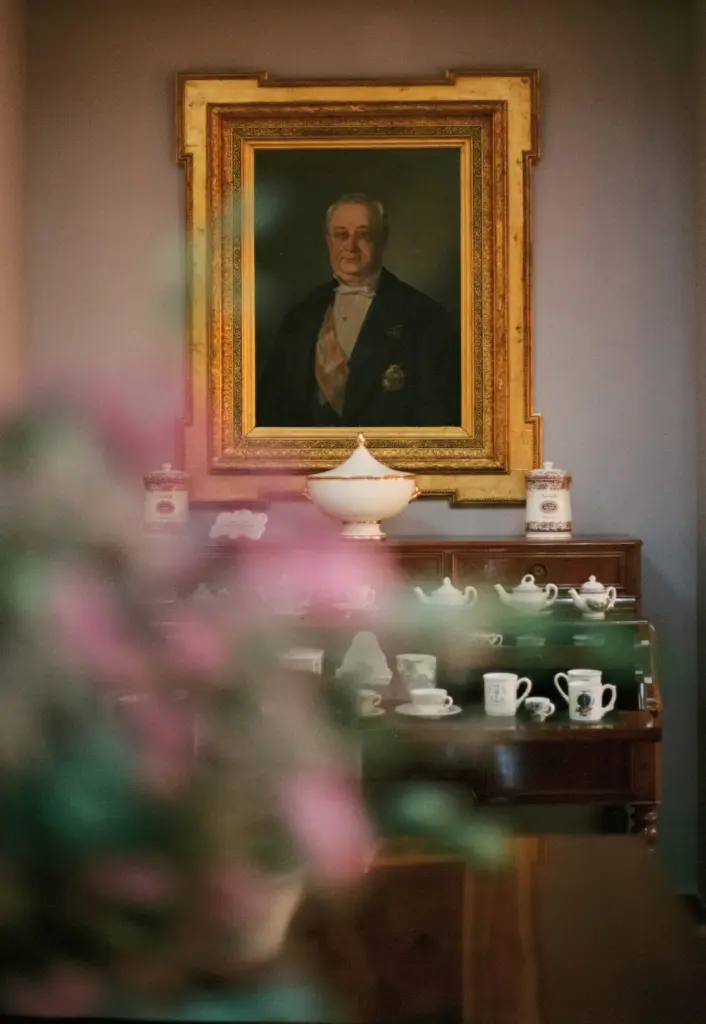
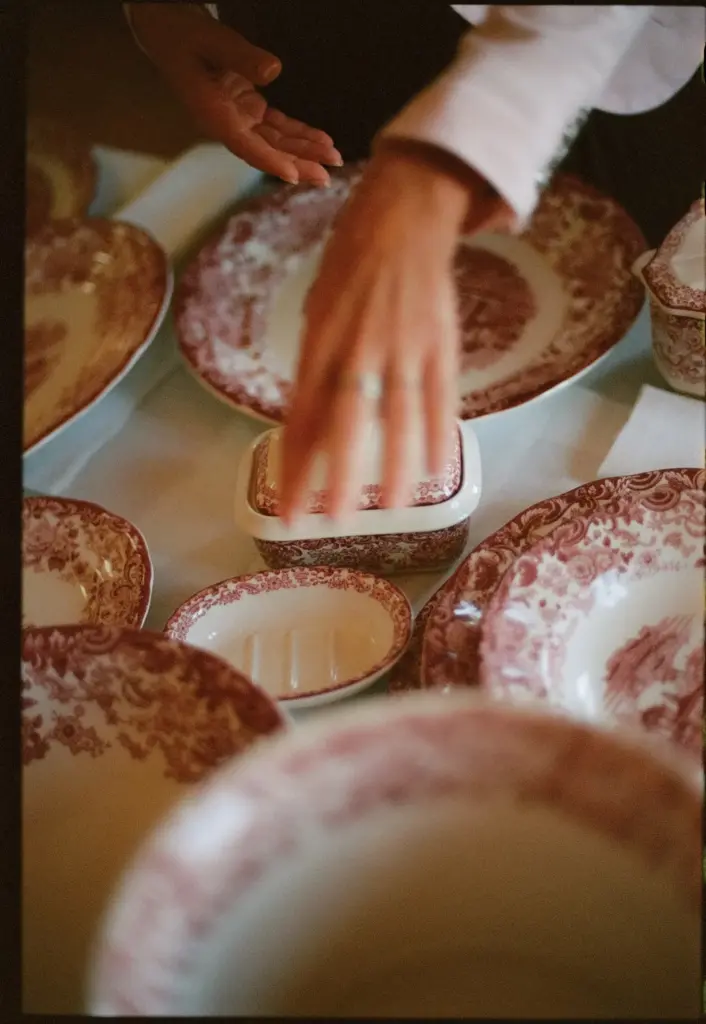
The first batch under the new owners was made in early May. It is the one ICON was able to see and focuses on the firm’s most characteristic designs: the pink, black, and Ceylon blue dinnerware, the three best sellers in its history and widely recognizable for their soft landscapes and floral motifs. They are part of the 15 models to be produced initially. “We will gradually incorporate the rest of the products,” says the general manager already in the administration area and under a canvas of the company’s founder. In the warehouse, Carmen Granja reviews the most classic models — called Aurora, Ochavada, and Imperio — but also shows examples of plain pieces, with repetitive elements like a fleur-de-lis or the colorful flowers of the so-called Bellavista.
It is surprising to see one with a modern look and tropical chromaticism. It is called Geórgica, inspired by the Kennedys and designed by illustrator Carmen García Huerta as part of a series of collaborations launched shortly before the pandemic, which included names like Yukiko Kitahara, Ana Jarén, Isaac Piñeiro, or the studio of Aaron Stewart and Fernando Rodríguez. “We want to continue combining tradition and iconic designs with innovation,” concludes Targhetta, who plans to quadruple production by the end of 2027 and maintain four sales channels: department stores, small own or third-party shops, hotels and restaurants, and online sales. “Everything is yet to be done,” adds Gabriela Luksic with the same enthusiasm that, possibly, Charles Pickman put into this legendary factory when he opened its doors almost 200 years ago.
Read more Trump proclaims «the greatest economic war» against Iran