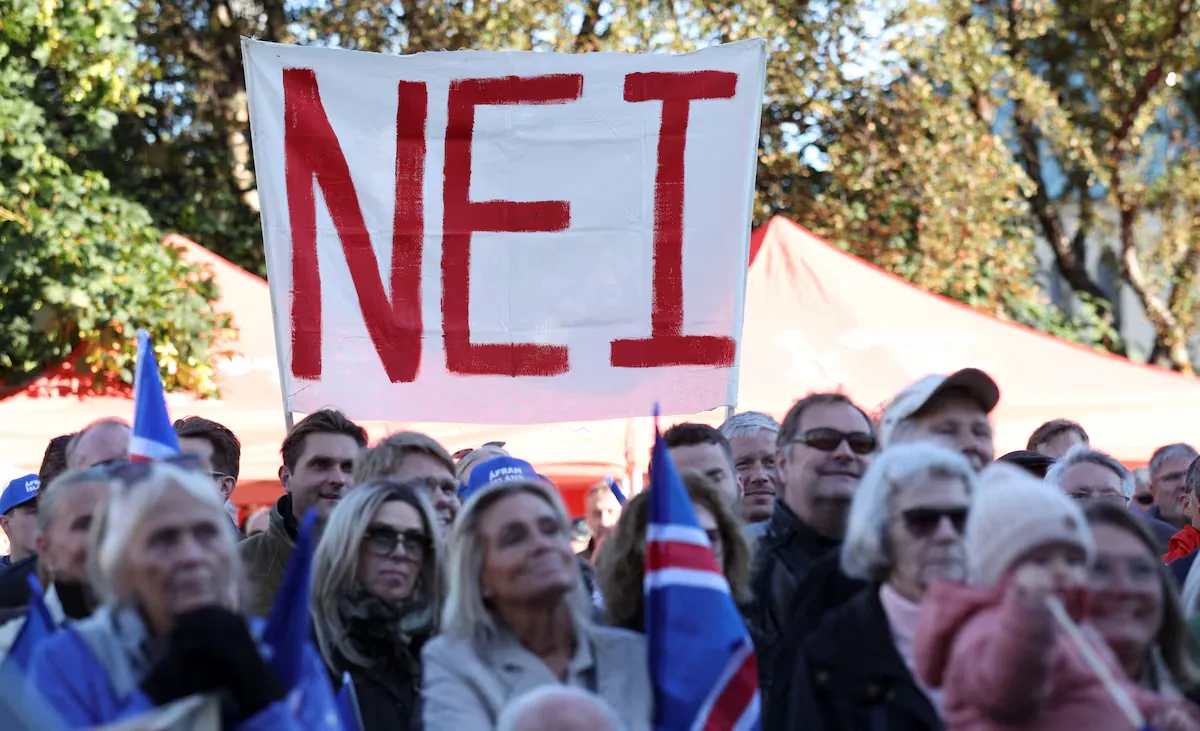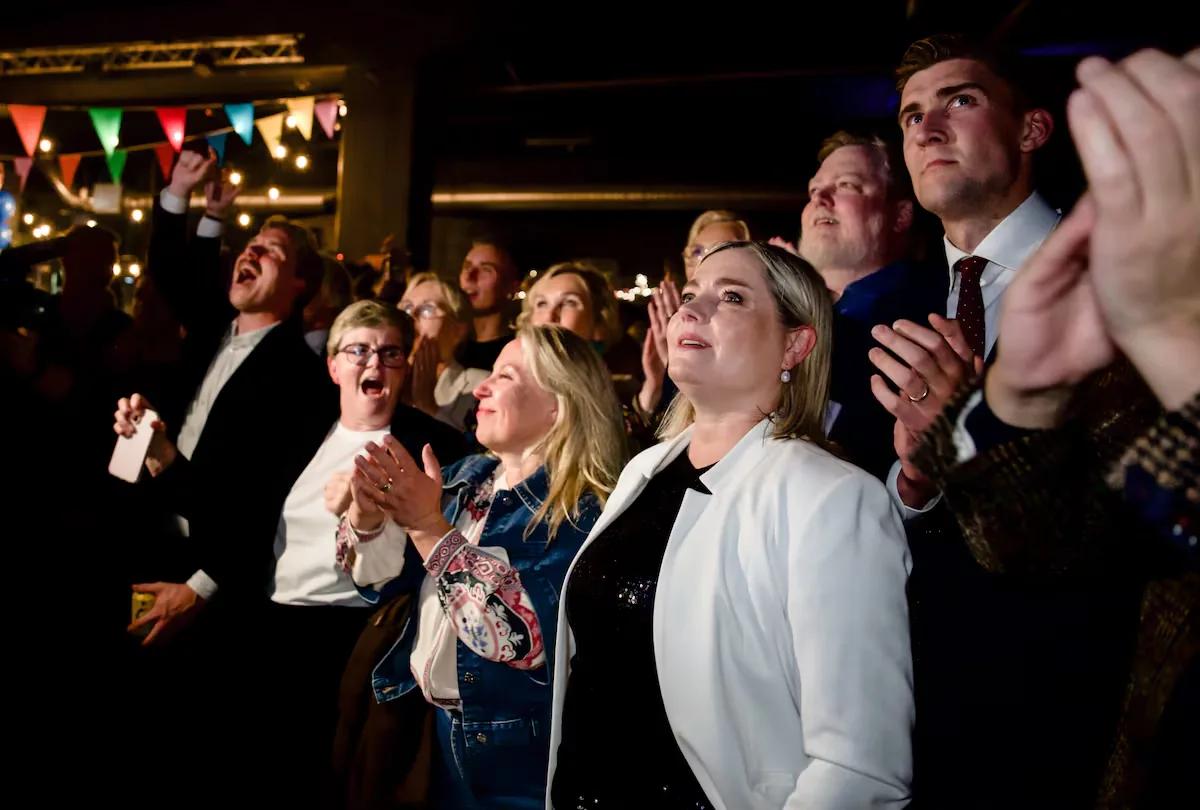
After a nail-biting count, the population of Iceland has rejected its accession to the European Union. 52.8% of voters expressed themselves in Saturday’s referendum against reopening negotiations with Brussels, suspended for more than a decade. The result is a severe setback for the community bloc, which aimed to incorporate a new net contributor, as well as strengthen its presence in the Arctic, a region of growing geopolitical interest.
Read more At least one dead and five injured in a shooting during a rave in northern Switzerland
A favorable result would not have guaranteed Iceland’s accession to the community club, but only the start of a process to negotiate the terms of a possible integration. Once an agreement was reached, the Icelandic citizens would have voted in a second referendum. The victory of the no stops the possibility of Iceland becoming the 28th member of the EU dead in its tracks.
Although polls gave the pro-European side an advantage for months, the final stretch overturned expectations. After a campaign dominated by the cost of living, national sovereignty, and fishing rights, opponents of accession gained ground in the last days, as anticipated by the last survey, published on Friday, which for the first time put the no in the lead. The count has confirmed this change of course: the majority of Icelanders reject even sitting down to negotiate with Brussels.
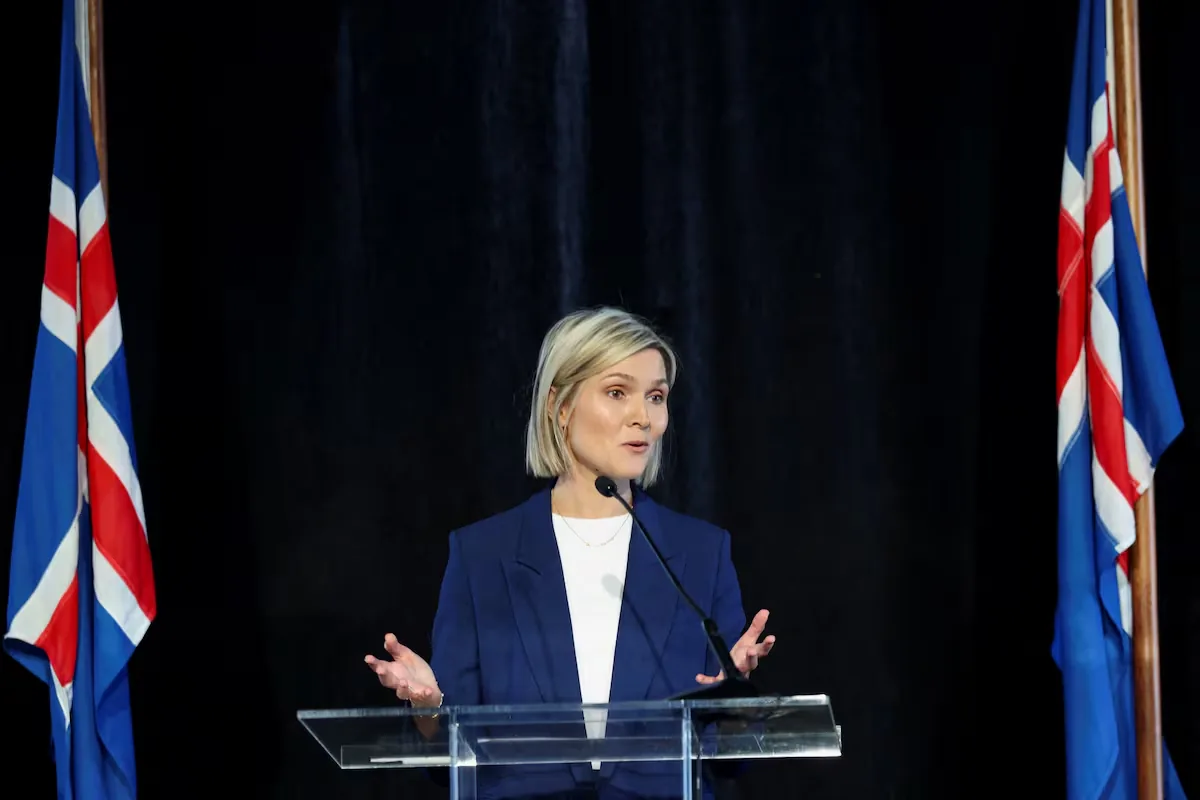
After coming to power less than two years ago, the center-left government led by social democrat Kristrún Frostadóttir announced its intention to hold a referendum in 2027. However, Donald Trump’s threats over Greenland — located just 300 kilometers away — led the prime minister to accelerate plans and call the consultation earlier than expected. Frostadóttir argued that Iceland, a founding member of NATO but without its own army and with only 400,000 inhabitants, faced growing vulnerability that required tightening ties immediately with the European bloc.
Despite Trump confusing Iceland up to four times when talking about his plans for Greenland, and the US ambassador in Reykjavik, William Long, even calling the island the “future 52nd state,” security has not been a predominant issue during the election campaign. The debate has focused much more on the economy and Icelandic fishing grounds.
With inflation above 5% and interest rates at 8%, Iceland displaced Switzerland a few months ago as the most expensive country in the world, according to Viska, the main Icelandic union. Faced with the volatility of the Icelandic krona, supporters of accession argued that a possible adoption of the euro would reduce the costs of loans and mortgages. Gudrun Hafsteinsdóttir, leader of the Independence Party, the main opposition force, reiterated in recent weeks that integration into the EU would not ease these problems, and that Icelandic politicians were the only ones capable of solving them.
The other major pillar of rejection has been the protection of fishing, a strategic sector that generates 40% of exports and represents around 7% of the country’s GDP. The fear of subjecting its valuable fishing grounds to the common fisheries policy gave wings to the eurosceptic campaign. Although Frostadóttir’s government set resource management, quota distribution, and restrictions on foreign ownership as non-negotiable red lines, and despite commissioners Costas Kadis (Fisheries) and Marta Kos (Enlargement) promising flexibility in this regard, the public has opted to safeguard exclusive control of its waters.
Read more Dani Bensky, Epstein survivor: “The United States has failed miserably in this case”
Despite the referendum result, Iceland will remain one of the EU’s closest partners. The country — which already began accession talks in 2009 after the collapse of its banking system, before a eurosceptic government froze them in 2013 — is part of the Schengen area and, along with Norway and Liechtenstein, forms the European Economic Area. Therefore, it has full access to the single market but is also obliged to adopt much of the community legislation without having decision-making power in its drafting.
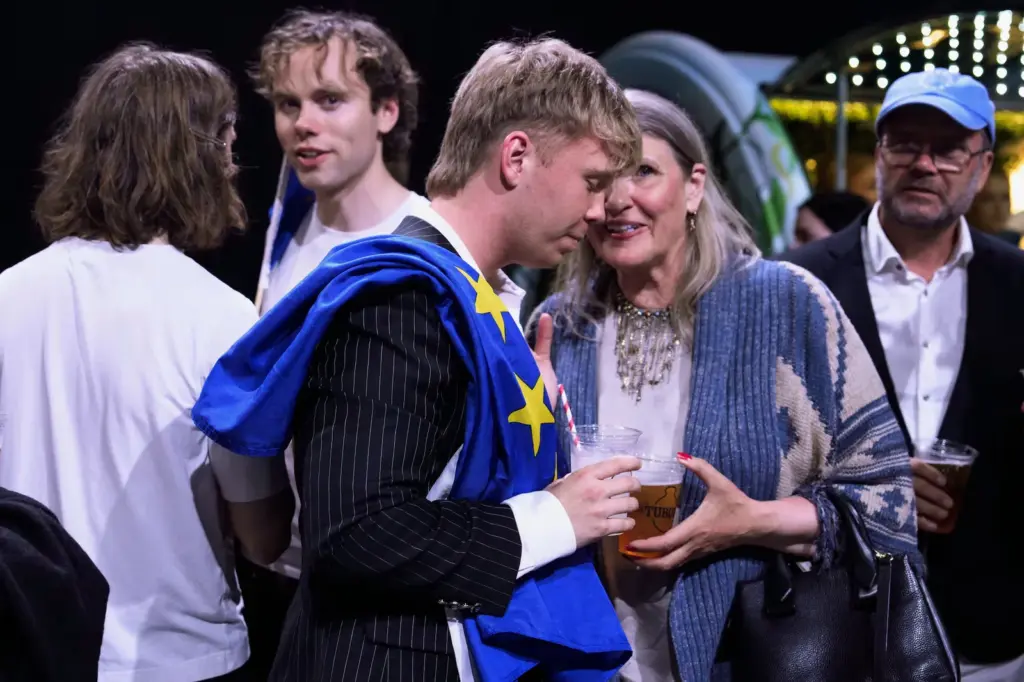
The consultation also had a strategic dimension of depth. In recent years, the Arctic has become an increasingly contested arena due to melting ice, the opening of new maritime routes, and the struggle for its natural resources. For the EU, incorporating Iceland would have significantly strengthened its position in a region where powers such as the United States, Russia, and China compete to expand their influence.
As the polls anticipated, the pro-European option only won in Reykjavik, and did so by a smaller margin than expected (56% of the votes). Both in the capital’s periphery and in the rest of the country’s regions, the majority of citizens chose to close the door to Brussels even before sitting down to negotiate.
Although supporters of dialogue with the EU led almost the entire count, the trend reversed in the final stretch of the tally, which lasted nearly 12 hours. Ballots from some remote localities were transported to counting centers by road, boat, or plane.
Had the Frostadóttir government’s intention succeeded, Iceland would have become the first member to join the EU since Croatia did in 2013, as well as the only net contributor to join the Union since 1995, when Sweden, Finland, and Austria did.