







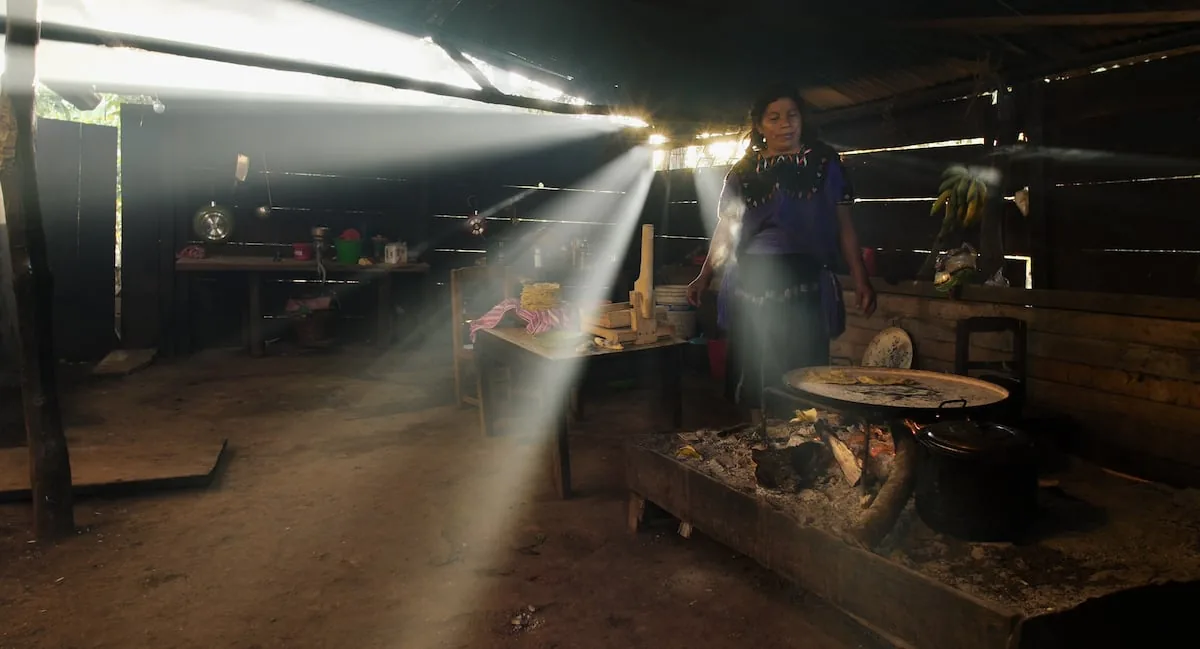
Cinema was liberating for Ana Ts’uyeb. Not only because it allowed her to tell the story of resistance, resilience, and rebirth of three generations of Tsotsil women facing patriarchal violence and the normalized practices of “usos y costumbres” in Chiapas, but also because she, thanks to her mother and the Zapatista uprising, was able to break these cultural stereotypes and return to her community as a filmmaker, almost two decades later, to document that story from her experience, territory, worldview, and in her own language. Li Cham (I died, in Tsotsil) is her feature debut, now in theaters in Mexico. It is the latest production from a representative of the country’s indigenous peoples, one of the many voices that have taken cinema as a tool to tell their stories and seek to overcome obstacles to reach a wide audience.
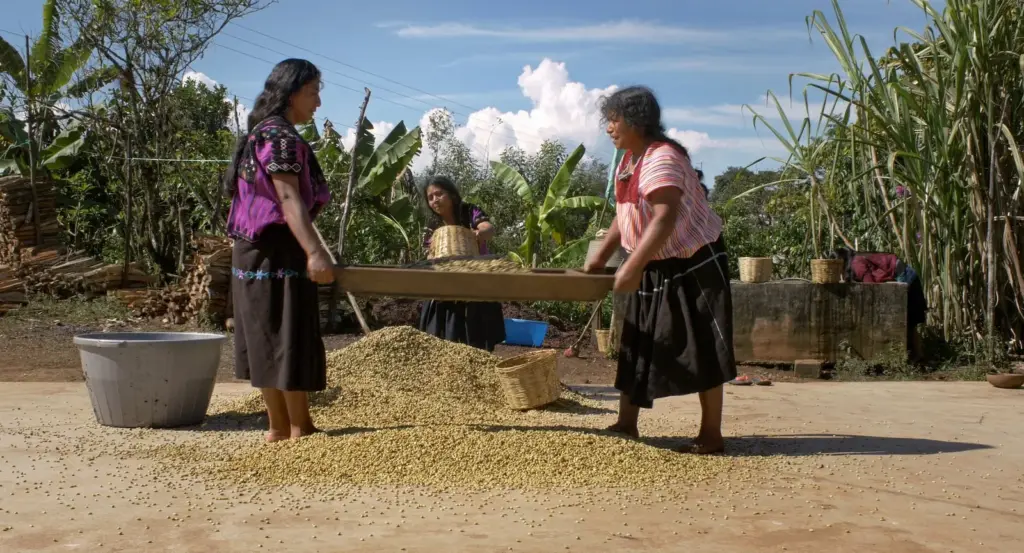
Ts’uyeb, 29 years old and originally from Naranjatic Alto – a Maya-Tsotsil community – says the idea arose in 2018 during her journalism internship, in which she conducted research for a written report about its three protagonists. Juana, Margarita, and Faustin, who after losing the lives of their babies and relatives due to patriarchal violence, some of them die. With the arrival of Zapatismo in the early nineties, their dreams bloom again and they defend the most valuable thing they have: their land and a life with independence and hope.
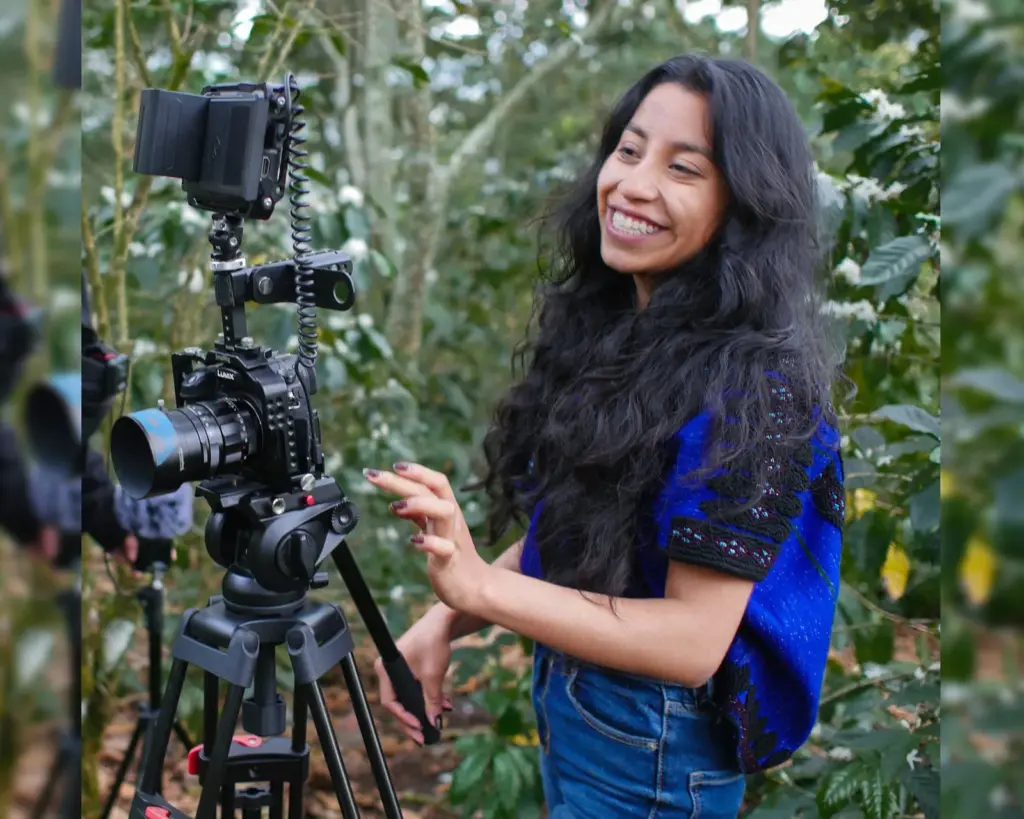
The director left her community at 15 years old. She recalls that since she was a child she already questioned these usos y costumbres of her community, which established that because they were born women they had no right to land ownership and could not aspire to any dream outside their community. “They were taught that because we were born women we had to take care of men and get married to serve from the age of 15,” Ts’uyeb says via video call.
The emergence of the Zapatista Army of National Liberation (EZLN) more than 30 years ago in Chiapas brought with it for women, in the insurgent and guerrilla life, the need to fight for equity and against machismo and subjugation. “If we were able to leave, it was because my mom defended that right that belongs to us. Thanks to Zapatismo she was able to gain strength to change things,” she adds.
Cinema as a tool
The director began her film training through a diploma at the Escuela Diversa de Cine Indígena in Chile, where, she says, they gave her a stance to seek her own narrative and be able to build it consciously. “Our identity and image have been narrated from an external perspective that often tends to generalize our context. It stigmatizes it, folklorizes it, and we never feel identified or represented. Cinema as a tool is very important because it makes this difference that speaks about us from philosophy, worldview, language, and music,” she relates.
The Stimulus for Audiovisual Creation in Mexico and Central America for Indigenous and Afro-descendant Communities (ECAMC), created in 2019 and promoted by the Secretariat of Culture and the Mexican Institute of Cinematography (IMCINE), has supported the creation of multiple short and feature films by indigenous filmmakers. Li Cham, as well as 118 other projects in these seven years, has been one of the beneficiaries.
Mariana Linares, regional liaison director of IMCINE, reveals that since ECAMC started, 25 projects have been completed. She says the stimulus is a decades-long community cinema effort in Mexico. She celebrates that for the first time in 10 years, as announced last December, the amounts of the Fiscal Stimulus for Investment Projects for National Cinematographic Production and Distribution (EFICINE) increased by 115 million pesos, or 16.43%. With this increase, the fund reached 815 million pesos, which also benefits cinema made by indigenous peoples with 11 million 800,000 pesos from this administration.
According to this year’s ECAMC call, in this eighth edition 19 projects were selected out of 57 registered, coming from indigenous peoples such as the Conca’ac, Zapotec, Wirrárika, among others.
“We are very happy that the amounts [for ECAMC] were also increased, because that reflects that indigenous peoples are also making more complex productions, that more technological equipment is required, that more personal equipment is needed, also people involved in those productions. What excites me most about indigenous and Afro-descendant cinema is that it is absolutely innovative and imaginative. It covers all genres. The diversity that is being generated is very surprising and evident,” Linares says via phone call.
Part of festivals and competition
There are various voices that consider that indigenous peoples’ cinema is beginning to come out of museums and academic spaces. Now they are not only shown at national and international festivals but also win them beyond the limiting categories of indigenous cinema.
Read more Colombia’s presidential campaign falls into showmanship
“Now we manage to be in competition sections. That has been so important because it is a way to recognize that our cinema has the same quality as any other,” says Eritrean-Mexican filmmaker Medhin Tewolde, who toured more than a dozen festivals and won the same number of awards with Negra (2020), her first feature documentary.
A clear example of this trend is Mixe Oaxacan filmmaker Yovegami Ascona, who with his feature debut, Boca vieja, has participated in two of the most important film events in Mexico. His documentary was made in 2025 with the Honorable Mention, Audience Award, and Young Jury Award at the Guadalajara International Film Festival (FICG) and also was part of the nonfiction competition in Morelia (FICM) that same year.
Another filmmaker who stepped on the FICM before her most recent film had its commercial premiere in early 2026 was Yolanda Cruz. The director, originally from a Chatina community in San Juan Quiahije, Oaxaca, presented La raya – beneficiary of ECAMC – which addresses migration and traditions in that state with a tone of comedy and magical realism.
Tewolde says this openness is also part of a struggle that other filmmakers like María Sojob, of Tsotsil origin, have been building, and the multiple awards she won with Tote (Grandfather) since its premiere in 2019. She also mentions Ángeles Cruz, the Mixtec filmmaker who has stood out for highlighting the perspectives of indigenous peoples, domestic violence, and sexual diversity in contemporary Mexican cinema.
Ts’uyeb has also paved that path. In 2024 she won the Best Mexican Documentary Feature award at FICM with Li Cham. “It is relatively recent that these productions, from indigenous and Afro-descendant peoples in Mexico, are considered in the more conventional circuits, such as important festivals. For example, Ana’s film is the first Tsotsil film to premiere at Cinépolis [one of the largest chains in Mexico], in a commercial theater, and that is a very important achievement,” adds Teowolde.
Edgar Apanco, film industry analyst, says it is always an uphill battle for this type of production, even if they manage to premiere in theaters. The specialist states that these productions are “invisible” because ComScore, an international company that measures box office revenue, does not take into account the income from alternative, cultural theaters, spaces like film libraries, so it shows smaller numbers that influence the permanence in theaters of this type of production or more independent ones.
This should change with the new Federal Film and Audiovisual Law, approved last April, guaranteeing a minimum of 10% screen time for Mexican cinema and new obligations for streaming platforms. Apanco states that Mexican cinema, in general, needs to do better marketing work to reach audiences. He says one of the most outstanding and recent cases where a “very smart” strategy was made for its distribution was with the film Nudo mixteco (2021), by Ángeles Cruz.
“The film found its audience in film libraries and also in alternative spaces, local exhibition forums. That is, the film did reach communities in the Mixtec Sierra. That was a very successful strategy,” Apanco concludes.
Read more Meat on the grill