
Iran announced this Thursday that it is easing restrictions in the Strait of Hormuz and has begun allowing tankers destined for Asian markets to pass through. The measure primarily benefits China, but also Japan. The decision coincides with the visit of US President Donald Trump to Beijing to meet with his counterpart, Xi Jinping. Both agreed on the need for the strait that connects the Persian Gulf with the Indian Ocean, through which before the war a fifth of the world’s hydrocarbons were exported to international markets, to be “open” to the free transit of energy products.
The news agencies Tasnim and Fars, both close to the Iranian Revolutionary Guard — whose Navy controls the strait — reported this Thursday that Iranian authorities began allowing Chinese vessels to pass from Wednesday afternoon following a request from the Chinese Ministry of Foreign Affairs and the Beijing embassy in Tehran.
According to these two agencies, up to 30 vessels crossed the Strait of Hormuz between Wednesday night and Thursday afternoon “with Iran’s permission.” This figure is difficult to verify, as many of these vessels turn off the transponder that broadcasts their position to the Automatic Identification System (AIS) or falsify their signal. On Wednesday alone, maritime intelligence company Windward detected the departure of at least seven vessels (three cargo ships, two tankers, and two butane carriers) heading towards the Gulf of Oman and the entry of at least four others, two of them tankers, heading towards the Persian Gulf. All of them used the corridor designated by the Iranian Revolutionary Guard, located north of the international transit route used before the war that runs through Omani waters.
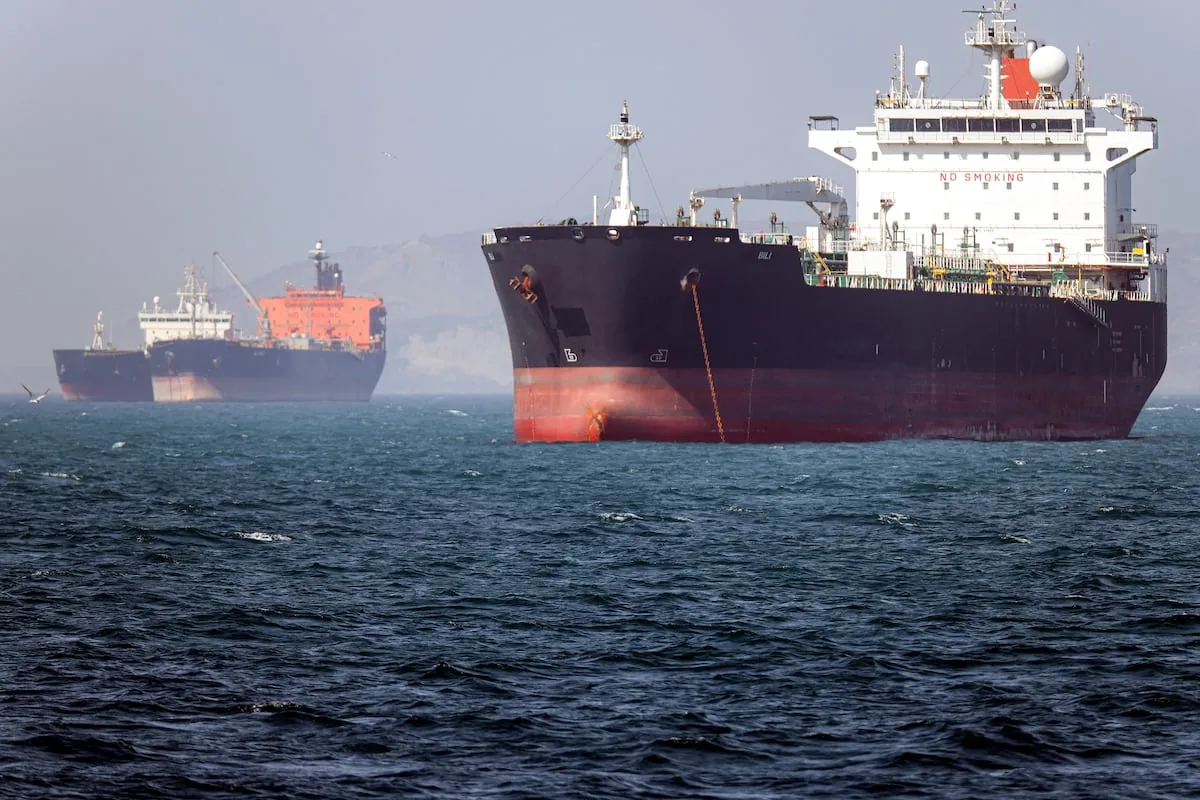
One of the vessels that left the strait is the supertanker Yuan Hua Hu, from the Chinese state shipping company COSCO, which loaded two million barrels of crude oil in Basra (Iraq) in early March and had remained in the Persian Gulf since then.
According to data from the ship tracking platform Marinetraffic, the Yuan Hua Hu is sailing through the Indian Ocean towards the Chinese port of Zhoushan and by Thursday afternoon had also passed the Gulf of Oman area, where the US Navy maintains its own naval blockade.
A car carrier, the Xiang Jian Kou, has also passed the dual Iranian-American blockade and is sailing in open sea broadcasting via AIS the message “Chinese ship and crew,” a method to avoid boarding. Other tankers that have crossed in recent hours loaded with crude oil and natural gas are not directly linked to China but, according to Windward, most are believed to be heading to Chinese ports.
Another supertanker, the Eneos Endeavor, has crossed the strait and is heading to the Japanese port of Kiire loaded with Kuwaiti crude. It is the second vessel of this type bound for Japan to manage to get through the blockade since the start of the war.
The Iranian agency Tasnim defended that this measure does not constitute a breach of the strait’s blockade and remains in line with the policy of allowing passage to vessels from “non-adversary” countries decreed by Tehran. In any case, this measure has been applied unevenly, as Revolutionary Guard patrol boats have even attacked vessels from states not hostile to Iran.
The result has been that most shipping companies have not wanted to risk their ships, and traffic through the strait, which ranged between 120 and 140 vessels daily in both directions before the war, has fallen to about 10-12. Many have also chosen to use position concealment tactics — mandatory under normal conditions — to avoid attacks or boardings by Iranian or US vessels.
“This action, based on Iran’s internal protocols, neutralizes any political exploitation that could be made to exert external pressure and strengthens Tehran’s smart management position over this vital route,” Tasnim states. In fact, in another of its publications, it quotes Iranian Vice President Mohamed Reza Aref, who said his country “will not leave” the strait “under any circumstances.” “The Strait of Hormuz is ours; it has been our property, only that for a time we have not made good use of it,” he said defiantly.