




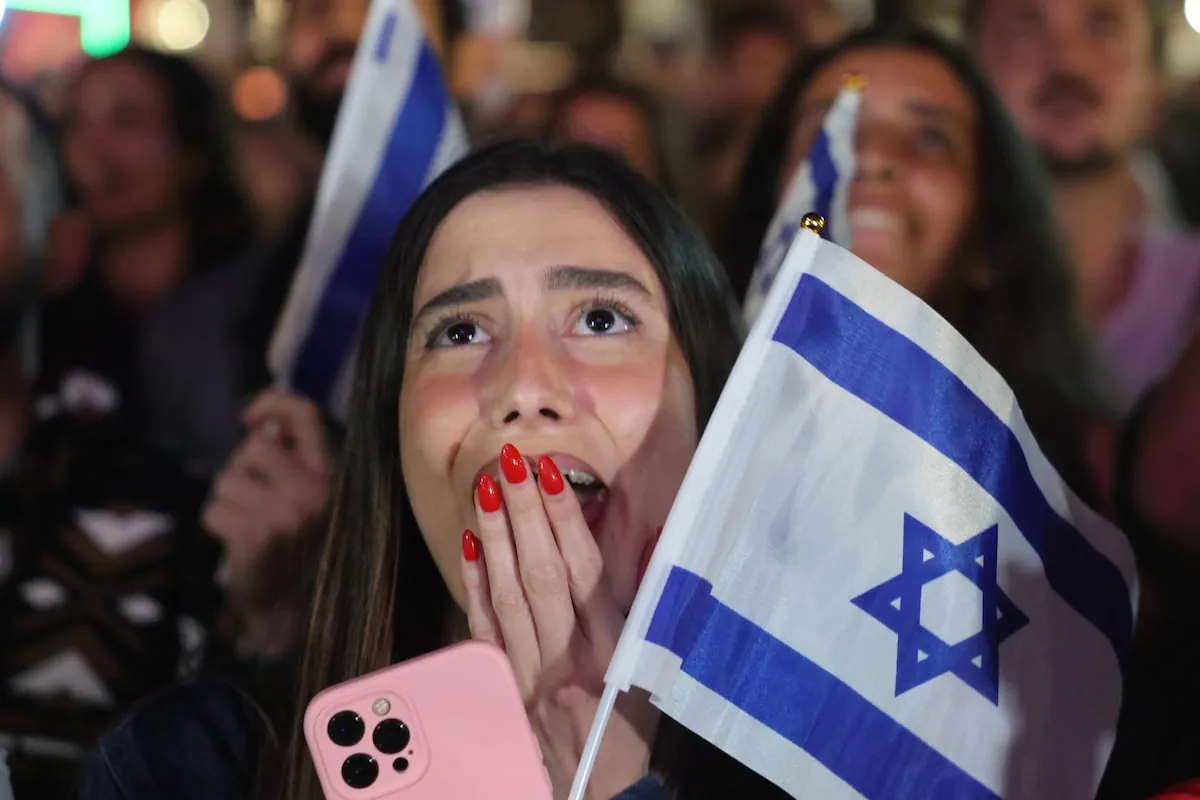
Hundreds of Israelis arrive, without much optimism, at the crucial moment of the Eurovision final. They have been following it for almost four hours on four giant screens that the Tel Aviv City Council has installed ad hoc next to the beach, outdoors. It is almost two in the morning and only the most motivated remain in a country that seeks in each contest to convey the image in which it likes to recognize itself in the mirror and that others do too: one more among others. The presenters are about to reveal the result of the public vote, their great asset to overcome the eighth place to which the jury has relegated them. Silence falls. Some cover their mouths with their hands in a sign of nervousness and others hold hands. The verdict (220 points, only less than Romania) lifts them to the top of the table and euphoria breaks out in Tel Aviv.
Read more Foldable, stackable, and ventilated: the shoe organizer that fits any space
A group waves the national flag while starting to sing “Eretz Israel!” (The Land of Israel). Many of those who were sitting watching the contest stand up and approach a giant screen. The shouts of enthusiasm grow as competitors fall. “Come on, Israel!” says one. “It’s yours, Noam [Bettan, the country’s representative], it’s yours!” shouts another. Victory is within reach.
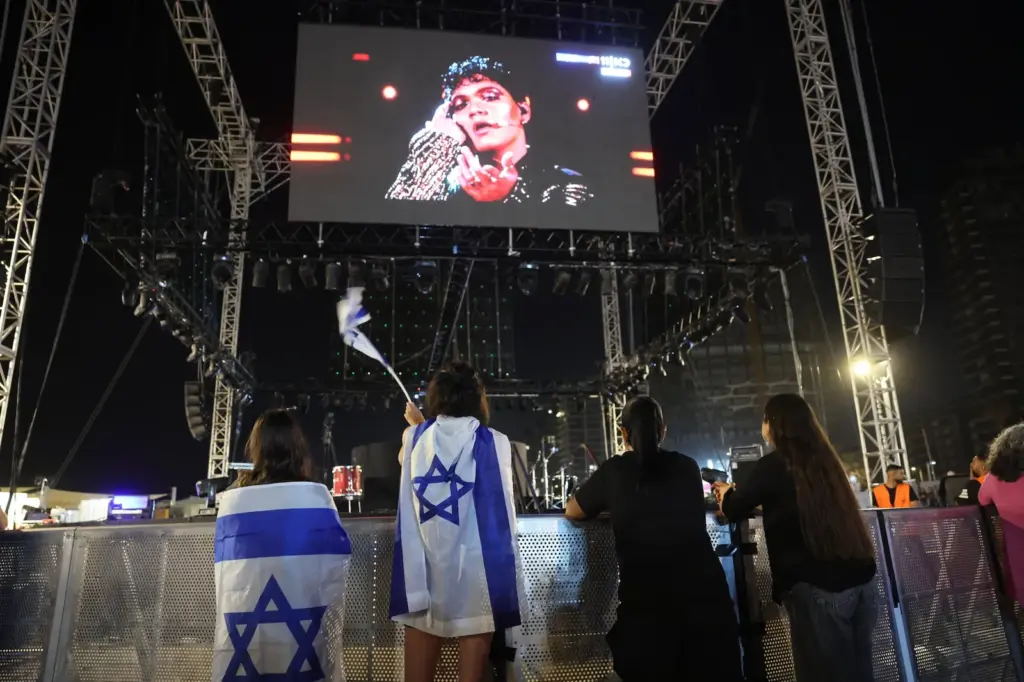
Only Bulgaria remains, the jury’s favorite. The arrow that suspensefully marks the points given by the public stops before matching Israel’s score and those gathered in front of the screen almost burst with joy. A second later, they realize it was not the end and discouragement spreads. Bulgaria ends up obtaining 312 points, wins, and Tel Aviv goes in 20 seconds from savoring Israel’s fifth victory in Eurovision (and precisely in such a controversial edition) to finishing in second place.
A woman starts crying. “It was ours, it was ours…” she says to her son, who comforts her. Another throws himself to the ground while cursing. Most, however, put the blow into perspective and start chanting the country’s name and the song it competed with again, Michelle.
Eli Izon, 26 years old, is among those who were not disappointed. “It’s not bad to be second. With all the antisemitism in the world and all the countries we can’t travel to, it warms the heart to see that there are still so many who love us,” he says, ignoring the controversy around the voting, including a warning from the contest’s executive director, Martin Green, about the ads in which Bettan asked for the 10 possible votes.
Sivan, a year younger, is also happy with the final result, two places above the forecast. On one hand, she says, because Tel Aviv will not host the contest in 2027 and organizing it “is very expensive.” On the other, because it shows that her country continues to receive notable support worldwide, even when five countries (including Spain) have boycotted precisely because of Israel’s participation, in a gesture that — she adds — is “indifferent” to her. “Almost better even. Let them stay there. It’s not like those who boycott us are doing very well musically either,” she concludes.
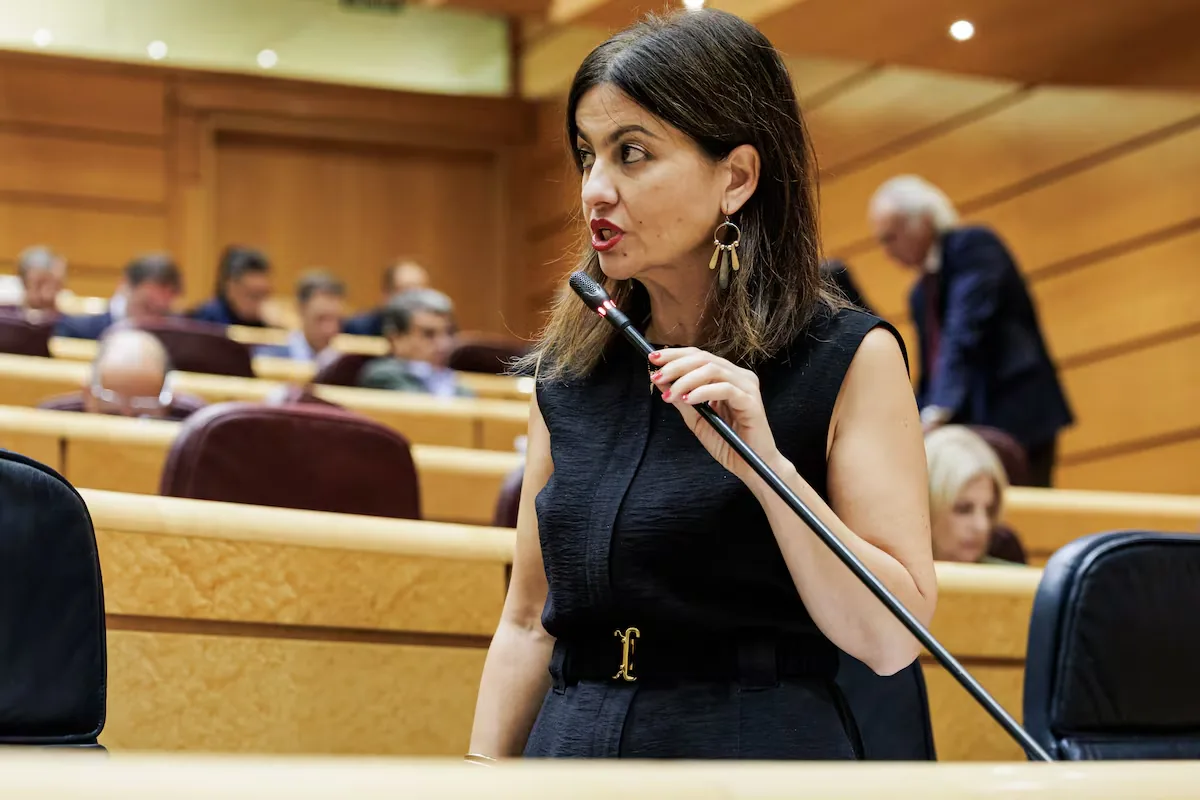
Here, this Saturday, no one wanted to mix Eurovision with politics, but there was a lot of the latter. Israel has attended previous editions presenting itself as a country of coexistence (with the Jewish Noa and the Arab Mira Awad singing together for peace in 2009) or open and modern, with Dana International as the first trans participant — in 1998 with Viva la Diva — and Netta Barzilai and her feminist Toy, in 2018. These are its last two victories in the festival.
Much at stake
This 2026, there was also much at stake and it was palpable, in the atmosphere and in the comments of the public television presenters. After almost three years of perpetual war and invasions in Gaza, Lebanon, and Syria, Israel is the reason the edition has 25 participants (the lowest number since 2004), and some, like Spain, do not even broadcast it.
The supposedly absent politics soon appear. The contest opens with Denmark’s representative, Søren Torpegaard Lund, and one of the Israeli public television presenters recalls that he shared on Instagram a photo of a laptop with a sticker saying: “FCK HMS (Fuck Hamas).” “Since then, he’s our friend,” he adds. The audience in Tel Aviv applauds.
Israel performs third, so the euphoria arrives shortly after. Noam Bettan is about to perform Michelle and an Israeli television presenter celebrates the image in “the year in which there has been the greatest effort to exclude Israel.” In Tel Aviv, the crowd sings and dances to the song, a handful of them covered with the national flag. Few know the lyrics (a mix of Hebrew, English, and French that Bettan inherited from his parents, Jews from Grenoble who emigrated to Israel), but it matters just enough. This is not just about music and, after all, the end of the chorus requires little memory: “Michelle, Michelle, Michelle.”
Read more The DGT fines scooters without identification: how to regularize them and get the ‘license plate’
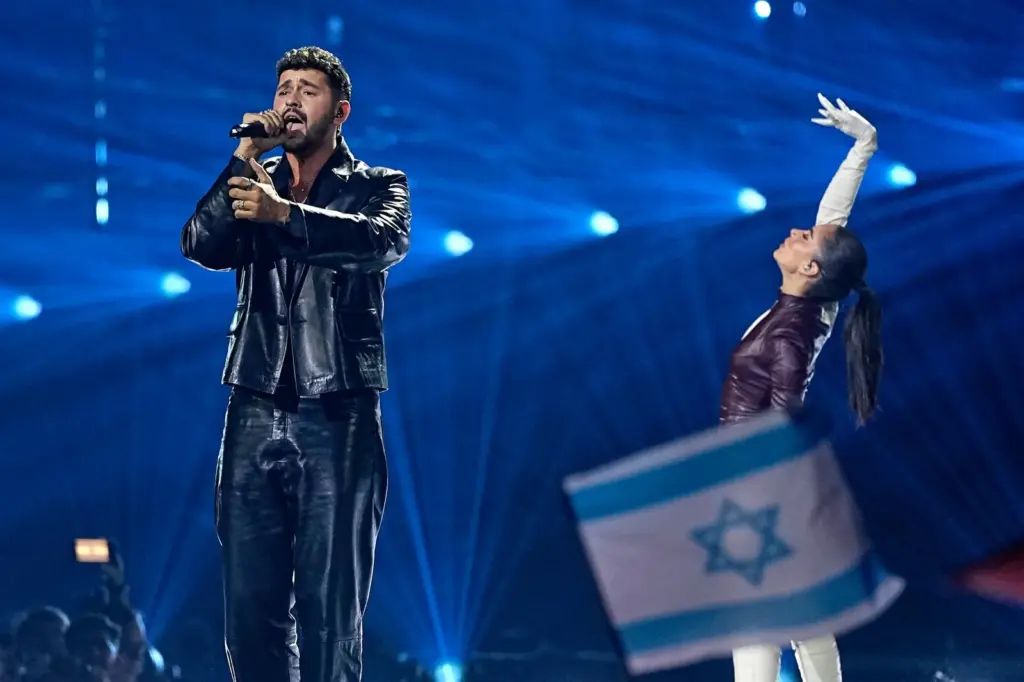
The climax comes at the end of the performance, when Bettan says in a mix of English and Hebrew: “Thank you Europe, todá rabá, I love you all, Am Israel Jai” (Thank you, Europe; thank you very much; I love you all; the people of Israel live). The last phrase has become omnipresent since the Hamas attack in October 2023 that left nearly 1,200 dead and more than 250 hostages. “The people of Israel live!” repeats one of the Israeli presenters. “Israeli flags among the audience. They love him a lot here in Vienna.”
There are 22 more songs left, so most take the opportunity to go buy beer, fish and chips, or churros at the stands in the space, named Tel Aviv 360. Some have been there since 8:00 p.m. (7:00 p.m. in peninsular Spain) when a DJ and a mini-concert by Netta Barzilai kicked off the party. “The world and Noam need us today […] We are a very special place,” he said while hundreds of people marched in Vienna against Israel’s presence in the contest.
During the gala, every detail related to the country was celebrated like a goal in the opponent’s field. Like when the presenters in Vienna played at introducing the names of previous winners into sentences. They mentioned Toy first and the audience cheered.
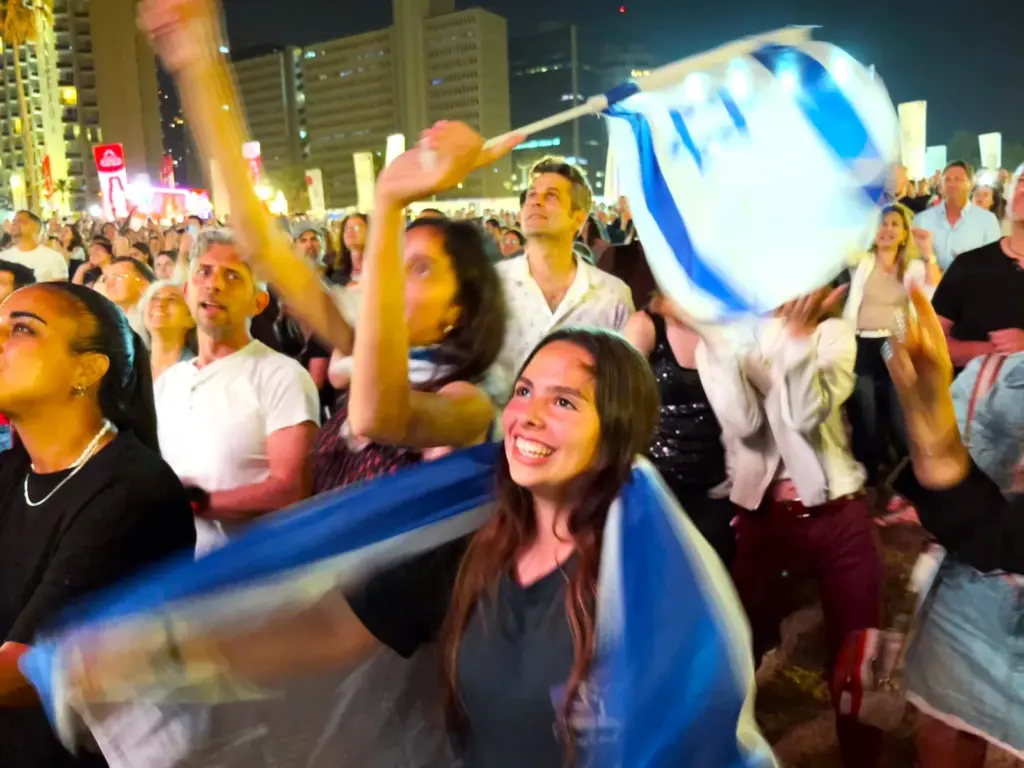
It was not the choice, but its meaning. Mika, a young woman from the city who preferred to join the collective viewing rather than watch it at home as in previous years, understands it. “Eurovision goes far beyond politics. I find it incredible that they boycott us after all we suffered on October 7 [2023], but the important thing is that we have managed to get this far,” she points out.
Several same-sex couples in the audience show the convergence of Tel Aviv’s character as the gay capital of the Middle East and the contest’s popularity among the LGBTI community. A drag queen, Ziona Patriot, was the master of ceremonies. During one of the breaks, she filled the time by asking the audience who would win if Bettan did not.
There were hardly any answers because, obviously, no one wanted to consider the possibility. Patriot then listed the favorites.
― “Finland?”
Everyone knows it advocated excluding Israel from the competition, so it was booed.
― “Greece?”
It is one of the main European allies: round of applause.
― “France?”
Neither cold nor hot. Tens of thousands of Israelis were born there (including Bettan’s own parents), but the president, Emmanuel Macron, has been toughening his tone with Benjamin Netanyahu’s government.
None of its three juries finally gave points to Israel, as if they had heard it from afar on the night when the public vote almost left the European Broadcasting Union organizers with an even hotter potato: Eurovision 2027 in Israel.
Read more This Korean spray serum is the hydration ‘boost’ your skin needs this summer