









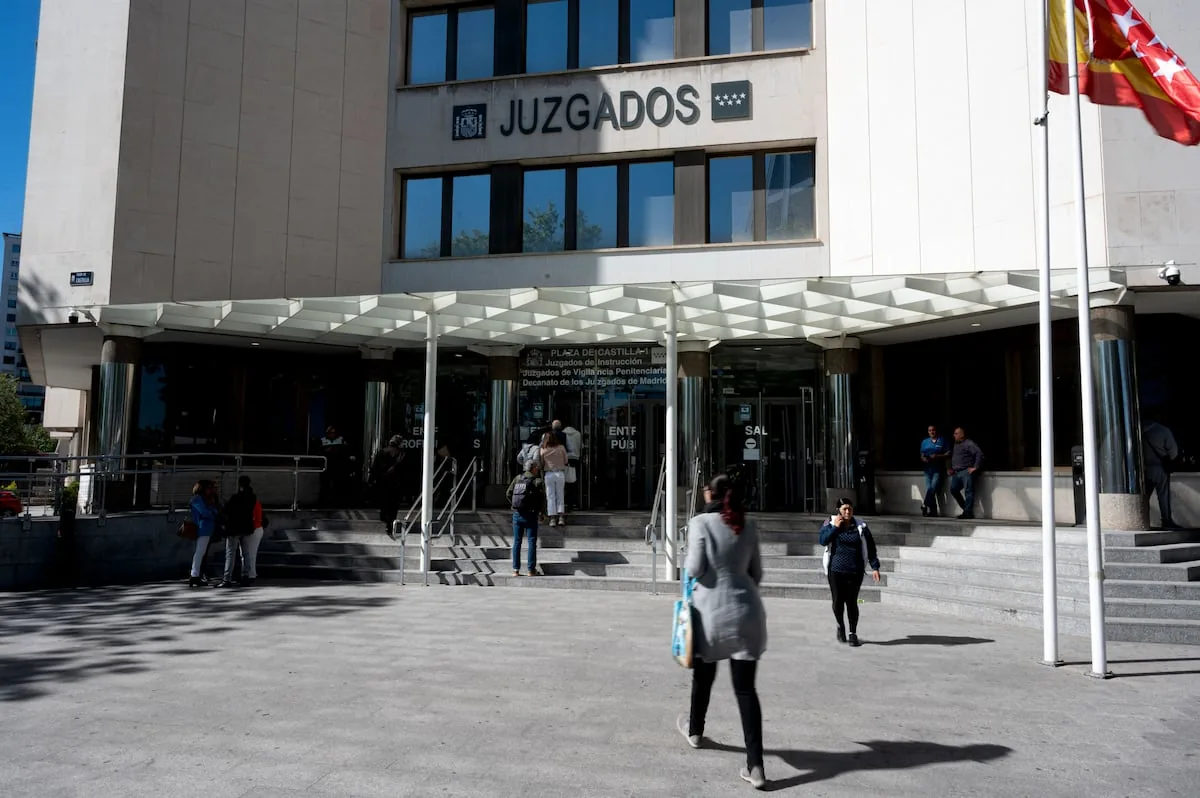
In Spain, the speed with which a company can resolve a commercial dispute depends less on the law than on the place where it is registered. An SME in Valladolid claiming non-payment can obtain a judgment in just over a year. In Barcelona, the same procedure can drag on for almost three years. Between these two scenarios, the legal framework does not change, but the functioning of the judicial machinery does. And that difference is a decisive factor for business competitiveness, according to the Spanish edition of the Business Ready report, published this week by the World Bank. The document aims to “identify regional differences in regulatory environments and promote reforms that foster private sector growth.”
Read more Trias’ disciple challenges Puigdemont to be Junts’ candidate for the Barcelona mayoralty
The study, which compares the business climate in 17 Spanish cities, portrays a country with homogeneous regulation on paper, but uneven in its practical application. The distance between cities is less due to the rules than to the operational capacity of the courts. That is where judicial differences appear. Medium-sized capitals like Pamplona or Valladolid are able to resolve disputes with relative agility, but the major economic hubs, like Madrid or Barcelona, are trapped in judicial delays that slow down business activity.
The gap is hard to ignore. An ordinary commercial dispute takes an average of 410 days to resolve in Valladolid. In Barcelona, the process reaches 1,035 days. For many companies, especially small and medium-sized ones, that difference is not just statistical, but freezes their liquidity, accumulates legal costs, and generates a lot of uncertainty.
The problem does not seem to be in digitalization. The report insists that Spain has advanced in the technological modernization of its courts. The electronic submission of documents, telematic notifications, or online payment of fees are procedures that can be done throughout the territory. However, the World Bank warns that technology alone does not guarantee more efficient justice. The difference lies in the organization and the pressure the courts endure.
In cities like Madrid and Murcia, judges handle more than 5,600 and 6,200 cases annually, respectively. In Pamplona, on the other hand, each magistrate handles around 2,787 cases, that is, less than half. That overload affects procedural times. In Barcelona, a company can wait six months just for the preliminary hearing and another six to reach trial. In Valladolid, those deadlines are reduced to three months and two and a half months.
The report also identifies specific organizational problems. In Murcia, for example, part of the administrative staff works in buildings different from those of the judges and without direct supervision. The result is interruptions in procedures, which sometimes come to a halt due to lack of staff.
Judicial slowness takes on a more critical dimension in insolvency processes, where time determines the value of the company because if the procedure drags on, assets depreciate. Here too, the Spanish map shows strong differences. Valladolid again ranks among the most efficient cities, with procedures resolved in just four months.
Read more Valencian teachers in struggle: “In some centers we work in inhuman conditions. We demand dignity”
In other cities, such as Valencia or Zaragoza, those same processes extend up to nine months due to the greater financial complexity of companies and the accumulation of cases. The differences are even greater in liquidations. While Palma de Mallorca takes about 11 months to liquidate the assets of an insolvent company, in Gijón the process can extend up to 34 months.
The size of the city does not imply better judicial performance. In fact, several medium-sized capitals outperform large metropolitan areas in efficiency and perceived quality. Pamplona tops the ranking in dispute resolution not only for speed but also for business confidence. Companies surveyed by the World Bank rate the independence and impartiality of their courts better there than in cities like Santander or Murcia.
To reduce these differences, the organization recommends expanding the powers of commercial courts to handle all disputes between companies, following models like Vienna’s, where specialization has allowed processes to be streamlined. It also suggests promoting other means of dispute resolution, such as mediation and arbitration, which in its view are little used in the Spanish system.
Transparency appears as another major deficit. Unlike countries like Estonia, where all first-instance judgments are public, Spain only systematically discloses decisions from higher courts. According to the report, opening access to commercial case law would help strengthen legal certainty and more accurately assess the performance of each court.
Beyond these weaknesses in the judicial environment, the report highlights that the country has promoted a series of reforms aimed at business development over the last decade, fostering digitalization and transparency. Among the key measures mentioned are “the establishment of fully online companies, the simplification of permits, the improvement of standards in energy and water, the improvement of connectivity, the digitalization of courts, and the implementation of preventive restructuring frameworks.”