







Key moments
- Macron and Starmer orchestrate this Friday the meeting of “non-belligerent countries” to unblock the Strait of Hormuz
- Stock markets fall as optimism about the truce in the Middle East cools
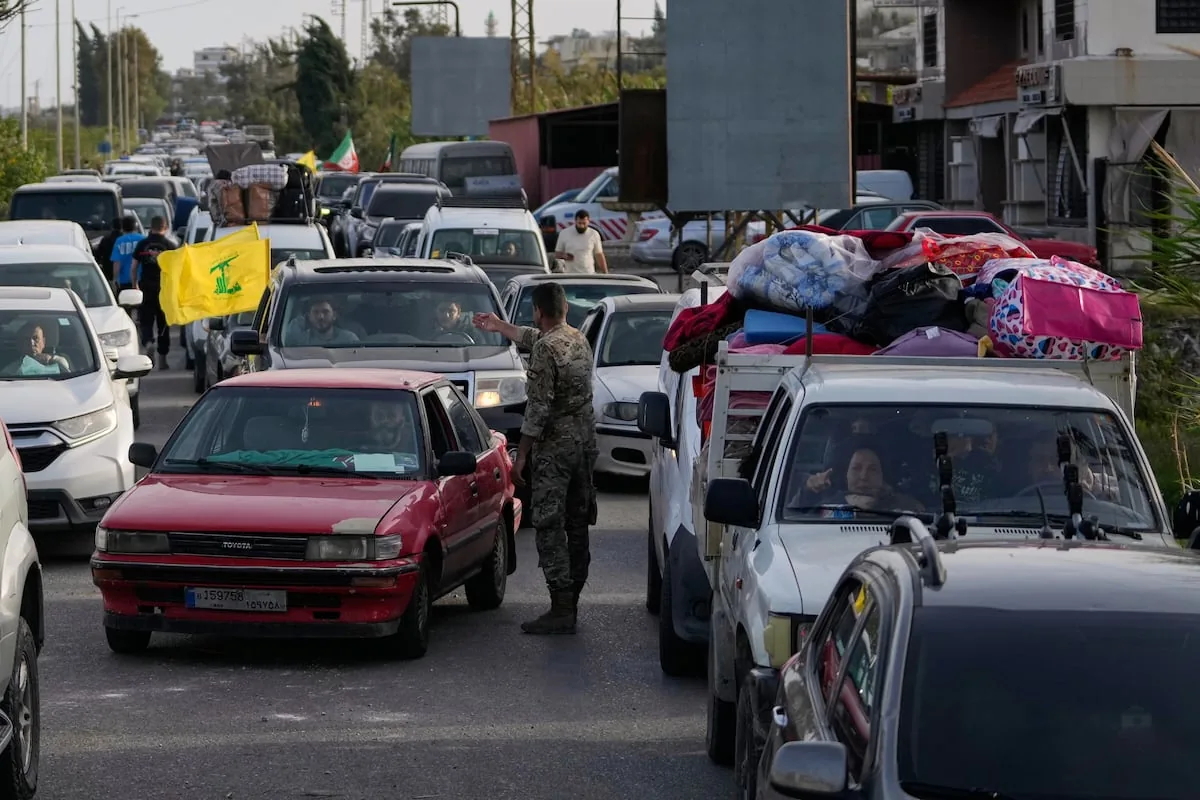
Thousands of people are trying to return to their homes in southern Lebanon this Friday, on the first day of the ceasefire with Israel. The Lebanese newspaper L’orient-Le Jour reports traffic jams on the highway between Sidon and Tyre and states that the coastal road at the height of the Qasmiyé bridge — bombed yesterday Thursday by the Israeli army — which connects the two cities, has been partially reopened. The same newspaper reports that the coastal road of Bourj Rahal and a secondary road at the height of Zrariyé-Tayr Felsay have also been reopened. The Lebanese army accused Israel at dawn of violating the 10-day ceasefire, which came into effect at midnight. Iran has welcomed the pact with “satisfaction” and states that it is part of the truce agreement closed with the United States last week. The spokesperson for the Iranian Ministry of Foreign Affairs, Ismail Bagaei, also called for Israeli troops to leave Lebanese territory. Regarding the conflict between the US and Israel and Iran, US President Donald Trump said last night that it is a “small intervention,” stating that it was a necessary operation to prevent the country from developing a nuclear weapon, and repeated that it is about to end.
EL PAÍS offers the latest news on the US and Israel attack against Iran for free. If you want to support our journalism, subscribe.

China hopes the ceasefire in the Middle East will be maintained “responsibly”
The Chinese government has asked the parties involved in the Middle East conflict to maintain, with a responsible attitude, the momentum of the ceasefire and negotiations, after a ceasefire agreement was reached between Israel and Lebanon.
The spokesperson for the Chinese Foreign Ministry Guo Jiakun has assured that China “welcomes all efforts that contribute to a ceasefire and cessation of hostilities” and has called to maintain the agreements that have stopped attacks in the region, as well as for the involved parties to resolve their disputes “through political and diplomatic means.” “The urgent priority is to prevent by all means the resumption of hostilities and to prevent instability from causing a greater impact on energy security,” he concluded. (EFE)
Israeli attacks in Lebanon cause damage and a “serious risk” to the necropolis of Tyre
The Director General of Antiquities of Lebanon, Sarkis Khoury, warns of the “direct and indirect” damage caused by Israeli bombings to the important Roman necropolis of Tyre (in the south) and the “serious” risk it has been exposed to due to strong vibrations.
He explains that an attack recorded near this UNESCO World Heritage site in early March caused “direct” damage to the wall and the museum that was still under construction inside.
With a 2nd-century Roman triumphal arch and a hippodrome from the same era considered one of the largest in the empire, the Al Bass necropolis had already been subject to protective measures such as moving movable pieces to other less affected areas by the conflict. “We moved the most important archaeological pieces to safe places, but it is not enough because although we move the small pieces, the site itself cannot be moved. That place has exceptional universal value and must be preserved as it is,” Khoury states.
Additionally, the official warned that detailed studies will still need to be carried out later to address restoration, highlighting the consequences of the vibrations that “the whole place” recorded due to the strong explosions that occurred a few meters away. “Archaeological structures are fragile and these vibrations pose a serious risk, as in the medium term within three or four years, once exposed to rain, cracks may appear causing significant damage,” the director points out.
This week, his department had to file an urgent complaint with UNESCO after a temple of importance to both Christians and Muslims in the Chamaa area, also in the south of the country and with reinforced protection status since the 2024 war, was attacked. “The Chamaa site is not the first time it has been attacked by Israel, it is the second since we classified it in 2024,” Khoury declares. “Additionally, we received information that the place is being razed with excavators due to the fighting, which is why we filed a complaint with the UN and UNESCO, and requested international protection for this place,” he adds.
Chamaa joins other cultural victims of the conflicts Lebanon has experienced in the last three years; such as the Crusader castles of Tebnine and Beaufort, the Nabatieh market, and “many historic buildings” bombed in other southern towns like Yaroun or Blida.
The Director General of Antiquities emphasizes that only in the previous war about 40 villages were completely destroyed, including cemeteries that are part of their memory, and olive groves or carob trees that are part of their identity. “In almost every village there is an archaeological site, and when a village is destroyed, its heritage is also destroyed,” he denounces. “The cultural and natural landscape has been destroyed in an attempt to erase the identity and history of the area. As if it never existed, when in reality this region has more than five thousand years of history,” Khoury comments.
According to the Antiquities official, they have managed to have a total of 73 sites in the country covered by the Second Protocol of the Hague Convention, for the protection of cultural heritage during armed conflicts. Specifically, 34 sites were inscribed during the 2024 war and another 39 obtained the status this year. This heritage, spread throughout the country but especially in the areas “most exposed” to Israeli attacks, has been marked with the blue shield, the international emblem recognized by the convention.
The senior official states that they will not “remain silent” in the face of attacks on their cultural wealth and that both the Ministry of Culture and the Directorate General of Antiquities are doing everything they can to preserve it, although he acknowledges that their capabilities are “very humble.” “What can Lebanon do when tons of explosives fall on it that erase people, buildings, and even the land itself, changing the geography and destroying roads?” he asks.
In 2024, a bombing hit very close to the Greco-Roman ruins of Baalbek, in the east of the country and an area of historical relevance as great as Tyre. Khoury wonders what happens with the impacts in these regions where there may be historical remains still “underground.” “Destroying a known site is a crime, but destroying an unknown one is even worse, because it deprives us of future knowledge. Today the world is losing very valuable heritage, in addition to historic villages with five thousand years of history,” he concludes. (Efe)
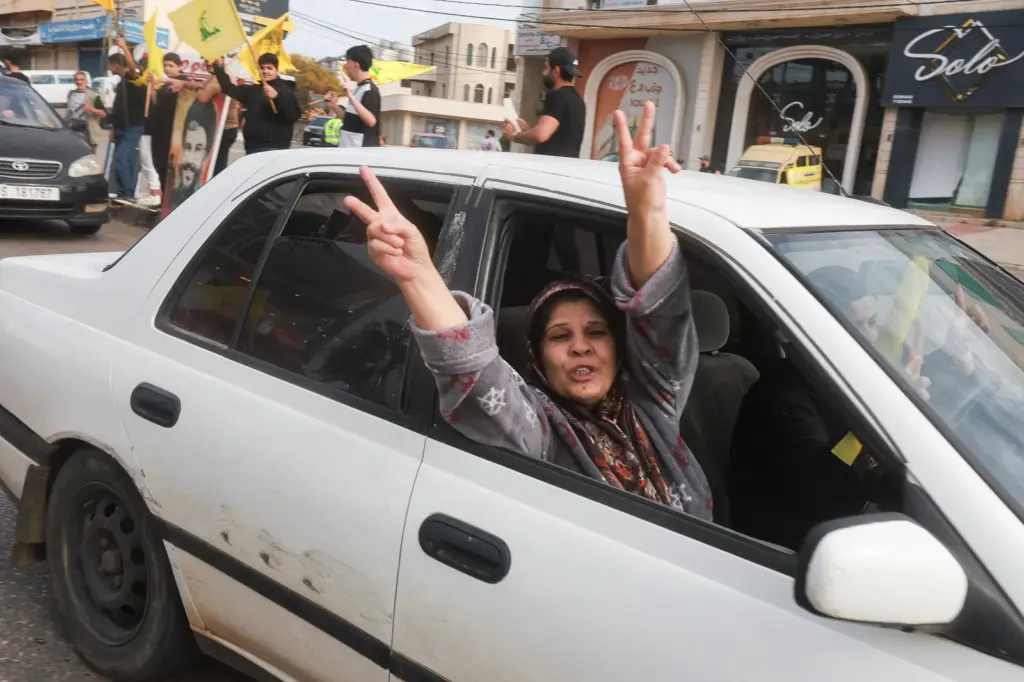
A woman celebrates the ceasefire in Lebanon while returning to her home in Nabatieh / Aziz Taher / REUTERS
Celebrations, victory gestures, and Hezbollah flags among Lebanese returning to the south after the ceasefire
Some displaced Lebanese citizens have returned to their homes in the south of the country celebrating the announcement of a 10-day ceasefire between Israel and Lebanon. In the cities of Nabatieh, Qasmiyeh, Sidon, and Tyre, gestures of celebration have been seen among those who dared to return to their homes south of the Litani River, the border region with Israel, where Benjamin Netanyahu’s army has concentrated most of its attacks since the conflict began.
Among the victory gestures of the displaced, many held signs with the faces of former Hezbollah leaders, Hassan Nasrallah and Hashem Safieddine, and flags of the Shiite militia.
Pakistani president celebrates the ceasefire in Lebanon and Trump’s “bold” effort
Pakistani President Shehbaz Sharif has celebrated the announcement of the ceasefire in Lebanon and congratulated US President Donald Trump for his “bold” diplomatic efforts, which he hopes will lead to “sustainable peace” between Israel and its northern neighbor.
Sharif also emphasized his country’s support for Lebanon’s “sovereignty and territorial integrity.” The Pakistani is in the midst of a diplomatic mediation campaign in the region to extend the other major ceasefire, that between the US and Iran.
Thousands try to return to their homes in southern Lebanon after the ceasefire
Thousands of people are trying to return to their homes in southern Lebanon this Friday, on the first day of the ceasefire with Israel.
The Lebanese newspaper L’orient-Le Jour reports traffic jams on the highway between Sidon and Tyre and states that the coastal road at the height of the Qasmiyé bridge — bombed yesterday Thursday by the Israeli army — which connects the two cities, has been partially reopened. The same newspaper reports that the coastal road of Bourj Rahal and a secondary road at the height of Zrariyé-Tayr Felsay have also been reopened.
The Lebanese army asked last night the residents of the south of the country who are forcibly displaced due to the war “to postpone their return to their villages until the ceasefire agreement comes into effect.” Hezbollah, for its part, issued a similar recommendation “given the enemy’s treacherous history of violating promises and agreements,” clearly referring to what happened after the ceasefire signed in November 2024, when Israel opened fire, causing more than 20 deaths, against citizens returning to their villages.
Read more The 65 recommendations from Quadern critics for Sant Jordi 2026
The Lebanese army accuses Israel of violating the 10-day ceasefire announced yesterday by US President Donald Trump, which came into effect at midnight.
Macron celebrates the ceasefire in Lebanon and expresses “concern about the continuation of military operations”
French President Emmanuel Macron expressed this Friday his “full support” for the ceasefire between Hezbollah and Israel, which came into effect last midnight. However, he expressed concern “that it may already be weakened by the continuation of military operations.”
In a message posted on X, the French leader called for security for the civilian populations of both countries. “Hezbollah must give up arms. Israel must respect Lebanese sovereignty and stop the war,” he concludes.
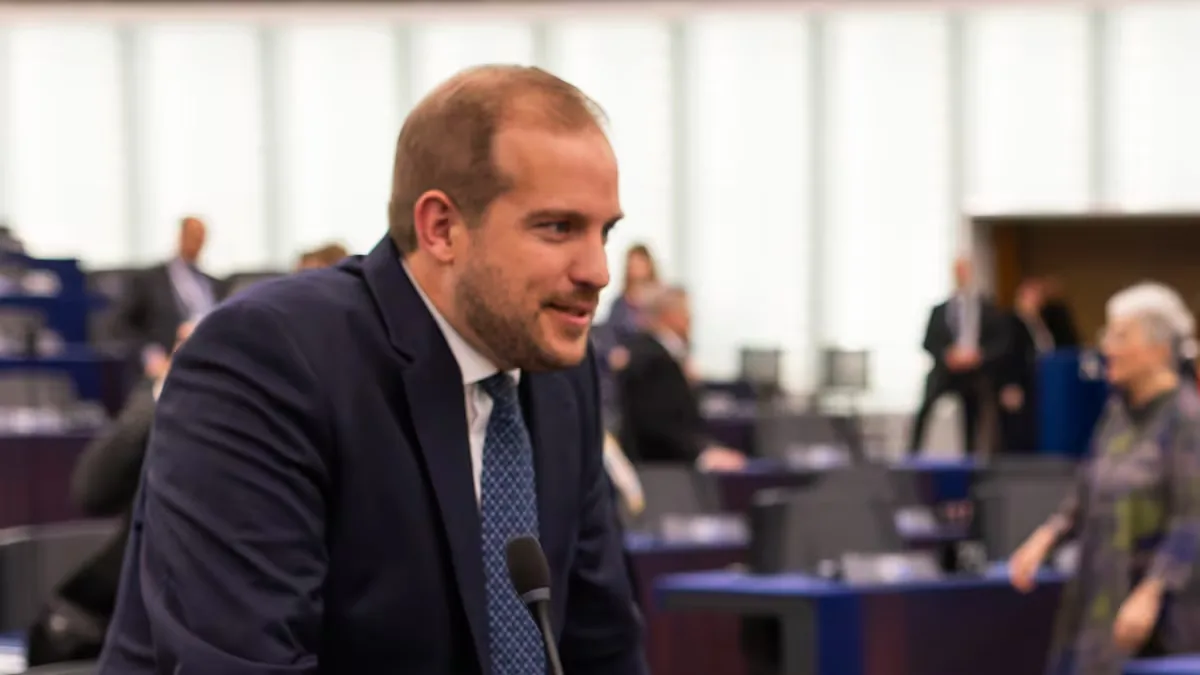
Macron and Starmer orchestrate this Friday the meeting of “non-belligerent countries” to unblock the Strait of Hormuz
French President Emmanuel Macron and British Prime Minister Keir Starmer will lead this Friday from Paris the videoconference of “non-belligerent countries” willing to participate in “a multilateral and purely defensive mission in the Strait of Hormuz,” as defined by the Élysée, in which about 40 powers will study how to reopen the corridor, subject to the blockade by Iran and the United States. The meeting, which will begin at 14:00, will also be attended in person by Italian Prime Minister Giorgia Meloni and German Chancellor Friedrich Merz. Spain will be represented by the Minister of Foreign Affairs, José Manuel Albares, remotely from Barcelona.
The French Ministry of Defense has assured that European powers have the capacity to clear mines placed by Iran in the strait, a transit point for 20% of the world’s oil. Minister Catherine Vautrin stated in an interview with the television channel TF1 that “there are capabilities to offer fully supported escort services — that is, in no case offensive, of course — to ships to ensure safe passage through the strait.”

Stock markets fall as optimism about the truce in the Middle East cools
The unprecedented bullish streak in equities has come to a sudden halt both in Asia and Europe as investors are opting to reduce their positions before the weekend, awaiting progress in the extension of the ceasefire between the US and Iran. The MSCI World index — the broadest barometer of the global stock market — falls 0.1% after a ten-day bullish streak that took it to historic highs this Thursday. Although Wall Street indices also closed at historic highs this Thursday, momentum deflates in the main Asian stock markets. The Japanese Nikkei falls about 1% after hitting historic highs this Thursday and Chinese indices also trade in negative territory. In Europe, EuroStoxx 50 futures register slight declines. The Ibex 35 will start today from the 18,089 points it closed yesterday and is set to end the week with a negative balance.
Investors await progress in negotiations that could reopen the Strait of Hormuz, facilitating crude flow and easing pressure on economies after the rise in oil prices following the start of the conflict at the end of February. Although crude has cut its war-driven premium and stocks have risen to historic highs, policymakers warn that markets may be underestimating the economic impact of the war.
WAR AGAINST IRAN
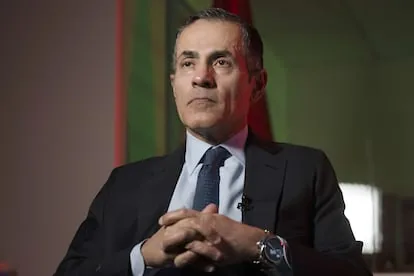
Vali Nasr, former Iran advisor to the Obama Administration: “Tehran now has more influence than before the war”
The voice of political scientist Vali Nasr (Tehran, 65 years old), professor at the American university Johns Hopkins, is considered one of the most authoritative in the world on Iran, Shiism, the Islamic Republic, and US foreign policy in the Middle East. Author of reference works on his native country, his work transcends the academic: between 2009 and 2011, he served as chief advisor to Richard Holbrooke, Washington’s special representative for Afghanistan and Pakistan. During that period, he also advised the State Department and President Barack Obama himself on Iran. By video call on Tuesday from the US, this specialist shows cautious optimism about the negotiations that began last Saturday in Pakistan between Tehran and Washington. He also describes how this war has shown the limits of Donald Trump’s belief that everything can be achieved by military force. After 40 days of bombings, that President Donald Trump has agreed to negotiate with his enemy is, in his eyes, the admission of failure.
You can read the full interview here
WAR AGAINST IRAN
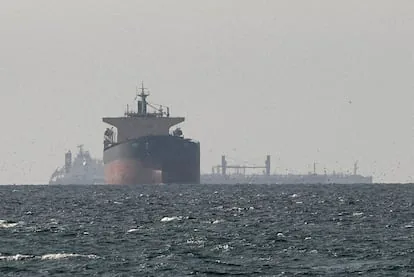
Ships defy blockades in Hormuz with false identities, turned-off transponders, and the ‘spoofing’ technique
The double Iranian and US blockade to which the Strait of Hormuz is subjected, one of the main global hydrocarbon supply routes, has turned its transit into a cat-and-mouse game in which ships defy limits using irregular tactics and diversion maneuvers to take advantage of exceptions, but it has also caused some ships to interrupt their voyage and turn back to avoid confrontations that endanger negotiations hanging by a thread and the fragile ceasefire in force.
You can read the full information here
Iran celebrates the truce in Lebanon and calls for the withdrawal of Israeli forces from its territory
Iran has welcomed this Friday with “satisfaction” the ceasefire between Lebanon and Israel, stated that it is part of the truce agreement closed with the United States last week, and called for Israeli troops to leave Lebanese territory.
The spokesperson for the Iranian Ministry of Foreign Affairs, Ismail Bagaei, welcomed with “satisfaction” the 10-day ceasefire that came into effect last night, according to a statement collected by Press TV. “Since the beginning of talks with various regional and international parties, including the Islamabad negotiations, the Islamic Republic of Iran has constantly emphasized the urgent need for a simultaneous ceasefire throughout the region, including Lebanon,” Bagaei said. “After the Islamabad talks, Iran pursued this goal with the utmost seriousness,” he continued.
The United States and Iran held negotiations last Saturday in Islamabad, mediated by Pakistan, which did not conclude in an agreement between the two rivals, after a ceasefire agreement of the war that according to Tehran included the end of hostilities in Lebanon.
The ceasefire in Lebanon was announced during the visit of the head of the Pakistani army, Asim Munir, to Tehran, where he met with senior Iranian officials.
Bagaei also called for Israel to leave “all occupied territories in southern Lebanon” and “release all prisoners.” (Efe)
Trump calls the war in Iran a “small intervention” that is about to end
US President Donald Trump referred this Thursday to the conflict in Iran as a “small intervention,” stating that it was a necessary operation to prevent the country from developing a nuclear weapon, and repeated that it is about to end. Trump again defended his military crusade in the Middle East saying it was a “small intervention” that “should end quite soon,” during an event at a hotel in Las Vegas, Nevada, focused on promoting his economic policies such as the elimination of taxes on tips. As on previous occasions, the Republican defended that if he had not attacked Tehran in February “they would now have nuclear weapons,” to which dozens of workers called for the president’s visit responded with applause. (Efe)
Lebanon accuses Israel of violating the ceasefire
Israel has committed violations of the ceasefire in Lebanon, which came into effect at midnight, including intermittent bombings against several villages in the south of the country, the Lebanese army denounces early Friday.
In a statement, the army urges citizens to refrain from returning to the villages and cities in the south. (Reuters)
Good morning. We start the live narration of the latest news on the conflict in the Middle East, this Friday, April 17, one day after the announcement of a 10-day ceasefire between Israel and Lebanon, which came into effect at midnight. However, the Lebanese army accused Israel at dawn of violating the truce.
Meanwhile, we remain attentive to the negotiations between Iran and the US to find a way out of the conflict, which began on February 28. The dialogue has been suspended since last weekend. US President Donald Trump referred last night to the conflict in Iran as a “small intervention,” stating that it was a necessary operation to prevent the country from developing a nuclear weapon, and repeated that it is about to end.